Home › Anomalous Reptiles › Anomalous Reptiles: History
Anomalous Reptiles: History
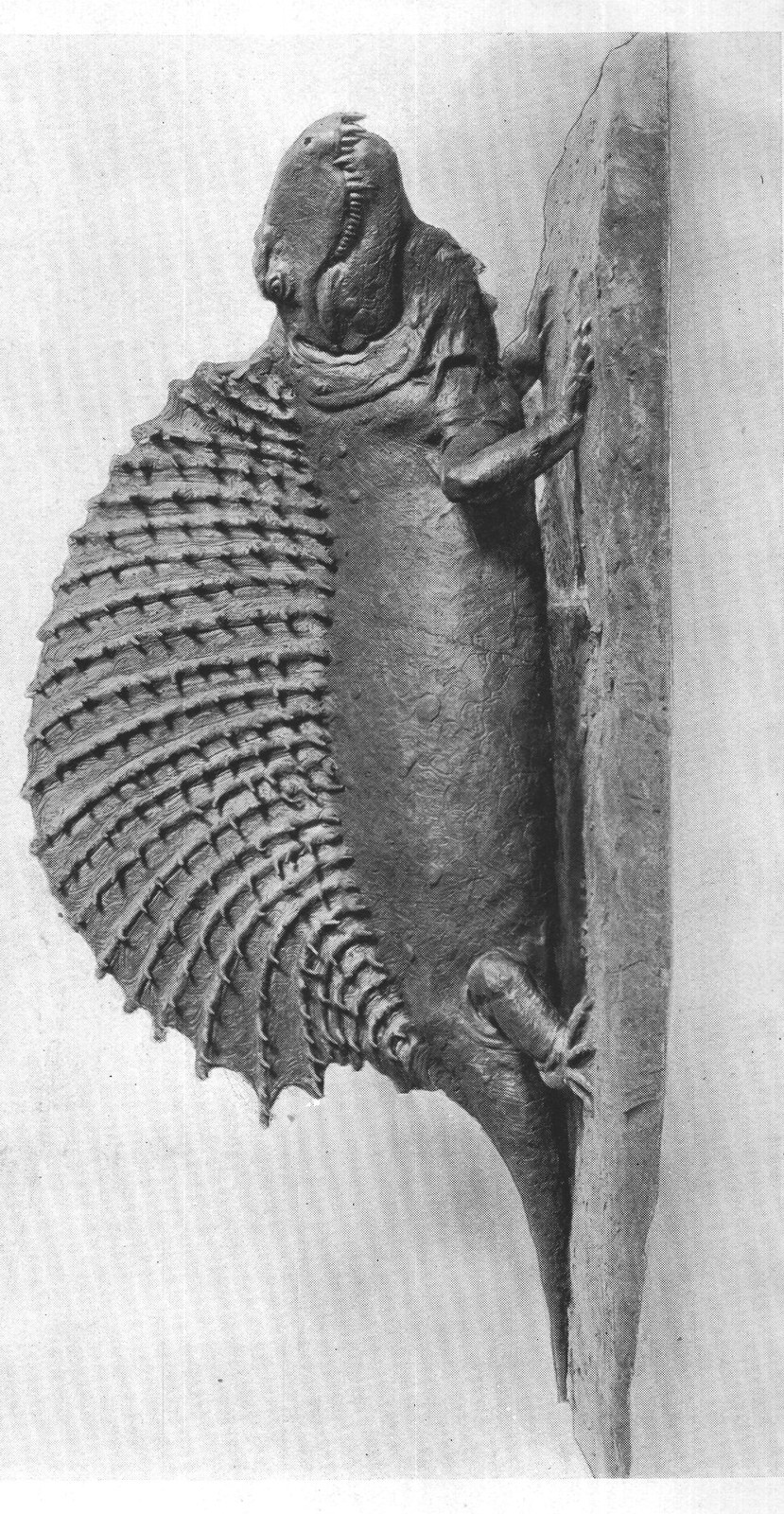
MODEL OF NAOSAURUS RESTORED. FROM PERMIAN STRATA OF TEXAS. Reproduced by permission of the American Museum of Natural History and Prof. Henry Fairfield Osborn. abounded in the seas of the Permian period. These, as Owen points out, may have been its prey.
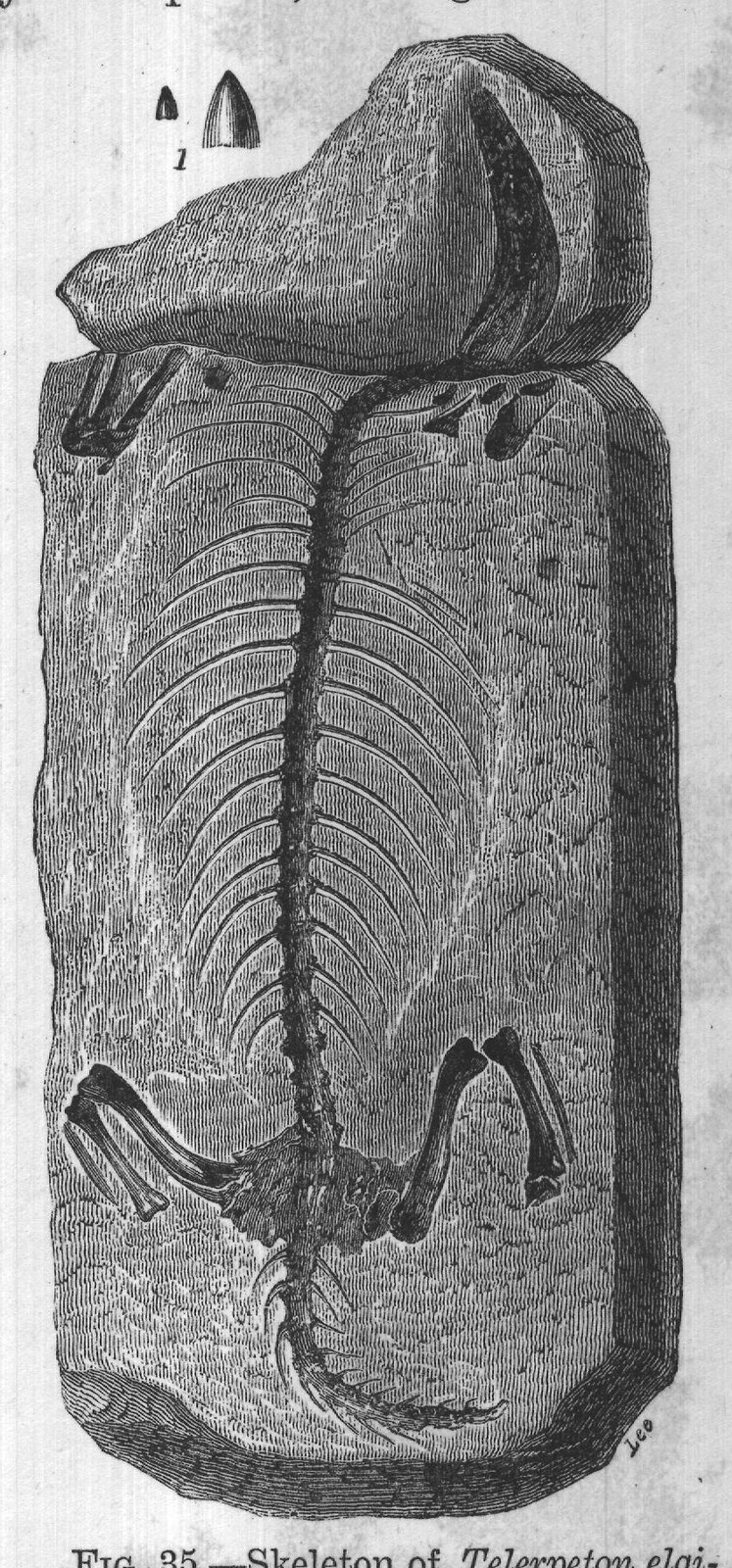
The beak-headed lizards, or Rhynchocephalia,¹ belong to another very remarkable order of reptiles that lived during the New Red Sandstone period. The order is now almost extinct, being only represented by the Tuatara, or Sphenodon, of New Zealand. 1 There are three extinct reptiles to be considered under this head before we conclude our survey of Triassic reptiles, and first we will take the little Telerpeton. It was found in the New Red Sandstone strata of Elgin-then considered to be the Old Red Sandstone, and a great controversy took place with regard to their geological age. But now most geologists accept the view that they are of New Red Sandstone age, as asserted by Professor Huxley, FIG. 35. Skeleton of Telerpeton elgiand others. The discovery of nense, from the Elgin Sandstone. Natural Telerpeton was an important size. 1. Tooth. (After Mantell.) event in the scientific world at the time, chiefly because the Elgin sandstones were then considered to be of Old Red Sandstone age. Lee The name now generally accepted denotes the remote antiquity of this reptile.2 1 Greek-runchos, beak; cephalos, head. 2 Greek-tele, far off; erpeton, reptile. A model or cast of this delicate fossil is to be seen in the Natural History Museum. Unfortunately, the head is not preserved. Dr. Mantell considered Telerpeton to be partly amphibian and partly saurian. But, some years later, Professor Huxley came to the rescue, and threw more light on the subject. In a paper read before the Geological Society,¹ he described a new specimen, which showed the skull. This specimen, the property of Mr. James Grant, of Lossiemouth, was sent to him by that veteran geologist, the late Rev. Dr. Gordon, of Birnie, by Elgin, who, for fifty years or more, had taken a deep interest in the geology of the district. It is larger, being ten to twelve inches 1 2 Lee FIG. 36. Skull of Rhynchosaurus articeps from the Trias, from the New Red Sandstone near Shrewsbury; natural size. 2. Upper aspect of a dorsal vertebra; natural size. (After Mantell.) in length. As is usual with fossils from the Elgin sandstone, the bones are represented by casts, but these were well defined. Professor Huxley was able to show that Telerpeton has no relationship with amphibians. In all its characters it is a true lizard. Instead of being a low, or "generalised" form, it is somewhat " specialised," or highly developed.