Home › Anomalous Reptiles › Anomalous Reptiles: Oudenodon
Anomalous Reptiles: Oudenodon
The genus Oudenodon,¹ although it has no teeth, so closely resembles the Dicynodon that it must be included in the same family. The skull is shown in Fig. 26. Professor Owen even suggested that the absence of teeth might merely denote a difference of sex; but this view is not accepted by others. The general shape of the skull is very similar to that of Dicynodon, and the Greek-ouden, nothing; odous, odontos, tooth.
IIO jaws ended in a kind of beak. There are several species, and some attained very large dimensions.
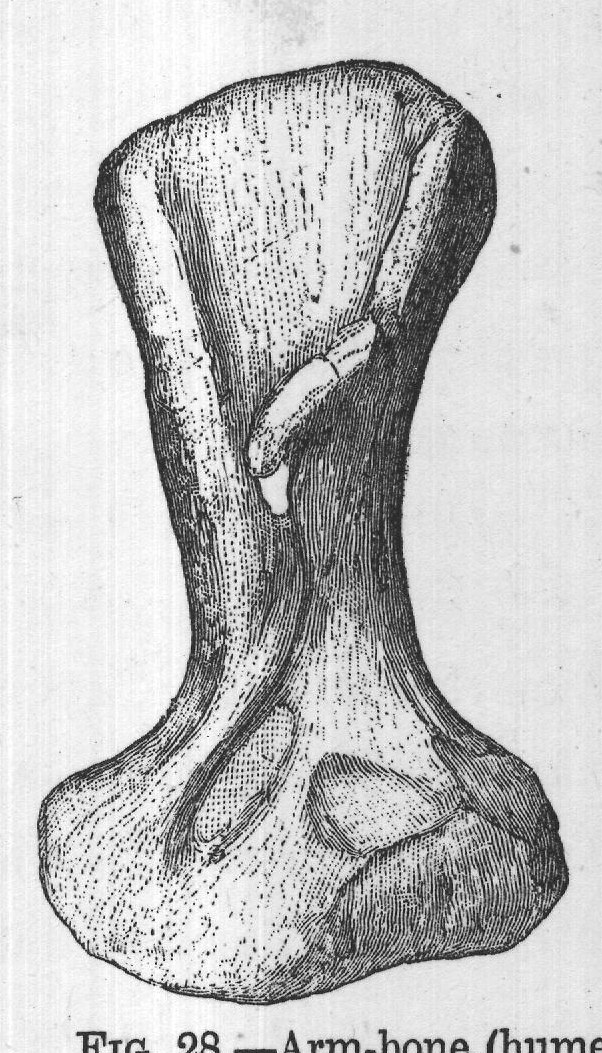
In Oudenodon Bainii the skull is six inches long.
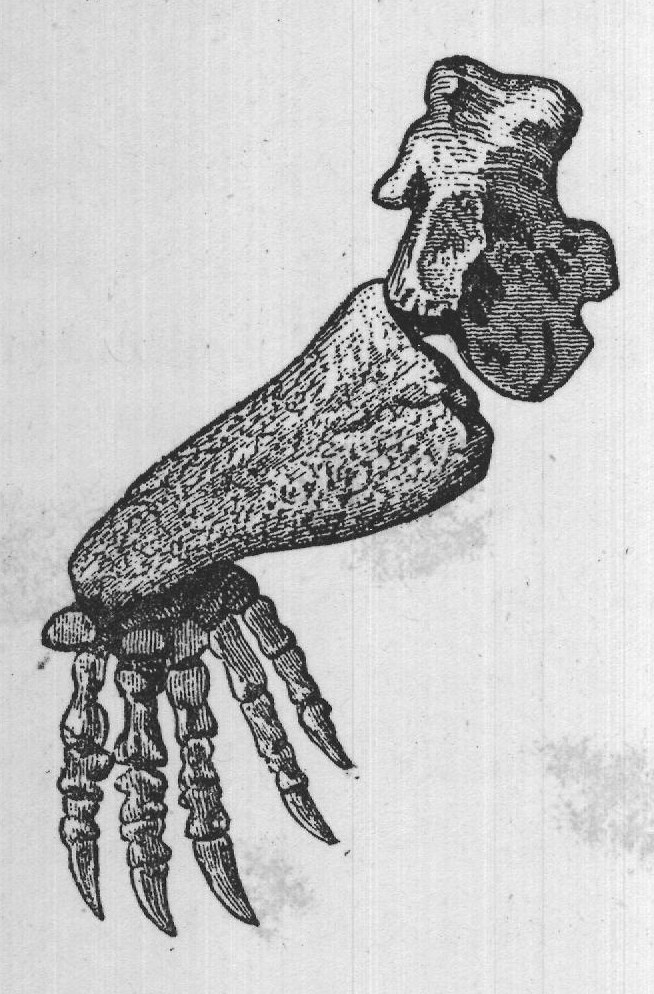
Platypodosaurus¹ is the name given to a considerable portion of the skeleton of a Dicynodont reptile from the Karoo strata of South Africa; but, unfortunately, the skull is unknown, and it may prove to be identical with Oudenodon. The structure of the pelvis, or region of the hips, is remarkably mammalian. The name indicates that it had broad feet.
The genus Endothiodon represents a remarkable family of large reptiles from the same strata, distinguished by the presence of teeth on the palate. The skull resembles that of Oudenodon, but the muzzle is longer.
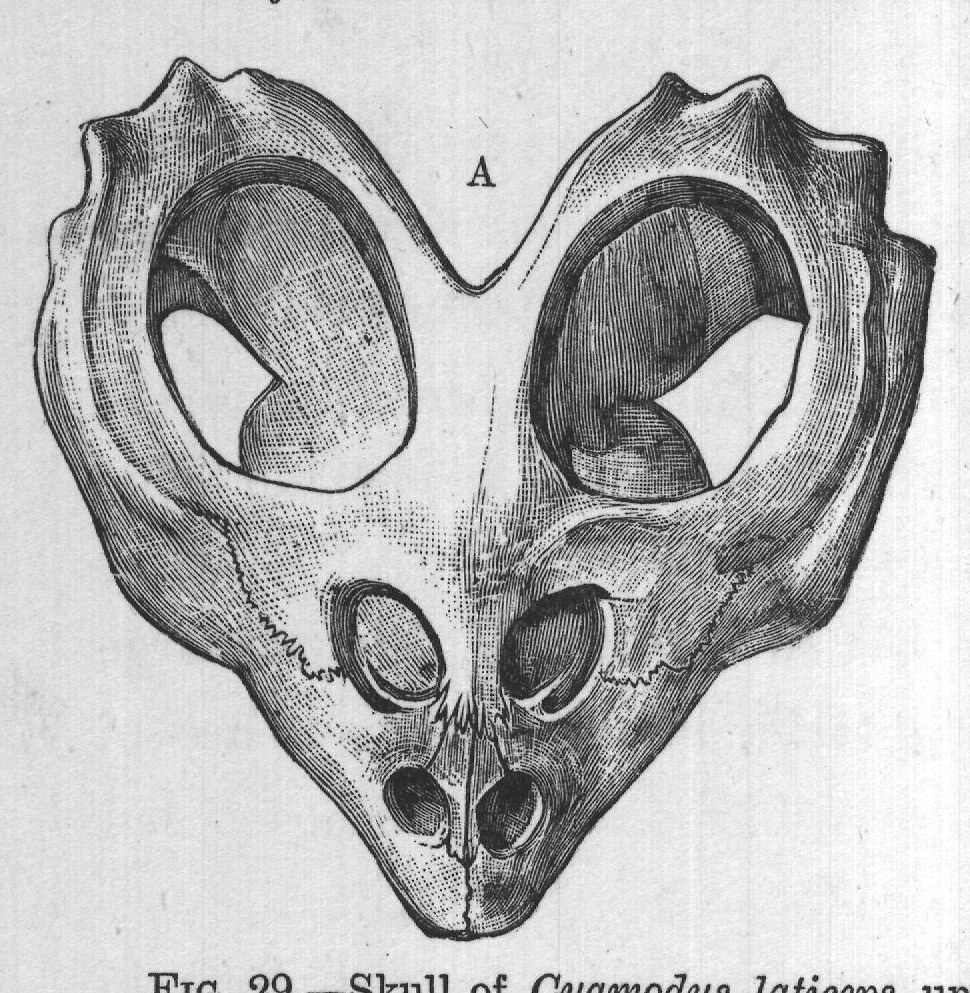
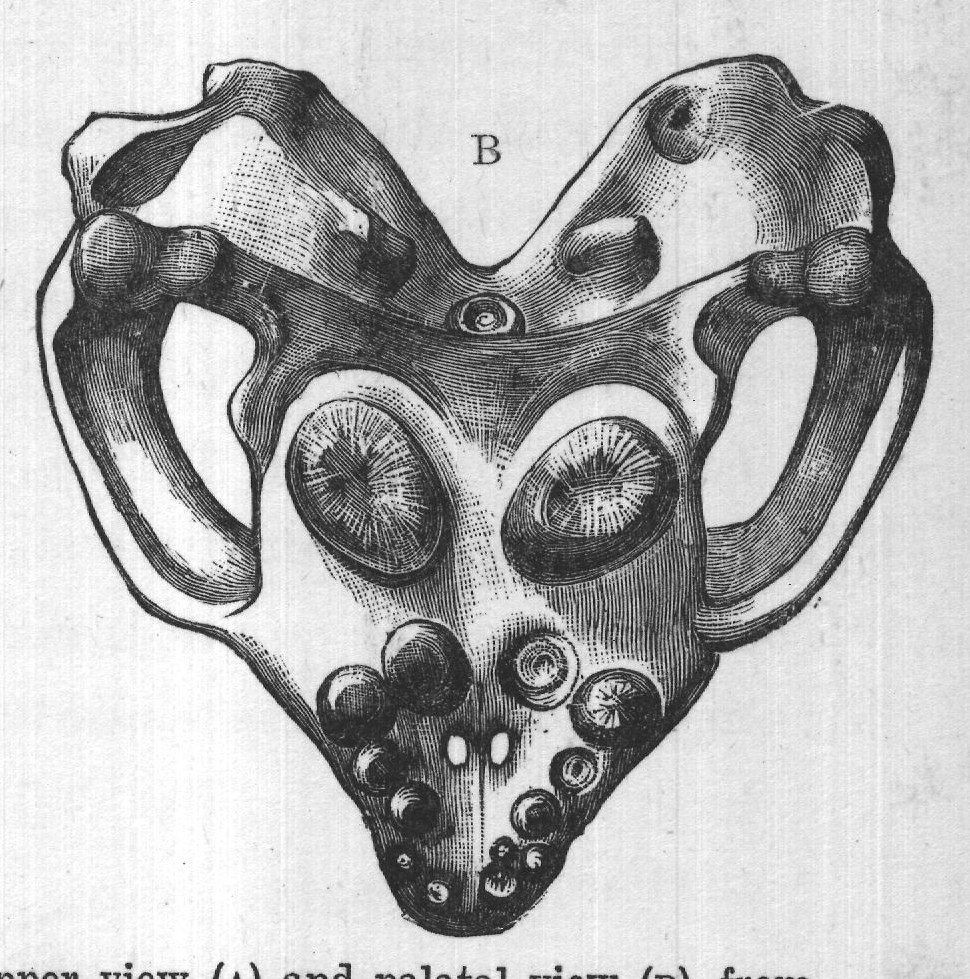
Two genera, Placodus 2 and Cyamodus, from Triassic strata in Germany, represent another group, the Placodonts, which are very remarkable, but unfortunately at present are only known by their skulls. These, however, are sufficiently peculiar to deserve notice. The teeth represent a curious modification previously unknown in the reptile class, but of which the class of fishes affords numerous examples. In the latter genus the skull is as broad as it is long, and the jaws were very strong. This powerful action of the jaws relates to the form and size of the teeth, which are broad and flat, like paving stones, and evidently adapted to crack and bruise shells of molluscs and crustacea (see Fig. 29). Although now admitted to be a reptile, this remarkable genus was once considered by Agassiz, Owen, and others to be a fish; but where fossil remains are so imperfect, mistakes may easily be made at first. Tapinocephalus and Titanosuchus 4 are the names given to two 1 Greek-platus, broad; pous, podos, foot; and sauros, lizard. 2 Greek-plax, plakos, any flat thing; odous, tooth. 3 Greek-tapeinos, low; cephalos, head. 4 Greek-titan, a titan; souchos, a crocodile. huge Anomodonts from South Africa, both belonging to the same family, the teeth of which indicate carnivorous habits. An A B e FIG. 29.-Skull of Cyamodus laticeps, upper view (A) and palatal view (B), from the Muschelkalk of Baireuth, Germany; natural size. imperfect skull, several entire limb-bones, and vertebræ are preserved in the national collection at South Kensington. Galesaurus,¹ of which the head is shown in Fig. 30, belongs to a remarkable group of Anomodonts, first described by Sir R. Owen, FIG. 30.-Skull and mandible of an Anomodont, Galesaurus planiceps. Length 6 inches. Karoo strata, South Africa. (After Owen.) and called by him Theriodonts, because the form and order of arrangement of their teeth bear a striking resemblance to those 1 Greek-galé, weasel; sauros, lizard. 2 Greek-therion, wild beast; and odous, odontos, tooth: because the teeth resemble those of savage carnivorous creatures, such as lions or wolves. of carnivorous mammals; for the incisors are separated from the molars by well-developed canines, and the canines of the lower jaw crossed those of the upper in front. In some of the members of this family the upper canine teeth are long and trenchant, and the incisors large and close together. Visitors to the Natural History Museum will find a most valuable set of specimens of the skulls, etc. (Gallery IV.).
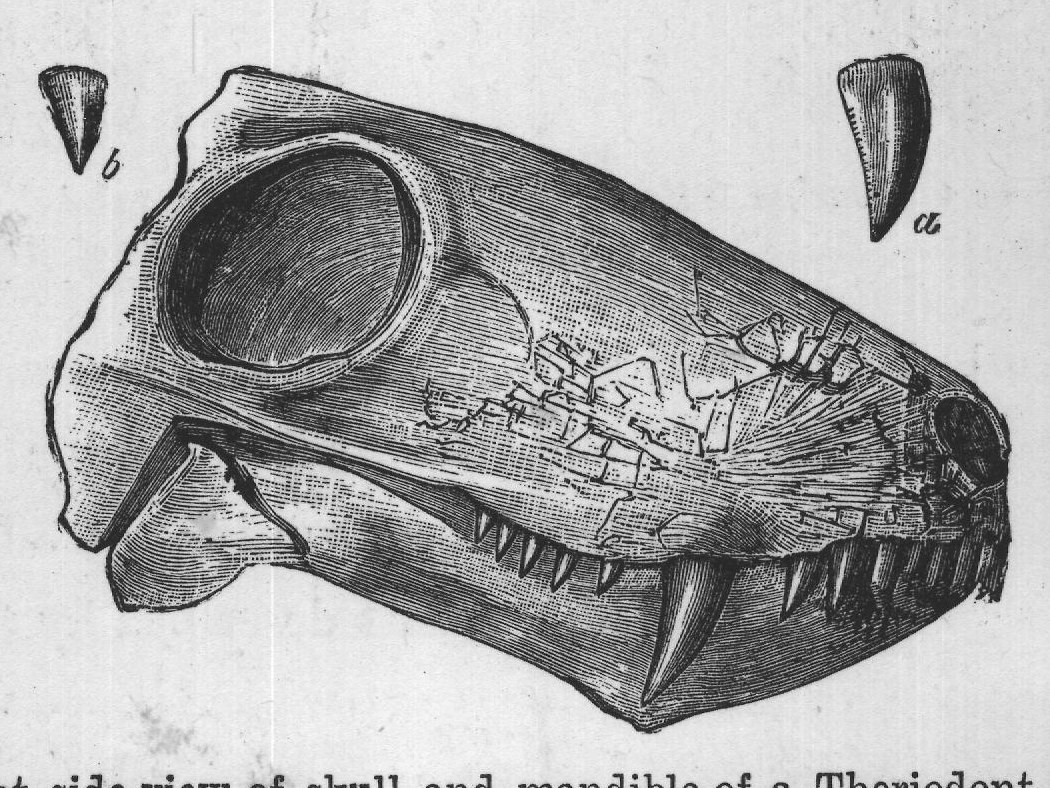
In most reptiles, living and extinct, the teeth that are worn away by use, or otherwise lost, are replaced by others that are constantly forming in the jaws; but in the case of Theriodonts there is no evidence of preceding teeth, like the milk-teeth in 6 FIG. 31.-Right side-view of skull and mandible of a Theriodont (Ælurosaurus felinus), natural size, with two upper teeth, natural size (a, b), from the Triassic Karoo Formation of Beaufort West, Cape Colony. Behind the large orbit the back part of the skull is broken away. (After Owen.) mammals, nor of succeeding teeth, like the crocodile's. Sir R. Owen therefore concluded that these creatures had but one set of teeth, which lasted through life. He has described eleven genera, varying in the size and form of the skull and teeth; they are all from South Africa, and are figured in his Catalogue of the Fossil Reptiles of South Africa.
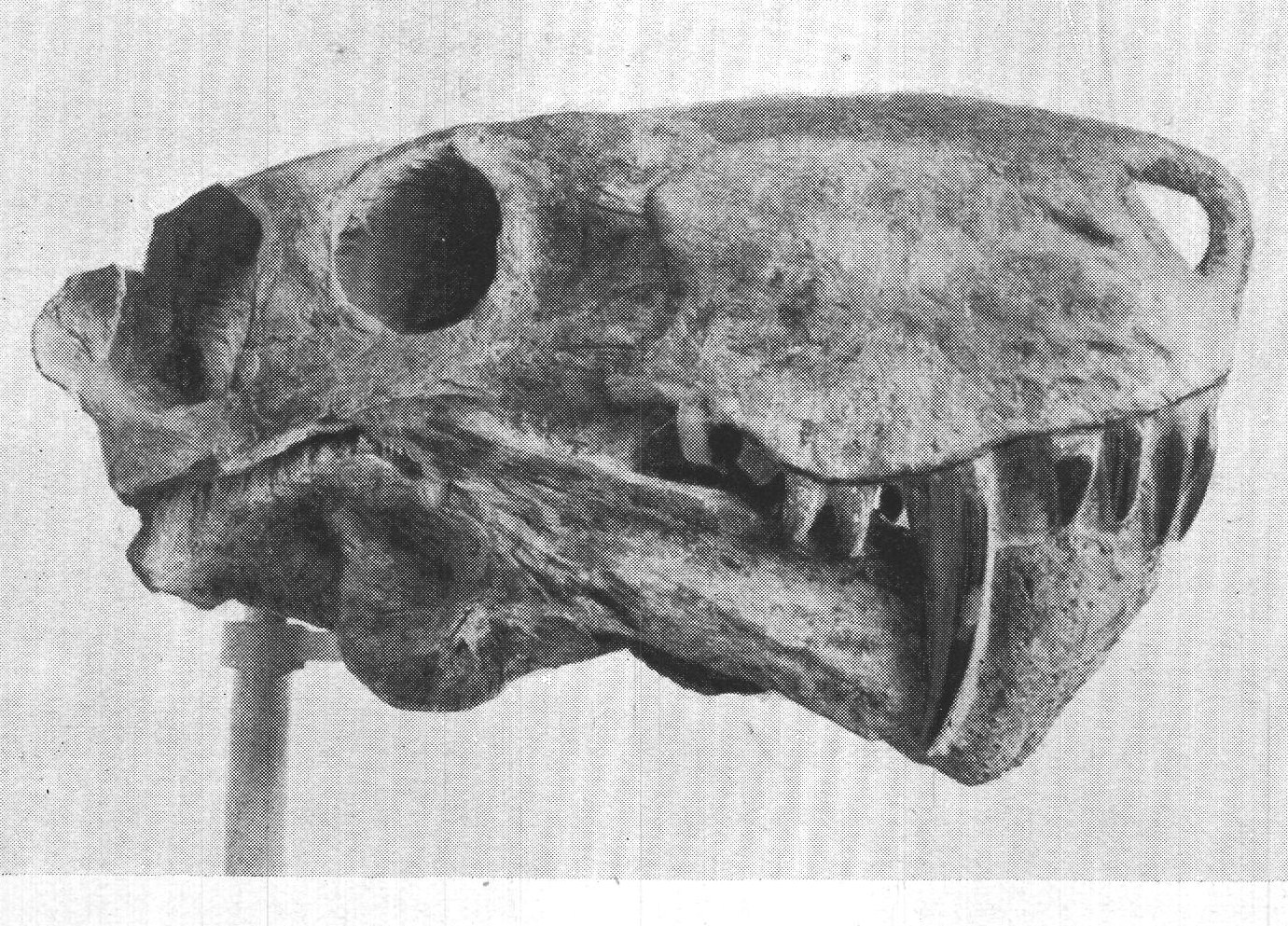
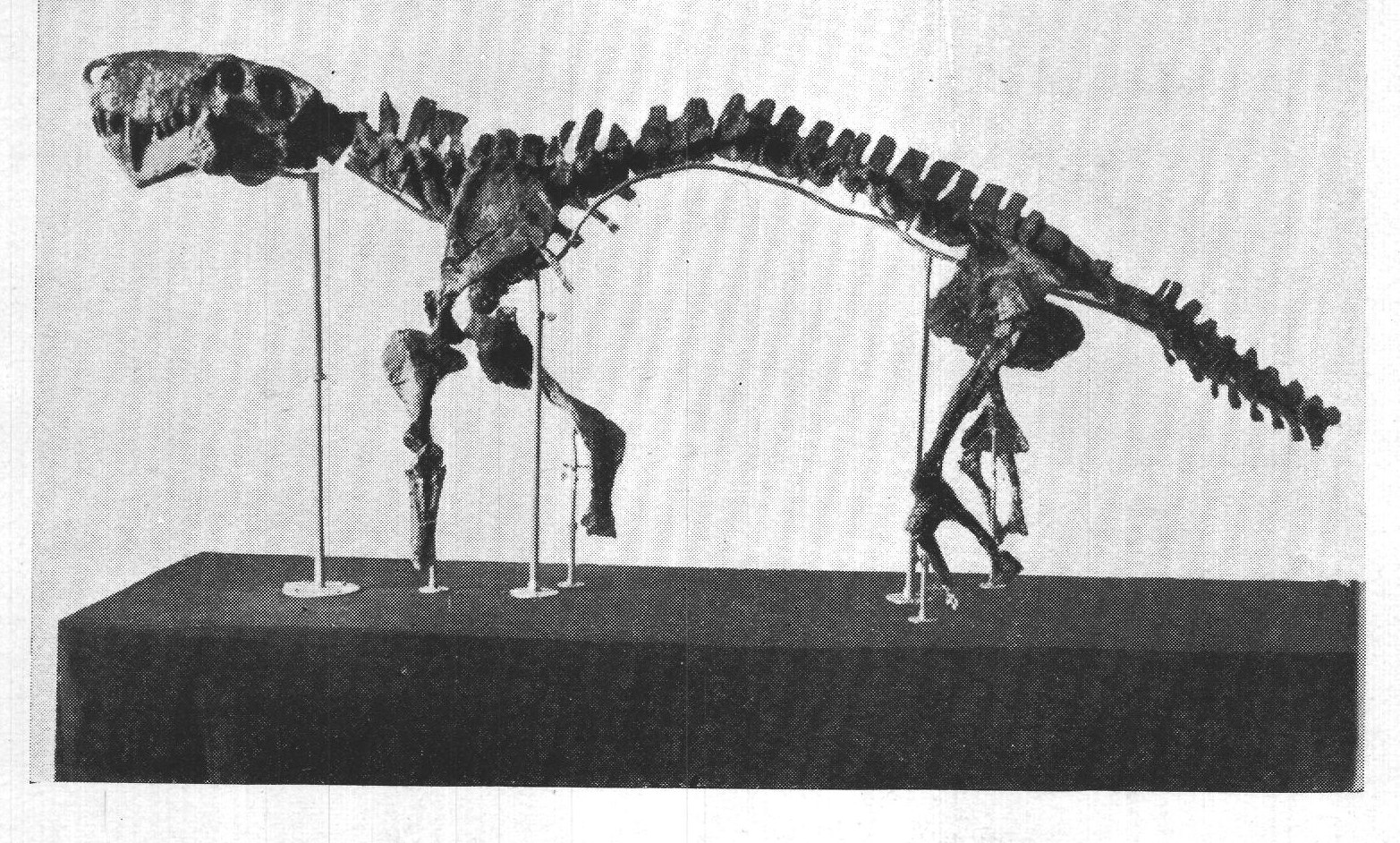
The work of describing and classifying Anomodont reptiles has PLATE XI. 1. SKELETON OF INOSTRANSEVIA ALEXANDRI. 2. SKULL OF INOSTRANSEVIA ALEXANDRI.