Home › Protective Resemblances in Spiders › Protective Resemblances in Spiders: Bates
Protective Resemblances in Spiders: Bates
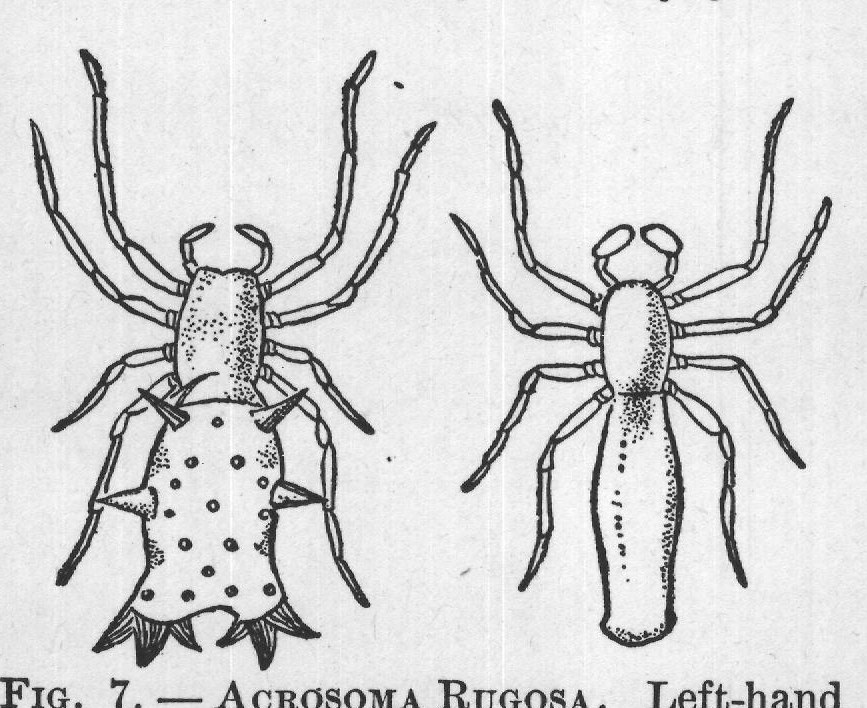
FIG. 7. - ACROSOMA RUGOSA. Left-hand In one respect the inconspicuous Gasteracanthidæ have a decided advantage over their bright-colored relatives. The birds, indeed, avoid the conspicuous ones, but their brilliancy serves to attract another enemy against which spines are no protection - the hunter wasp, which, as we have seen in the work of Bates, sometimes provisions its nest wholly with spiders of this family. Mr. Smith gives like testimony, saying: "Spines on the abdomen of certain spiders would serve as a protection against vertebrate enemies, though they do not protect against the hunter wasps, which frequently provision their nests with these species." He adds, however, that most of the spiny spiders are common, and that their colors make them conspicuous; just as butterflies that are protected by an odor are common and bright-colored.