Home › Rings from the Earliest Period › Rings from the Earliest Period: Tavernier
Rings from the Earliest Period: Tavernier
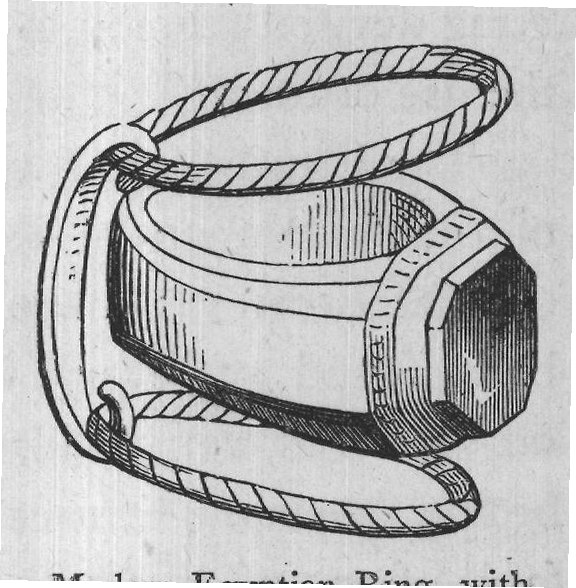
Tavernier states in his 'Travels' that the Persians did not make gold rings, their religion forbidding the wearing of any article of that metal during Modern Egyptian Ring, with Double Keepers. prayers, it would have been too troublesome to take them off every time they performed their devotions. The gems mounted in gold rings, sold by Tavernier to the King, were reset in silver by native workmen.
The custom of wearing rings may have been introduced into Greece from Asia, and into Italy from Greece. They served the twofold purpose, ornamental and useful, being employed as a seal, which was called sphragis, a name given to the gem or stone on which figures were engraved. The Homeric poems make mention of ear-rings only, but in the later Greek legends the ancient heroes are represented as wearing finger-rings. Counterfeit stones in rings are mentioned in the time of Solon. Transparent stones when extracted from the remains of the original iron-rings of the ancients are sometimes found backed by a leaf of red gold as a foil. The use of coloured foils was merely to deceive and impose upon the unwary, by giving to a very inferior jewel the finest colour. Solon made a law prohibiting sellers of rings from keeping the model of a ring they had sold.
The Lacedæmonians, according to the laws of Lycurgus, had only iron rings, despising those of gold; either that the King devised thereby to retrench luxury, or not to permit the use of them.