Home › The Dragons of Old Time-Dinosaurs › The Dragons of Old Time-Dinosaurs: Owen
The Dragons of Old Time-Dinosaurs: Owen
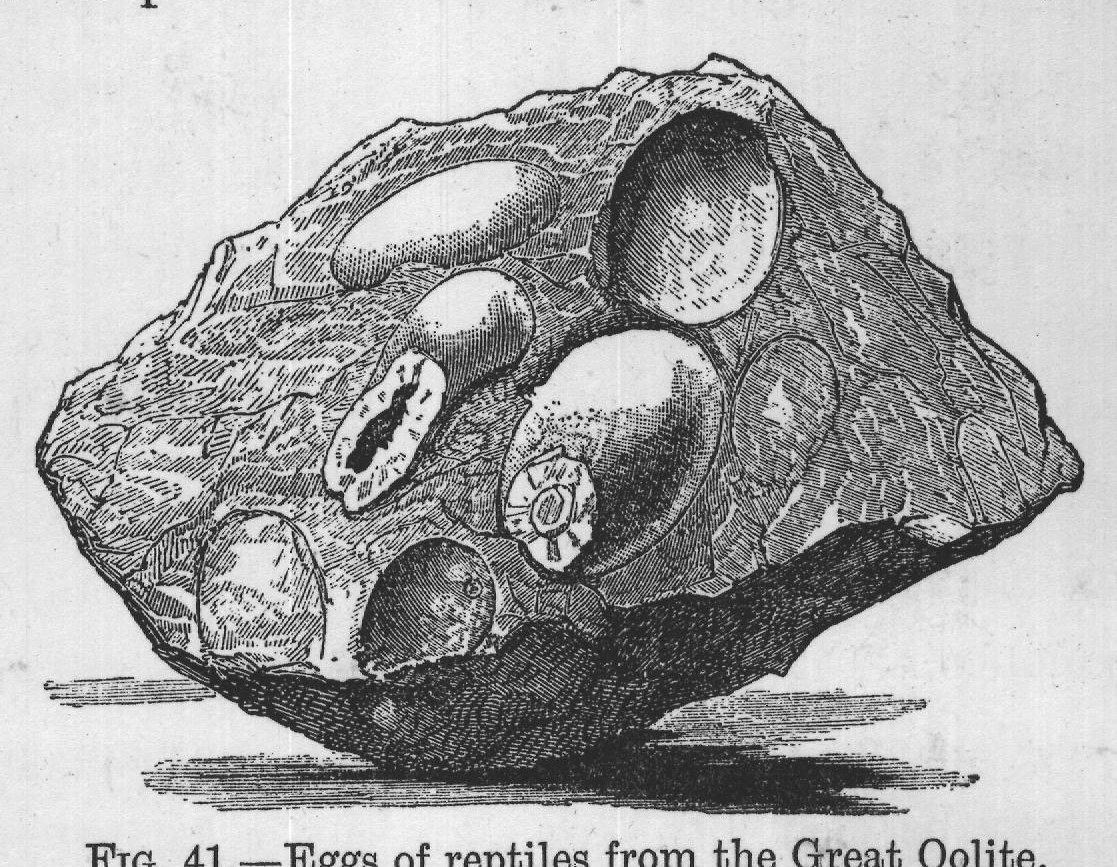
The late Sir Richard Owen, in his great work on British Fossil Reptiles, made some valuable remarks on the probable habits of Dinosaurs, which deserve careful attention. He points out that actual observation of a swimming crocodile testifies to the fact that the fore-limbs are laid flat and motionless upon the sides of the chest. Their chief swimming organ is, of course, the tail, which is both long and powerful, and, in some forms, is flattened in a vertical direction. Most of the Dinosaurs at present known have the crocodilian swimming organ; and some, such as the K Claosaurus (p. 169), and the Iguanodon (p. 164), reveal it considerably compressed vertically. In those forms it must have been a cumbrous impediment in the way of walking on land; but in others, such as Anchisaurus (p. 142), the tail was rounder and more lizardlike, and doubtless these carnivorous forms were less hampered in their movements on land. Concerning the smallness of the fore limbs, Professor Owen suggests that the forward dash of the creature through the water in pursuit of fishy prey would be facilitated by this reduction in size of the fore limbs, which would take no part in movement, unless in the way of steering. FIG. 41. Eggs of reptiles from the Great Oolite.
On land they might be of some use in scratching out the nest for the eggs, if they did lay eggs, as well as in helping to support the body.
When any tribe of plants or animals becomes very flourishing, and spreads over the face of the earth, occupying regions far apart from one another, where the geographical and other conditions, such as climate, are unlike, its members will inevitably develop considerable differences among themselves.
During the great Mesozoic period, Dinosaurs spread over a large part of the world; they became very numerous and DRAGONS OF OLD TIME powerful. Just as the birds and beasts (quadrupeds) of to-day show an almost endless variety, according to the circumstances in which they are placed, so that great and powerful order of reptiles we are now considering ran riot, and gave rise to a variety of forms, or types.
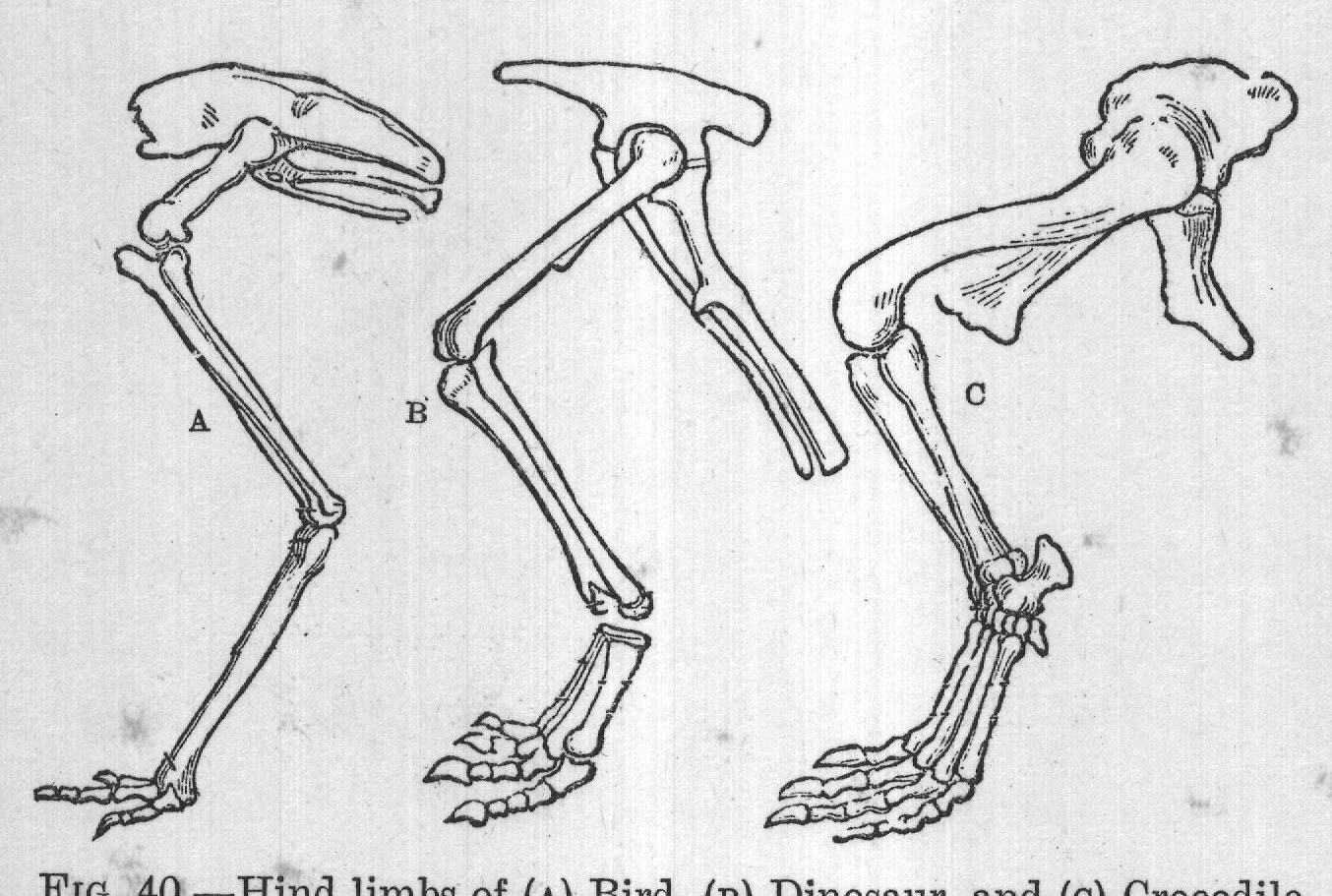
Various attempts have been made to classify Dinosaurs and arrange them in family groups. But considering how imperfect our knowledge is of this very great and important order of reptiles, it is well to bear in mind that all such attempts are provisional and temporary. Much might be said in favour of a complete rearrangement of the classification usually adopted, which is that of the late Professor Marsh. As at present constituted, they appear to make a very artificial group. The order is usually divided into three sub-orders, as follows: (1) Theropoda, or beast-footed; (2) Sauropoda, or lizard-footed; (3) Predentata, Ornithopoda, or Orthopoda. We shall follow this arrangement (used by von Zittel and others) but merely for convenience. Dr. H. Gadow raises them into a sub-class, making the above groups into orders, which perhaps is better. But it may be that Dinosaurs are not a homogeneous group. Perhaps some day the sub-order Sauropoda may be taken away altogether and placed with, or at least, near to the crocodiles, which they resemble in some ways. But Dinosaurs are strange beasts, very puzzling to the naturalist; and, much as our knowledge of them has been extended, future discoveries may bring to light forms quite as strange as those already known. Doubtless hundreds of specimens lie awaiting discovery in the unexplored fields of Asia, Africa, and South America. Dinosaurs also show obvious resemblances to the Rhyncocephalia and the Theromorpha. But nobody can say exactly where they should be placed. If we try to construct a genealogical tree of the reptiles we must put the branch called Dinosaurs somewhere near crocodiles, the sphenodon, and even the turtles.
We will take each sub-order in turn, and describe its leading features, and some of the individual genera will be described somewhat fully. In our previous edition the English and the American Dinosaurs were separately dealt with; in the present edition they are not so divided. We have been obliged to omit details here and there to save space, as we are now limited to one volume, and a great part of Creatures of Other Days, will be found to be included in the present work. The Theropoda (or beast-footed sub-order) include such forms as Megalosaurus, Anchisaurus, Compsognathus, etc. They played the part of lions and tigers of the present day.