Home › Armoured Dinosaurs and the Iguanodon › CHAPTER IX
Armoured Dinosaurs and the Iguanodon
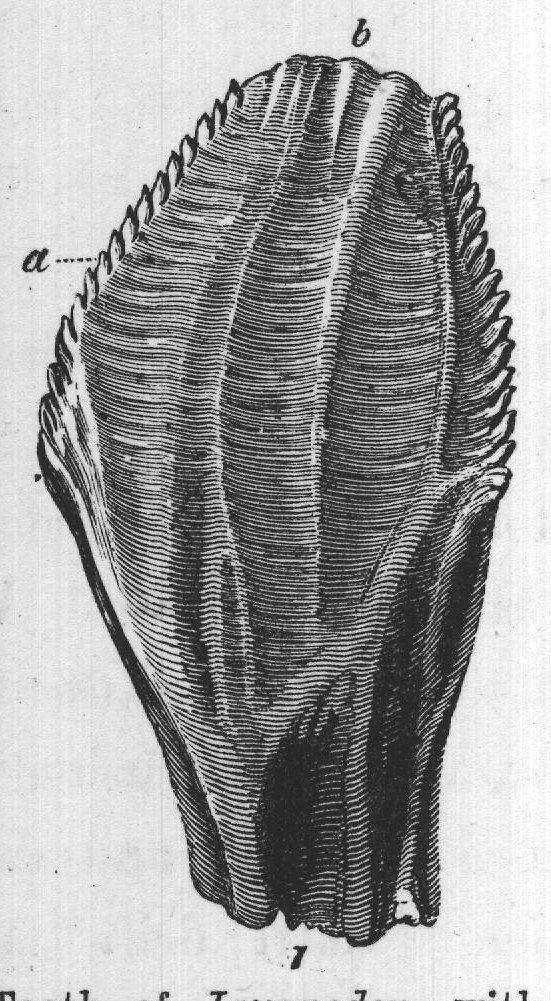
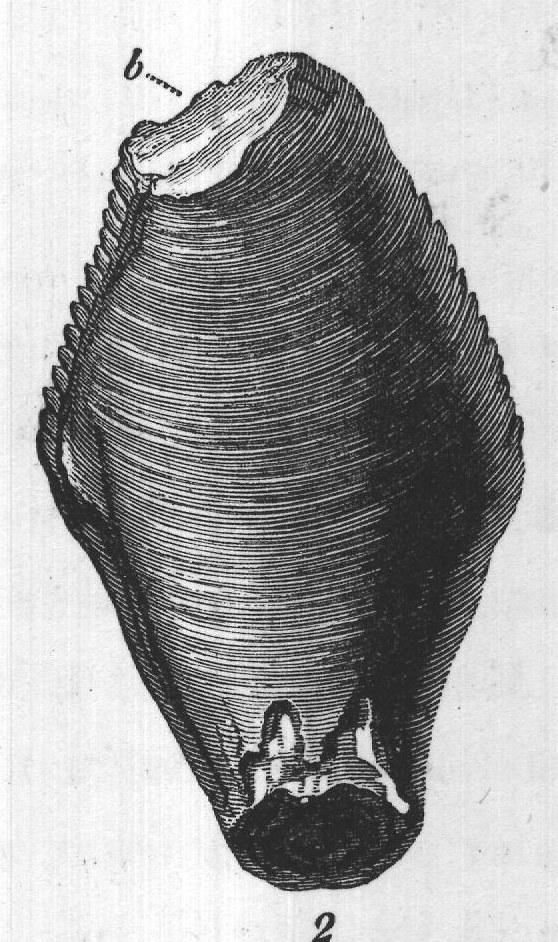
DINOSAURS (continued) "Everything in Nature is engaged in writing its own history: the planet and the pebble are attended by their shadows, the rolling rock leaves its furrows on the mountain side, the river its channel in the soil, the animal its bones in the stratum, the fern and the leaf inscribe their modest epitaphs on the coal, the falling drop sculptures its story on the sand and on the stone,not a footstep on the snow or on the ground, but traces in characters more or less enduring the record of its progress." - EMERSON. We propose now to give a brief account of a wonderful group of Dinosaurs, first introduced to the scientific world through Dr. Mantell's labours. The first of these monsters is the Iguanodon, the earliest known individual of the "bird-footed" division (Ornithopoda). The history of the gradual reconstruction of its skeleton is an instructive instance of the results that may be obtained by a careful and patient study of fragmentary remains. Through the labours of Dr. Mantell, in the first half of the last century, a considerable knowledge was acquired of the greater part of the skeleton, but certain portions remained a puzzle ; these, however, were eventually explained by Professor Huxley and Mr. Hulke, and a few years ago a series of complete skeletons was most fortunately obtained in Belgium, so that now every part of the huge framework of this monster is known to the palæontologist. Its history, as a fossil, is most interesting, and furnishes one more example of the marvellous insight into the nature of extinct animals displayed by the DINOSAURS illustrious Baron Cuvier. Let us begin with the teeth, since they were the first part of the monster brought to light. The first specimens of the teeth of Iguanodon were found by Mrs. Mantell, in 1822 (see Fig. 53), in the coarse conglomerate of certain strata in Tilgate Forest, belonging to the Cretaceous period (see Table of Strata, Appendix I.). Dr. and Mrs. Mantell subsequently collected a most interesting series of these remarkable teeth (which, for a time, puzzled the most learned men of a... 7 b b 2 FIG. 53. Tooth of Iguanodon, with the apex slightly worn. (From the Wealden Beds of Tilgate Forest. Natural size.) 1. Front aspect, showing the longitudinal ridges and serrated margins of the crown. 2. View of the back, or inner surface of the tooth. a. Serrated margins. b. Apex of the crown worn by use. the day), from the perfect tooth of a young animal, to the last stage, that of a mere long stump worn away by mastication. In external form they bore a striking resemblance to the grinders of herbivorous mammals, and were wholly unlike any that had previously been known. The first specimen that arrested his attention was a large tooth, which, from the worn surface of its crown, had evidently once belonged to some herbivorous animal. In form it so entirely resembled the corresponding part of an incisor tooth of a large quadruped ground down by use, that Dr. Mantell was much embarrassed to account for its presence in the ancient Wealden strata, in which, according to all previous experience, no fossil remains of mammals would be likely to occur. No reptiles of the present day are capable of masticating their food; how, then, could he venture to assign it to a reptile? Here was a puzzle to be solved, and in his perplexity he determined to try whether the great naturalist at Paris would be able to throw any light on the question. Through Sir Charles (then Mr.) Lyell, this perplexing tooth was submitted to Baron Cuvier; and great was the doctor's astonishment on hearing that it had been without hesitation pronounced to be the upper incisor of a rhinoceros! The same tooth, with some other specimens, had already been exhibited at a meeting of the Geological Society, and shown to Dr. Buckland, Mr. Conybeare, and others, but with no more satisfactory result. Worse than that: Dr. Mantell was told that the teeth were of no particular interest, and that, without doubt, they either belonged to some large fish, or were the teeth of a mammal, and derived from some superficial deposit of the "glacial drift," then called Diluvium!