Home › Armoured Dinosaurs and the Iguanodon › CHAPTER IX: XXVII
Armoured Dinosaurs and the Iguanodon: XXVII
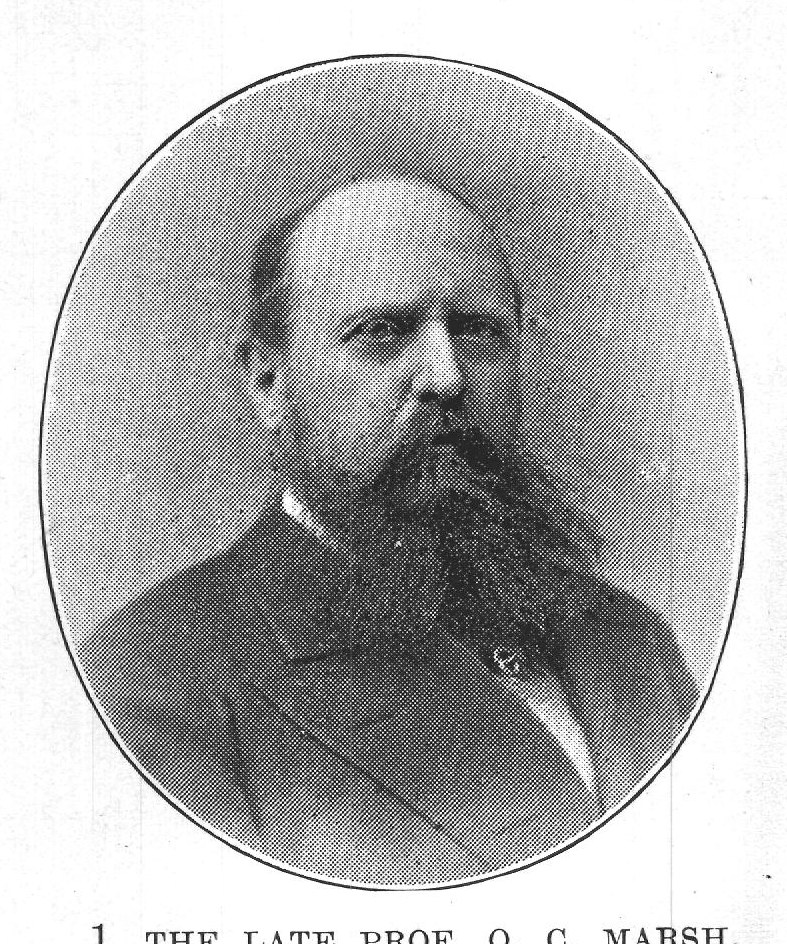
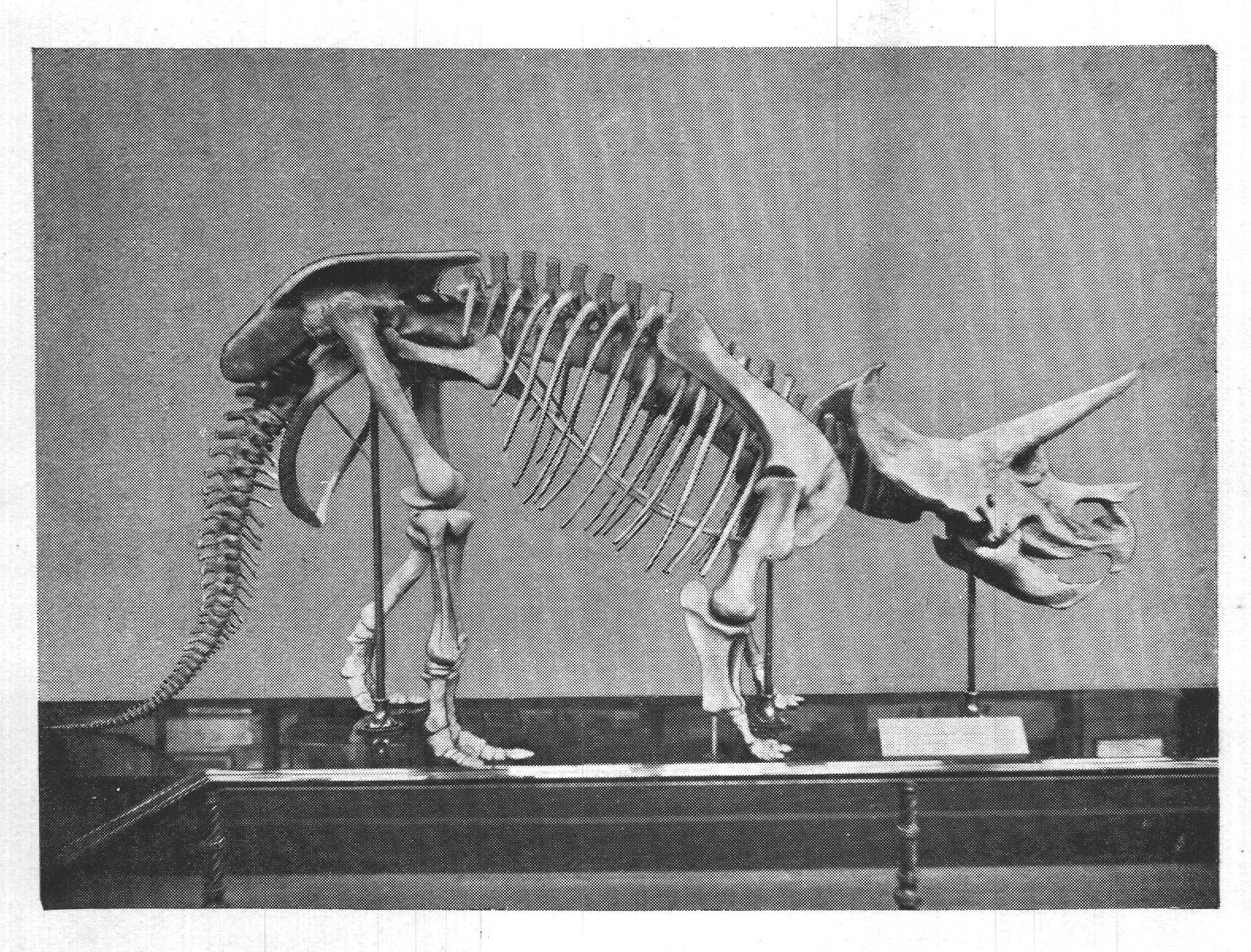
PLATE XXVII. 1. THE LATE PROF. O. C. MARSH. 2. RESTORED SKELETON OF TRICERATOPS.
DINOSAURS the present day. Twenty different skulls of this kind have been found, and Professor Marsh places the horned Dinosaurs in a separate family, to which he has given the name Ceratopsidæ, or horn-faced. Their remains come from the Laramie beds, believed to be of Cretaceous age, but representing a remarkably mixed fauna and flora, so that some have considered them to be Tertiary. The strata containing these fossils are very rich in organic remains, and have yielded not only other Dinosaurs, but Plesiosaurs, crocodiles, turtles, many small reptiles, a few birds, fishes, and small mammals. The Ceratops beds are of fresh-water or brackish origin, and can now be traced for nearly eight hundred miles along the east flank of the Rocky Mountains.
In this Dinosaur we find the fore feet larger than usual in proportion to the hind limbs, and there can be no doubt that it walked on all fours. Its length was about 19 feet 8 inches. The original estimate of Professor Marsh was about 25 feet, but Mr. Gilmore, who made the model shown in Plates XXVII. and XXVIII., has taken out six vertebræ so that the length is now reduced to 19 feet 8 inches. All the vertebræ and limb-bones are solid. The brain was smaller in proportion to the skull than in any known vertebrate.
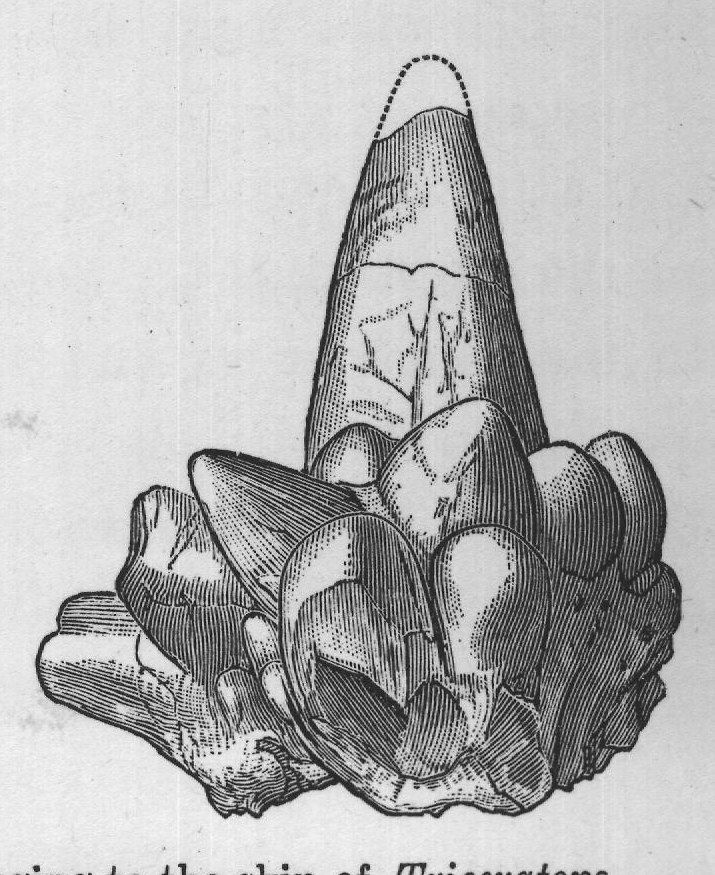
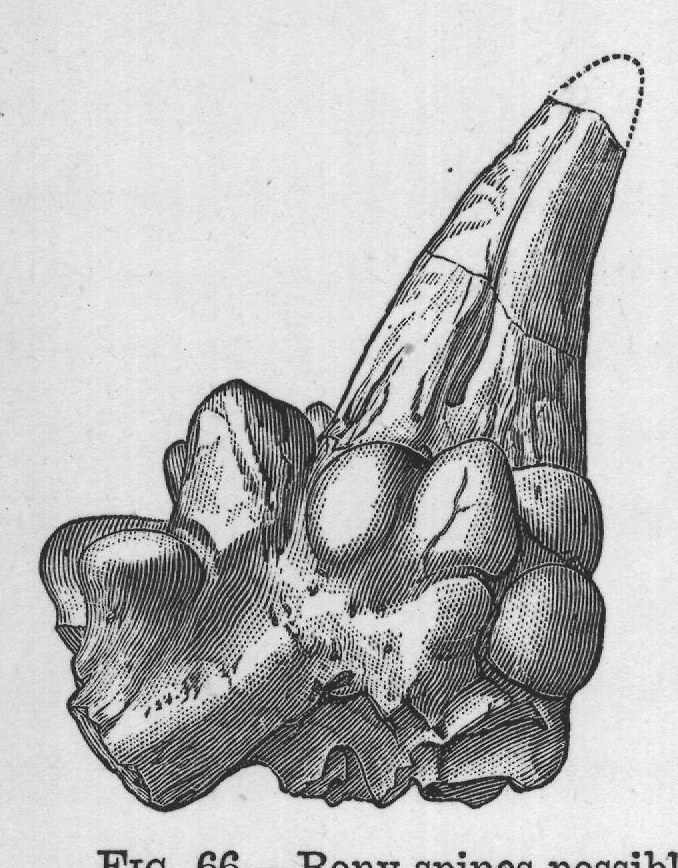
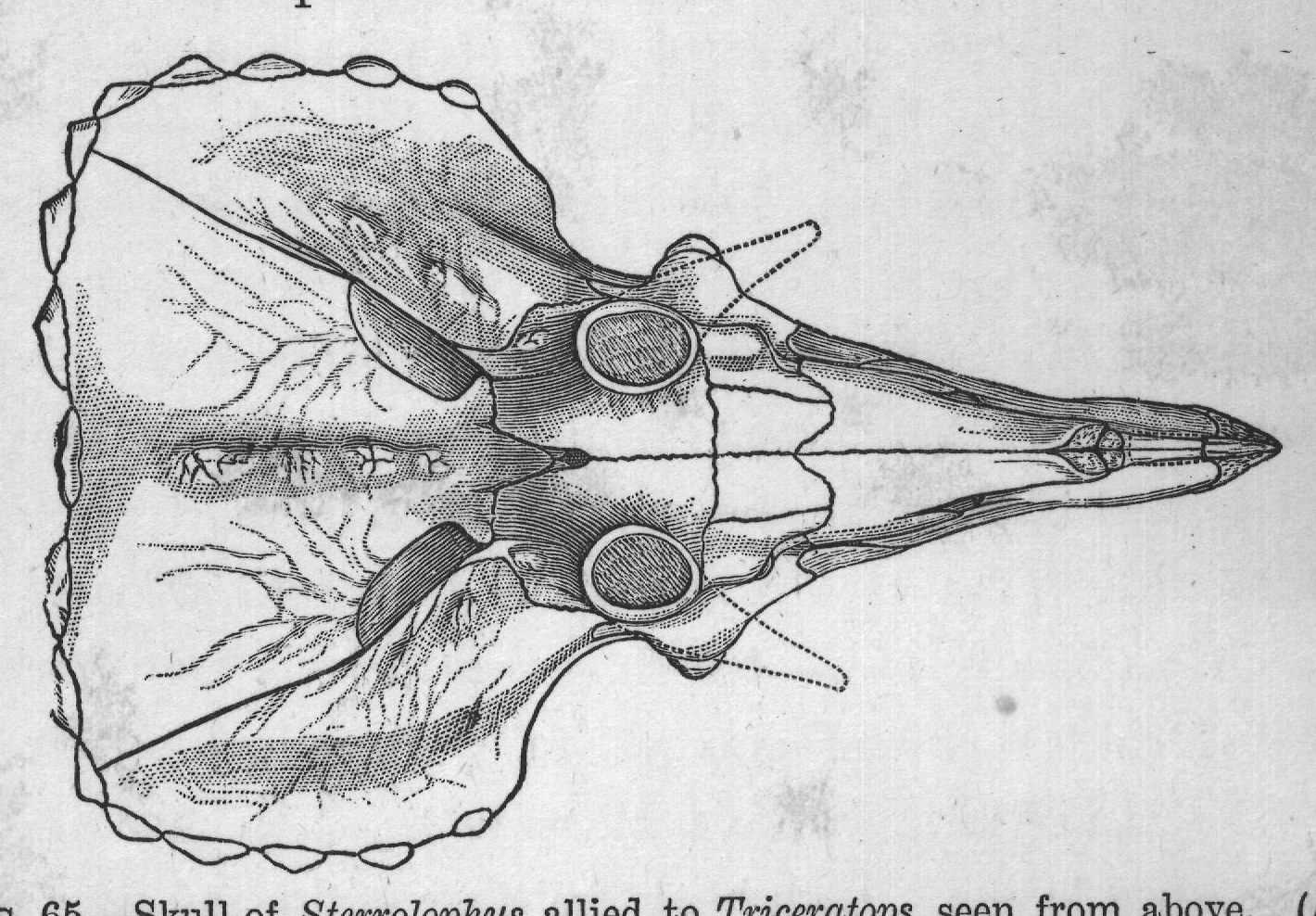
The teeth are remarkable in having two distinct roots. The wedge-like form of the skull is also very peculiar. The two large horns come immediately over the eyes, and the small one above the nose; this Dinosaur was, therefore, well provided with weapons of offence, such as would be highly useful in driving away or wounding carnivorous enemies. The back part of the skull rises up into a kind of huge crest, and this during life was protected by a special fringe of bony plates. Such an arrangement doubtless formed an effective shield to ward off blows when one Triceratops was fighting another, as bulls or buffaloes of the present day fight with their horns. The mouths of these Dinosaurs formed a kind of beak, sheathed in horn. The body as well as the skull was protected, but the nature and position of the defensive parts in different forms cannot yet be determined with certainty. Various spines, bones, and plates have been found that evidently were meant for the protection of the creature's body, and belonged to the skin. Probably some of these were placed on the back, behind the crest of the skull; FIG. 66. Bony spines possibly belonging to the skin of Triceratops. (After Marsh.) 1 some may have defended the throat, as in Stegosaurus. Altogether, Triceratops is very different from any other Dinosaur. One cannot help picturing it rather as a fierce rhinoceros-like animal. In the restoration (Plate XXIX., Frontispiece) our artist has given it a thick skin, rather like that of the rhinoceros, only indicating small bony plates, etc., here and there.