The Pampanos
BODY more or less compressed, and often elevated, sometimes naked, or more usually covered with small, thin, cycloid scales; head compressed, the occipital keel prominent, usually trenchant; mouth of varying size, the teeth generally small; premaxillaries usually protractile; lateral line complete, anteriorly arched, the posterior part straight, sometimes armed with bony plates; dorsal fins more or less separated, the spinous part rather weak, the spines usually depressible in a groove; anal fin long, similar to the soft dorsal, always preceded by 2 stiff spines, usually separate, but more or less connected with the fin or with each other in the young, these sometimes disappearing with age; often a procumbent spine before the dorsal fin; ventral fins thoracic, well developed, 1, 5; caudal peduncle very slender, the lobes widely forked; gill-opening very wide, the membranes usually not connected, free from the isthmus; pseudobranchiae large, sometimes disappearing with age. Genera about 30, species about 200, abounding in warm seas, often moving north in summer, like the Scombridae. They swim swiftly, often with the dorsal fin above the surface of the water. Most of the species are of wide distribution, and nearly all are valued as food.
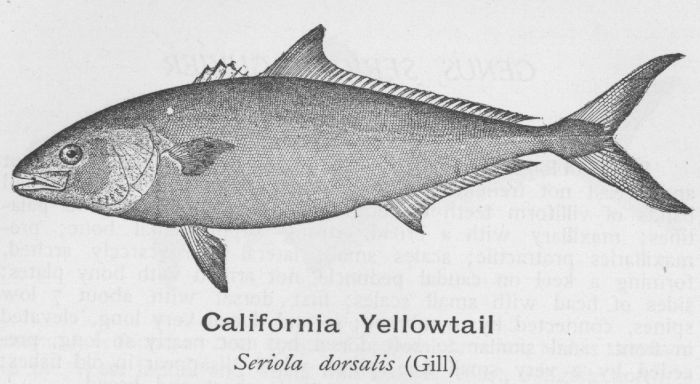 California Yellowtail Seriola dorsalis (Gill)
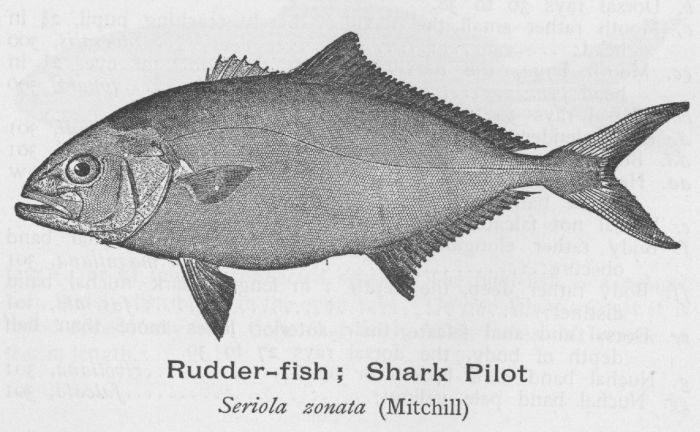 Rudder-fish; Shark Pilot Seriola zonata (Mitchill)
- Amber-fish; Coronado Seriola lalandi Cuvier & Valenciennes
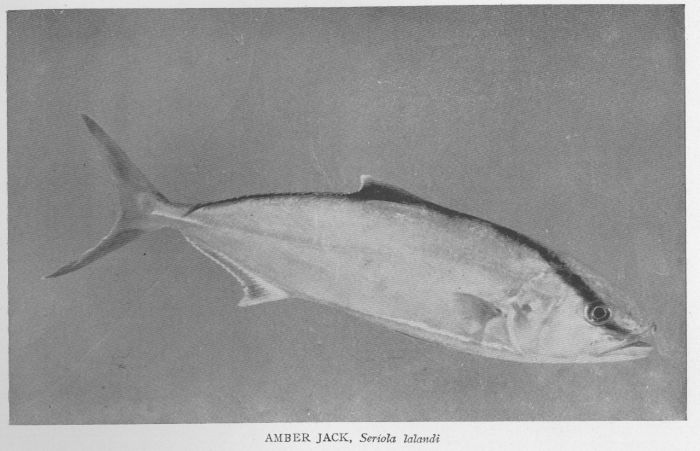 Amber-jack Seriola dumerili (Risso)
- Amber-jack — Part 2 Seriola dumerili (Risso)
- Amber-jack — Part 3 Seriola dumerili (Risso)
- Amber-jack — Part 4 Seriola dumerili (Risso)
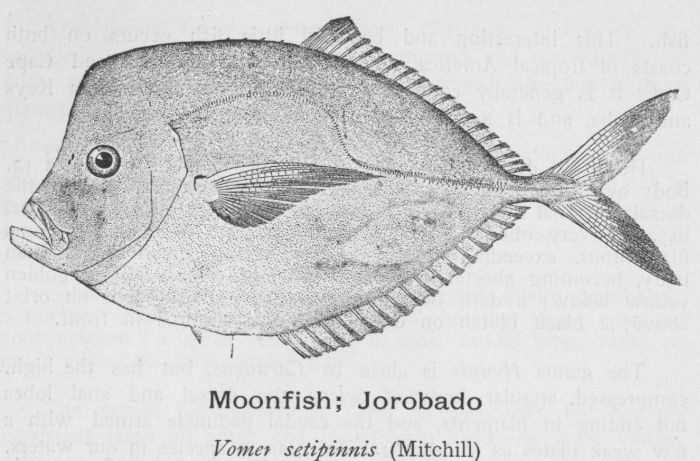 Moonfish; Jorobado Vomer setipinnis (Mitchill)
- Corcobado Vomer gabonensis Guichenot
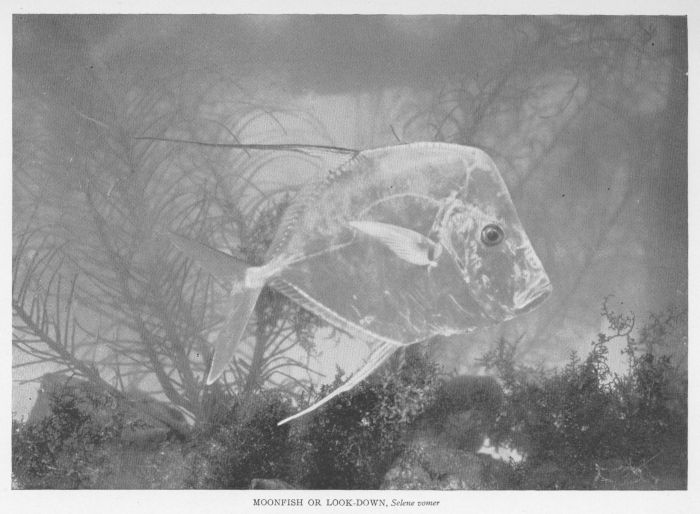 Lookdown; Horsehead Selene vomer (Linnaeus)
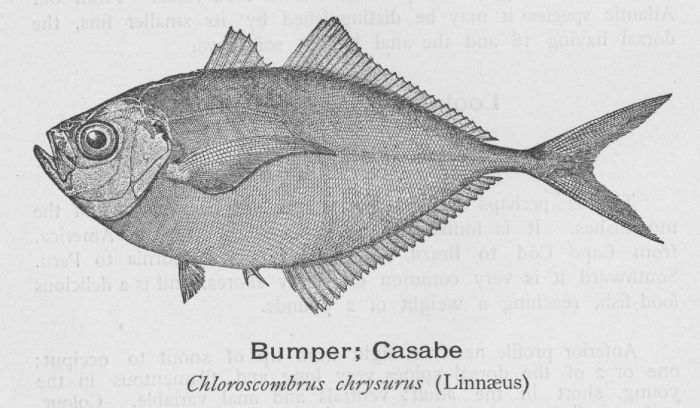 Bumper; Casabe Chloroscombrus chrysurus (Linnaeus)
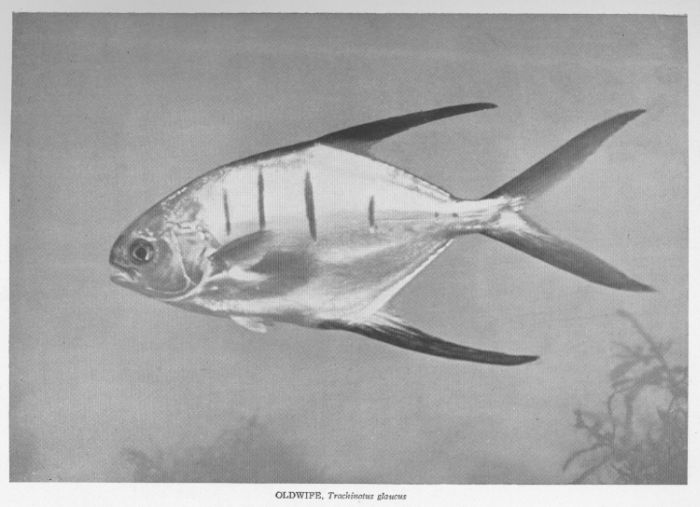 Old Wife; Gaff-topsail Pampano Trachinotus glaucus (Bloch)
- Pampanito Trachinotus rhodopus Gill
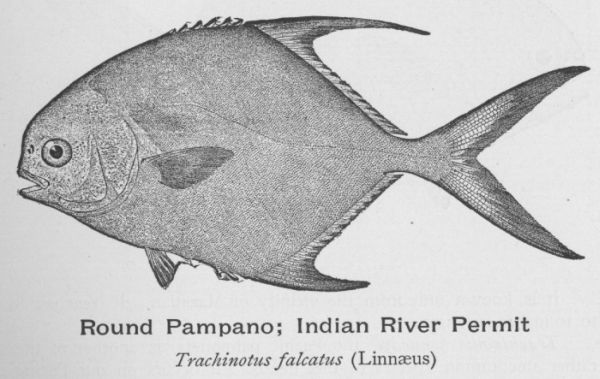
- Round Pampano; Indian River Permit Trachinotus falcatus (Linnaeus)
 Permit; Great Pompano Trachinotus goodei Jordan & Evermann
- Common Pompano Trachinotus carolinus (Linnaeus)