Home › Volumes › American Animals
Deer and Their Allies
To this family belong the majority of our American hoofed animals. As has already been explained, their most distinctive characteristic lies in their solid horns or antlers, which are shed once a year. The new horn grows rapidly and is for a time soft, full of blood vessels and provided with a downy covering known as the "velvet." When the full growth is attained the horn becomes hard and the velvet wears off. The first antlers are very simple, but each succeeding pair is, as a rule, more and more branched, so that a large number of "points" indicates to the hunter an old individual.
- American Elk Cervus canadensis (Erxleben)
- American Elk — Part 2 Cervus canadensis (Erxleben)
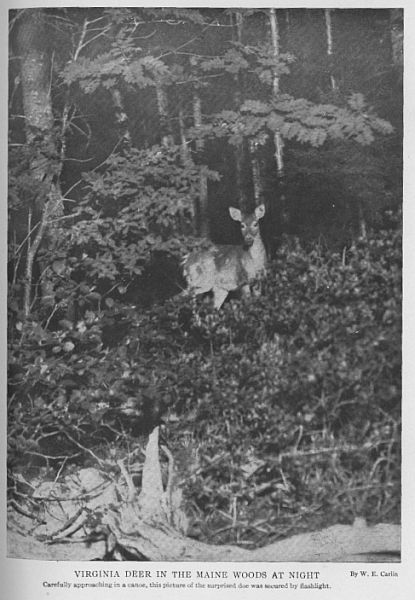 Virginia Deer Odocoileus virginianus (Boddaert)
- Virginia Deer — Part 2 Odocoileus virginianus (Boddaert)
- Mule Deer Odocoileus hemionus (Rafinesque)
- Mule Deer — Part 2 Odocoileus hemionus (Rafinesque)
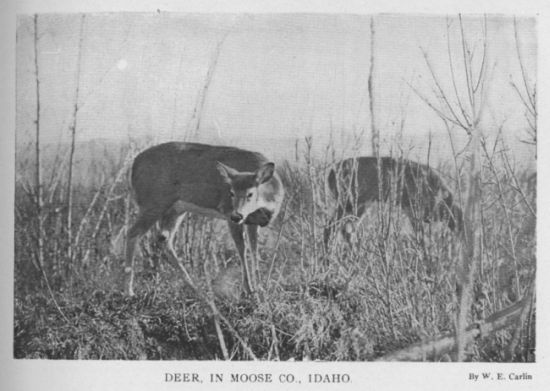 Moose Alces americanus Jardine
- Moose — Part 2 Alces americanus Jardine
- Moose — Part 3 Alces americanus Jardine
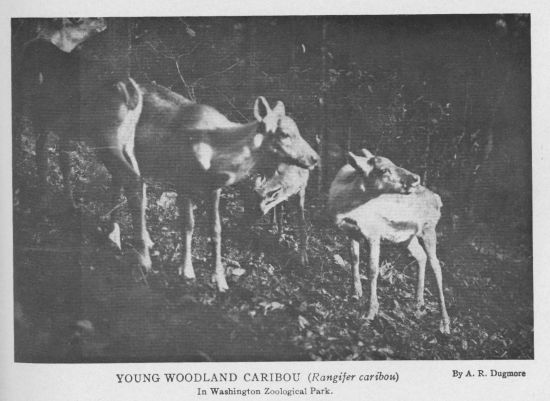 Woodland Caribou Rangifer caribou (Gmelin)
- Woodland Caribou — Part 2 Rangifer caribou (Gmelin)
- Barren Ground Caribou Rangifer arcticus (Richardson)