Home › Skin Cells › Skin Cells: Prickles
Skin Cells: Prickles
Prickles and some kinds of hairs and scales protect the outside of the plant from animals. When the animals bite the plant, these things stick into their mouths and they are glad to let it alone.
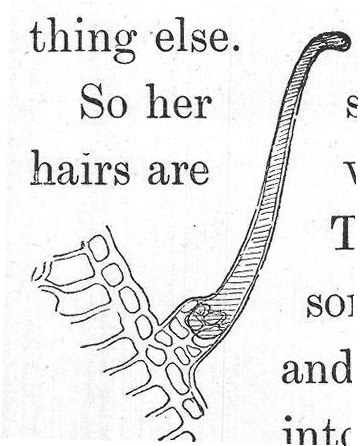
If you want to be sure that prickles and hairs protect the outside of a plant, go take hold of a nettle! Madam Nettle does not wish to be taken hold of nor eaten nor touched by cows or sheep or anything else. So her hairs are skin has hairs on it that sting. The very sharp and they are hollow.
There is a poisonous juice inside, something the protoplasm has made; and when the sharp end of a hair sticks into your finger, the little turned-up end breaks off, and the poisonous juice gets into the wound and irritates and causes the finger to swell a little.
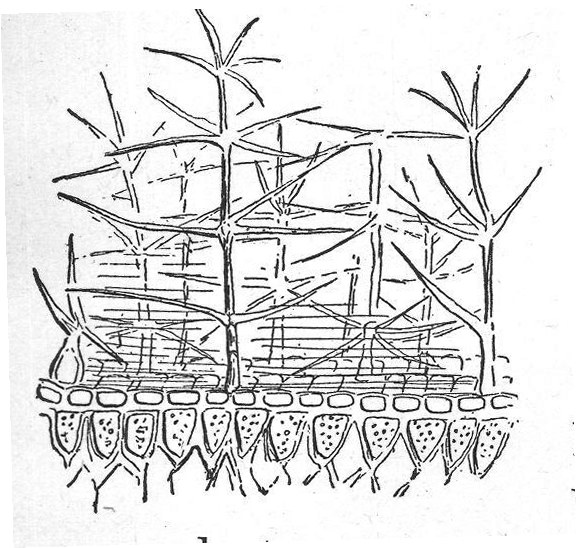
There is a way to take hold of a nettle so that it cannot sting. The little poison-filled hairs all point up, as you see in the picture. So if you stroke the nettle or draw your hand over it from root to tip, it cannot hurt you. Your hand presses the hairs flat against the stem and they cannot stick into you. Sometimes hairs branch and make a thick network, like felt, over the leaf. They do this in the mullein, and here is a picture of mullein hairs very highly magnified.
Prickles and scales are made of cells as hairs are.
All parts of the plant above ground and sometimes the roots are covered with skin, but only the parts above ground are covered with hairs or prickles. Some plants are abundantly supplied with these protections; others manage to get along without them. Plants very often have glands in their skins.