Home › Nothing but Leaves › Nothing but Leaves: Lake
Nothing but Leaves: Lake
You could not have found Lake Michigan on it nor even the Atlantic Ocean nor the Rocky Mountains, and the reason you could not have found them is, they were not there. There was no Lake Michigan and no Atlantic Ocean and no Rocky Mountains.
You see, they had not been made yet. All the water and minerals were bubbling and seething and whirling around in the most awful storms. You would have wanted to get as far from the earth in those days as you possibly could; not even the North Pole was cool enough to rest upon with any comfort.
This went on for a few millions of years probably, but the earth was all the time getting a little cooler, until it got so cool that things began to harden and the dry land to appear. But mother earth was in a state of terrific excitement even then, and every once in a while would heave such a sigh that an earthquake or volcanic eruption would break forth.
But as old earth, or young earth I suppose it was then, grew older and calmer, it settled more and more into its present form. It got so cold and old after awhile that it became wrinkled, like the skin of an apple in the late fall. You know how that is.
Only mother earth was a very large apple and her wrinkles were very deep, and in fact they made the great mountain ranges.
You need not believe all this unless you want to, but it is true, that is, the wise people, who know more than you and I ever will, say so.
But what has all this to do with leaves?
It has as much to do with leaves as the fire in the stove has to do with the boiling of the tea kettle.
Of course, while the earth was in this overheated state, nothing could grow on it. But it kept getting cooler and cooler, until at last life began to appear. Just exactly what this first life looked like I do not know. Nobody does, because, you see, nobody was living then to tell about it and write it down. But very likely queer mushy plants were the first to come along, and they were about all leaf. So far we may be pretty sure.
After awhile plants with stems and leaves grew up and flourished.
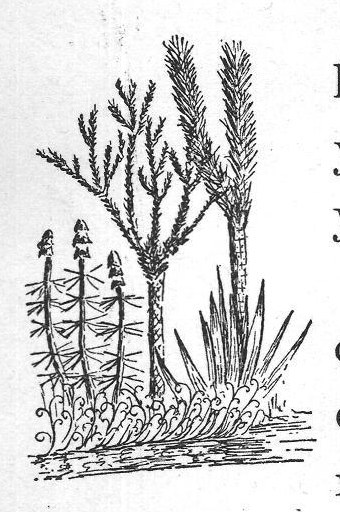
They were queer enough, no doubt, for there are pictures of some of them which the rocks took and kept for us, and people often break open a rock nowadays and find these old plant pictures.
They are what we call fossils, and now I have no doubt you know all about it; if you do not you will some day, - that is, if you care to.
From what the rocks tell us, and for other reasons, we feel pretty sure that the earlier plants had only leaf and stem, but no flowers. And the very first leaves were not like the leaves we see in the woods and gardens about us, for they were probably large and mushy and had no veins to speak of. If you had picked one up it would have been flabby and squashy, and you would have been glad to put it down again. But nobody ever did pick one up, because nobody was there.
The earth was not ready for us yet. It was all soft and swampy or hard and cheerless, and we had to wait until these queer pioneer plants gradually changed into other plants and made the earth fit to live on.
But these flabby old friends of ours went to work with a will to get things in shape for us to come.
Their green leaves and stems, where they had any, ate the gases in the air and stored them up as plant material. Then they died. They did us as much good by dying as by living, for only part of their substance went back as gases into the air; the rest went into the ground and began to make soil for other plants to grow in.