Home › CHAPTER IX › CHAPTER IX: Marsh's
CHAPTER IX: Marsh's
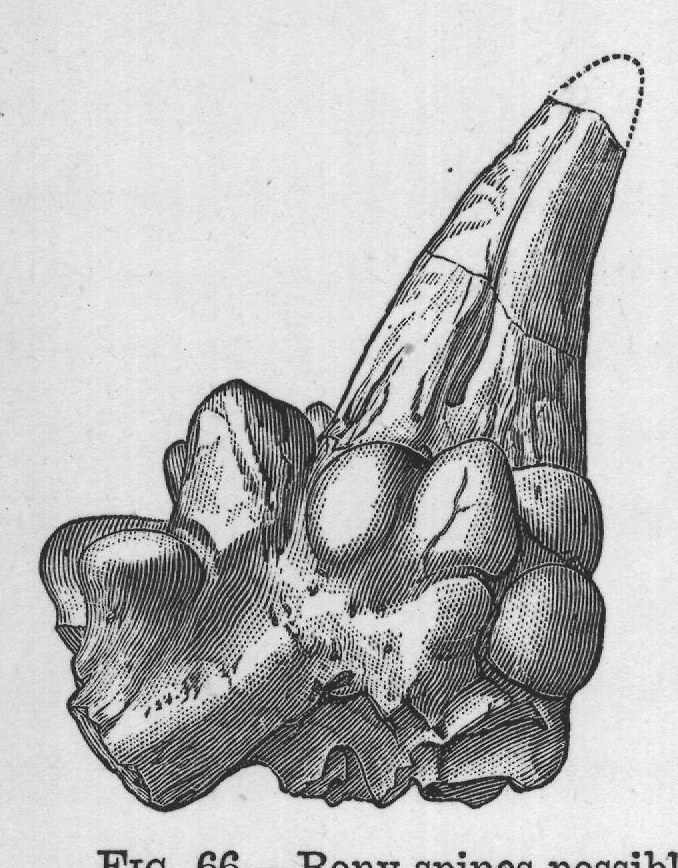
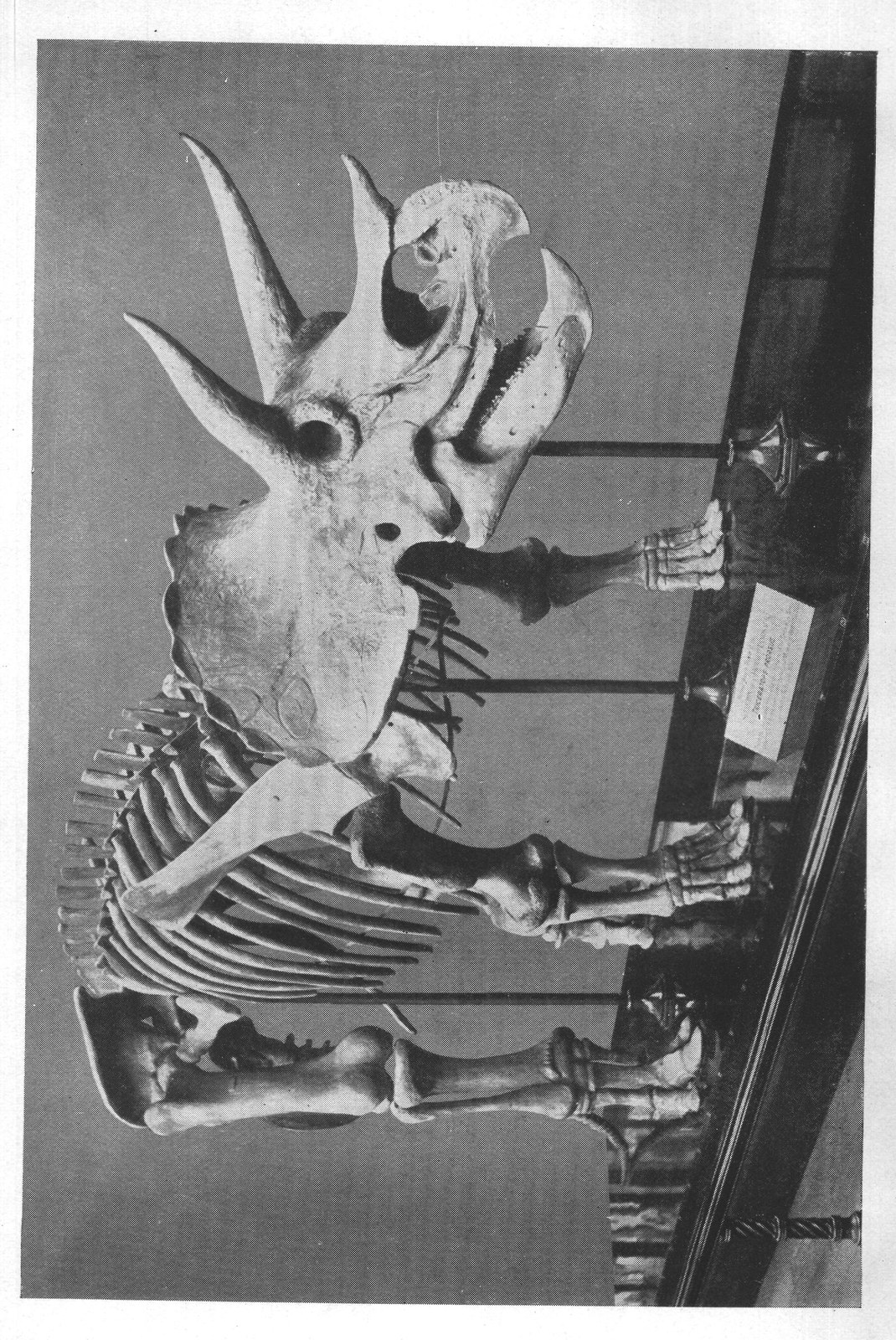
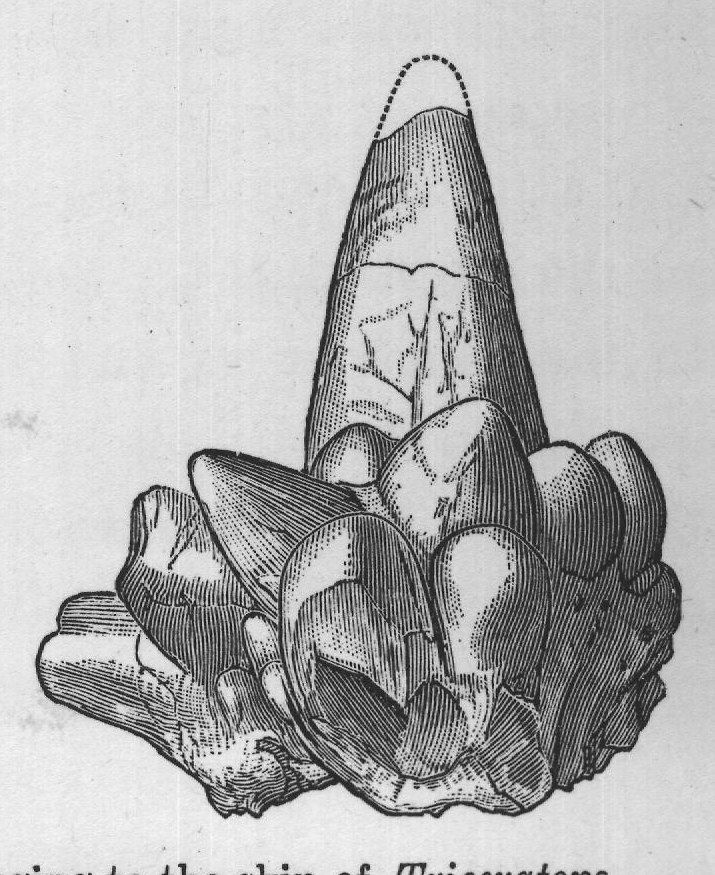
Professor Marsh thinks that as the head increased in size to 1 There is some doubt about these spines; for they might possibly belong to the carnivorous Dinosaur Tyrannosaurus found in the same place (see p. 139). Mr. Barnum Brown has recently described (1906) two sternal bones, previously unknown, but they are unlike those of Diplodocus and Brontosaurus. RECONSTRUCTED SKELETON OF A GREAT HERBIVOROUS HORNED DINOSAUR, TRICERATOPS PRORSUS, AS NOW MOUNTED IN THE NATURAL HISTORY MUSEUM, LONDON. CRETACEOUS PERIOD. NORTH AMERICA, PLATE XXVIII.
DINOSAURS bear its armour of bony plates, the neck first, then the fore feet, and then the whole skeleton was specially modified to support it; and he concludes that as these changes took place in the course of the evolution of this wonderful Dinosaur, the head at last became so large and heavy that it must have been too much for the body to bear, and so have led to its destruction! This conclusion, if sound, is a warning against carrying "specialisation" too far. If we wished to write an epitaph on the tomb of the monster, it ought (according to Professor Marsh) to be, "I and my race died of over-specialisation."
After all these various efforts to improve themselves and to perfect their organisation so as to bring it into harmony with their surroundings, or "environment," as the biologists say, it seems rather hard that the Dinosaurs should have been extinguished, and their place in Nature taken by a higher type; but all things have their day, even Dinosaurs.
With regard to the difficulties, hardships, and dangers attending the discovery and transport of the remains, Professor Marsh's concluding remarks may be quoted here, since they give us a glimpse into the nature of his explorations in the far West that have now become so famous. He says, "In conclusion, let me say a word as to how the discoveries here recorded have been accomplished. The main credit for the work justly belongs to my able assistant, Mr. J. B. Hatcher, who has done so much to bring to light the ancient life of the Rocky Mountain regions. I can only claim to have shared a few of the dangers and hardships with him, but without his skill little would have been accomplished. If you will bear in mind that two of the skulls weighed nearly two tons each, when partially freed from their matrix and ready for shipment, in a deep desert cañon, fifty miles from a railway, you will appreciate one of the mechanical difficulties overcome. When I add that some of the most interesting discoveries were made in the hunting-grounds of the hostile Sioux Indians, who regard such explorations with superstitious dread, you will understand another phase of the problem. I might speak of even greater difficulties and dangers, but the results attained repay all past efforts, and I hope at no distant day to have something more of interest to lay before you." 1 "1 1 American Journal of Science, vol. xli. p. 176.