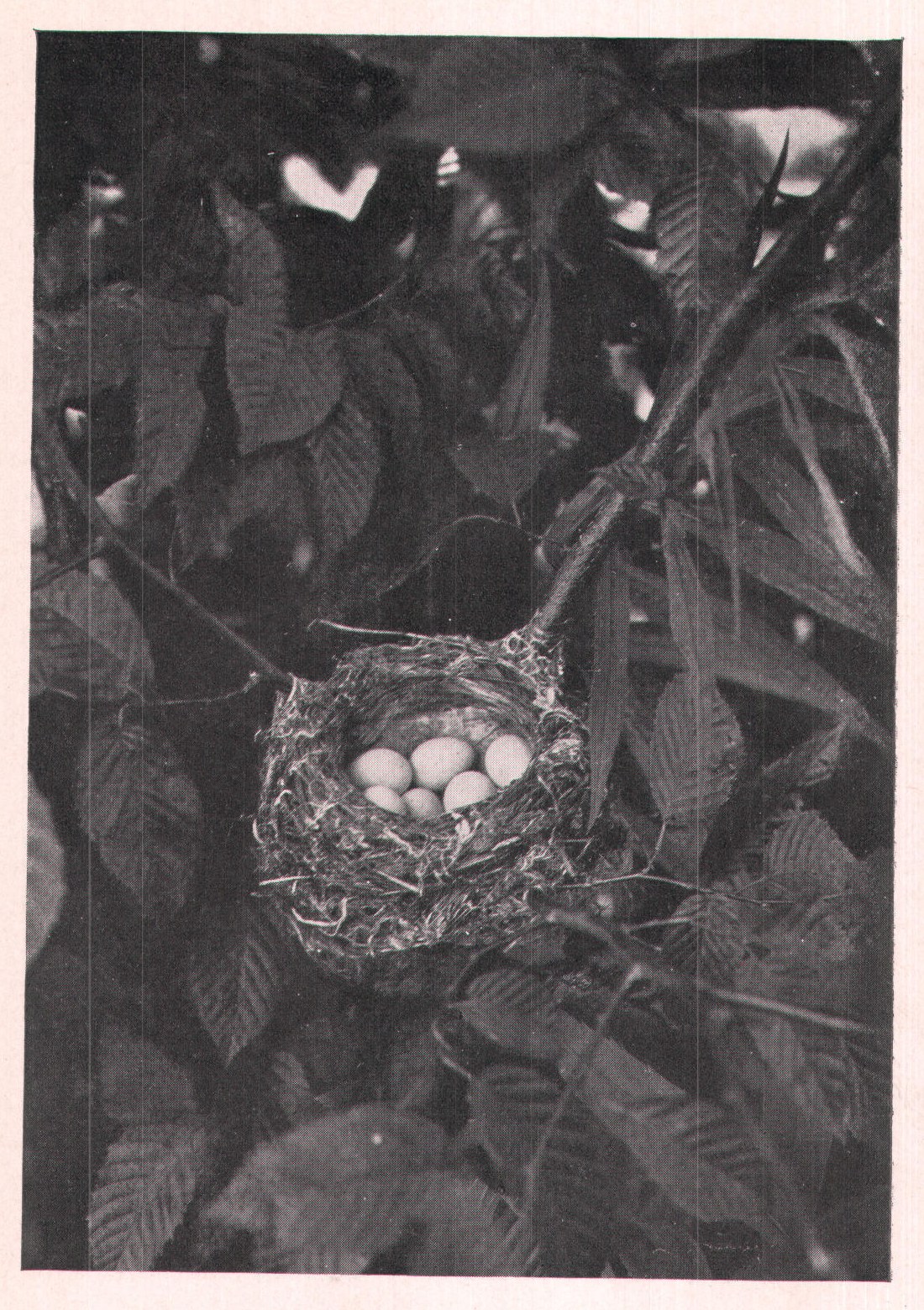
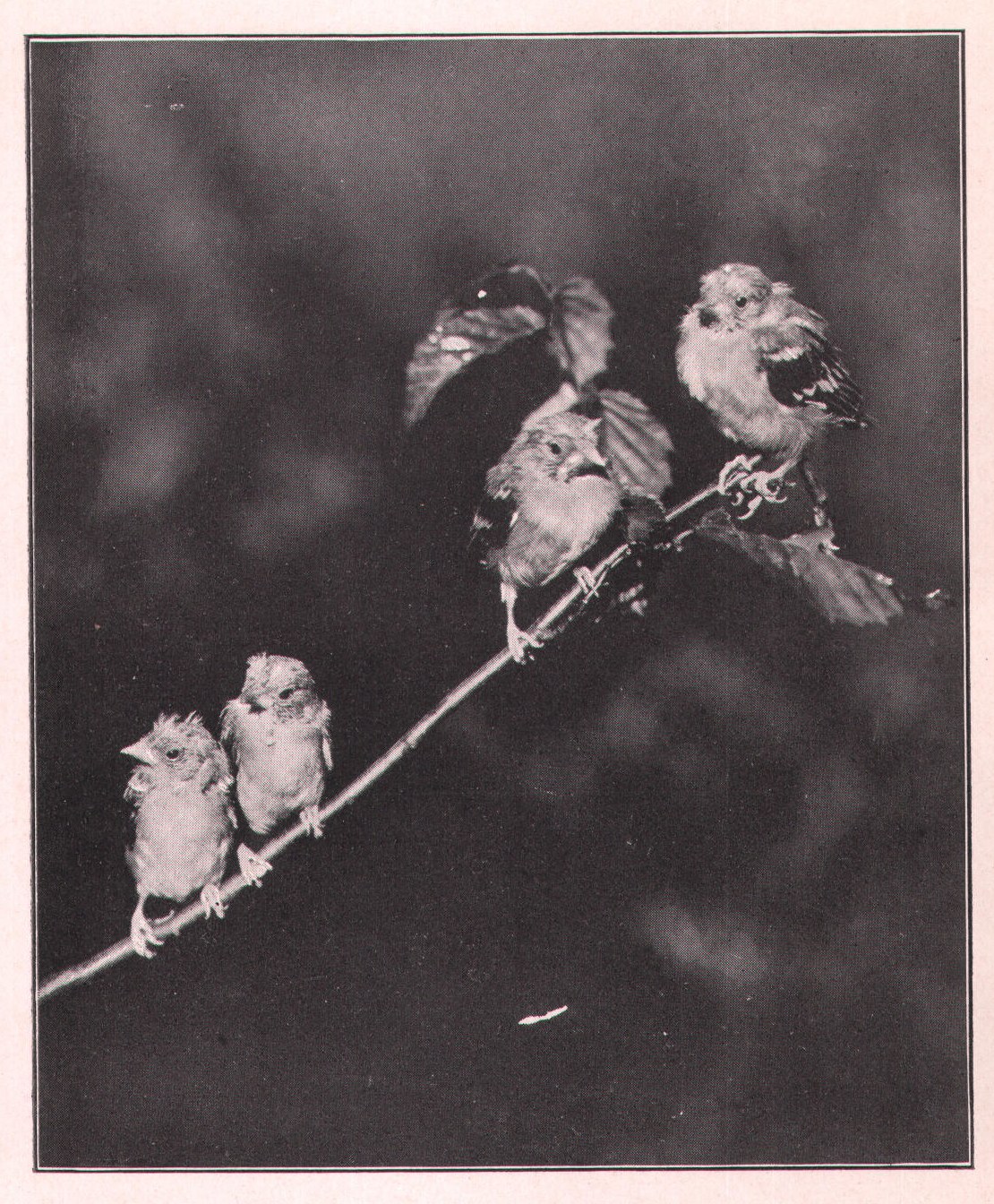
Wood Pewee
Belonging to an entirely different family, but still building the same type of moss-adorned nest, is the Wood Pewee. These are among the commonest of the flycatchers; they are called pewees because of the song they sing so often during the summer months, a very clearly whistled "pee-ah-wee; (short pause) peeeee-wee."
Nearly every small piece of woods has its pewees and often we find them in orchards. Each bird has a favorite perch or two, dead twigs that give them a good view of the surrounding territory. They perch on these for hours at a time, occasionally dashing out after a luckless miller or bee that happens to pass within sight of their keen eyes; ever and anon their plaintive "pee-ah-wee" rings out, often with clock-like regularity.
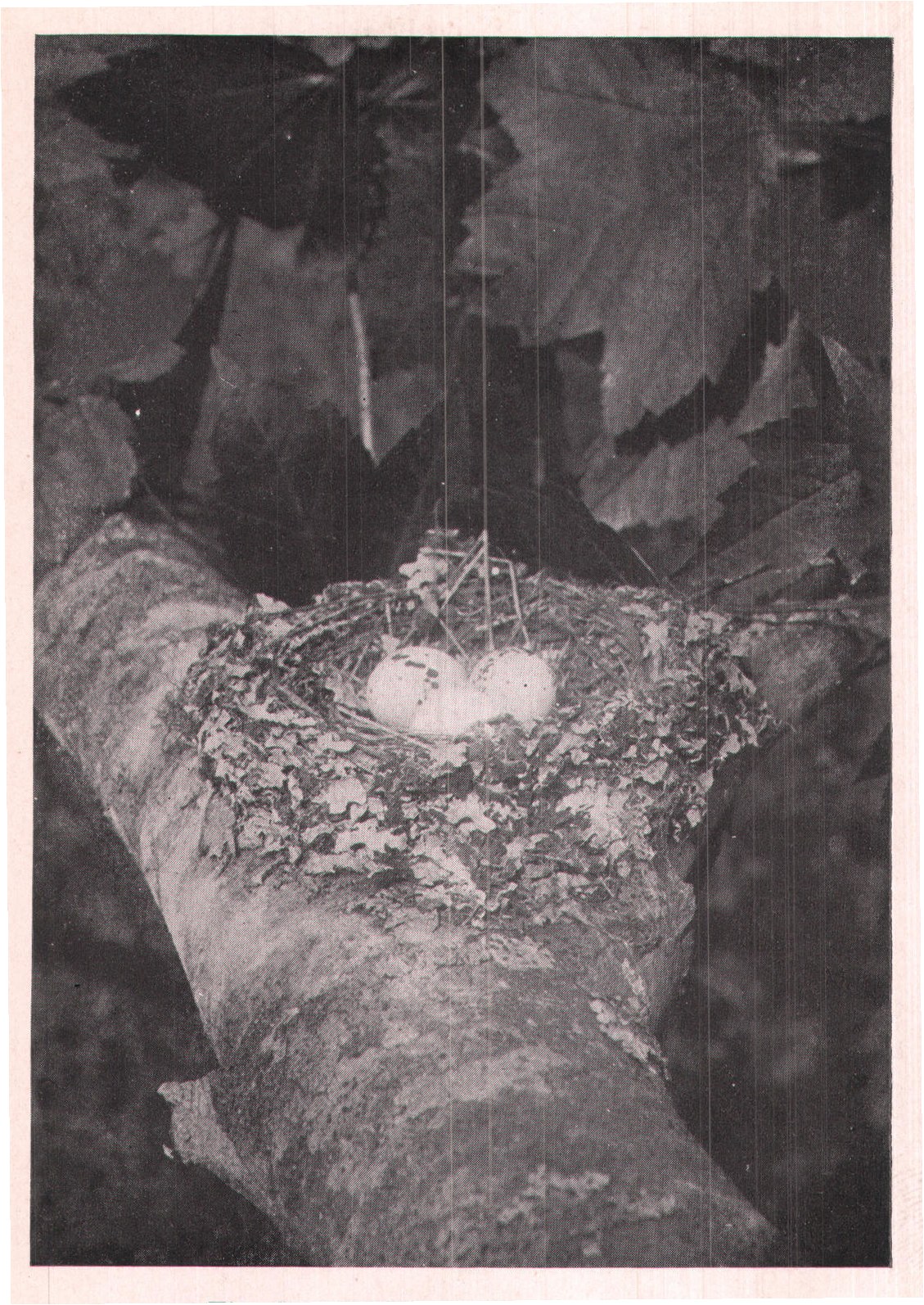
It is, however, with Wood Pewee homes that we are at present concerned. These are, as I have said, moss-covered, but they are very inferior in construction to those either of the Hummingbird or Gnatcatcher. The bulk of the nest is made out of coarse plant fibres, not so perfectly quilted together and very shallow as compared to the nests of the other birds mentioned. The outside has less moss attached and it is not done in as firm a manner.
Still these nests, saddling quite large limbs as they do, are very difficult to see. If one has patience they are, however, very easy to find, especially if the nest happens to contain a full set of the creamy white eggs with their sharp, brown specks. You have but to watch either of the owners. Should you chance to be observing the female, she will probably go to the nest within a few minutes; should it be the male bird that you are watching, he will probably quite quickly betray the hiding place of the nest, for he is very attentive to his mate and often carries food to her as she sits on the eggs.
All flycatchers have a metallic little trill that they utter, usually when they are very happy and sometimes under stress of excitement; the female pewee gives it as she settles on her nest and the male usually does as he goes to feed her. I have found the greater number of their nests built on horizontal limbs of oak trees, but I have sometimes, too, found th in chestnuts, in maples along roadsides and in apple tree. The majorit, have been located from twenty to fifty feet above ground, but I have found one as low as eight feet, this one being in an orchard.
The adults in summer are often called Wild Canaries; their song is fully as sweet as that of the canary.