Home › Contents › Loggerhead Shrike
Loggerhead Shrike
I. E. Hess.
He Perched on the topmost twig of an osage-orange tree, his gray suit and rounded form silouetted against the leaden March sky, we see the first Loggerhead of the season. is one of the earlier spring arrivals, being preceded only by the Robin, Bluebird, Grackle and Song Sparrow.
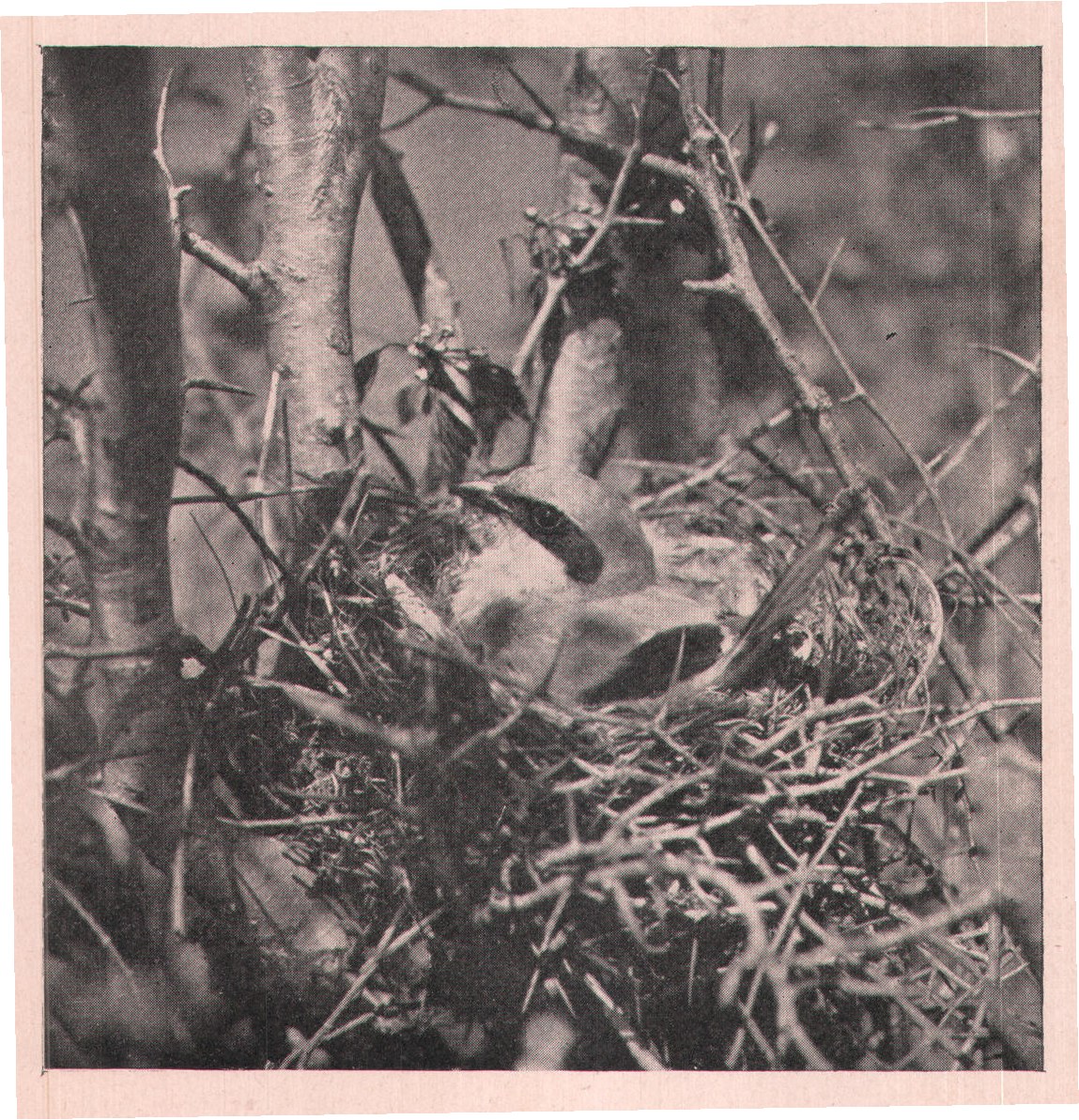
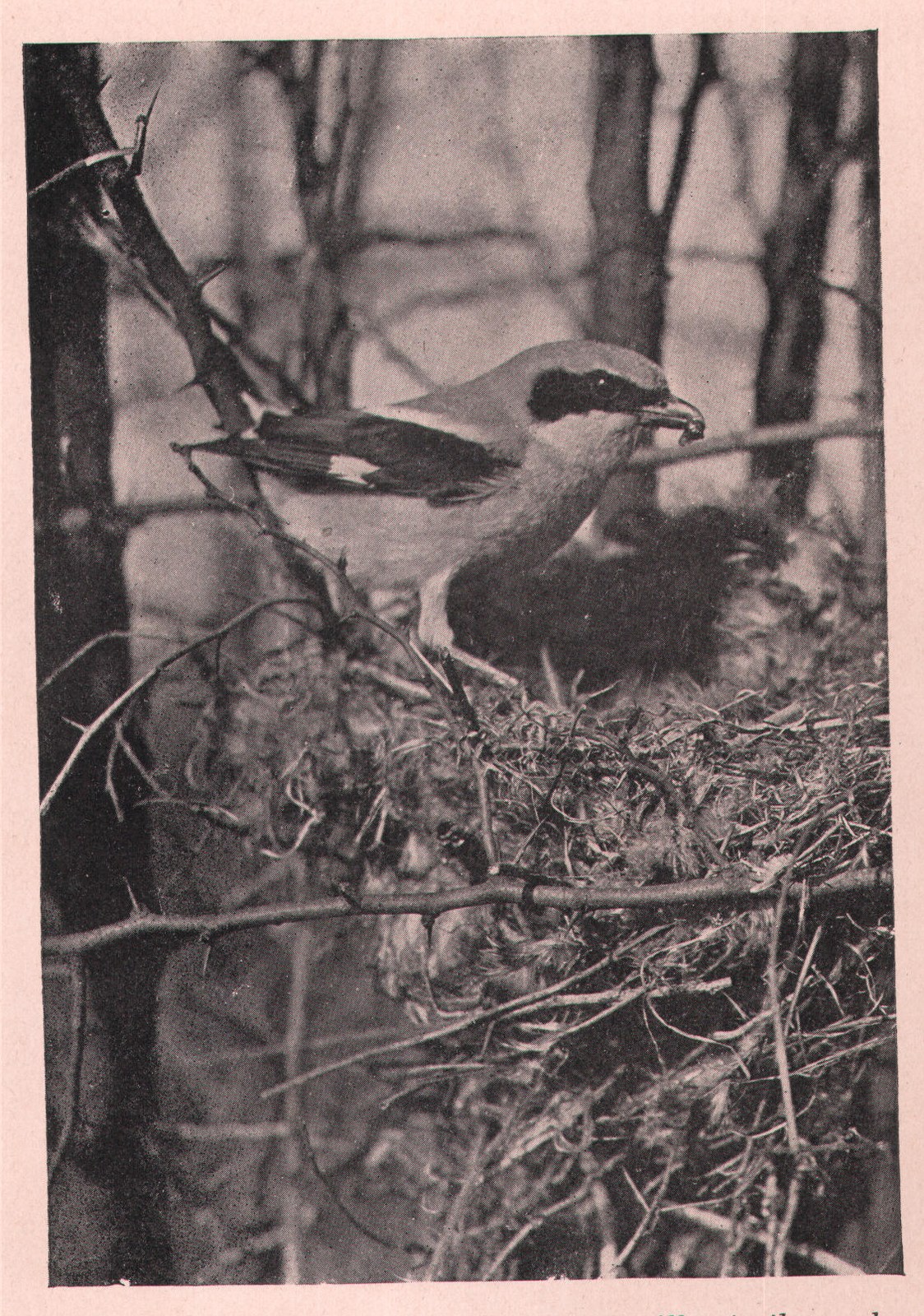
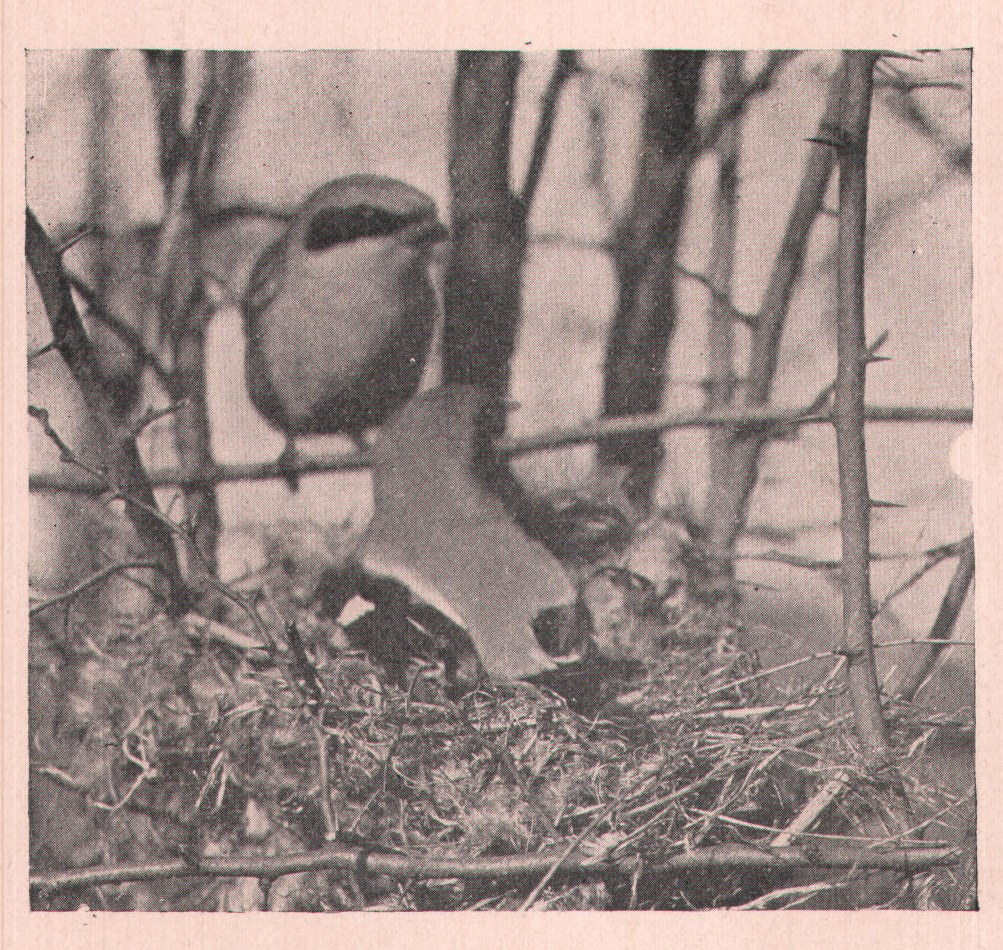
Totally ignoring the bleak north winds, and the gloomy Fig. 248. The male brings a small caterpillar to the newlyhatched youny. Fig. 249. The male often stood on guard while his mate was on the nest. threatening clouds, he sounds his call notes merrily. This is his early spring song and how different it is from his harsh and discordant notes of the previous autumn. His bell-like calls are now far from unpleasant to our ears and we rejoice in the vocal improvement he has made.
The Northern Shrike, cousin "borealis," is an accomplished songster,-a veritable mocking bird of the northland and although we conceded him the palm upon the first hearing, we are none the less proud of our own Loggerhead for the two clear, sweet notes he is capable of producing. The Loggerhead arrives about the middle of March, the males preceding the females by but a few days.
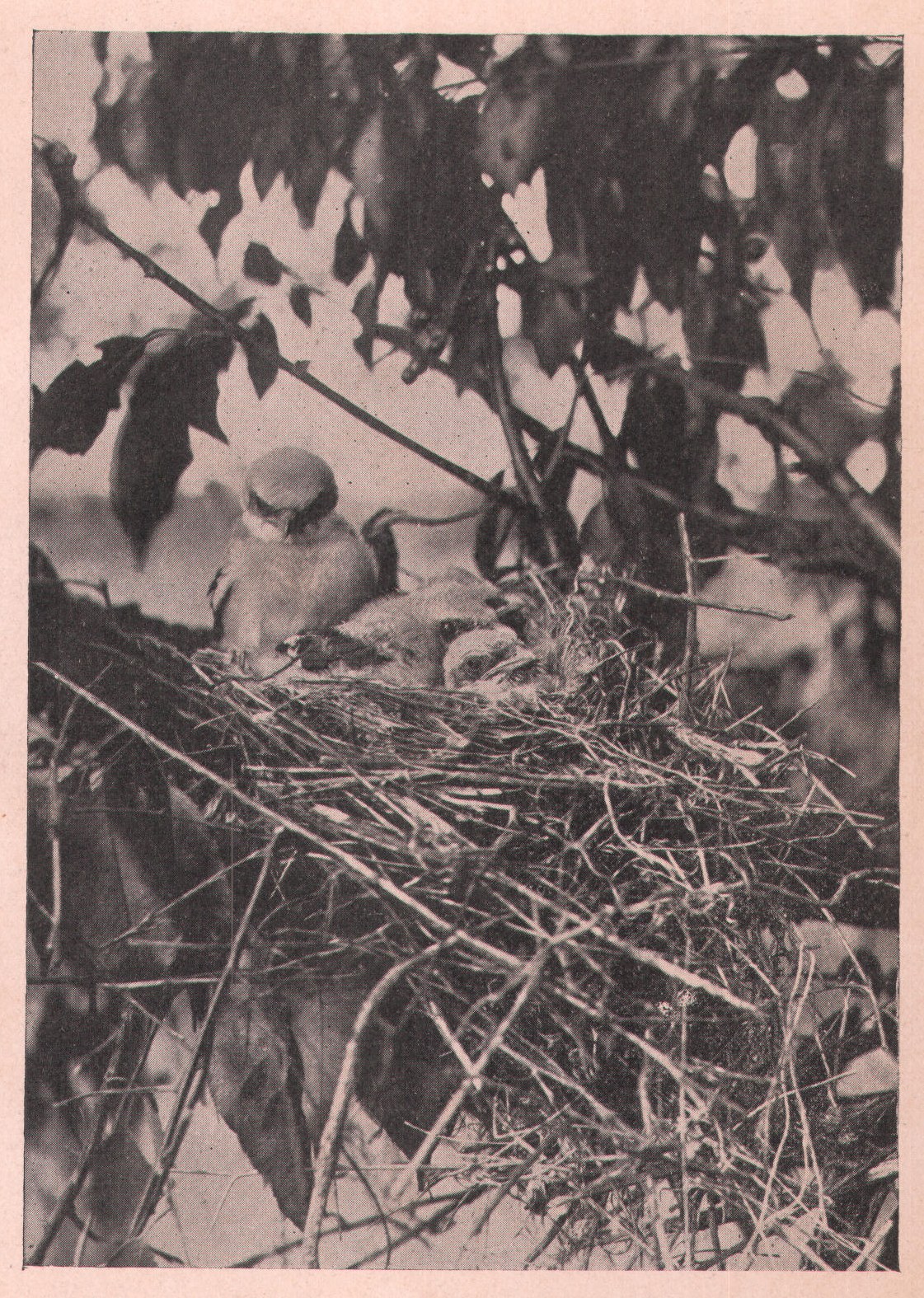
Fig. 250. Almost old enough to leave home.
When Mrs. Loggerhead arrives no time is lost in commencing a new home, which is usually near where last year's domicile was located. Great energy is at first displayed, but later considerable dallying is noticed and often two or three weeks are required in which to complete the new home. It is a worthy structure, however, in its finished state, and, like the scriptural house that was founded on a rock, is able to withstand the March winds that come and the April floods that are sure to descend upon it. The foundation is of sticks and thorny twigs, laced and interlaced with rootlets, grasses and strings. The deep and beautifully rounded inner-nest is thickly and softly lined with the fur of small animals and with feathers. The waving feathers give it an appearance of warmth and comfort and it certainly proves an attractive and well-loved place, for its owners are seldom found at any distance from it. A ride along our country roads during the first week in April will disclose many shrike nests in the process of construction. They are easily observed at this season, for it is a full month before the leafing of the hedges, and this renders them very conspicuous. This fact is in marked contrast with the nesting habits of birds in general, the great majority of which depend upon the dense foliage to hide their treasures from curious eyes. Except in occasional instances, however, the conspicuity of shrike nests, does not prove detrimental to their safety, for only by extremely hard labor and an absolute indifference to thorns, can one and its contents be examined. The nests are placed in the thorniest and most impenetrable parts of the hedge-rows and usually just out of reach from the ground.
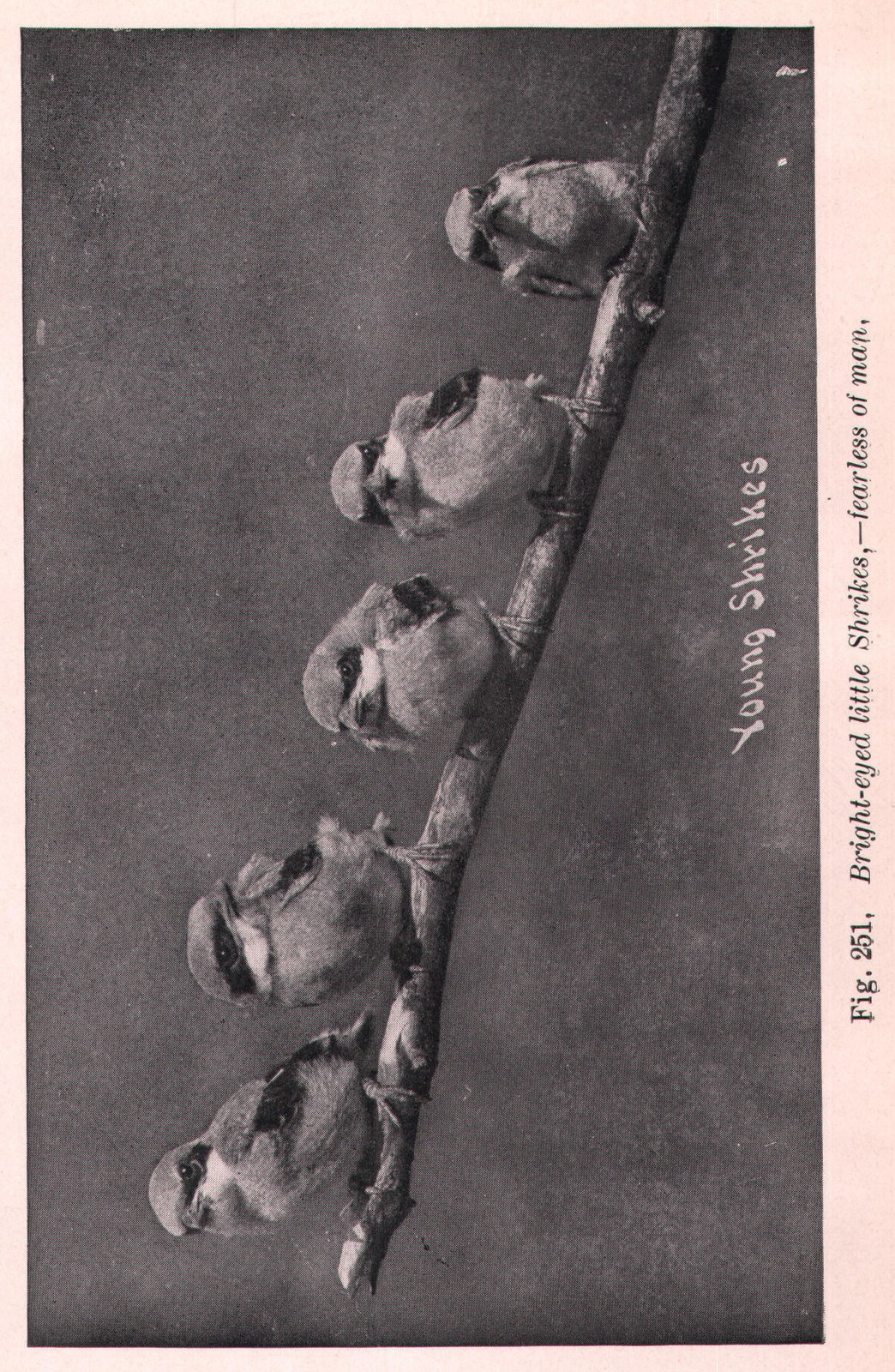
From the observations of several years during which hundreds of shrike nests have been examined, I would estimate that a line drawn horizontally seven feet six inches from the ground, would pass through a majority of them, while Young Shrikes Fig. 251, Bright-eyed little Shrikes, -fearless of man, perhaps ninety per cent. would be included between two parallel lines six and eight feet respectively above ground. This is certainly a noteworthy characteristic of his habits and represents the acumen of generations of shrike experience. A foot or more higher and the cosily-lined home would be buffeted about by the fierce spring winds, perhaps with disastrous results. A foot or so lower would bring them within the limits of the curiosity and mercy of the country lad, the former trait of whom is unlimited and the latter seldom demonstrated. Even located as they are, we too often see a nest turned on its side, with a cornstalk thrust through it and the contents broken upon the ground. Short legs and shorter arms not being able to secure, the selfishness of human nature shows itself in destroying that which cannot be obtained.
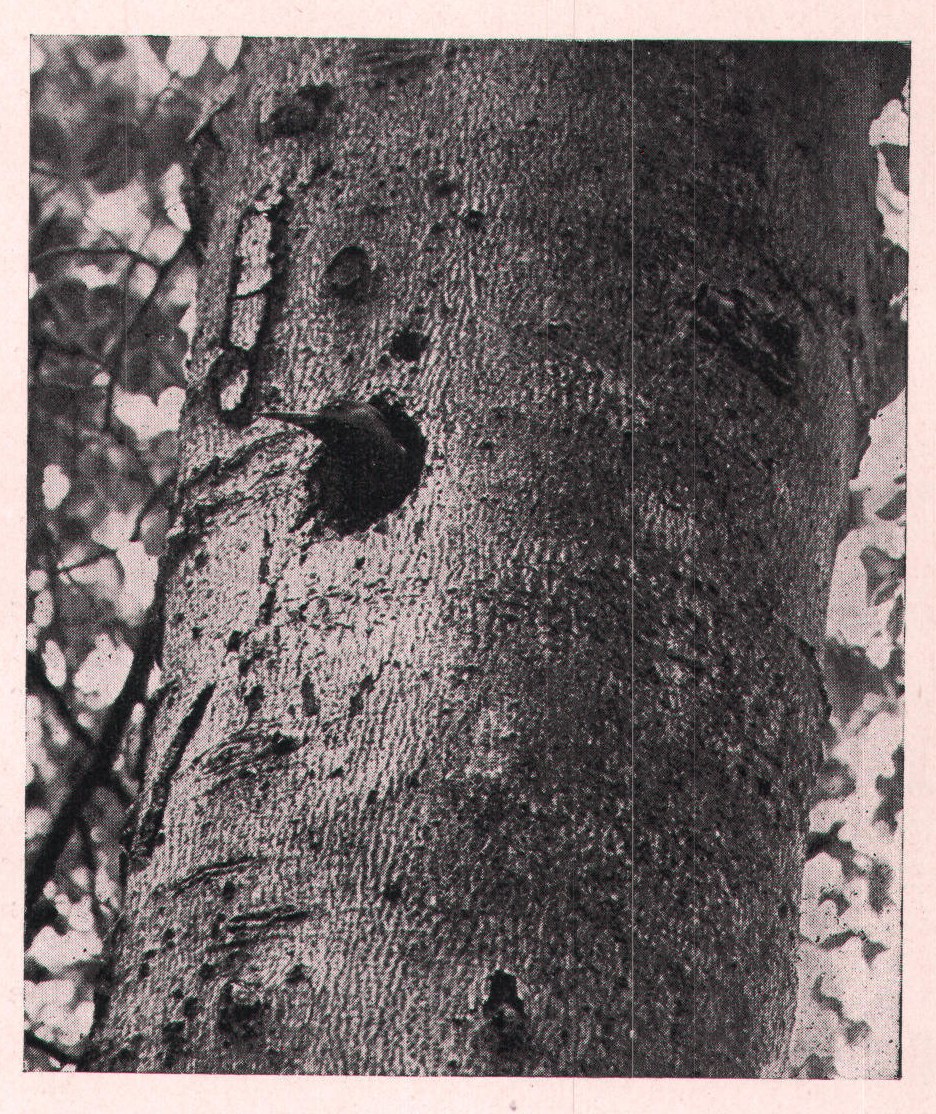
Our Loggerhead is not, however, discouraged by occasional reverses but will immediately proceed to build a new home and a fortnight later be happily engrossed in his new possessions. It is here that we see him at his best, for he is strictly a home bird, and will not object to a much closer inspection of his life than is allowed by most birds. His personal appearance is one of meekness and does not in the least betray that cruel hidden nature that often shows itself in an undeniable manner. While Mother Nature decreed that he should prey upon the field mice and other destructive rodents, and gave to him a hooked beak that he might more readily devour his prey, we find it hard to forgive his cannibalistic tendencies when we discover a little song bird impaled upon the cruel thorns. We are more willing however, to forgive his faults when we see the love and attention he bestowes upon his little mate and the unselfish care he devotes to his family of little ones. The male proves an admirable character in his home life. He helps to build the nest and is the constant companion of his mate during incubation. He brings her food while she is setting or temporarily relieves her of the task. He helps in feeding and caring for the young and, taken altogether, is a model and exemplary husband whose virtues far outweigh his faults. The number of eggs deposited and making a complete set is usually six, although sometimes but five are laid. Fig. 252. The Flicker takes one glance about her, then dashes out at full speed. Stump broken away so as to show the eggs