Home › Contents › Blue-Gray Gnatcatcher
Blue-Gray Gnatcatcher
These charming little birds are very common in the southern half of the United States. Their body is but little bigger than that of a hummingbird, but a rather long tail makes the total length of the bird a great deal more.
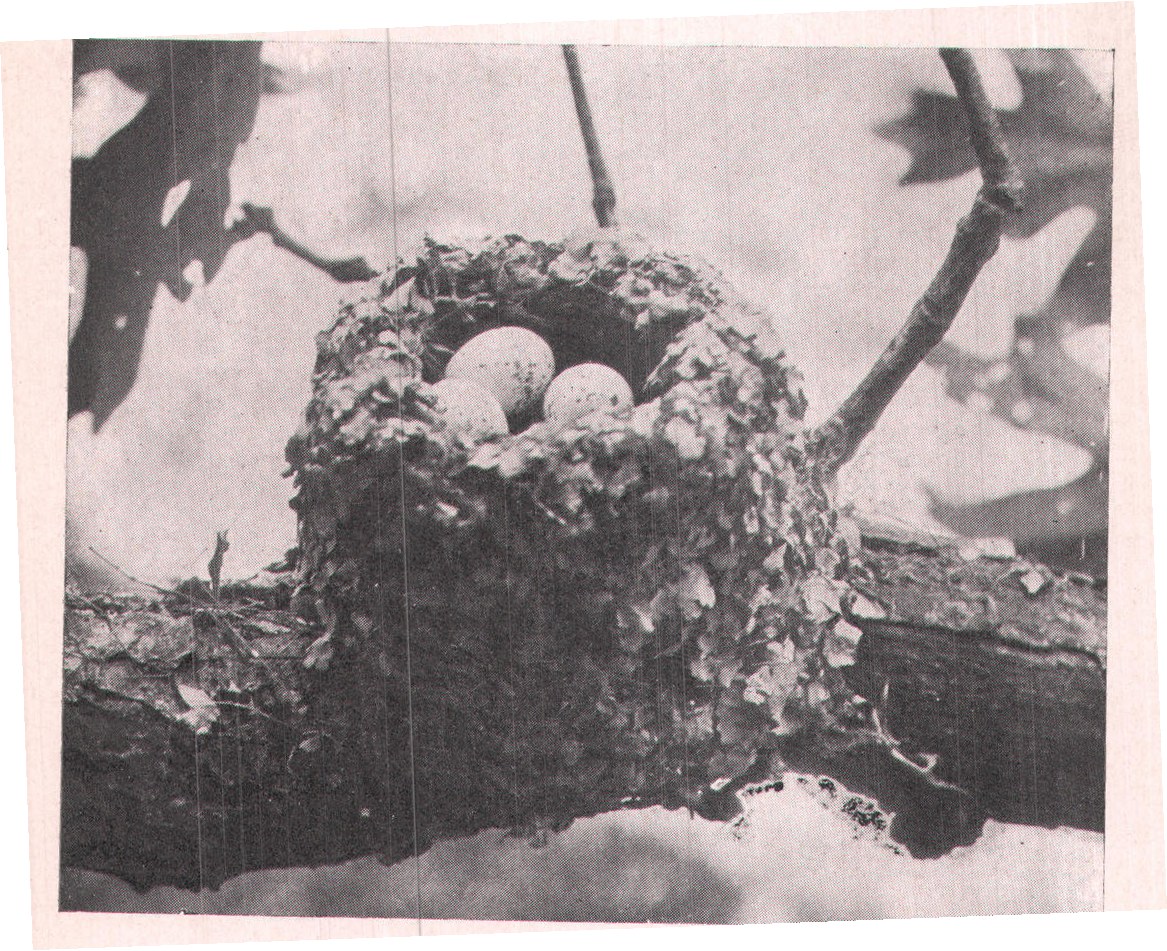
Their call notes can often be heard coming from the high trees that they like to frequent. It is a sound that would that they like to frequent . It is a sound that would escape the notice of many observers, not loud and with an insect-like quality that might cause it to be overlooked,-a rather, twanging, high-pitched mew. Their song is a mixed of faint noises, not worthy of the name of a song, Their song is a mixed but it expresses their pleasure and, to them, it may be as beautiful as the efforts of our most accomplished musicians. Although their vocal efforts may not appeal to us, they have two claims to notice that cannot be ignored,-their graceful beauty and their nest -building ability. Slim, graceful, with a soft blending of blue-gray, black and white, they create an impression that, coupled with their agility, matching that of the Chickadee, calls forth our admiration. I have said that the nest of our hummingbird is one of the most beautiful bird creations. The Blue-gray Gnatcatcher nest is almost a perfect reproduction of the hummernest but on a much larger scale. While the nest of the hummingbird is small even in proportion to its maker, that of the gnatcatcher is rather large for the size of the bird; that is, the outside of the nest, the whole bulk of it, is large; but the walls are very thick so that the little, very deeplycupped interior is hardly big enough to accomodate the little bird and the four or five beautiful, white, brown-specked eggs that she lays.
While you may see gnatcatchers feeding on the lower limbs of trees or among the underbrush, they like high elevations and it is usually high up in the trees, on horizontal branches, that the exquisite moss -covered homes are placed.