Home › Contents › Prairie Warbler
Prairie Warbler
These beautiful little warblers are very locally distributed. They nest usually in small colonies, one of which happens to be on a certain side hill where I have succeeded in making pictures of a great many species of birds. Each male seems to have his own little section and also a favorite lookout perch; many an exciting chase occurs when the head of some one household encroaches on the domains of another. A flash of yellow and black is all that can be seen of the bewildering conflicts as they dash in and out among the underbrush until one finally returns to his perch singing his victory in the peculiar, rasping tones common to this species. Their nests are quite difficult to find as they are, almost without exception, built at the tops of low shrubs, just where the leaves are the most dense. As there are hundreds of bushes perfectly adapted to their needs it requires a long search to locate a nest, particularly because these warblers are so very careful not to disclose its hiding place. All my observations have brought me to the conclusion that Prairie Warblers are practical jokers; I, at least, have been made their victim on several occasions.
One day I saw one of the females with a bit of grass in her bill, so I sat down to watch and find out where she was going to put it. She knew that I had seen her so she chirped and scolded for a long time, being ably aided by her mate who appeared by her side at the first note of alarm. In a few minutes she took the nesting material into the thick top of a bush and soon flew out again without it. A few minutes later, the male also carried material to the same spot followed after awhile by the female with some strips of bark. I was sure that they must have a nest nearly completed to be working so industriously, so I went over to investigate. Imagine my surprise when I found not a shred of a nest there; they had carried their loads to the bush and dropped them on the ground apparently for the very purpose of fooling me. I have had other very similar experiences with these little warblers.
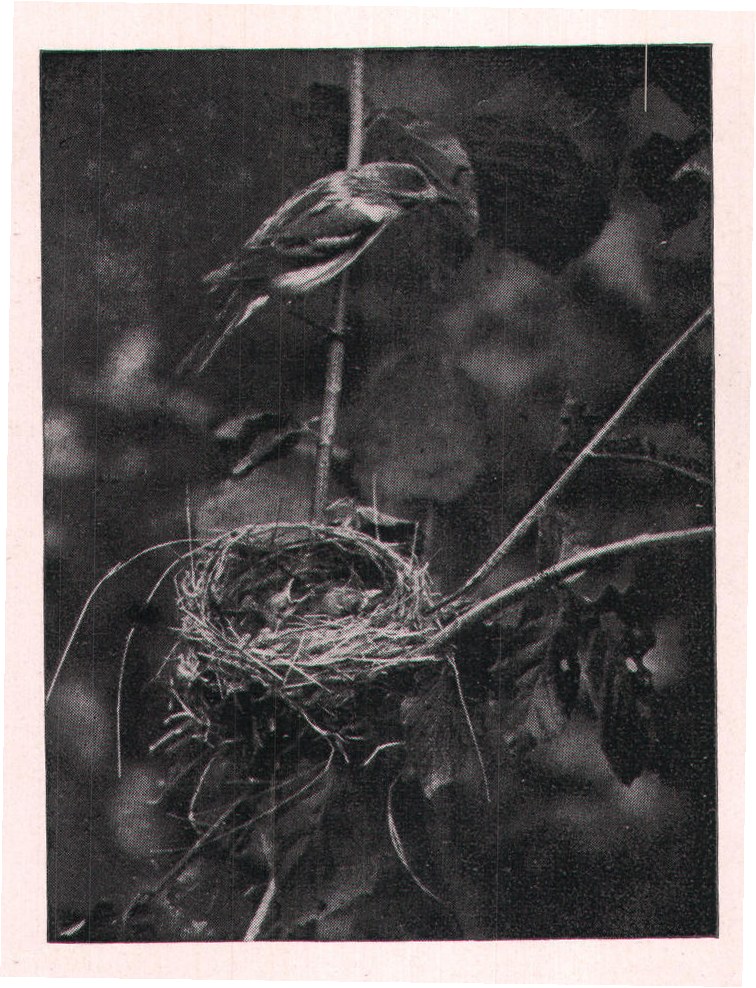
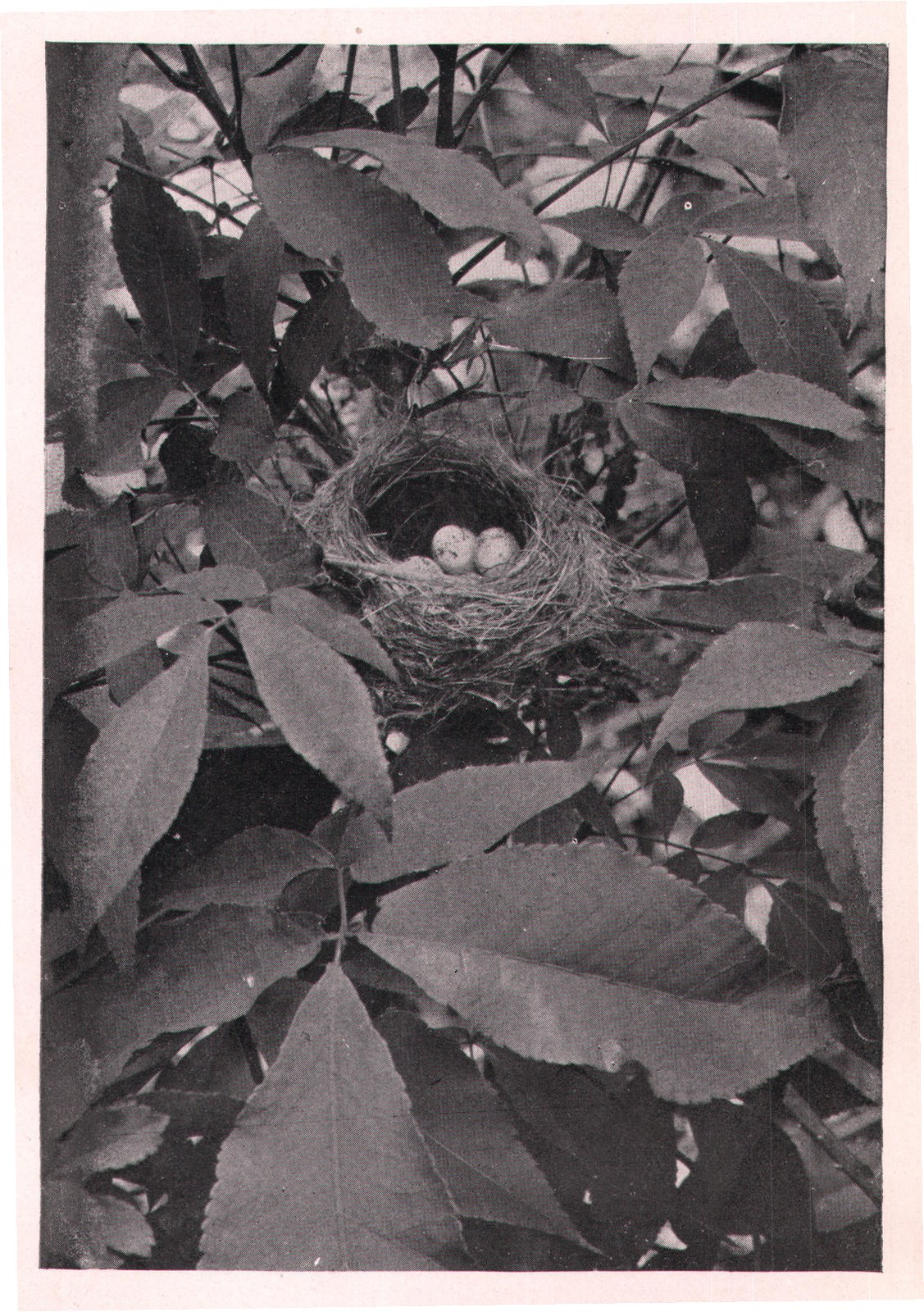
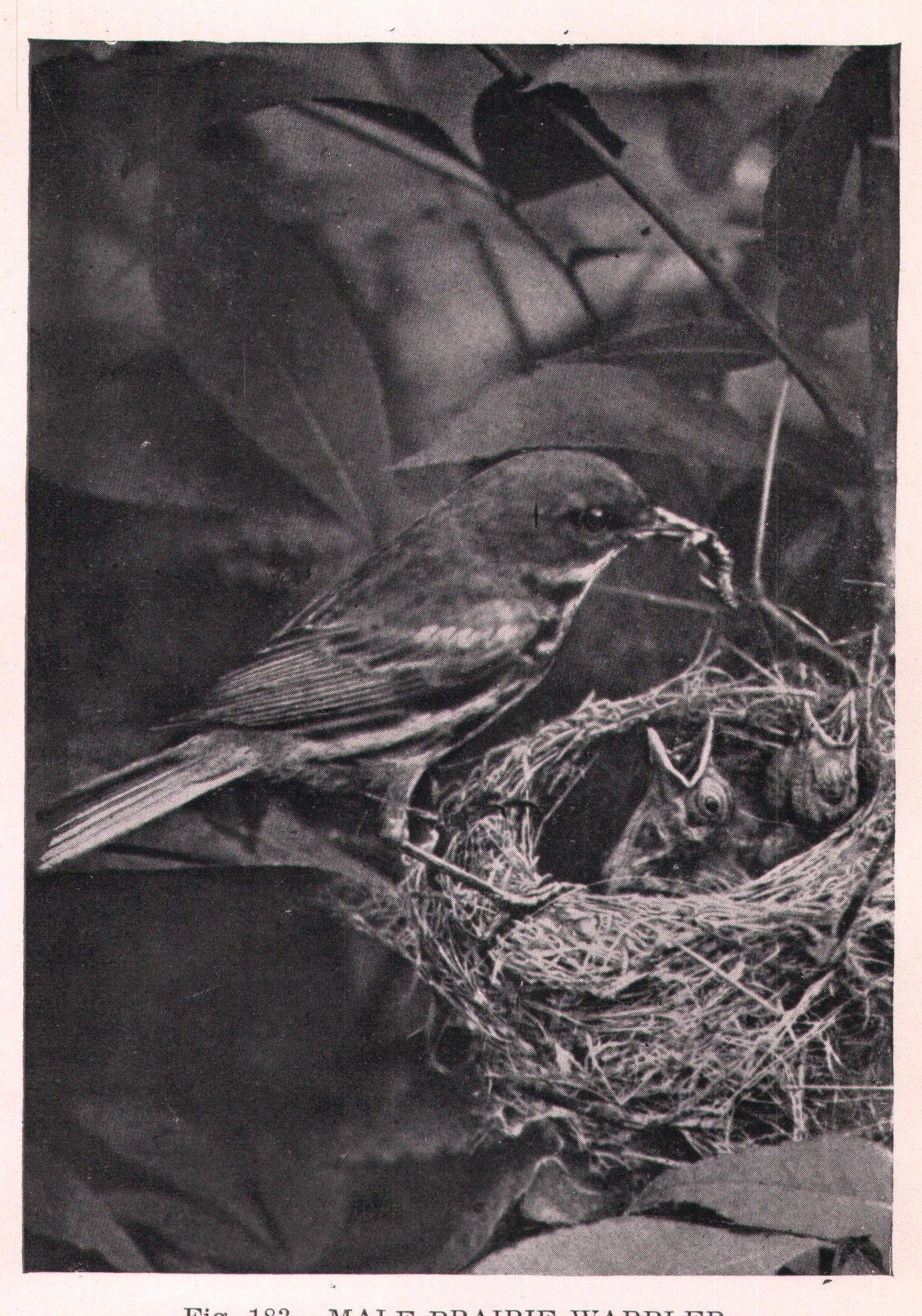
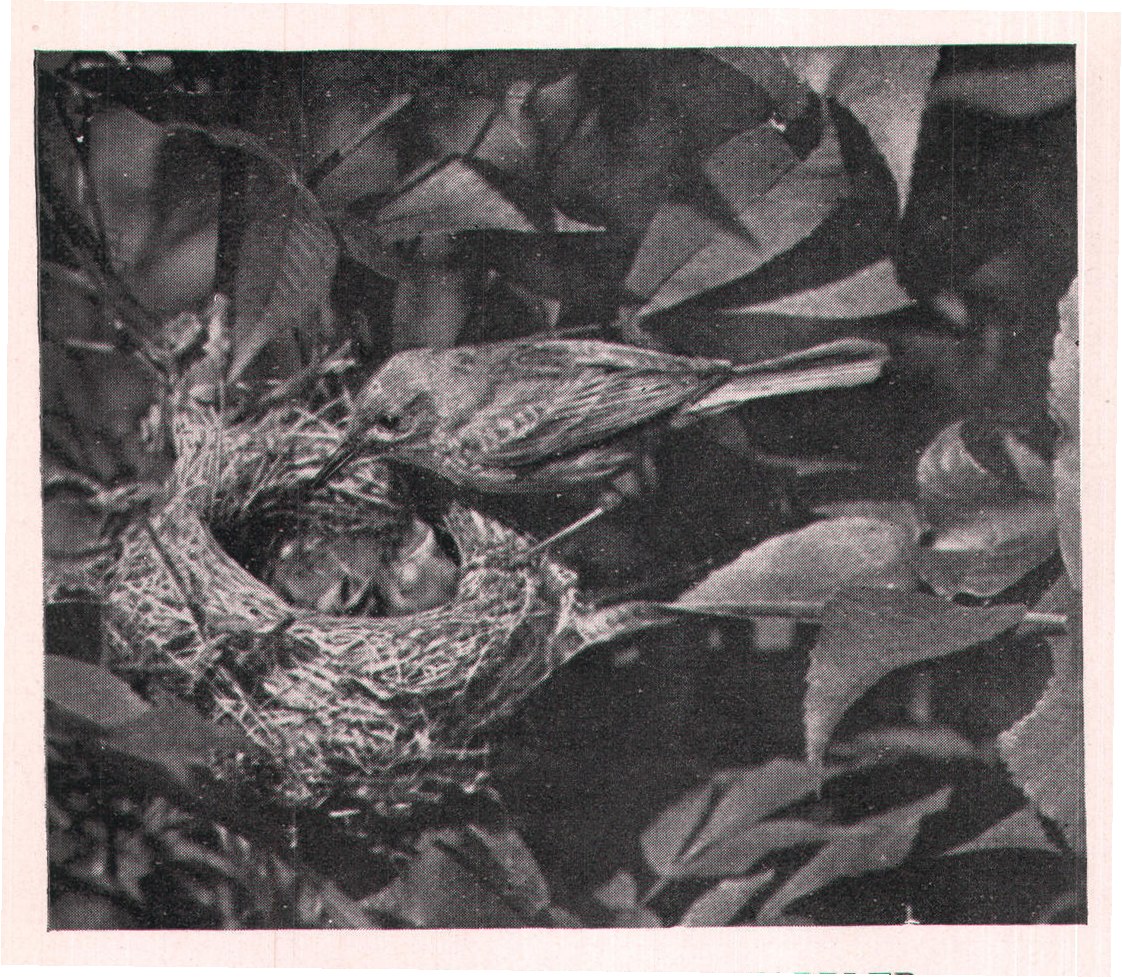
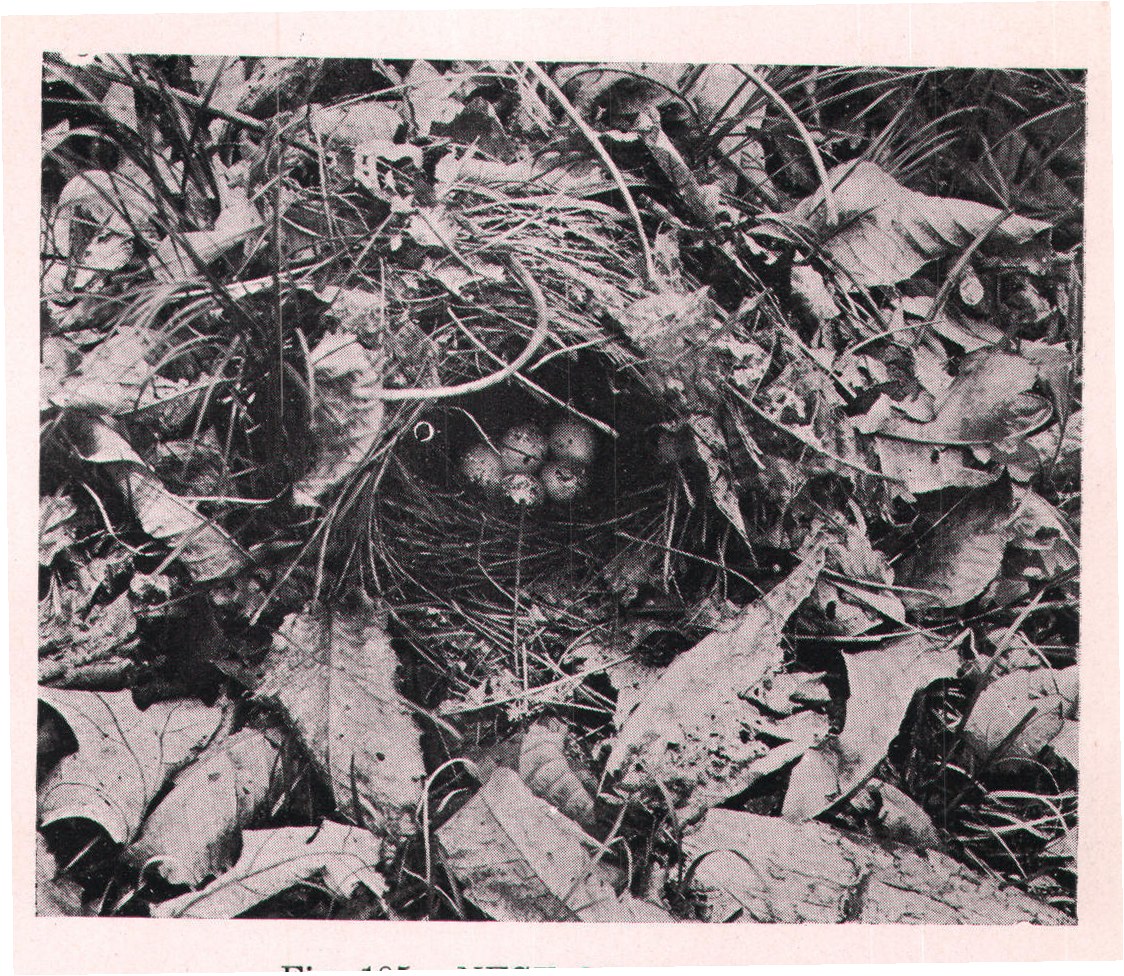
I show a few pictures obtained at a nest located in a young walnut tree. It is a typical nest, composed chiefly of plant fibres, a few grasses and shreds of bark. While the female was sitting, both she and her mate were watchful. She always left the nest and glided away unseen if anyone approached. As soon as the eggs had hatched, the parents lost much of their fear and would feed the little birds even while we were watching. When bringing food, they approached the nest cautiously, keeping near the ground where the swaying of the tops of the sweet ferns, that formed the lower strata of vegetation, showed their approach and soon a tremor of the walnut announced that they were almost at the goal. All manner of insects were included in their menu,-ants, aphids, flies, moths and even repulsive looking little worms such as one of the illustrations shows the male bird bringing. Arched over so that one has to stoop low to look under and see the eggs.
The good fellowship that exists between birds can be judged by the number that nested in company with the Prairie Warblers, within a radius of one hundred yards. They included Indigo Buntings, Towhees, Veeries, Thrashers, Vireos, Black and White and Chestnut-sided Warblers, Field and Song Sparrows, a Chickadee, Bluebird and Scarlet Tanger. As a general thing they all lived very peaceably with only an occasional tilt that in no ways disturbed the social equilibrum of the bird community.