Home › Contents › Chestnut-Sided Warbler
Chestnut-Sided Warbler
Both this species and the Black and White Warbler are about equally common, but the nests of the Chestnut-side are much more easily found. The birds are not as careful to avoid being seen and the nests are above ground so that they are often found without watching the owner. They are, however, located usually at the top of low bushes so they can be seen only below by removing the protecting leaves from above.
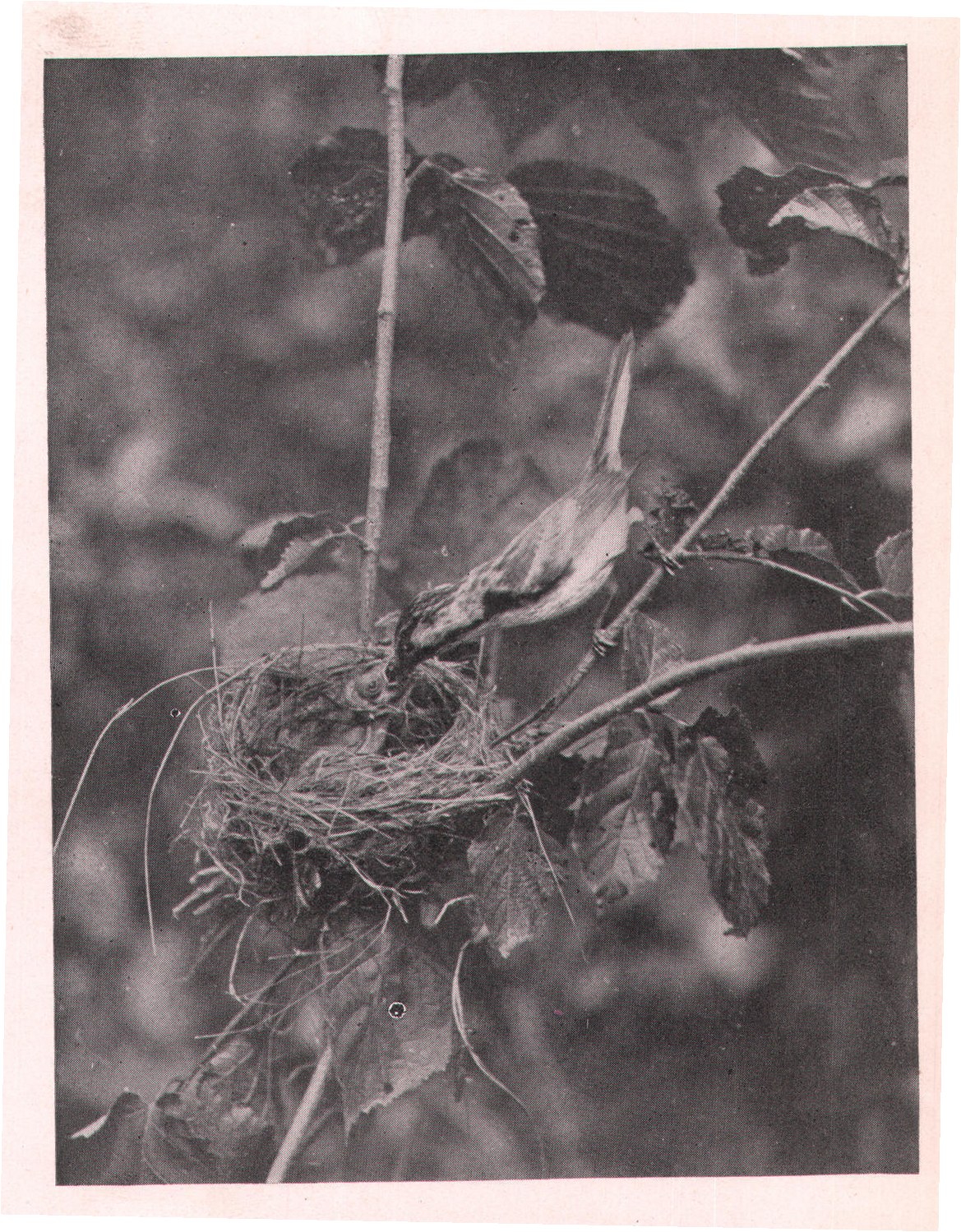
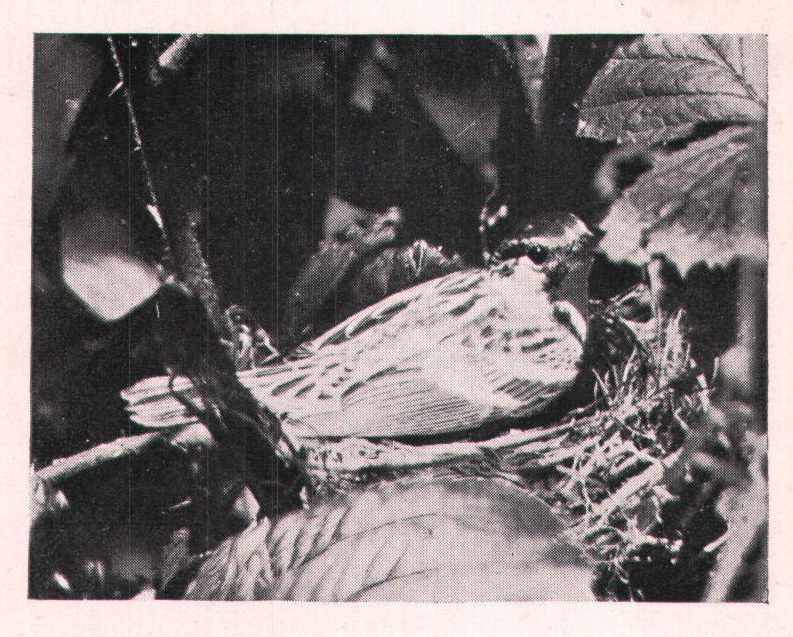
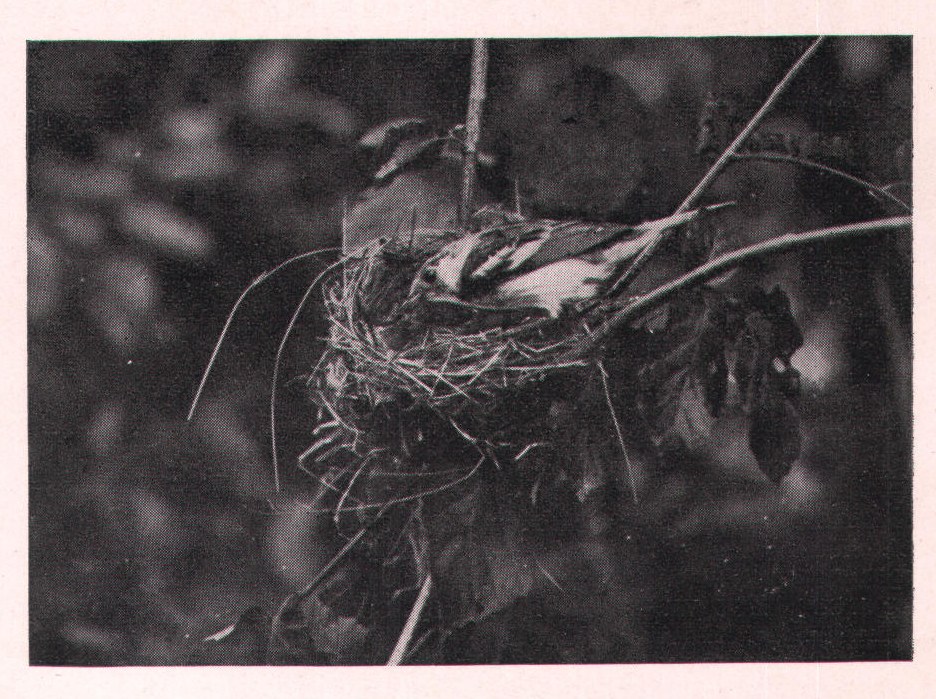
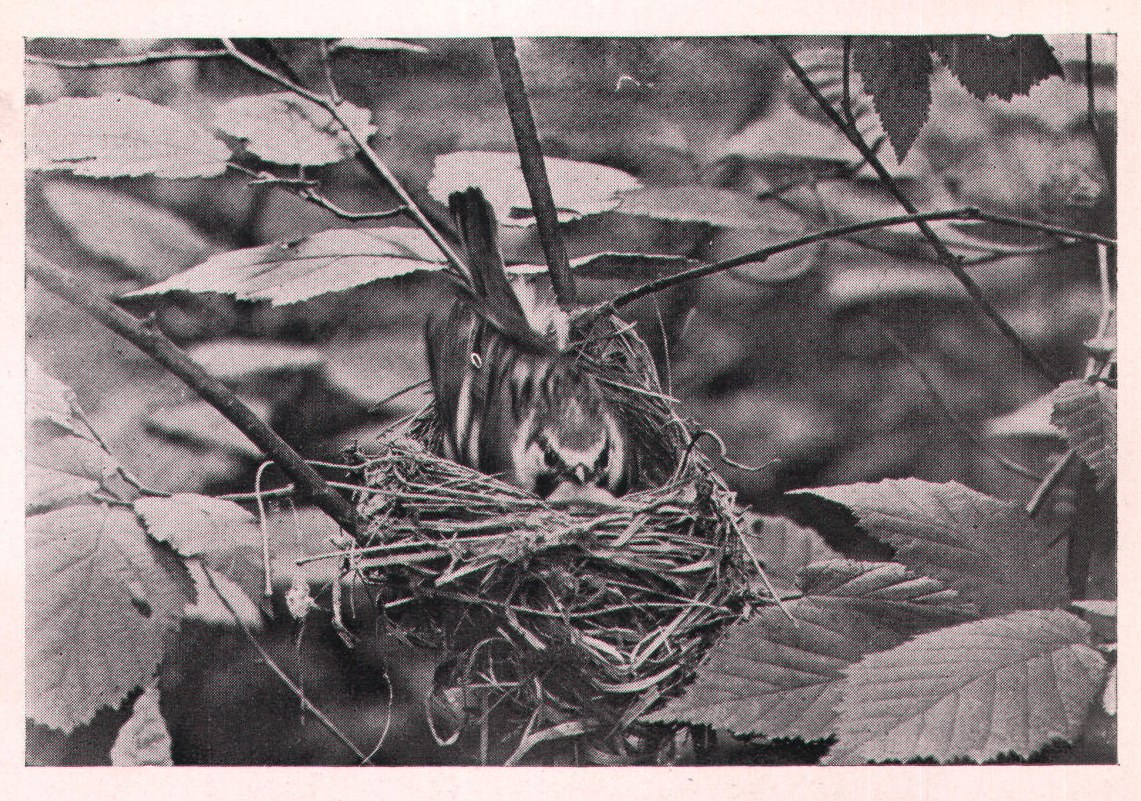
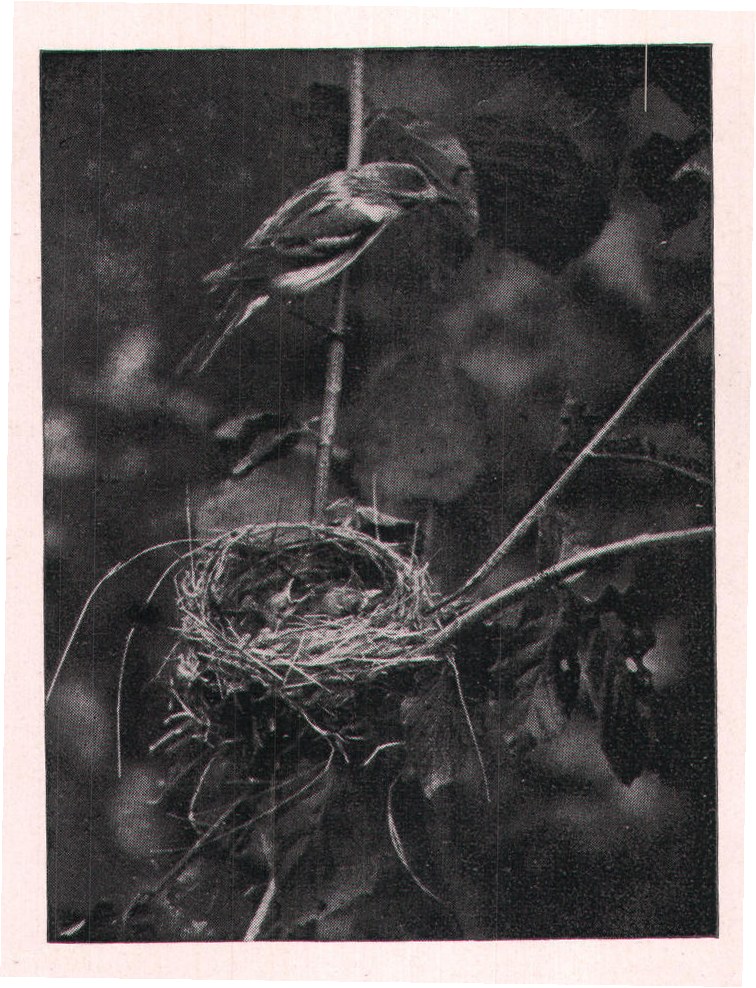
Fig. 177. Male Chestnut-sided Warbler feeding one of its young; there are three in the nest but not in sight. They are among the easiest of birds to photograph while they are sitting upon the nest. Several times I have removed leaves from above the bird, put a camera in place and made photographs without disturbing her; they sometimes have allowed me also to gently stroke their back, without leaving the eggs. They seem to be very popular with that Fig. 178. I advanced until the lens was within 2 feet of her and she half rose from the eggs. bird-parasite, the Cowbird, for about twenty-five per cent. of the nests found contain one or more eggs of this species. Although Sir Chestnut-side leaves the task of making the nest almost wholly to his mate, he takes his turn at sitting on the eggs and, in almost every case that I have watched, does more than his share in feeding the little ones. most birds that I have photographed, it has been the female that returned first after the battery of cameras was trained on the nest, but with Chestnut-sides it has always been the male which showed the way.
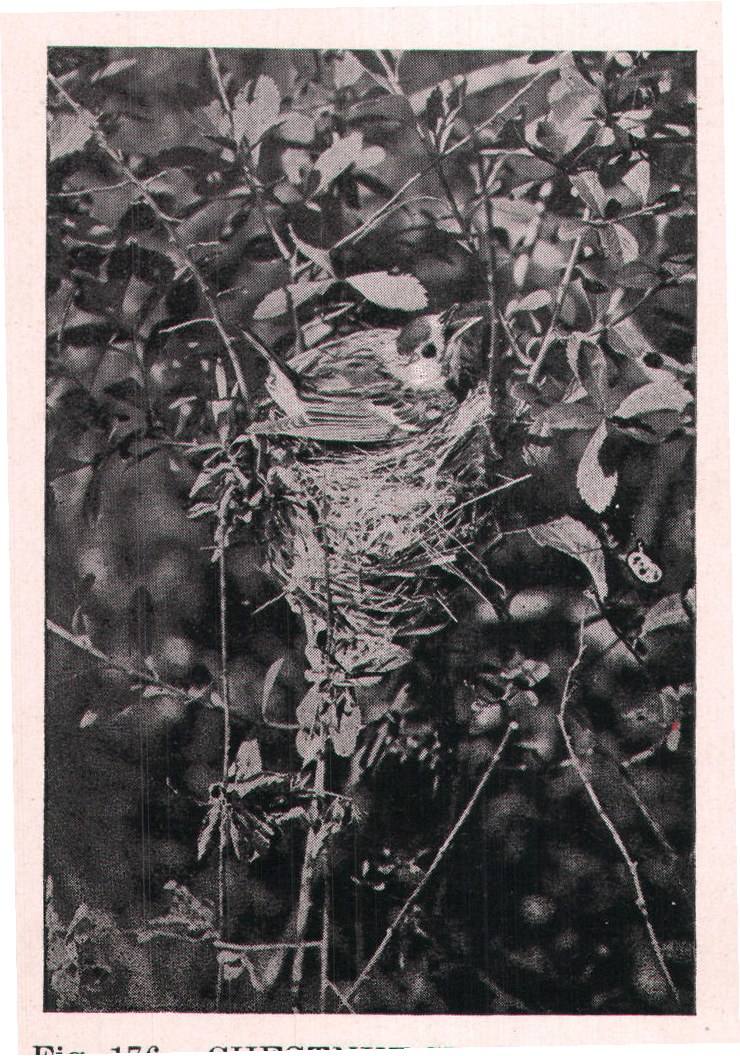
With It was several years before I was able to secure any pictures of the parent birds feeding their little ones. Nearly Fig: 179. She jumped at the click of the shutter.
Fig. 181. every nest of this species that I located would be destroyed in some manner before the eggs hatched or something would take the little ones while they were very small. The fact that most of the nests were in a locality where chipmunks and grackles abounded was perhaps responsible for the great destruction of eggs and young.