Home › Blue Jay › Blue Jay: Kitty
Blue Jay: Kitty
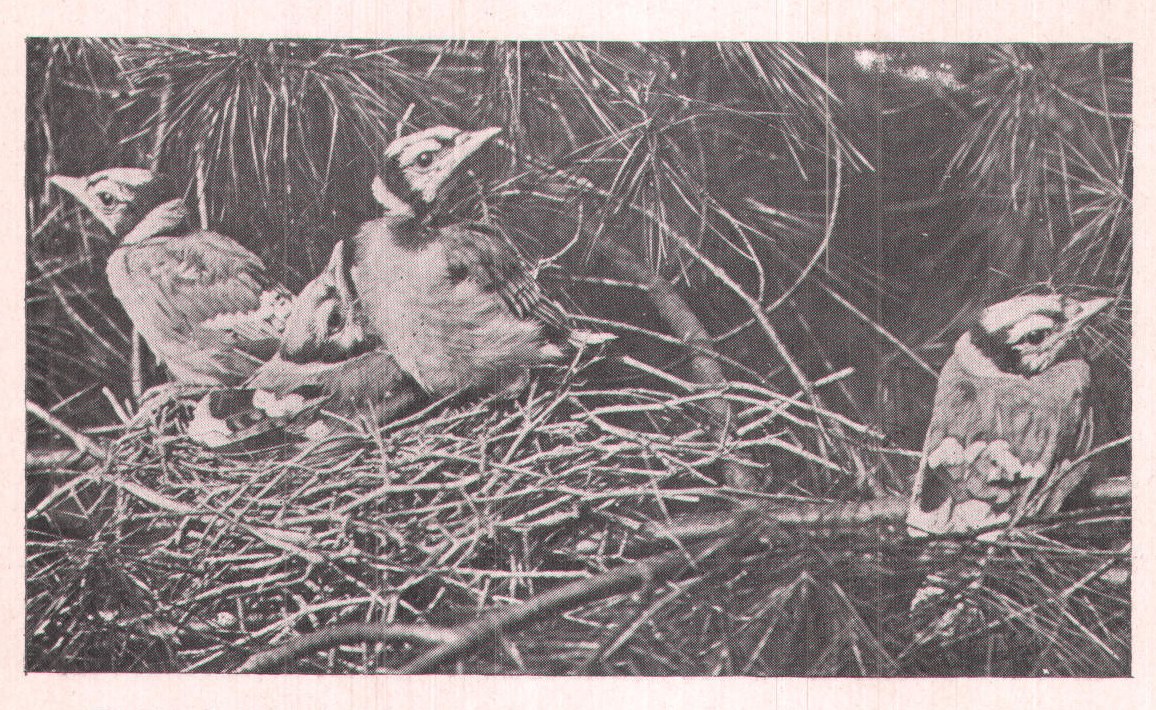
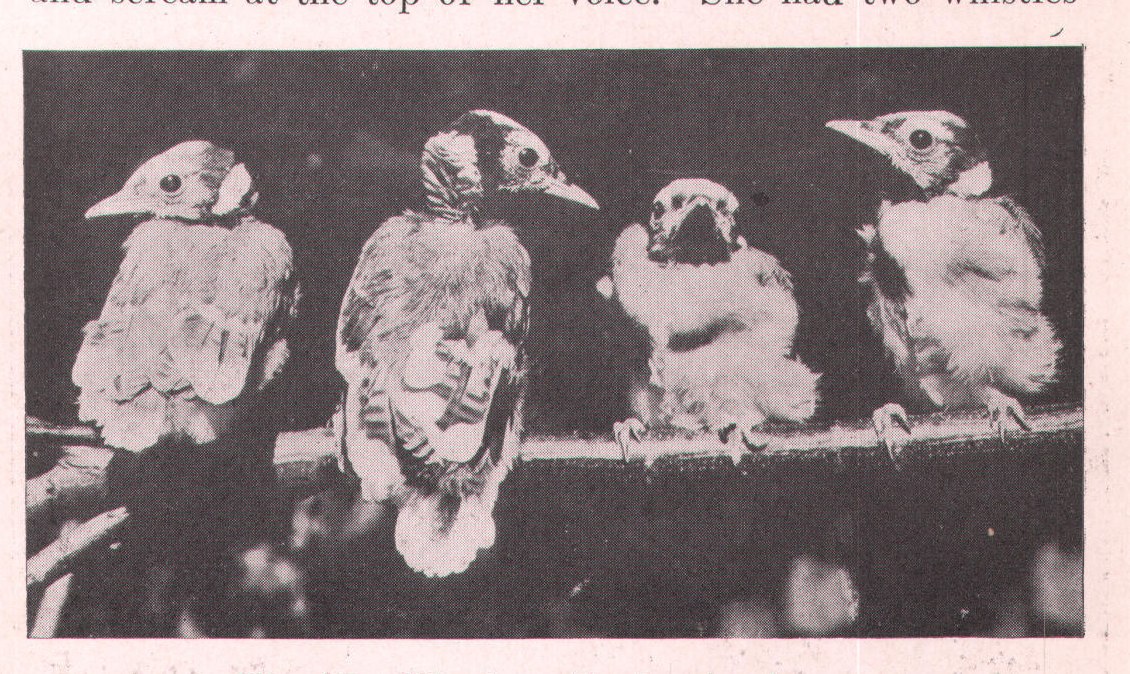
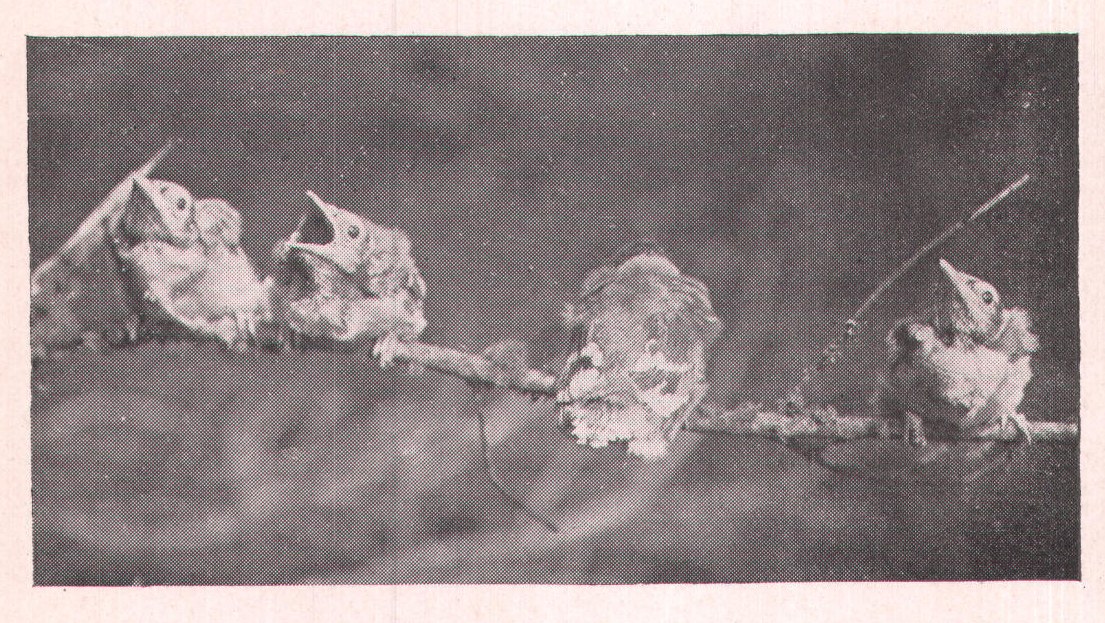
Who first gave this bird a name and why it was given, nobody knows, but almost from the first day it was known as Kitty. Part of a room was screened off, including a large window, for the exclusive use of Kitty, and several small trees and a little pine were introduced so as to allow for exercise. The first two weeks, Kitty had to be fed very often; when anyone was in the room, she would hop about after them with wide-open mouth and fluttering wings, always begging for more. Bread and milk, eggs and bits of Fig. 76. The Jays become too large for their home and are crowded out on the neighboring branches. raw meat seemed perfectly satisfactory to her if they came in large enough doses and at frequent intervals. It was about three weeks before Kitty could fly strongly and then her mischievousness began to assert itself at every opportunity. Kitty seldom made typical jay calls or whistles but she had a very great many notes of her own and would sometimes whistle and warble continuously for an hour at a time, at times striking combinations of notes that sounded very pretty. Wild jays, especially in Spring, often talk among themselves with low whistles, with an effect very similar to Kitty's song. She never used the loud, harsh, jay scream unless angered or greatly excited; if a dog came into the room, she was a typical, wild jay and would raise her crest and scream at the top of her voice. She had two whistles Fig. 77. The day after leaving home. that were used to denote gratification, usually when she had played a joke on some one; always, when giving these she would bob up and down on her legs in the most ludicrous manner.
Many a ball player might have taken lessons, to advantage, from Kitty; she never missed catching in her beak, peanuts, kernels of corn or pennies, as they were tossed to her. She was a regular miser and pennies were hid in crevices all over her room; she also stored up, the same as wild jays do, quantities of food so as to be provided for a rainy day.
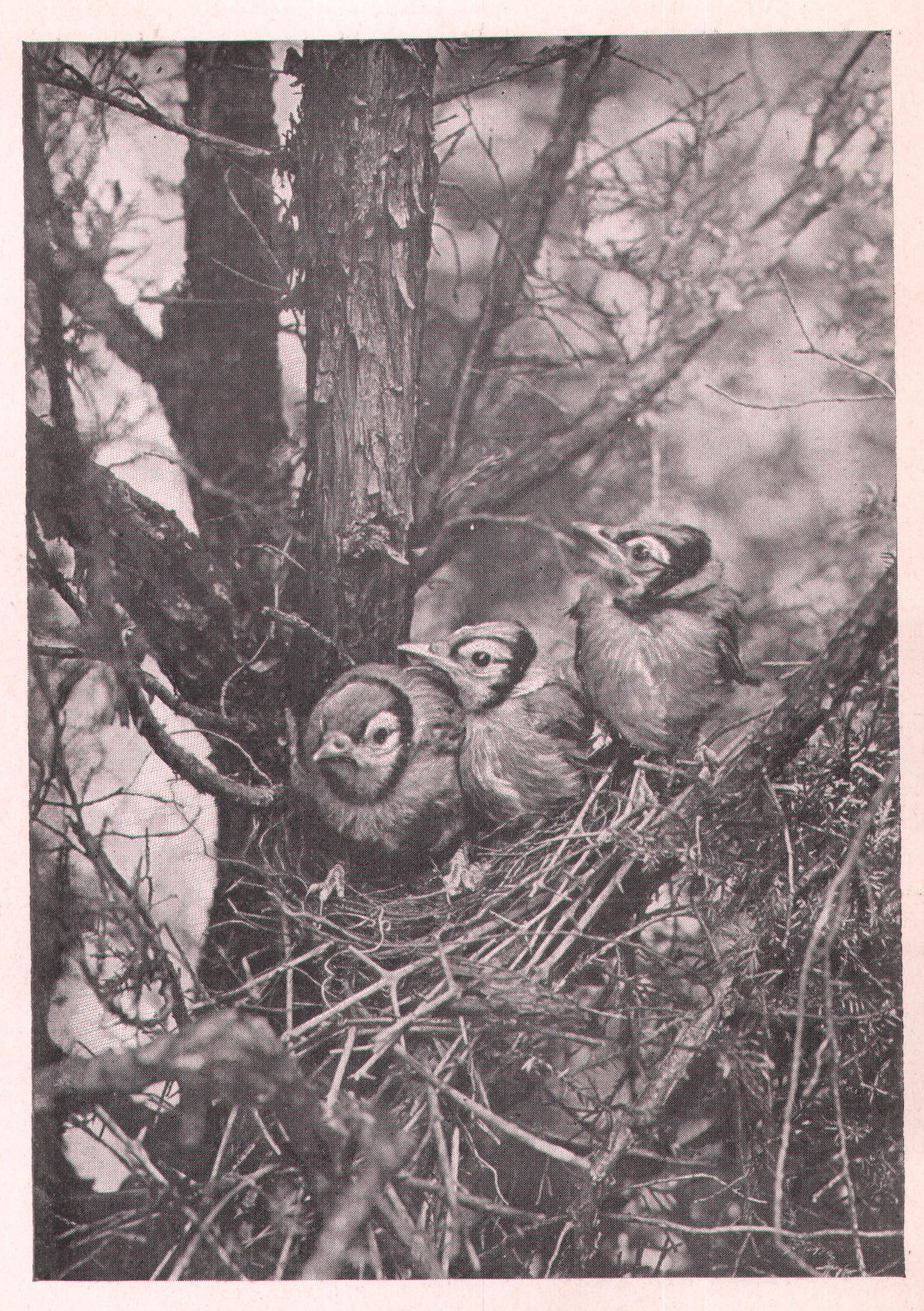
If I happened to be talking to anyone in the room, she would bide her time until we were not watching her, then swoop down between us so that a wing would sweep across our faces; if we were startled and dodged, as usually hap- Fig. 78. Three days before they left the nest, of their own accord pened, she would dance up and down and whistle in her ecstacy. She was fond of bright colored objects, especially if they were on ladies' hats. One day a lady went into the room wearing imitation cherries on her hat. Kitty was quite fond of cherries but had never had them served that way before. She did not, however, complain about the service but landed right in the middle of the bunch and commenced to hammer away with all her might. Fortunately for me, I got her away before any damage was done.
One day a live Barred Owl was brought to me and was placed in the room outside of Kitty's portion. Kitty's greatest delight was to escape from her apartment when we opened the door to feed her. By a sudden dash, she got her freedom on the day the owl was brought in. She had never seen an owl before but was perfectly willing to take a chance on hectoring him. Every time she flew across the room she would whistle with glee as he opened his eyes and blinked at her. The owl made no attempt to dissuade her from her play but I imagine he was saying to himself: "You just wait until night, you little blue imp, and I'll wring your neck." Of course as Kitty was safely fastened in her own apartment before dark, the owl had no opportunity to get his revenge.
It is a pity that such beautiful and interesting birds as Blue Jays should be so destructive. They do a great deal of useful work in destroying caterpillars but the harm they work in destroying eggs and young of other useful birds much more than balances the good that they do. Still I think that no one would advocate the extermination of jays; certainly not until that greatest of all pests, the English Sparrow is gotten rid of.