Home › Feathered Tyrants › Feathered Tyrants
Feathered Tyrants
KINGBIRDS.
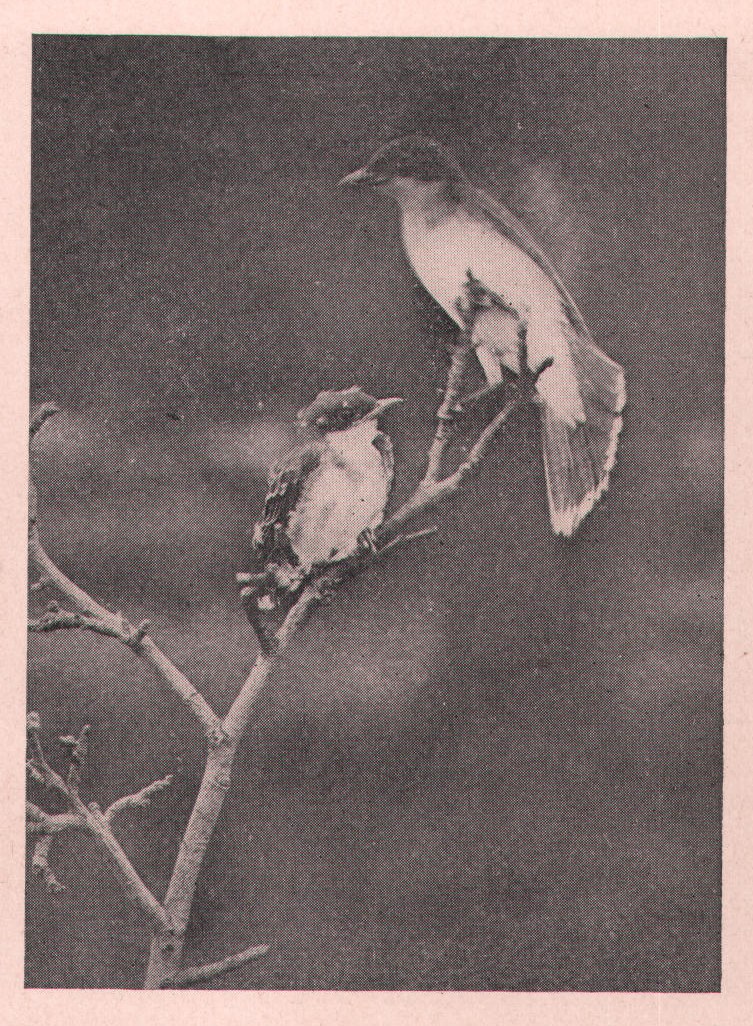
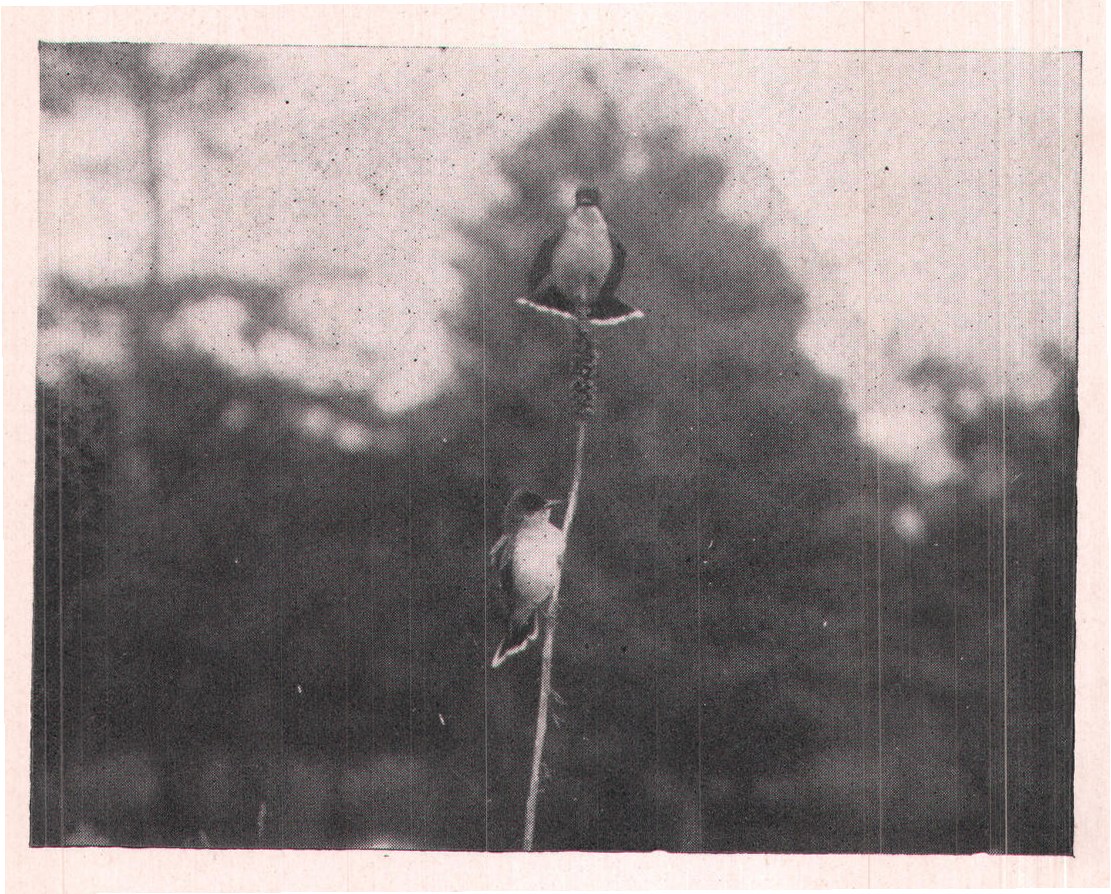
How well the name applies to these birds! Kings by name, kings by nature and, if we may consider the concealed orange patch on the top of their heads as a crown, kings in raiment. Although they are usually called tyrannical and despotic in manner, it will be noticed that they very seldom quarrel with birds smaller than themselves, but confine their attacks chiefly to predacious birds. By driving away grackles, jays and squirrels, Kingbirds perform an invaluable service to all their orchard friends. And their attacks upon hawks often relieve the farmer of any anxieties in Fig. 234. One of their favorite lookout perches was a dried mullein stalk. regard to his chickens, although few of the hawks touch poultry in summer.
The sight of a bird of prey is to a Kingbird, like a red flag flaunted before a bull. He immediately starts in pursuit, get above the larger bird and keeps dashing down at it. It is strange fact that hawks or crows never attempt to defend themselves but will exert themselves to the utmost to escape from the torment.
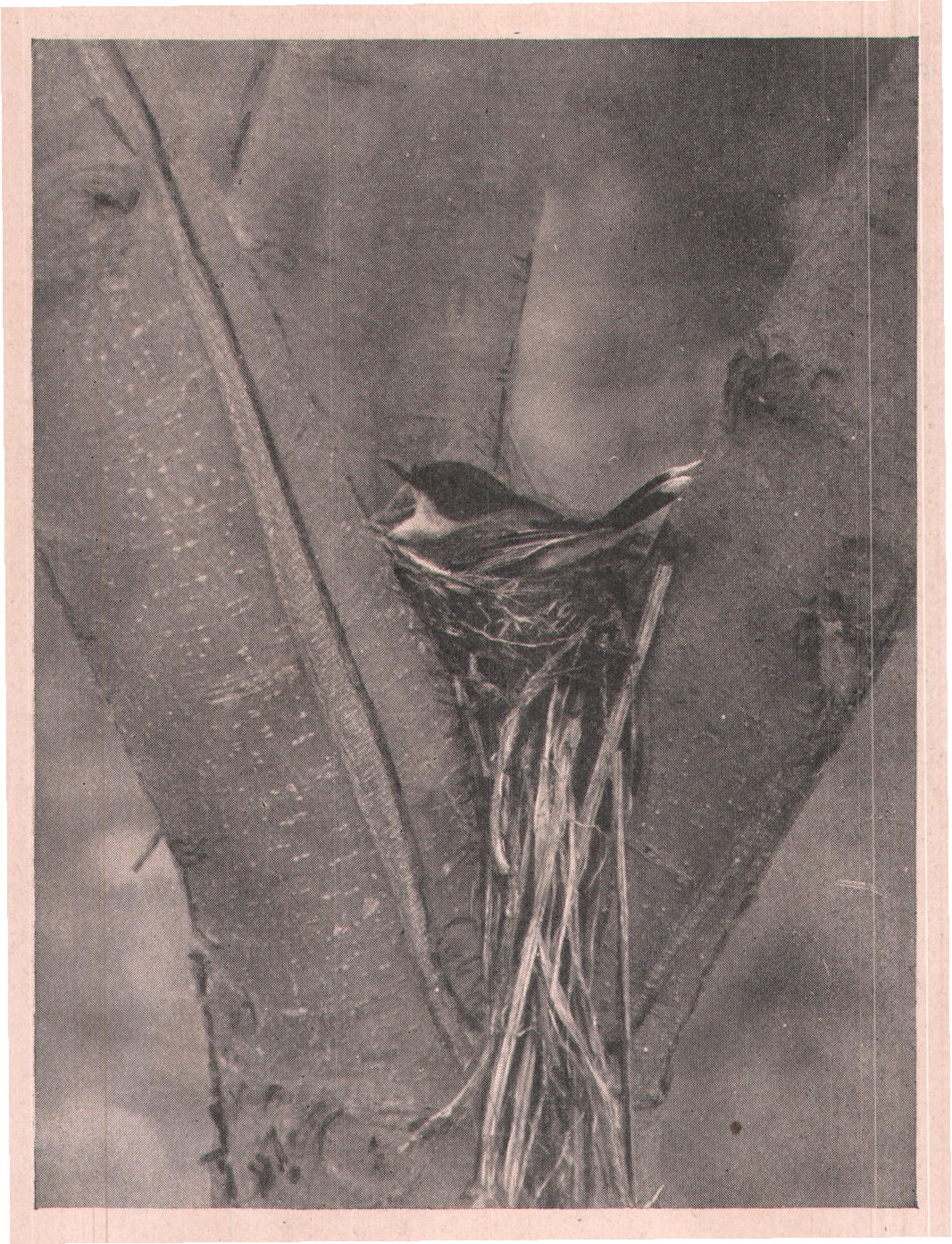
Fig. 236. An unusual site; their nests are usually among the smaller outer branches of trees.
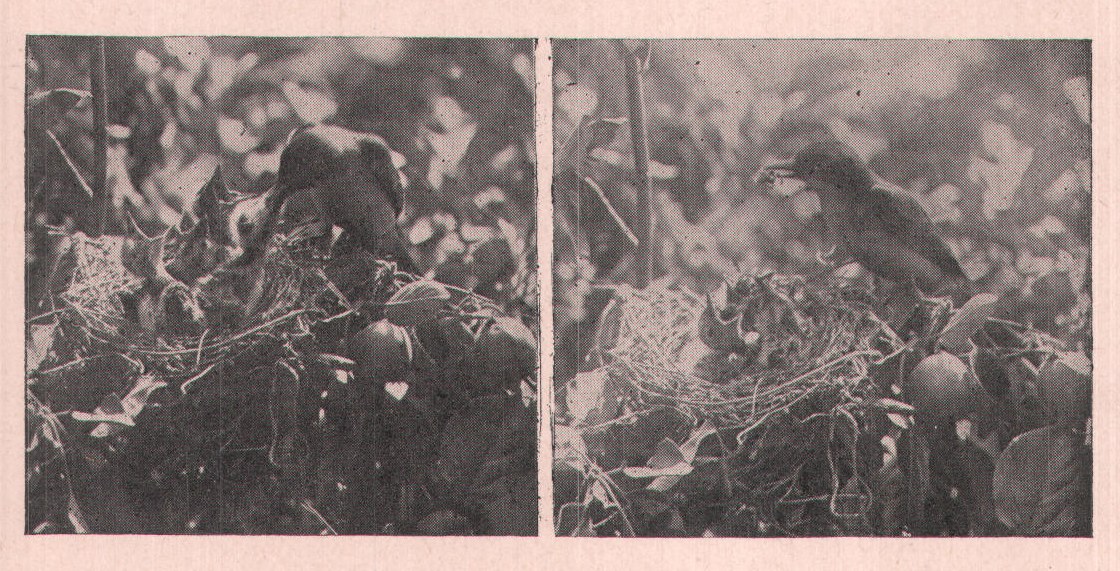
Although Kingbirds are commonly found about man's habitations, they have their likes and dislikes; every stranger is considered as an enemy until he has proved otherwise. The notes of Kingbirds are loud, sharp, metallic "tsee" 's, that have a disagreeable sound and carry too far for the comfort of any person who has no business in an orchard. A pair of Kingbirds, I believe the same ones each season, returned every year to a certain orchard. As they had seen me pass through their domains so often, I thought that perhaps they might prove friendly with me and my camera, so I started to visit them one morning, armed photographic- ally. As I approached the orchard they came out to meet me, not with words of welcome, but with their usual penetrating notes of warning. When I paused beneath their nest they became so vociferous that they put the whole orchard population into a panic; Robins, Bluebirds, Chipping and Song Sparrows, Orioles, House Wrens and a pair of Tree Swallows, swarmed about me all giving their various notes of distress and alarm. It required but a few minutes of this noise to bring forth the farmer to investigate. Fig. 239.
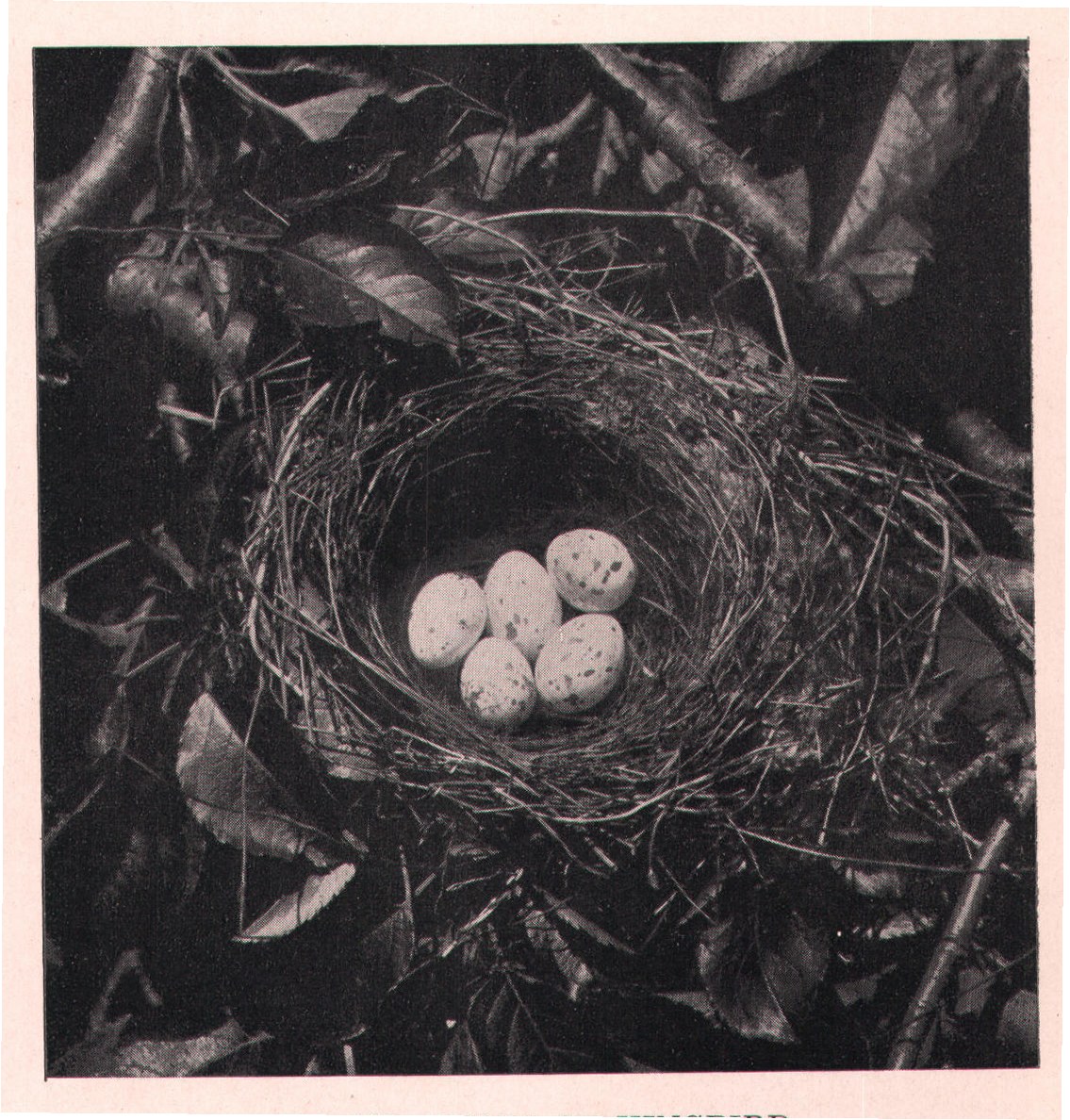
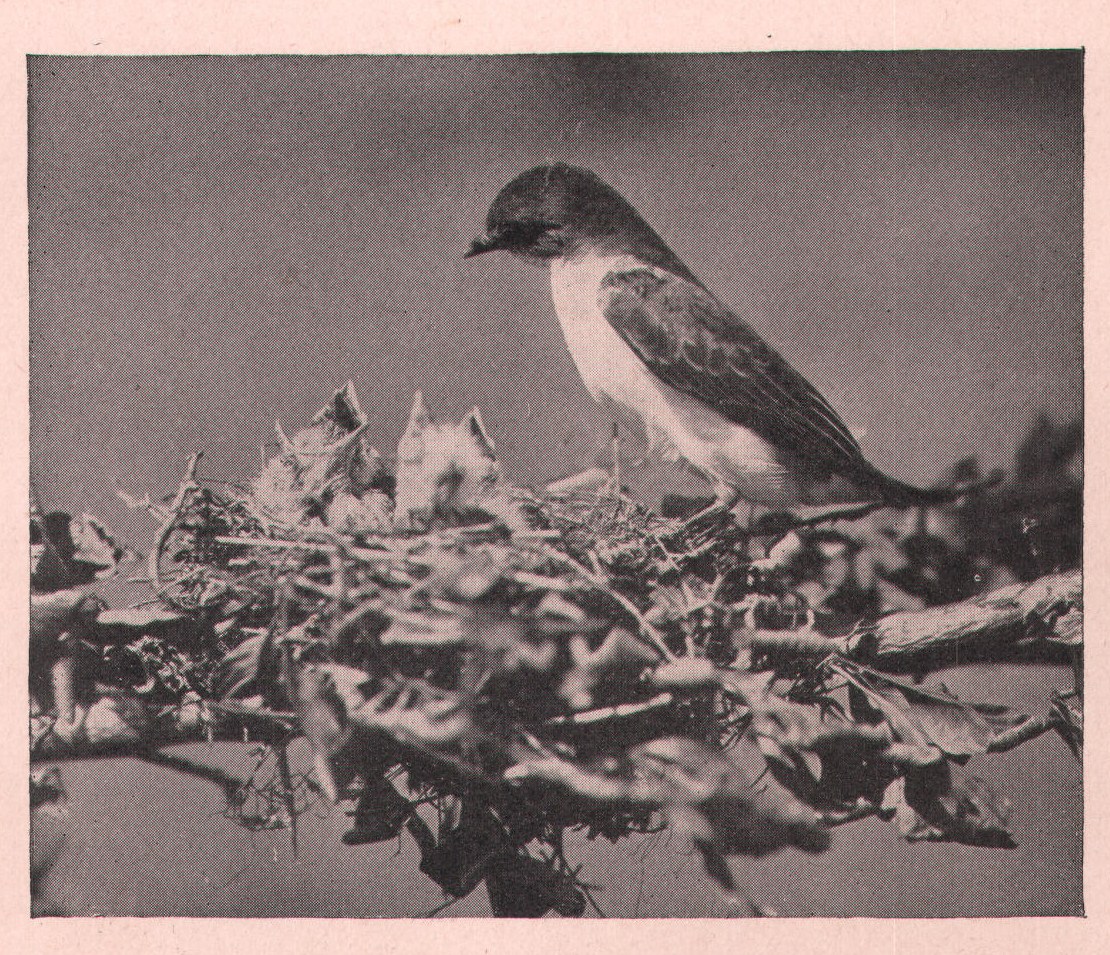
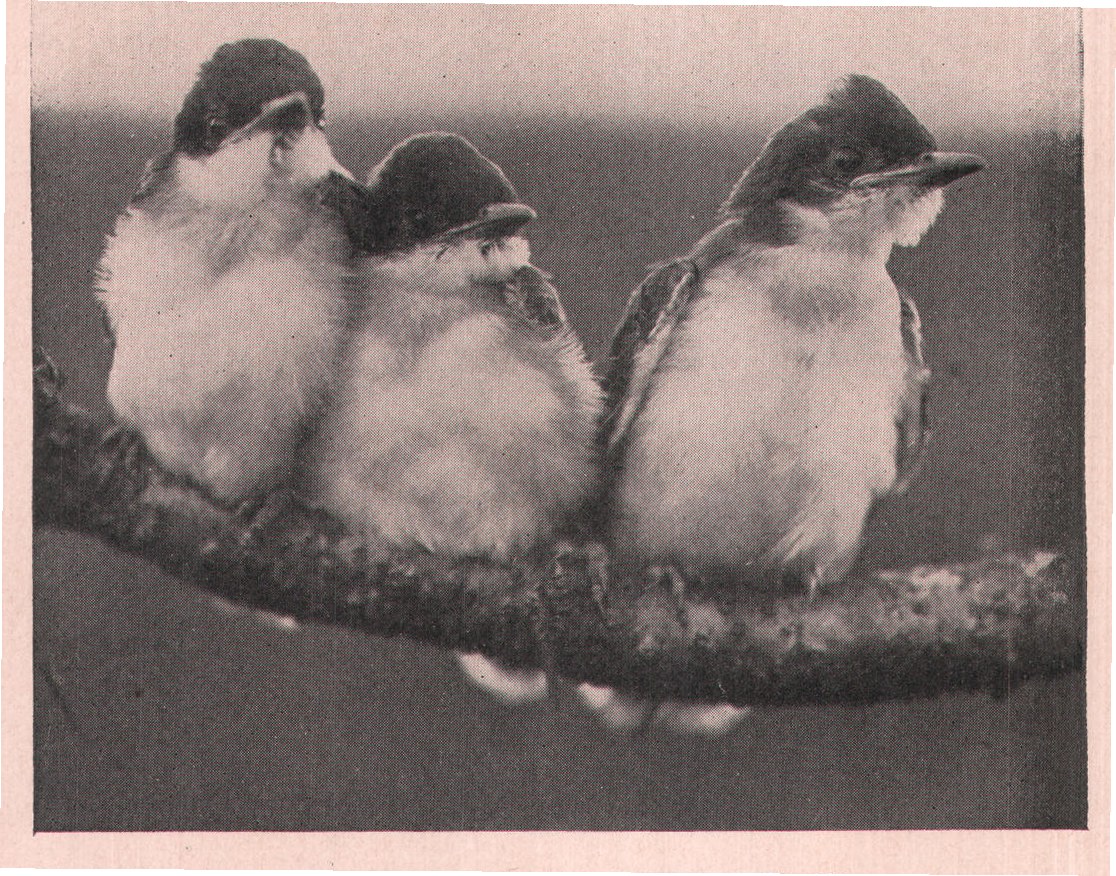
I first made peace with the owner of the orchard and then tried to do the same with the birds, the latter being a much more difficult matter. It required visits of an hours duration on six different days before the Kingbirds had sufficient confidence to return and feed their young while I was concealed in the tree. Kingbird nests are quite large affairs of rootlets, grasses, gray fibres, string, paper, etc. Their four or five creamcolored eggs are very handsomely spotted with reddishbrown. Their food consists almost wholly of insects that are caught in the air. The birds have their favorite lookout perches and, so keen is their sight, that they will note passing insects at a distance of fifty yards and dash out to seize them, a loud snapping of the mandibles testifying to their success and of the demise of another insect. Many winged insects enter into their bill-of-fare. Large grasshoppers, dragonflies, cicadas, etc., are favorites and are even fed to the little kingbirds while in the nest. Figs. 240, 241 She fed them spiders, millers, small wasps, dragon-flies, etc.