Home › Contents › Chebec or Least Flycatcher
Chebec or Least Flycatcher
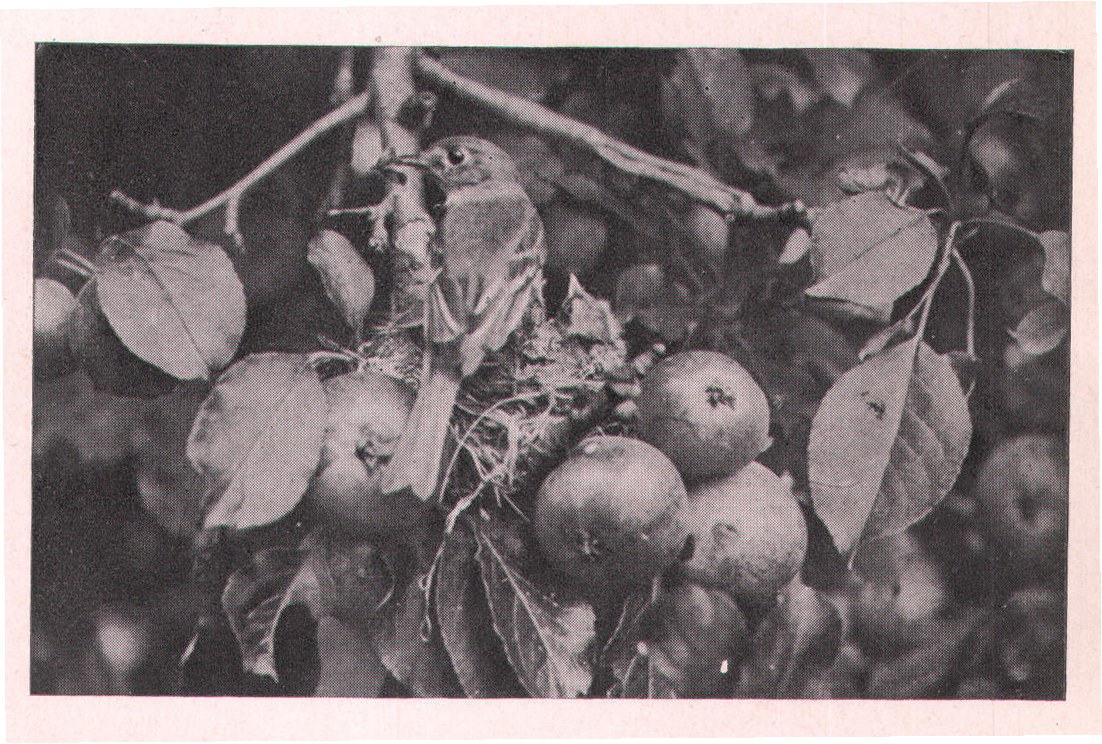
The pair of Least Flycatchers, with which this chapter deals, built their nest, as may be very plainly seen in the photographs, in an apple tree. This tree was located within twenty feet of the house of a friend of mine and also of the birds.
We saw the very foundation built, in fact we noticed them carrying almost the first materials that entered into Fig. 54. The nest was daintly set among a cluster of green apples. it. The building of the home occupied the two of them for three days. They did not work very steadily for there were a great many flies and moths to be caught. The male had a favorite lookout perch at the very apex of a pear tree; he would often sit there for an hour at a time singing his simple and homely song, just a sharp, snappy "che-bec," accompanying each syllable with a quick jerk of his head. It was a finely made nest, very firmly quilted together, of gray plant fibres, string, horsehair and fine grass, bound very tightly to its supporting twigs. A week after the nest was completed, it contained three, creamy-colored eggs; she laid no more but immediately commenced sitting, hour Fig. 55. Many millers, as well as other insects, were fed to the young Chebecs. after hour and day after day. Sometimes she did not even leave at dinner time for her mate was very thoughtful and often brought her moths and various kinds of flies. At other times he would start from his lookout perch and fly over her, with that fluttering flight that flycatchers so often affect, just to assure himself that everything went well in his home; at such times he usually uttered the beautiful little trill that these flycatchers often make when they are pleased with themselves or their surroundings.
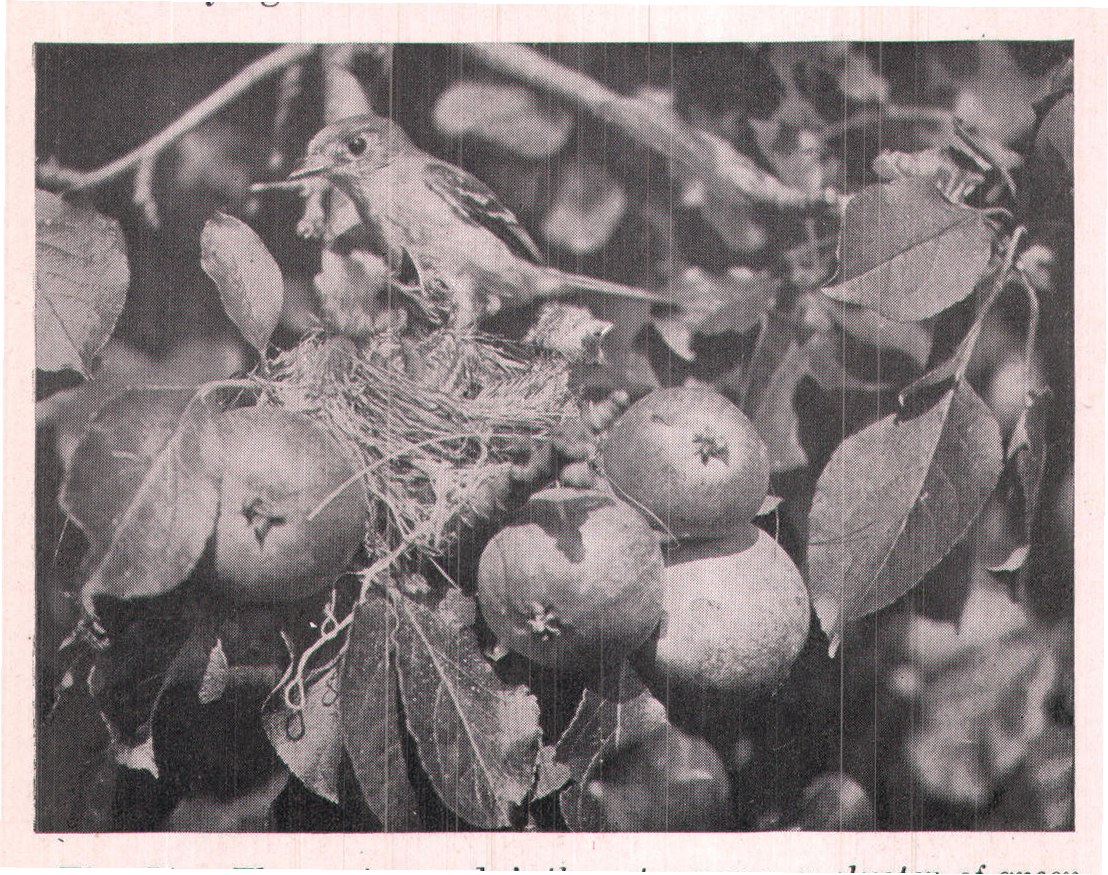
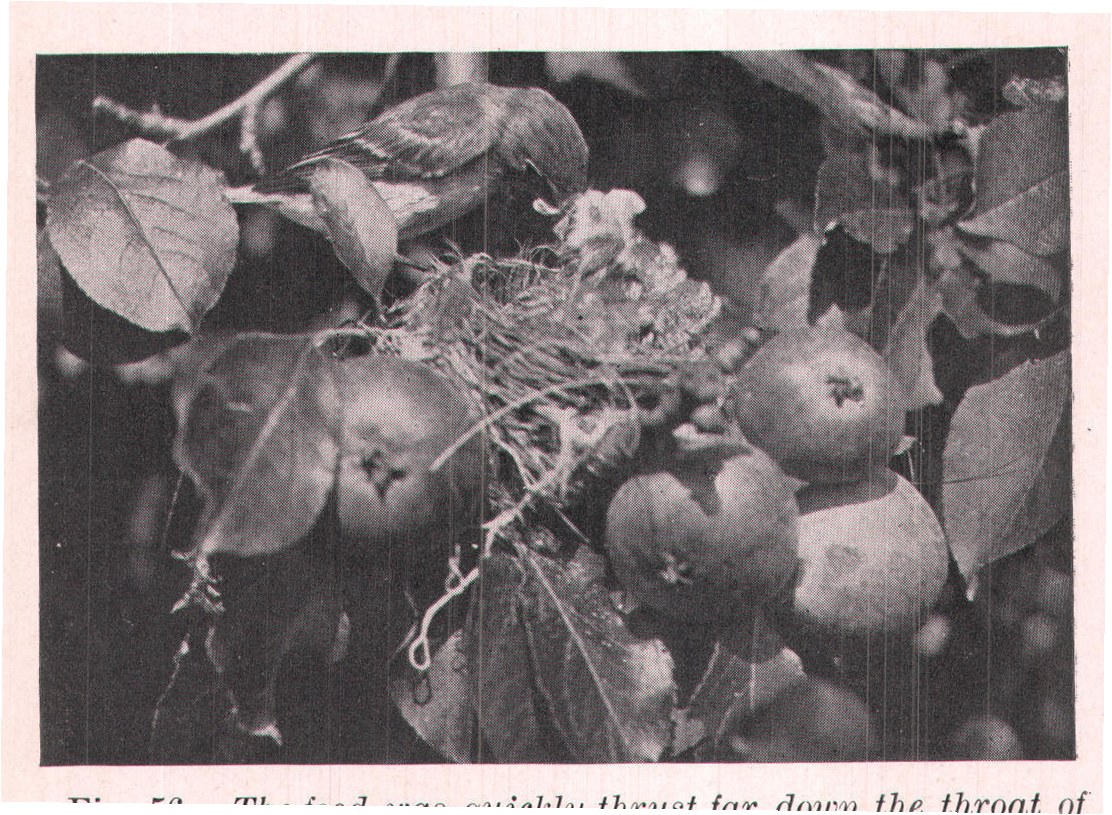
In due course of time the eggs hatched. When the young were ten days old we made our first photographs. The nest Fig. 56. The food was quickly thrust far down the throat of the hungry bird-baby. was about ten feet from the ground, but we pulled the limb down and tied it so that their home was only eight feet up. We then backed a large covered wagon up close to the nest and from within made quite a series of pictures. The little mother was brooding the young as we backed the wagon up and, although so large an object coming so close must have frightened her, she stayed "aboard" the nest until we climbed into the wagon and began setting up the cameras within three feet of her.
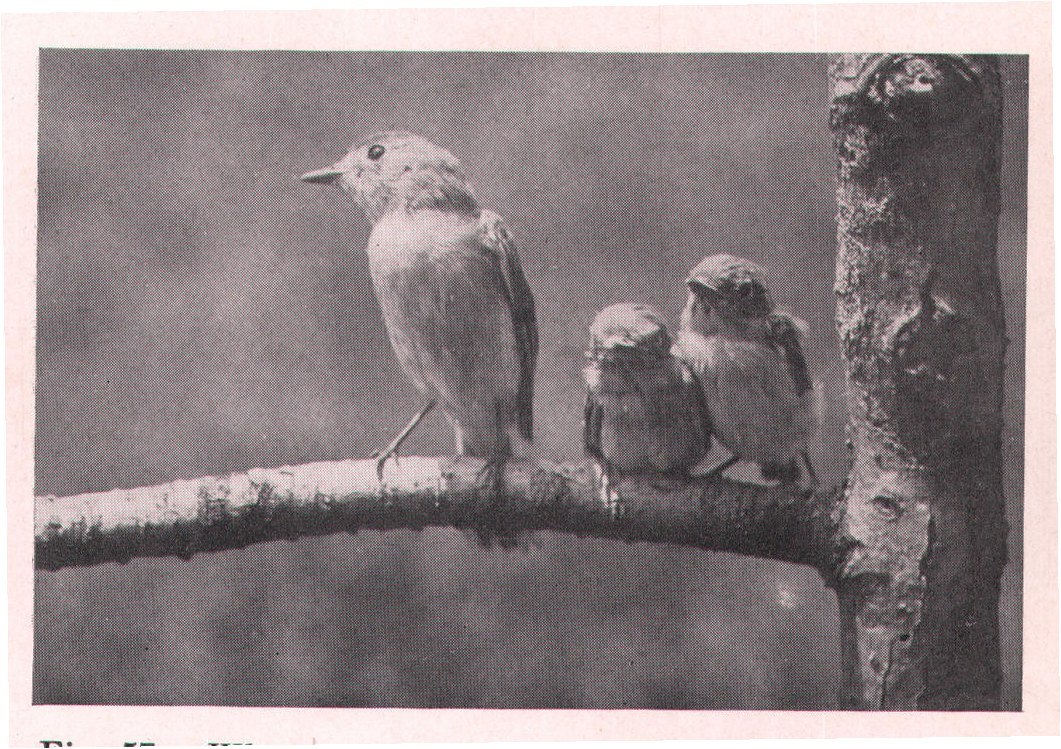
We soon had everything concealed, except the lenses, by large blankets, and the little mother bird paid no more attention to us. The nest was in an exposed position, where the sun shone brightly on it during the forenoon, so she brooded the little birds a great deal. She would stand over them with wings slightly spread, warding off the fierce rays of the sun from her offspring; such was her devotion. About every five minutes her mate would bring some kind Fig. 57. When we placed the little birds on a branch, mother Chebec at once fed them and then looked long at the glass "eye" staring at her. of a winged insect for the little ones, and she would instantly dart down into the coolness of the foliage below, only to return in a few minutes to take up her task.
This pair of birds and the three young remained about the orchard until the end of summer; the next year a pair, and I think it was the same, had a nest within a few feet of where the other was, but this time it was placed where the sun did not shine on it at all; had she remembered the suffering of the previous year?
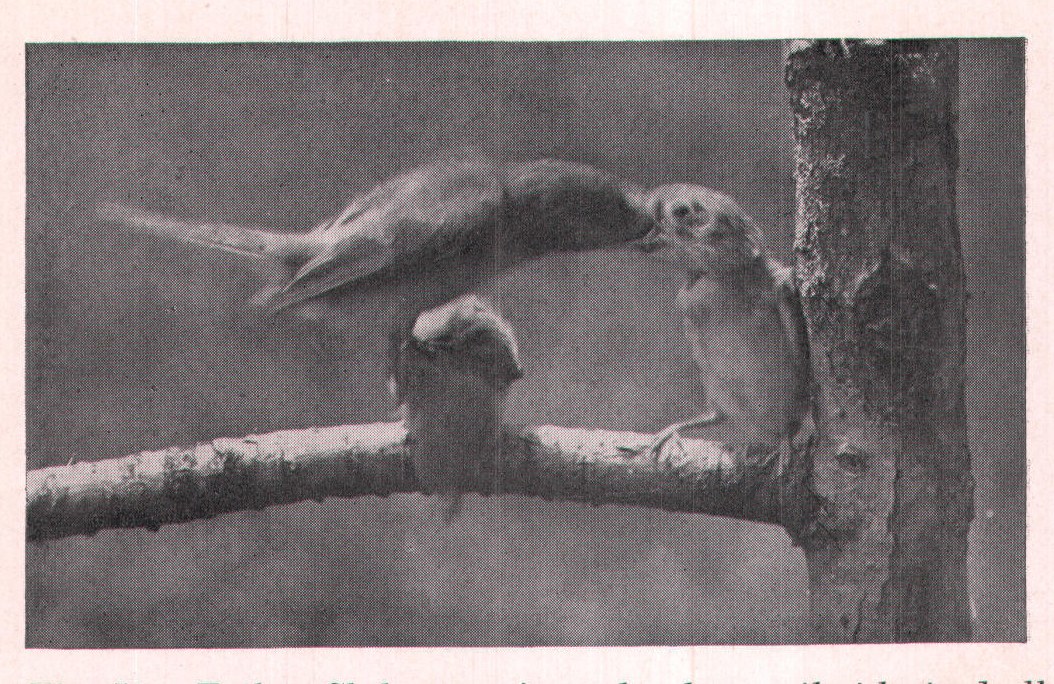
Fig. 58. Father Chebec was in such a hurry that he trod all over one of the little birds while feeding the other.