Home › What I Saw in an Ant's Nest › What I Saw in an Ant's Nest: Darwin
What I Saw in an Ant's Nest: Darwin
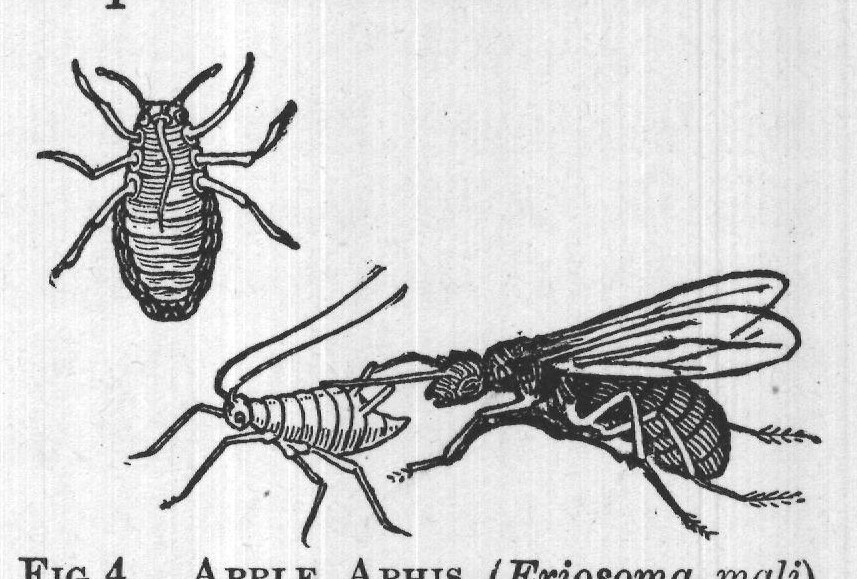
That the relation between the ants and plant-lice are of very stable kind is proved by the interesting remarks of Mr. Darwin, who "removed all the ants from a group of about a dozen aphides on a dock-plant, and ✓ prevented their attendance during several hours."
Careful watching showed that the plant-lice after this interval did not excrete the sweet fluid. Mr. Darwin then stroked the plant-lice with a hair, endeavoring thus to imitate the action of the ant's feelers, but not a single plant-louse seemed disposed to emit the secretion. Thereafter a single ant was admitted to their company, the insect, in Mr. Darwin's words, appearing, " by its eager way of running about, to be well aware what a rich flock it had discovered." The ant first stroked one aphis and then another, each insect excreting a drop of the sweet juice “ as soon as it felt the antennæ;" and " even the quite young aphides behaved in this manner, showing that the action was instinctive, and not the result of experience." If, as Mr. Darwin remarks, it is a convenience for the aphides to have the sweet secretion removed, and that "they do not excrete solely for the food of the ants," the observation does not in any degree lessen the curious nature of the relationship which has become established between the ants and their neighbors, or the interesting features in ant life which have inaugurated and perpetuated the habit. Not less remarkable are the "slave-making" instincts of certain species of ants. It may be safely maintained that the slave-making habit forms a subject of more than ordinary interest not merely to naturalists but to metaphysicians given to speculate on the origin and acquirement of the practices of human existence.