Home › The Story of a Strange Land › The Story of a Strange Land: Yellowstone
The Story of a Strange Land: Yellowstone
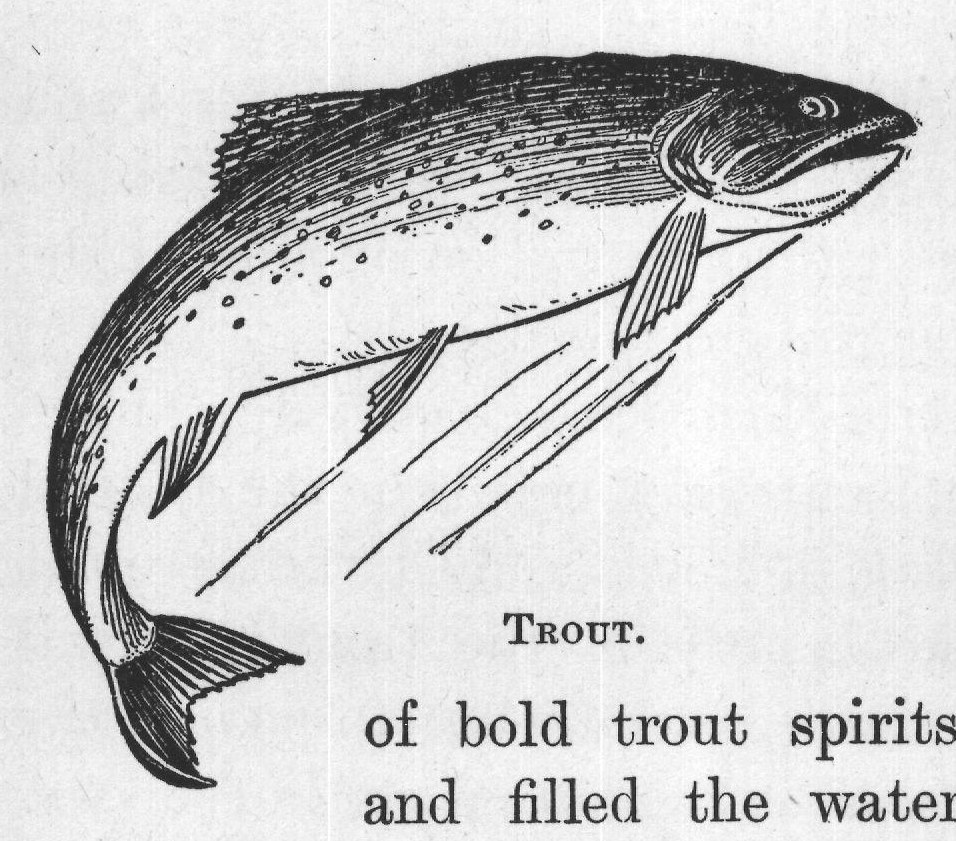
Year after year, as the spawning-time came on, they leaped against the falls of the Gardiner, the Gibbon, and the Firehole Rivers, but only to fall back impotent in the pools at their bases. But the mightiest cataract of all, the great falls of the Yellowstone, they finally conquered, and in this way it was done: not by the trout of the Yellowstone River, but by their brothers on the other side of the Divide. These followed up the Columbia to the head-waters of the Snake River, its great tributary, past the beautiful Heart Lake, and then on to the stream now called Pacific Creek, which rises on the very crest of the Divide. In the space between this stream, which flows west to help form the Snake River, and a smaller stream now called Atlantic Creek, flowing down the east slope of the Divide, the great chain of the Rocky Mountains shrinks to a narrow plateau of damp meadow, not a fourth of a mile in width; and some years, when the snows are heavy and melt late in the spring, this whole region is covered with standing water. The trout had bided their time until they found it so, and now they were ready for TROUT. action. Before the water was drained they had crossed the Divide and were descending on the Atlantic side toward the Yellowstone Lake. As the days went by, this colony of bold trout spirits grew and multiplied and filled the waters of the great clear lake, where their descendants remain to this day. And no other fishes - not the chub, nor the sucker, nor the white-fish, nor the minnow, nor the blob had ever climbed Pacific Creek. None of them were able to follow where the trout had gone, and none of them have ever been seen in the Yellowstone Lake. What the trout had done in this lake their victories and defeats, their struggles with the bears and pelicans, and with the terrible worm, joint enemy of trout and pelicans alike - must be left for another story.
So the trout climbed the Yellowstone Falls by way of the back staircase. For all we know, they have gone down it on the other side. And in a similar way, by stealing over from Blacktail Deer Creek, they overcame the Undine Falls in Lava Creek and passed its steep obsidian walls, which not all the fishes in the world could climb.
In the Gibbon River the cataracts have proved to the trout an impassible barrier; but, strangely enough, its despised associate, the sluggish, chunky blob, the little soft-bodied, smooth, black tadpole-like fellow, with twinkling eyes and a voracious appetite - a fish who cannot leap at all - has crossed this barrier. Hundreds of blob live under the stones in the upper reaches of the stream, the only fish in the Gibbon waters.
There he is, and it is a standing puzzle even to himself to know how he got there. We might imagine, perhaps, that some far-off ancestor, some ancient Queen of the Blobs, was seized by an osprey and carried away in the air. Perhaps an eagle was watching and forced the osprey to give up its prey. Perhaps in the struggle the blob escaped, falling into the river above the falls, to form the beginning of the future colony. At any rate, there is the great impassable waterfall, the blob above it and below. The osprey has its nest on a broken pine tree, above the cataract, and its tyrant master, the bald eagle, watches it from a still higher crag whenever it goes fishing.
Two years ago the Hon. Marshall McDonald, whose duty as United States Fish Commissioner it is to look after the fishes wherever they may be, sent me to this country to see what could be done for his wards. It was a proud day when I set out from Mammoth Hot Springs astride a black cayuse, or Indian pony, which answered to the name of Jump, followed by a long train of sixteen other cayuses of every variety of color and character, the most notable of all being a white pony called Tinker. At some remote and unidentified period of her life she had bucked and killed a tradesman who bestrode her against her will, and thereby, as in the old Norse legends, she has inherited his strength, his wickedness, and his name. And when, after many adventures, I came back from this strange land and told the story of its fishes other men were sent out from Washington with nets and buckets.
They gathered up the trout and carried them to the rivers above the falls, and now all the brooks and pools of the old lava-bed, the fairest streams in the world, are full of their natural inhabitants.