Home › Volumes › Game Birds
Rails, Gallinules, Coots
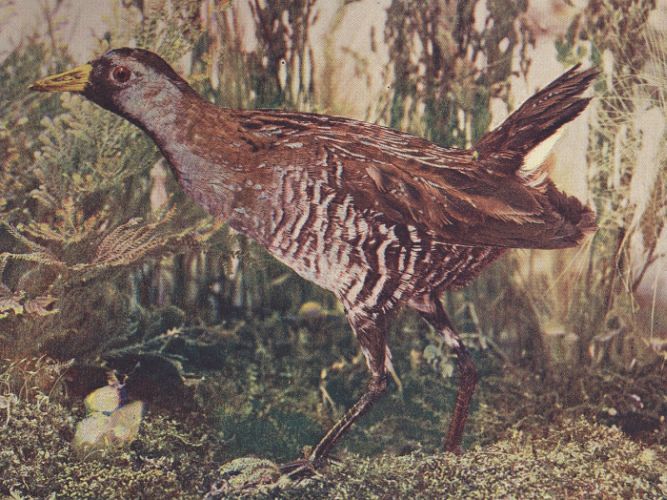
The exceedingly shy, skulking rails, or marsh hens, spend their lives hidden among the sedges of marshes, where they run very lightly over the oozy ground, picking up their food from the surface rather than treading it out of the mud with their long toes. Like the gallinules, they associate with their kin where food is abundant rather than from pure sociability. In spite of their short, rounded wings, they cover immense distances in their migrations; but when flushed in the marshes, where they might remain unsuspected did not their voices betray them, they rise a few feet above the sedges, and, dragging their legs after them, quickly drop down among the grasses they are ever loth to leave. All manner of absurd fables about the rails being blown in from sea, and not hatched from eggs, and certain alleged mysteries of their nests, that human eye, it is said, has never looked upon, are palmed off upon the credulous, not only by the superstitious darkies in southern marshes, but by white people of intelligence, also. Rails are birds of medium or small size; their plumage differs little in the sexes or with age or season; the body is compressed to a point in front, but broad and blunt behind, this wedge shaped figure enabling the bird to squeeze through the mazes of aquatic undergrowth where it finds its constant home. "As thin as a rail" is a truly significant term. Gallinules and coots have a bare, horny plate on the forehead; some of the former are superbly colored. They keep more to the muddy shores of lagoons and ponds and less hidden among the sedges than the rails. Graceful walkers, they are good swimmers also, though their toes lack the lobes that enable the coots to pass much of their lives on the water. Coots live in flocks.