Home › Volumes › Game Birds
Herons and Bitterns
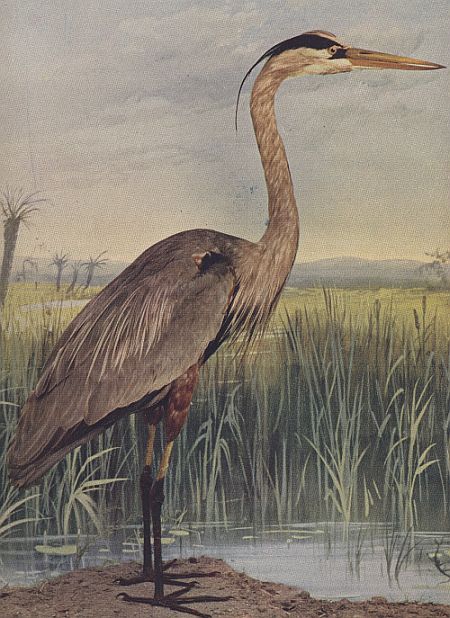
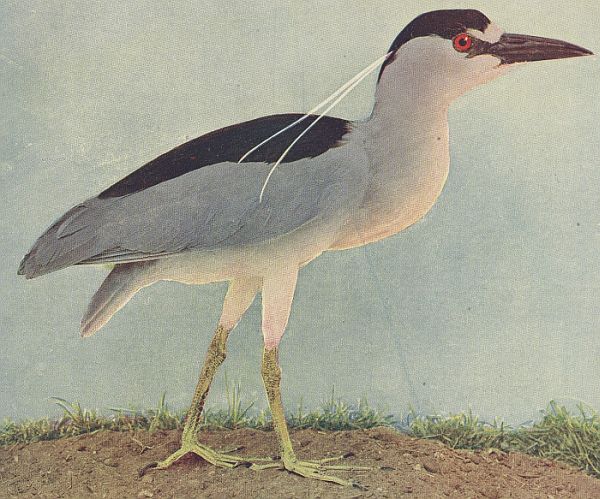
Birds of this family, that contains about seventy-five species, mostly confined to the tropics, have certain peculiar feathers or "powder-down tracts" which, when worn in pairs of two or three, are a fair but superficial mark of the clan. The herons wear three pairs; one on the back, over the hips; one underneath the hips, on the abdomen; and another on the breast. Bitterns lack the pair underneath. Their purpose is not yet known, but some scientists contend that these tracts are phos-phorescent, and that fish are lured by them at night. The plumage is generally loose, adorned with lengthened feathers, some species having beautiful crests and plumes on the back, that are worn in the nesting season. The legs are long and unfeathered, for wading; the four toes, all on the same level, are long and slender, for perching. The bill, which is always longer than the elongated, narrow head, appears to run directly into the eyes. Usually herons nest and roost in flocks, in favorable localities, numbering thousands; but when feeding on the shores of lagoons, rivers, and lakes, solitary birds are seen. Other species, on the contrary, live singly or in pairs all the time.