Home › We and the Plant People › We and the Plant People: Just
We and the Plant People: Just
When the protoplasm of certain cells wants to build hard, tough walls, it uses potash and soda or even silica, which you know glass is made of. Just draw a blade of sedge grass through your fingers if you want to feel the silica in it. You will probably cut your fingers, but that will help make you remember about silica. Then the protoplasm uses iron to color the petals and other parts of the plant. It uses magnesia, too, and salt and lime and a number of other materials for building walls or making dyes or something else.
Every material in our own bodies is found in plants, and sometimes the plants have materials that we do not have.
Of course materials are put together differently in plants from what they are in us. When Mother Nature combines her carbon, hydrogen, oxygen, nitrogen, sulphur, phosphorus, magnesia, iron, and all the other things to make a plant, she does not go to work as she would if she were going to make an animal.
Just what the difference is it would be difficult to tell, but there is a difference.
Plants contain a good deal of sugar as a rule, and if you remember cloves you will admit that at least some flowers are made of spice, for cloves are the dried flower buds of the clove tree.
Cinnamon is the bark of a plant, and if you are acquainted with orange trees you will be willing to say they are "made of sugar and spice and everything nice," for the whole tree, wood, bark, stems, leaves, flowers, and fruit, is fragrant and spicy.
Oil is another common substance in plants, and it is made from the materials of starch which, as we know, are carbon, hydrogen, and oxygen; cotton-seed oil, olive oil, and castor oil we are all familiar with. All nuts contain a great deal of oil, and the skin of a fresh-picked orange is so full of it that it runs down our fingers when we cut the orange.
All the things in a plant - starch, sugar, oils, spices, wood, bark - everything is made by the wonderful protoplasm in the cells. Starch and the food taken up by the roots pass through all parts of the plant by the sap tubes, and as the sap goes along, each living cell draws into itself the substances from the sap that it needs, and these it combines into the things it wants to make. Some of the cells in an orange skin, for instance, attract out of the sap the materials to make the fragrant, stinging oil that fills the fresh skin, while other cells attract the materials to build the white cottony covering inside the outer skin, and so the cells in each part of the plant take out what they need to build with.
WHAT BECOMES OF THE FLOWERS?
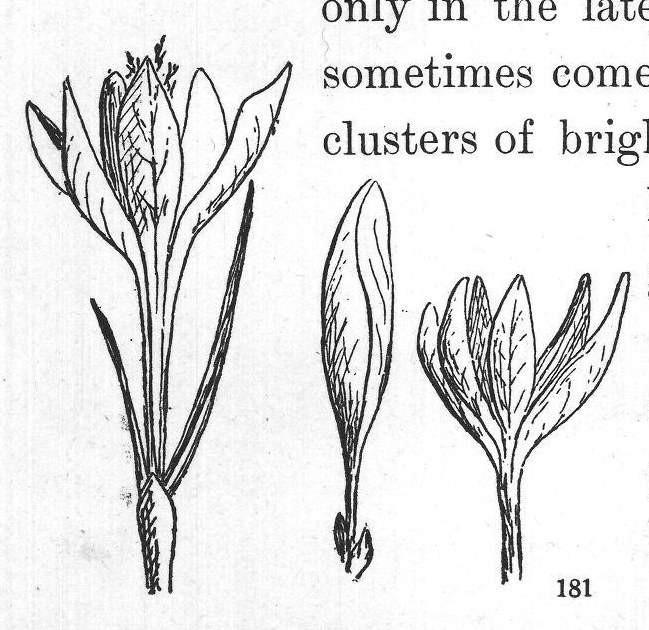
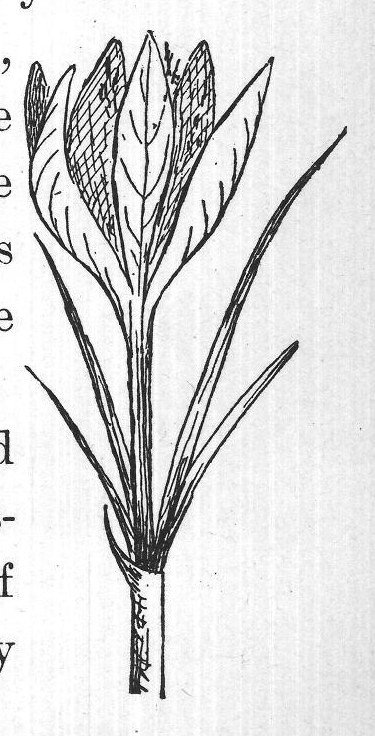
EARLY in the spring the snowdrops and crocuses peep out, and then they go away.
We do not think much about it, for other flowers have come in their places.
Spring beauties and bloodroots shine in the woods, and then they go away. But the mandrakes have come with their umbrella leaves, and then the columbines and roses ask for a welcome. After awhile we can find no more mandrakes and columbines, only yellow apples and brown seed-pods.