Home › Contents › The Hyacinth's Sceptre
The Hyacinth's Sceptre
KINGS bear a sceptre, and so do I.
Theirs is a symbol of power, and so is mine.
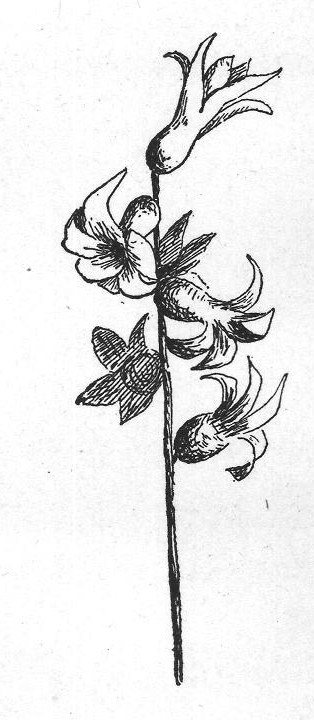
Theirs is a costly rod with an emblem at the top Mine is a tall green rod bearing flower bells.
My sceptre is called a "scape." "Scape" means "sceptre," the sign of kings.
TUNICS.
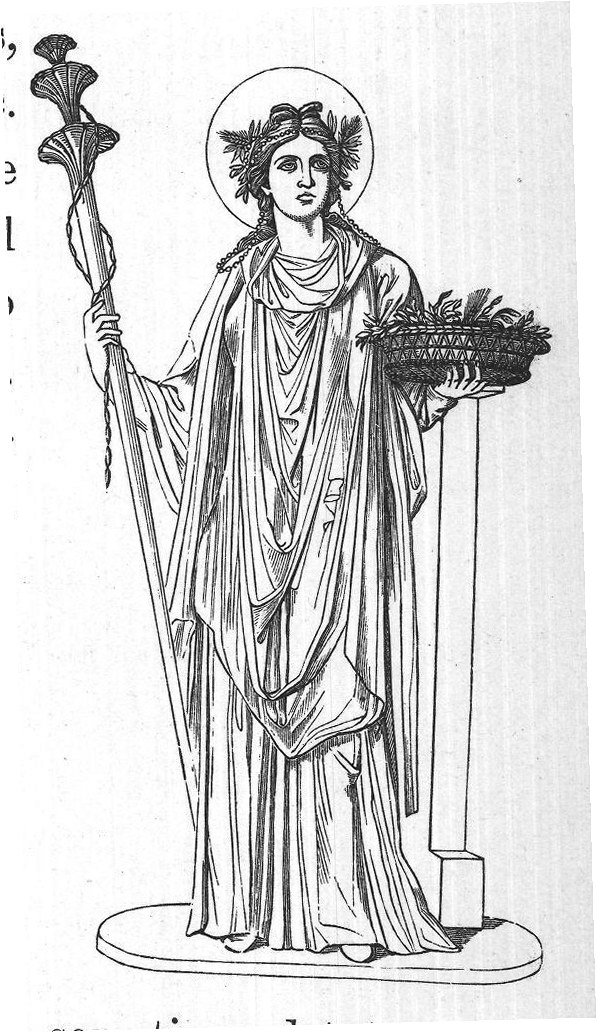
A TUNIC, as everybody knows, is a dress worn by the old Romans. The Greeks wore a garment very much like that of the Romans, and it, too, is often called a tunic.
Tunics did very well in a climate where it was always summer and upon people who did not have to hurry about and work hard. But, graceful as they are, and appropriate to Greece and Italy, they would hardly be suitable for an American business costume in midwinter.
For a tunic is not very close fitting.
It is a loose garment which would be apt to fly away in our Northern gales.
The tunic was sometimes confined at the waist by a girdle and sometimes let to hang loose.
We do not wear tunics, but we admire them very much in pictures, for they show the beautiful lines of the human form instead of concealing and altering them and making them ugly by ridiculous and tightfitting clothes - very often tight in the wrong place, as is the case with modern garments.
But there are tunics worn in America, and they are never tight in the wrong place, though, truth to tell, they are not loose and flowing like the Roman or Greek tunic.
Perhaps you do not know that so commonplace an object as an onion wears a tunic, yet I assure you it is true. And the onion does not come from Rome or Greece, that is, probably not. As far as we can find out, that homely vegetable first saw the light in the southwestern part of Asia, but it was known in Rome and Greece at a very early date, and lived in those places long before it found its way to us.
So it has seen more tunics than we have, if it is not a native Greek or Roman. Not that its garments look at all like a classical tunic!
Probably its bulb is said to be "tunicated," or covered with tunics, because the different scales wrap about it like so many garments, and in a general way the word "tunic" is used to mean any garment.
The hyacinth, too, has a tunicated bulb. It came from the Levant, a country where people wear loose garments like the Greek and Roman tunic. I do