Home › Rings from the Earliest Period › Rings from the Earliest Period: French
Rings from the Earliest Period: French
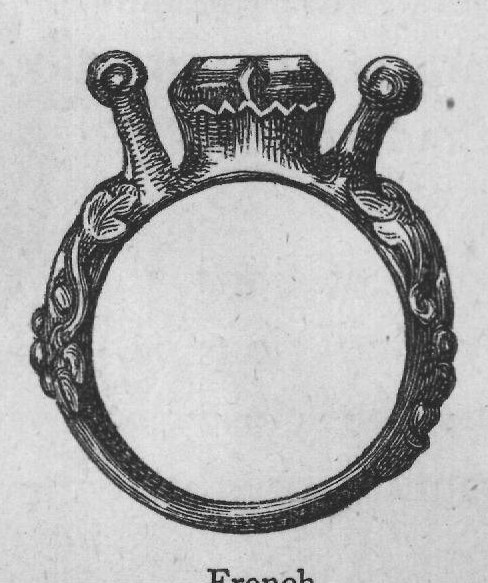
Annexed are representations of some remarkably fine rings (French) dating from the close French. of the fourteenth century or the commencement of the fifteenth.
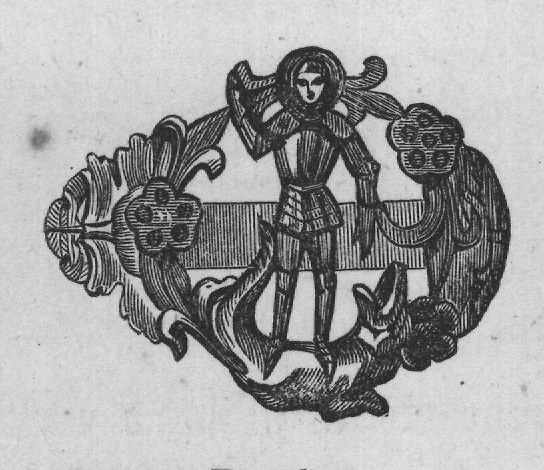
A handsome ring, of silver gilt, representing St. George and the Dragon, belongs to the end of the fifteenth century. There is a border of roses and fleurs-de-lys around the saint.
French.
French.
The following examples of French art of the sixteenth century are in the Museum of the Louvre:- French.
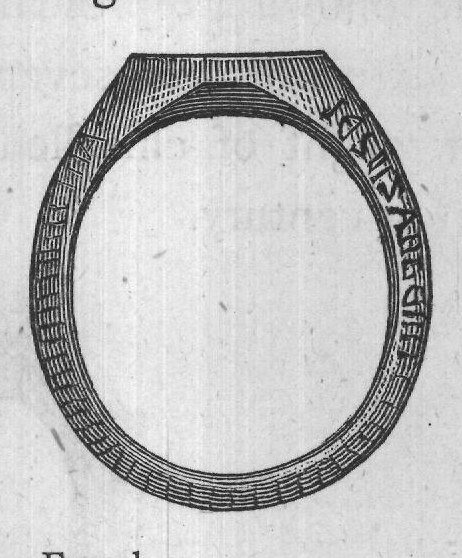
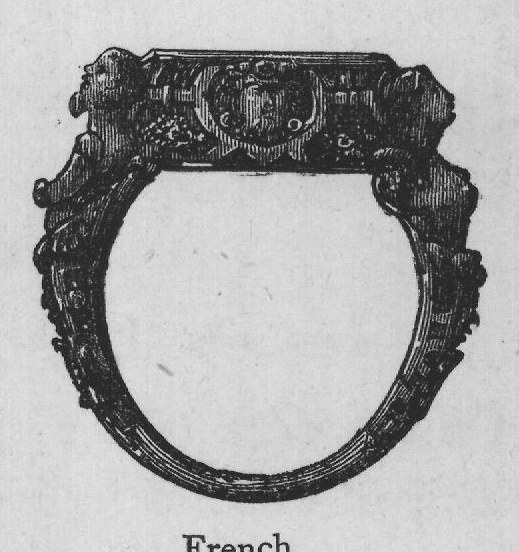
The annexed illustration represents an escutcheon ring (from Viollet le Duc) of the Middle Ages, and is thus described by M. Chabouillet in his 'Catalogue Général.' The Cabinet of Medals at Paris possesses a ring dating from the commencement of the fifteenth century, if one may judge from the form of the letters, and that of the helmet engraved on the seal. The ring is of massive gold; the arms, engraved hollow on the seal, represent a shield, charged with a dragon, carrying (perhaps) some prey in his jaws. On the two sides of the intaglio are two names- MSCALX19 'Escutcheon' ring. French.
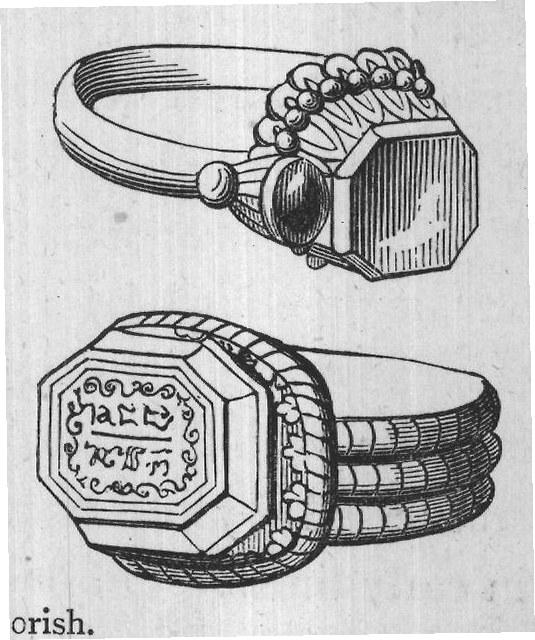
MARIN, PIXIAN. On the sides of the ring are two inscriptions in relief, one only of which is legible, and this is taken from St. Luke-' Jesus autem transiens per medium illorum ibat.' The accompanying are from Chabouillet's 'Orfévrerie de la Rénaissance,' in the Fould Collection (dispersed by auction in 1860).
French.
G These engravings are from Labarte's ' Orfévrerie du XV. et XVI. Siècles' :- Oot French French.
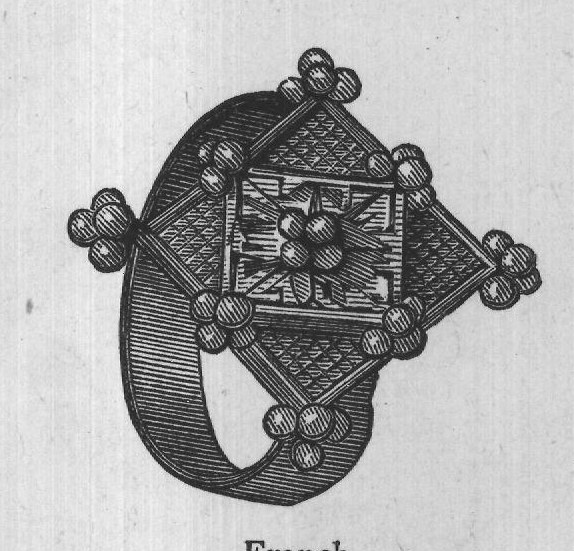
The following represent rings in the Musée Sauvageot, of the sixteenth and seventeenth centuries; one is elaborately wrought of chiselled iron, of French manufacture-- date, 16th century.
French.
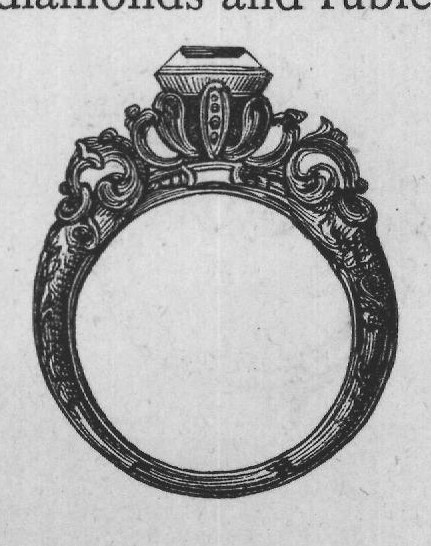
The annexed are two fine specimens of comparatively modern date; one ending in volutes near the bezel, the other enamelled white, red, green, and blue-a turquoise, with diamonds and rubies in settings.
French.
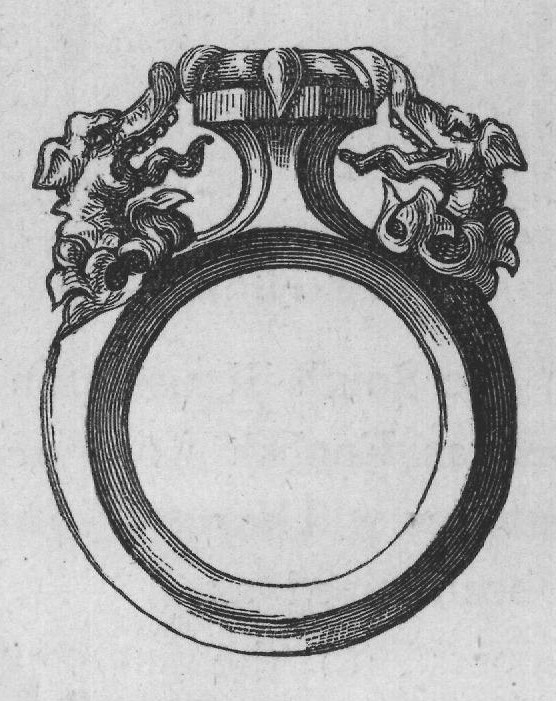
Mr. Fairholt mentions two characteristic specimens of modern French ring-work; one a signet ring, the face engraved with a coat of arms. At the sides two Cupidons repose amidst scroll-work partaking of the taste of the Rénaissance. The same peculiarity influences the design of the second ring; here a central arch of five stones, in separate settings, are held by the heads and outstretched wings of Chimaras, whose breasts are also jewelled. Both are excellent designs. 88 Modern French.