Home › The Story of the Elephants › The Story of the Elephants: Mammoth
The Story of the Elephants: Mammoth
THE MAMMOTH Many are the traditions and tales that have clustered round the Mammoth. He is, however, no fabulous product of the 1 The word Mammoth is thought by Pallas and Nordenskiöld to be of Tartar origin. The former asserts that the name originated in the word mamma, which signifies earth (the Mammoth being found frozen in the earth). It was introduced into the languages of Western Europe about two centuries ago, from the Russian. But other writers have attempted to prove that it is a corruption of the Arabic word Behemoth, or "great beast," which in the Book مع PLATE XLVII.
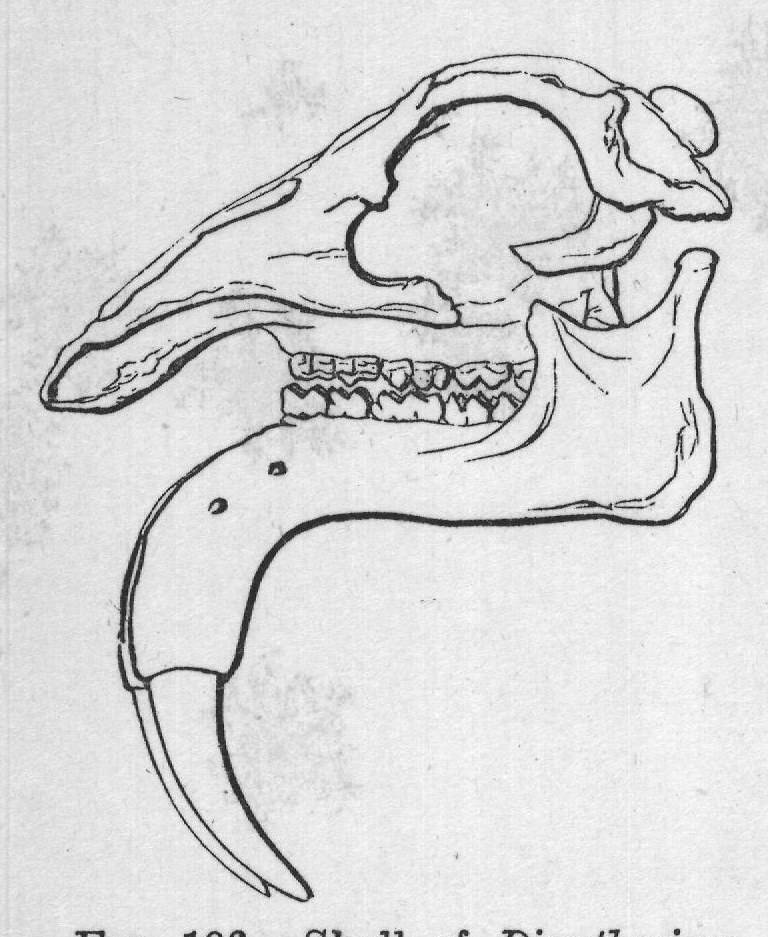
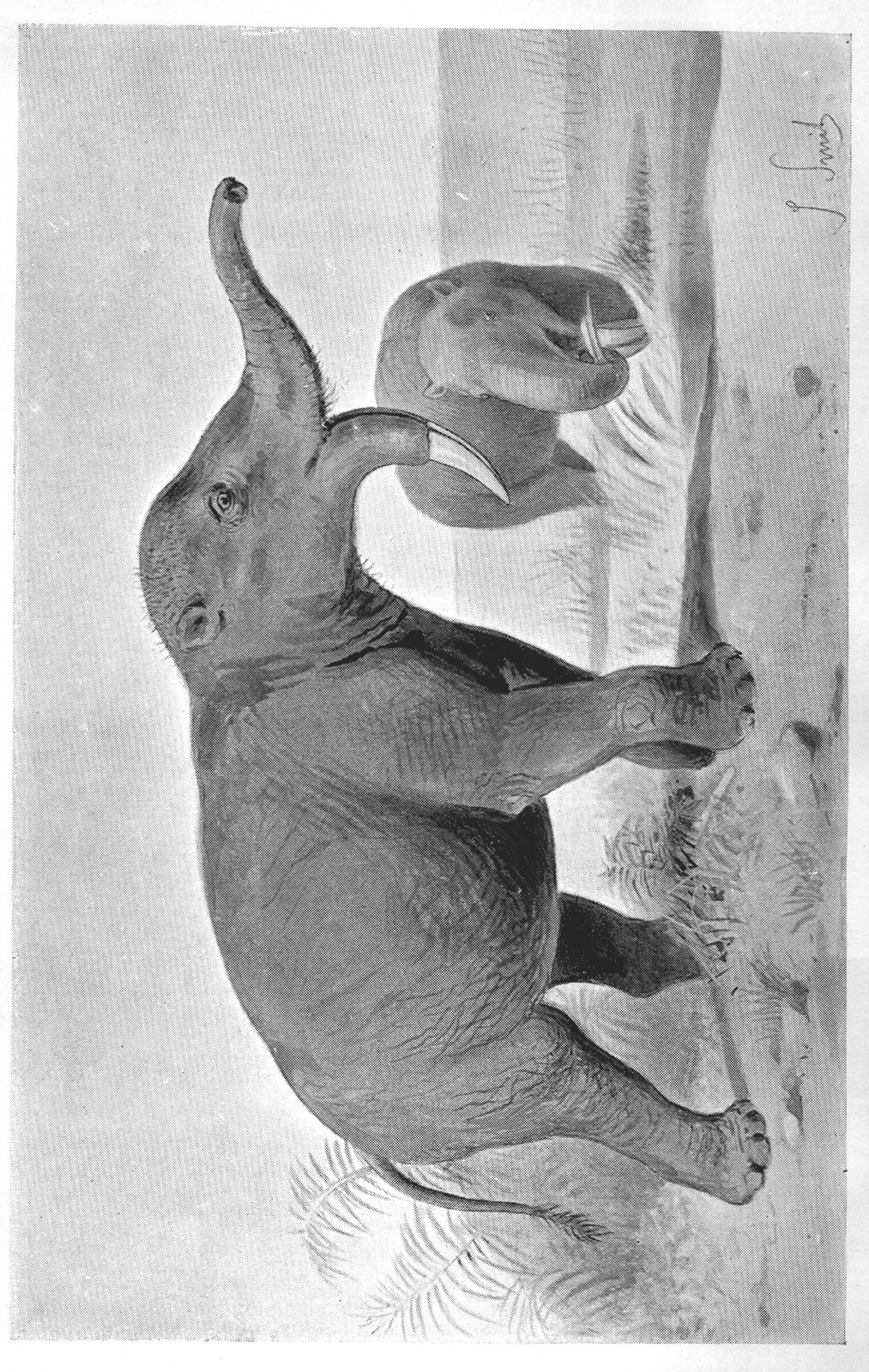
AN ANCIENT ELEPHANTINE MONSTER, DINOTHERIUM. MIOCENE PERIOD. EUROPE. imagination, like the dragon, for he has actually been seen in the flesh, and not only seen, but eaten, both by men and animals! But, for all that, men's minds have been busy for centuries past making up tales, often of the wildest description, about him; and it is little wonder that a creature whose bones are found in the soils and gravels, etc., over more than half the world, and whose body has been seen frozen in Siberian ice, should have given rise to many tales and superstitions. To students of folk-lore these legends are of considerable interest, and to some extent also to men of science. To the latter, however, one of its many points of interest is that palæontology may be said to have been founded on the Mammoth. Cuvier, the illustrious founder of the science of organic remains, was enabled, by his accurate and minute knowledge of the structures of living animals, to prove to his astonished contemporaries that the Mammoth bones and teeth, so plentifully discovered in Europe, were not such as could have belonged to any living elephant, and consequently that there must have existed, at some previous period in the world's history, an elephant of a different kind, and quite unknown to naturalists. This was a new idea, and accordingly one that met with opposition as well as incredulity.
It was thought in those days that whatever animals lived in the past must have resembled those now inhabiting the world, and the idea of extinct types unknown to man, and unknown to the regions where their bones were found embedded below the soil, was of so novel and startling a character as to appear incredible. Besides, the Mosaic account of Creation made no direct reference to extinct animals, and therefore the notion was not to be entertained! of Job signifies an unknown animal. In an ancient Chinese work, of the fifth century before Christ, it is spoken of under the name tien-schu, that is to say, "the mouse which hides itself."