Home › The Story of the Elephants › The Story of the Elephants: Andrews
The Story of the Elephants: Andrews
FIG. 100.-Skull and lower jaw of Maritherium lyonsi, Middle Eocene of the Fayûm, Egypt. (After C. W. Andrews.) Museum at South Kensington he will be able to inspect the models of restored skulls which have been made at the Museum. L.i. nar.
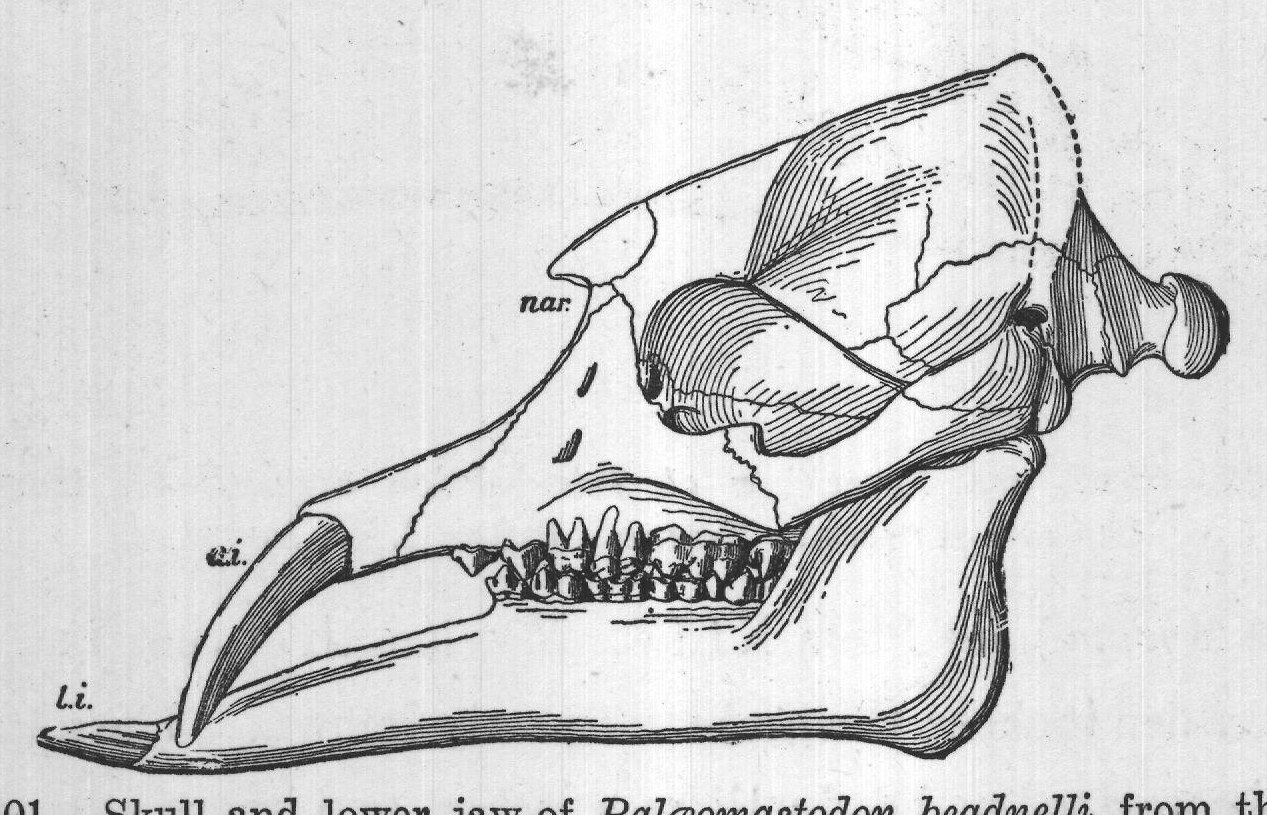
FIG. 101. Skull and lower jaw of Palæomastodon beadnelli, from the Upper Eocene of the Fayûm, Egypt. (After C. W. Andrews.) These are to be seen close to the elephant skeletons in the gallery devoted to fossil mammals.
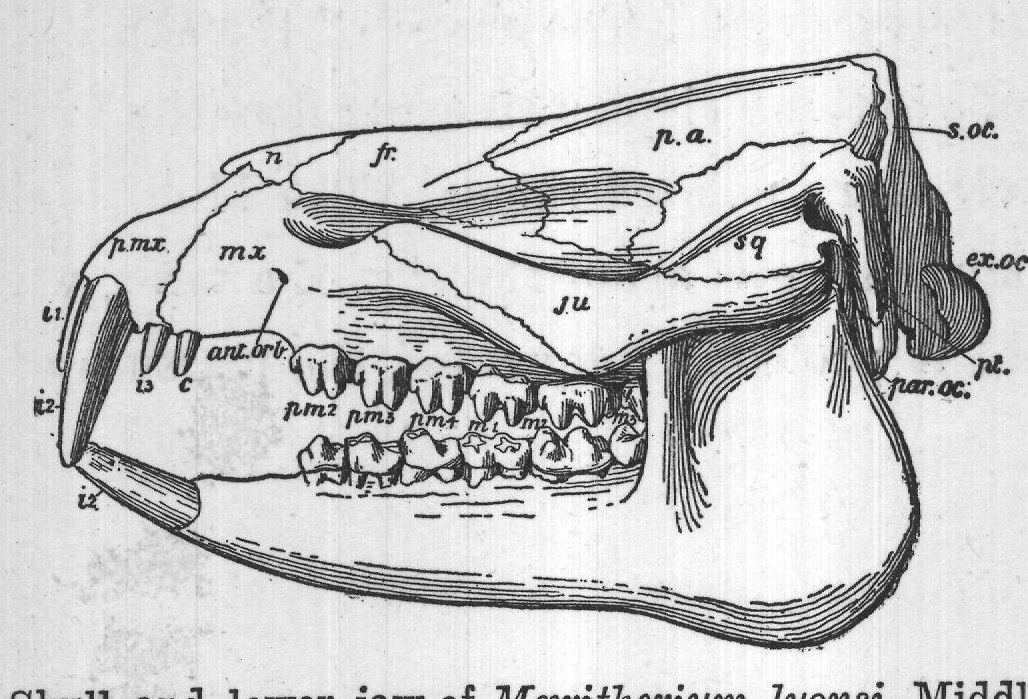
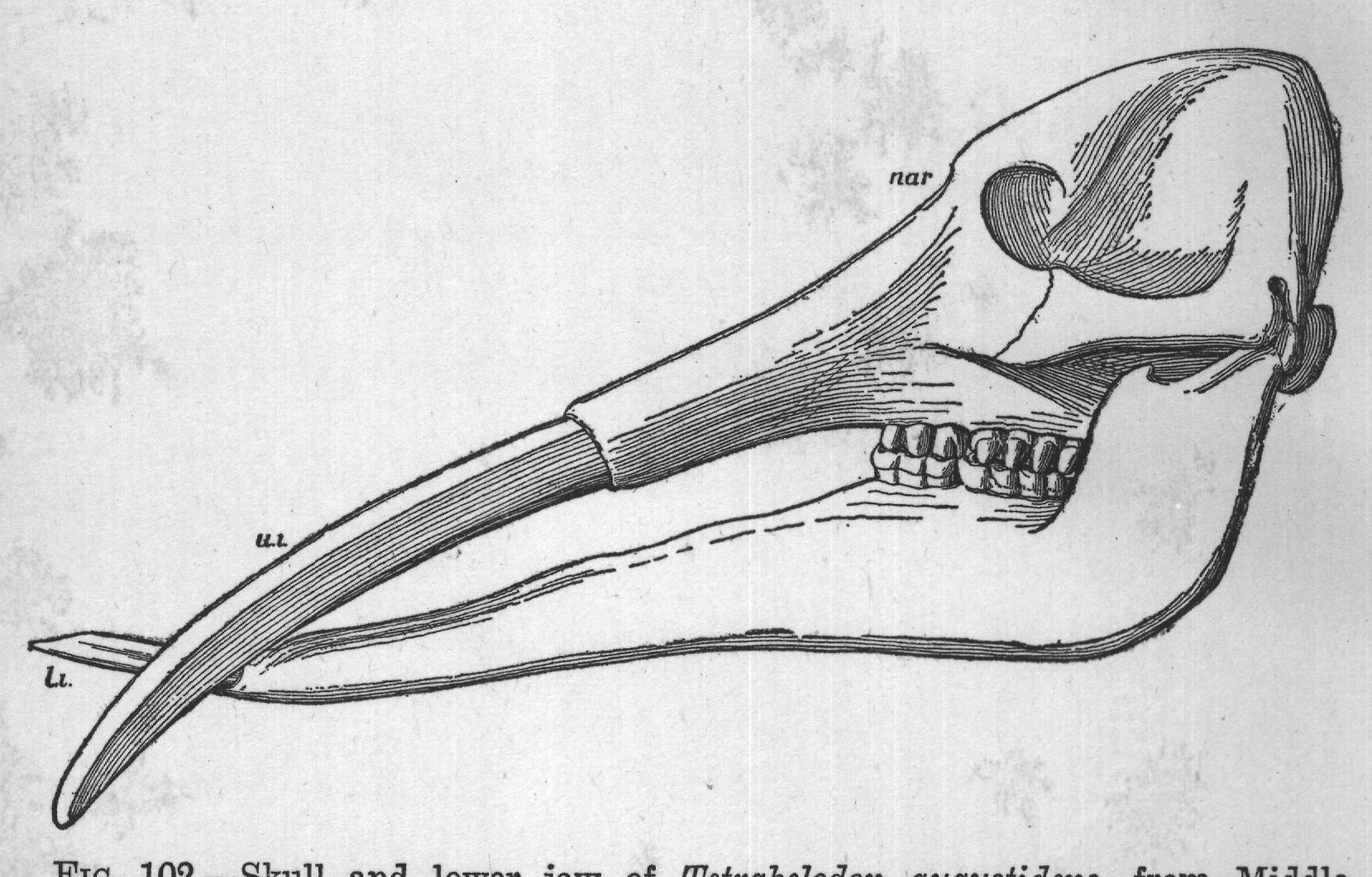
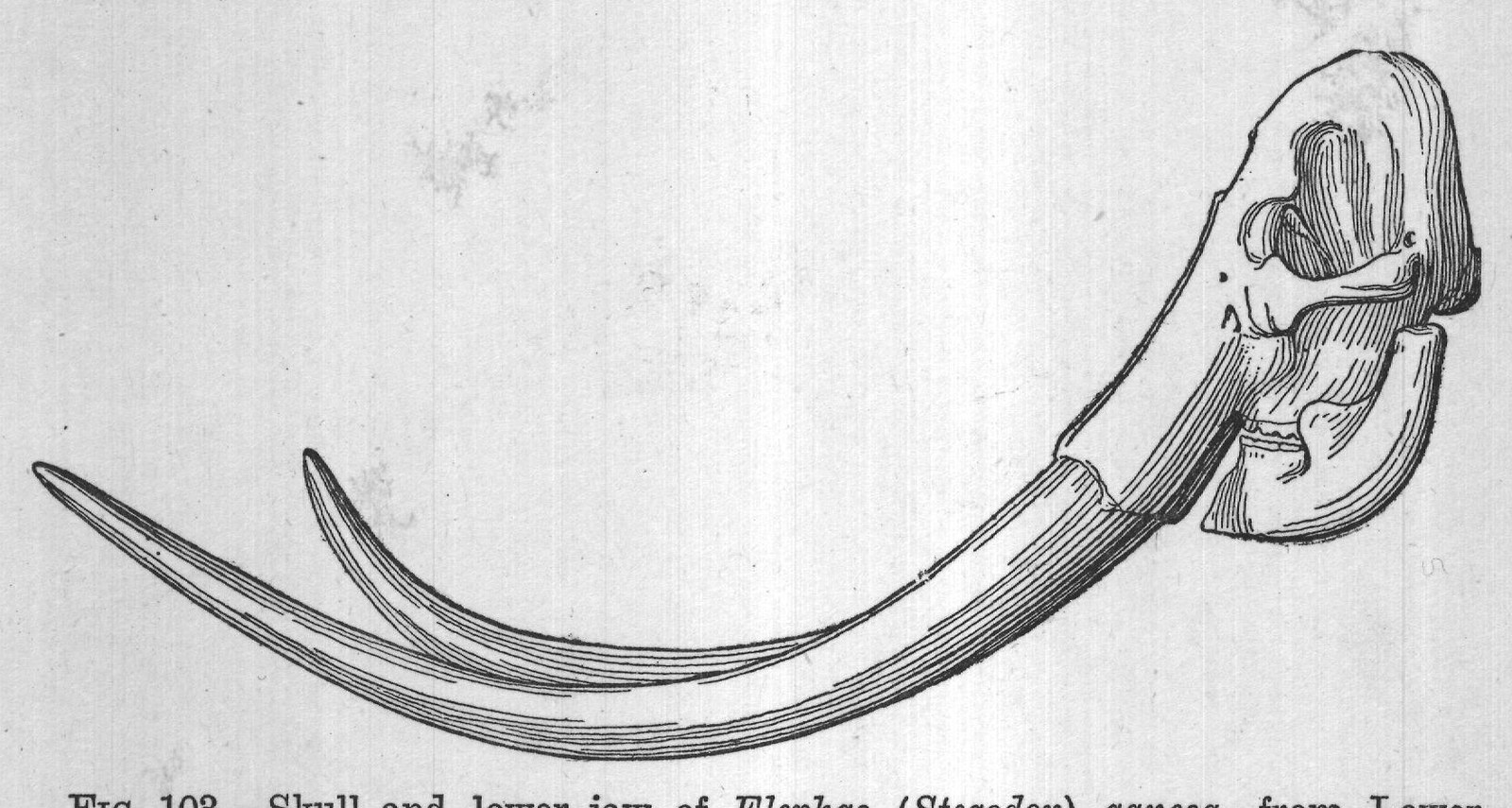
The four stages in the history of Elephants may be best illustrated by the four skulls shown in Figs. 100 to 103. The first belongs to the Mæritherium, which takes its name from the old Egyptian Lake Mæris. "Can it be possible," the reader may well ask, "that this skull once belonged to a creature which was the forerunner of Elephants?" Well, so it seems, although the differences are very great. The shape of the skull gives no suggestion at all of anything elephantine, nor does the large number of teeth with their sharp pointed ridges. The Mæritherium, according to Dr. Andrews,¹ was about the size of a tapir, which it much resembled, and it probably frequented the marshes of the period Li. 12.2 nar FIG. 102. Skull and lower jaw of Tetrabelodon augustidens, from Middle Miocene of Sansan, France. (After C. W. Andrews.) (Middle Eocene), see Plate XLIV. The length of the skull is only about sixteen inches; the limbs are partly known. The next beast, the Palæomastodon beadnelli was larger and more adapted to a terrestrial life. Its skull, shown in Fig. 101, was about three feet long, and now we see something really elephantine. The whole face, nose, and cheeks began to be pushed forward, its forehead slopes upward, and there is a large opening for the nose, the teeth 1 Catalogue of the Tertiary Vertebrata of the Fayûm Egypt. Published by Trustees of the British Museum.
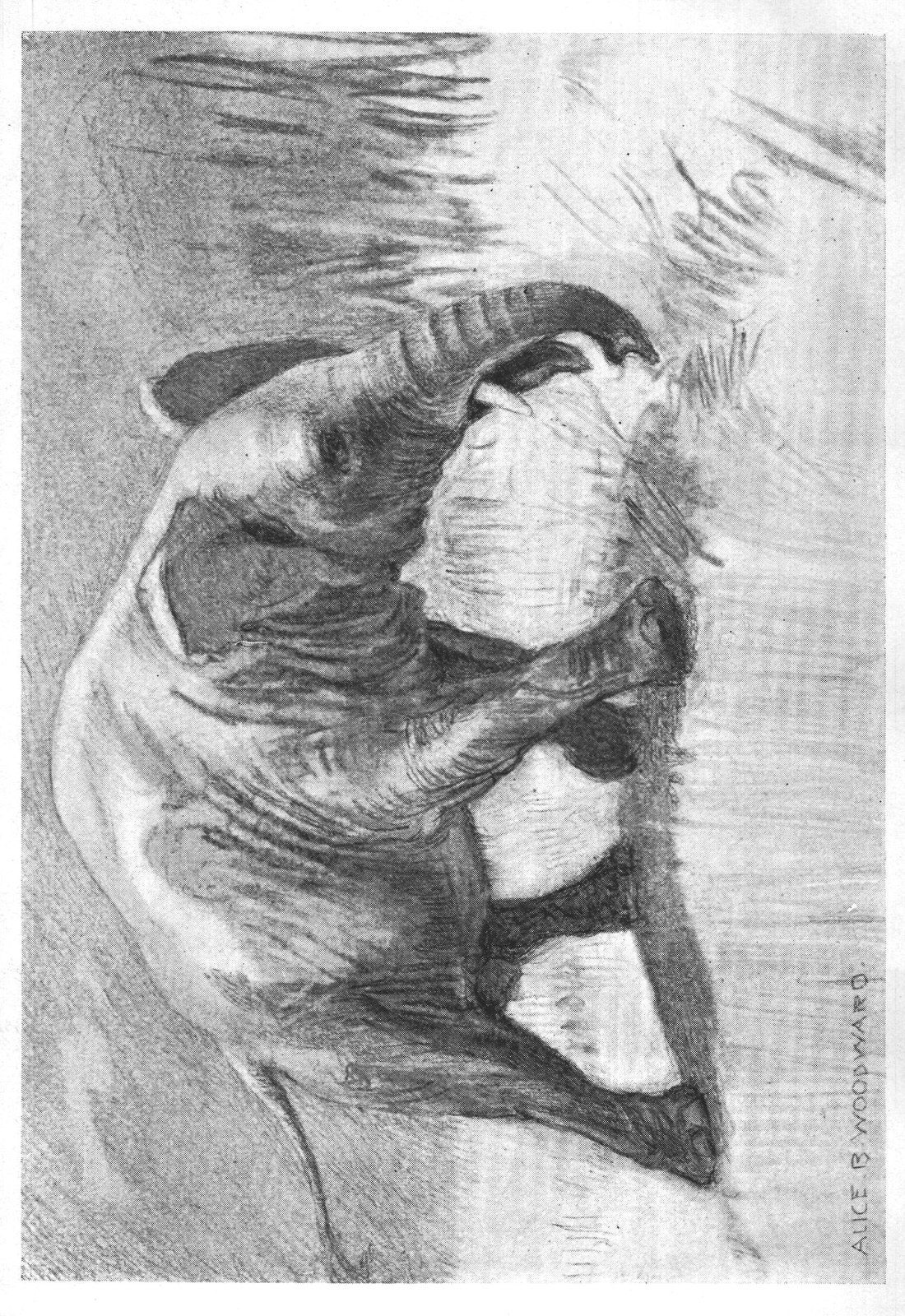
ALICE B WOODWARO PLATE XLV.
THE EVOLUTION OF THE ELEPHANT, SECOND STAGE, PALÆOMASTODON. Height about 4 to 6 feet at the shoulder.
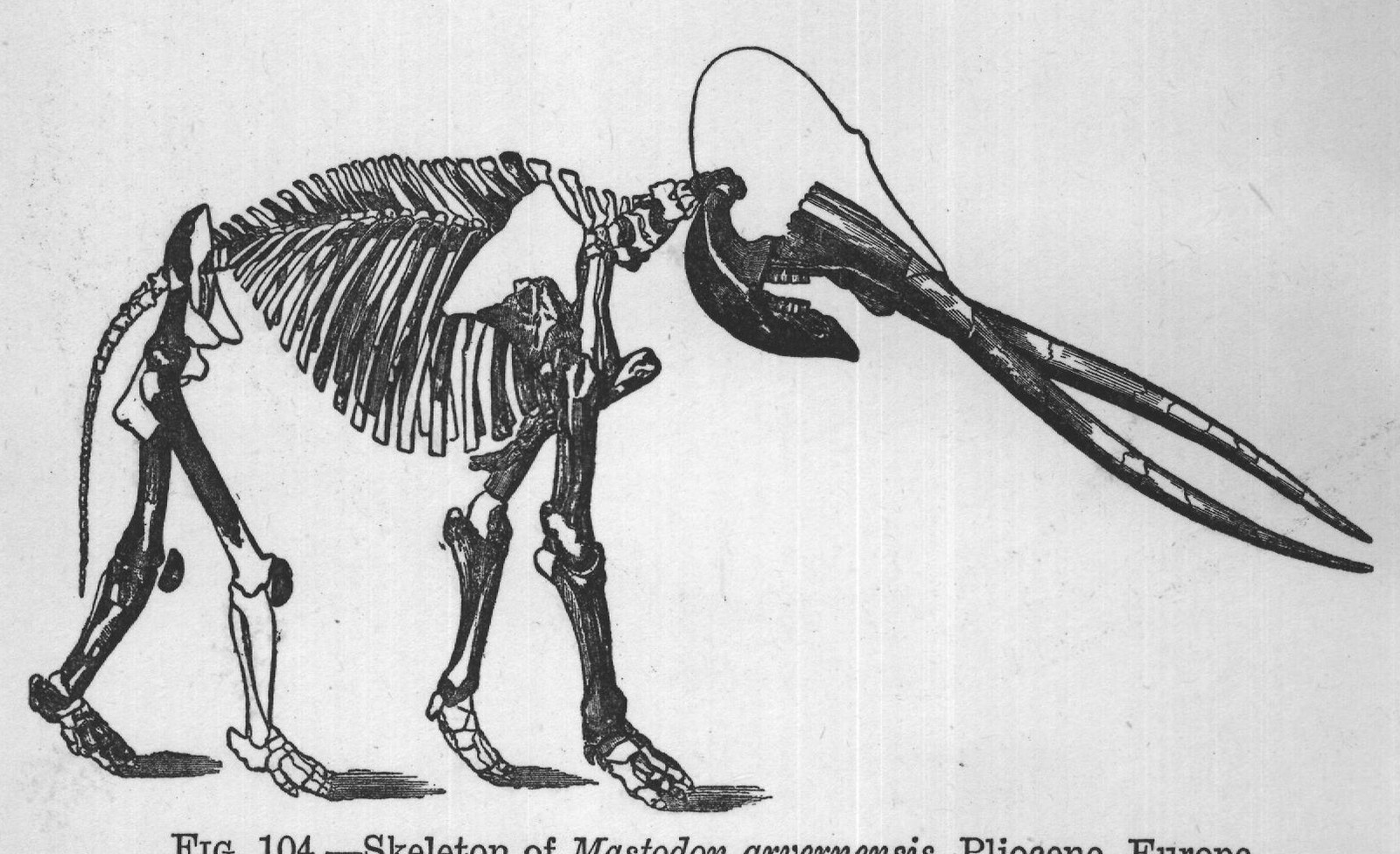
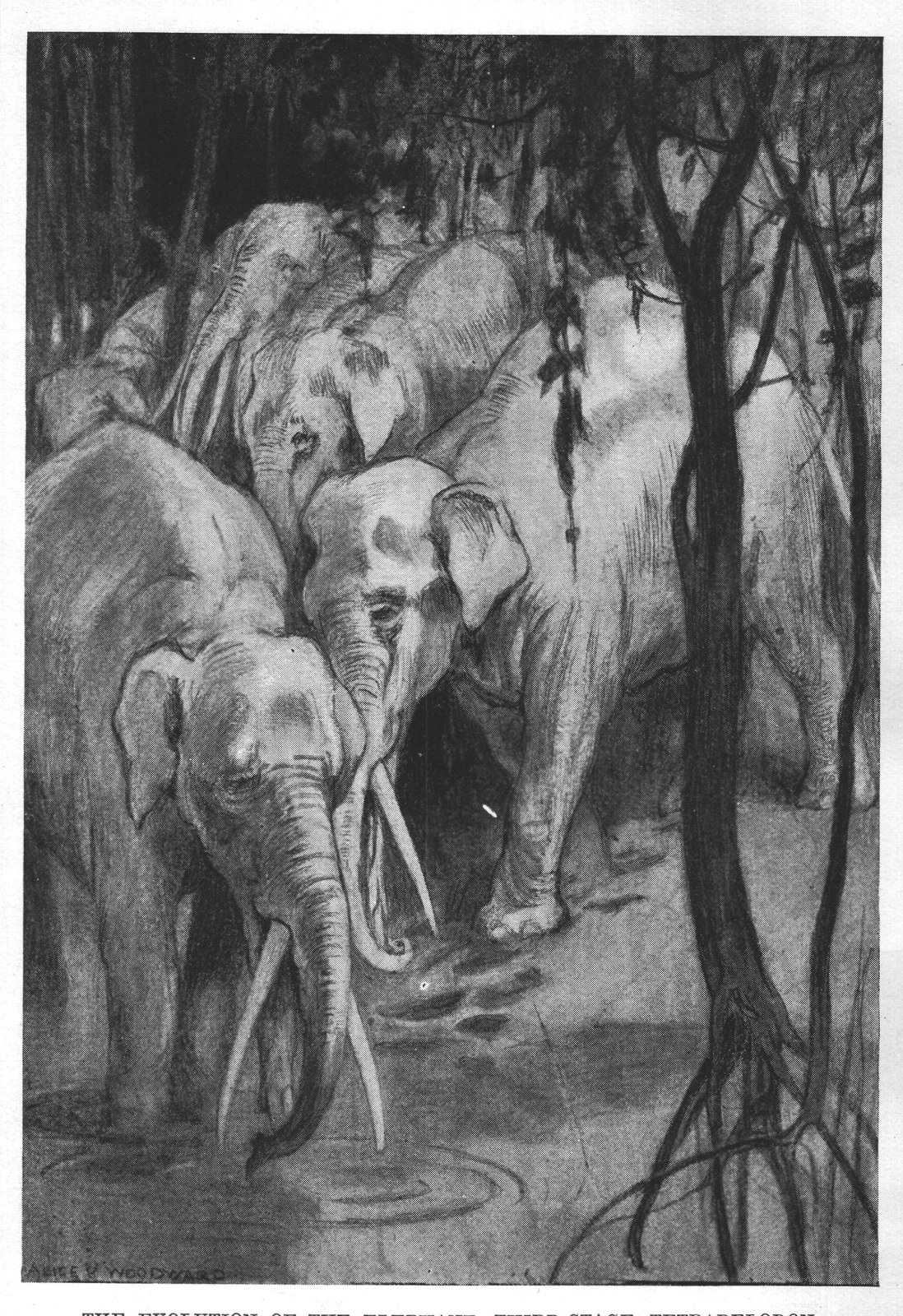
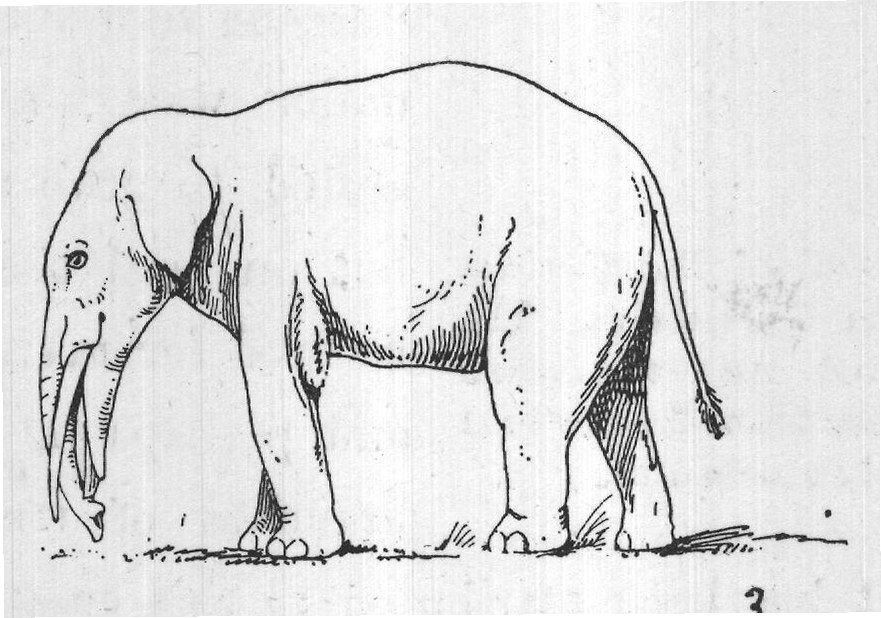
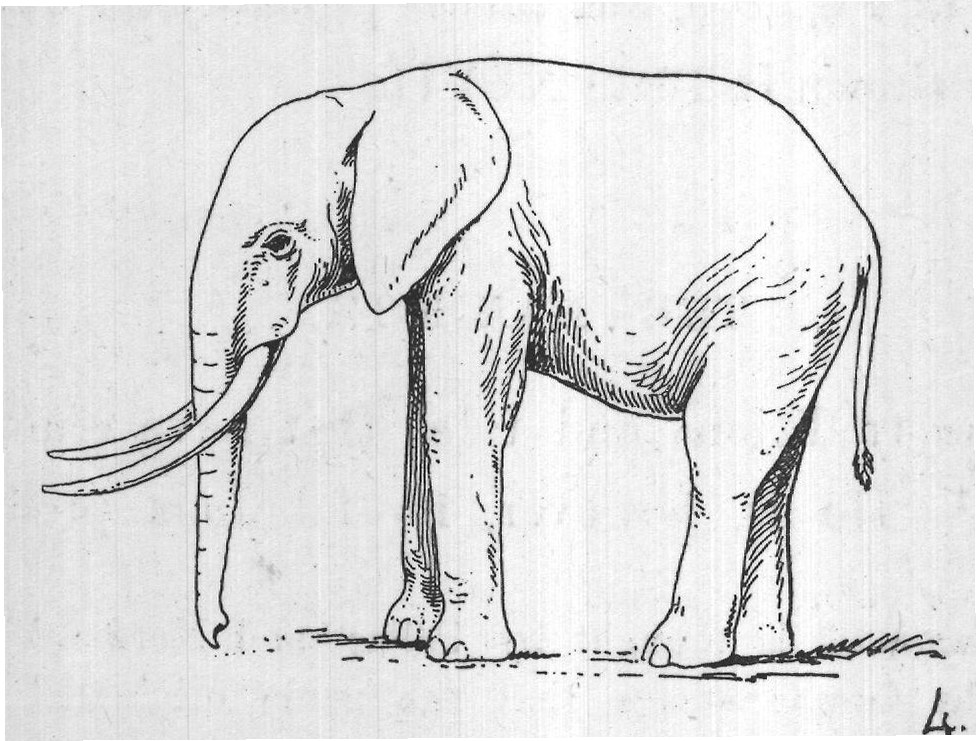
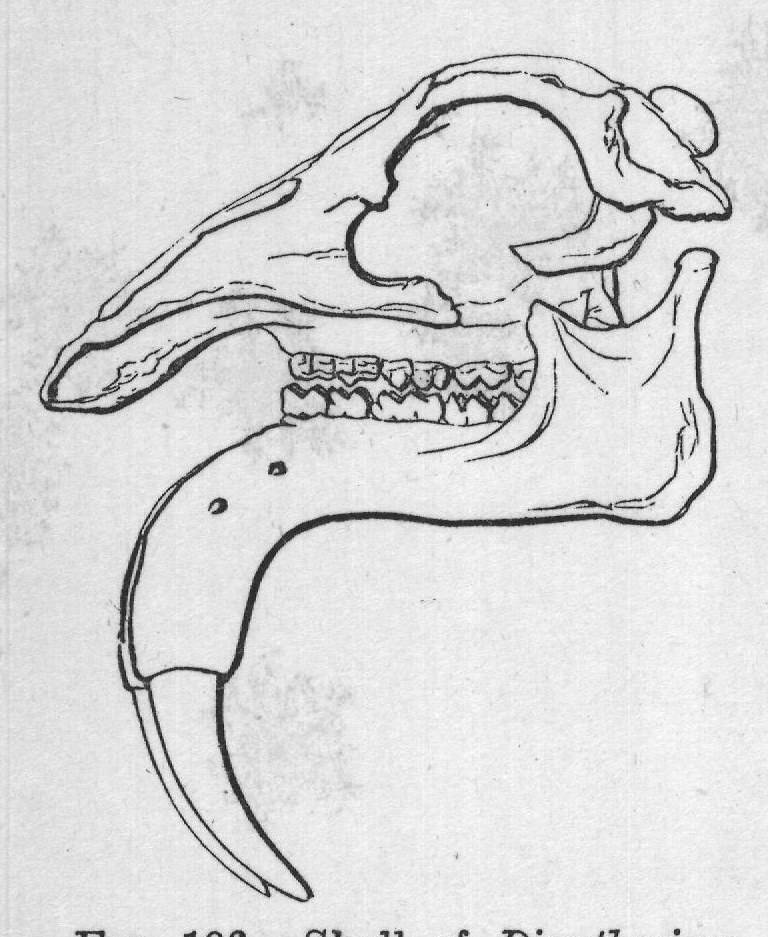
Illustration lent by H. R. Knipe (from Nebula to Man). EOCENE PERIOD. EGYPT. are reduced in number. The canines and the first premolars are lost. The lower jaw is considerably elongated. We begin to see signs of a trunk. Now, this creature probably looked like a rather long-necked elephant (see Plate XLV.), but its trunk was not flexible, being supported by the long lower jaw, for which it partly formed a covering. Probably it could reach the ground with its lower incisors, and the end of the snout may have been prehensile. In size it was about as big as a half-grown Indian Elephant. Now, in the next stage, represented by Tetrabelodon augustidens FIG. 103.-Skull and lower jaw of Elephas (Stegodon) ganesa, from Lower Pliocene of Sivalik Hills, N. India. (see Fig. 102), we have something much more like an Elephant. To begin with, it is bigger. Then see how much more elongated is the lower jaw. The upper incisors have greatly increased in size; only two molars are left in each jaw. The opening for the nose is further back. Plate XLVI. is a restoration. In size this creature also resembled the Elephant, being about as big as a moderate-sized elephant of the present day. In the later Miocene period this long lower jaw got shortened, and so an approach was made to the modern type. Fig. 103 shows us the last stage in this strange history, when the lower jaw rather suddenly contracted and the proboscis greatly increased in size, being left entirely free and unsupported. These remarkable changes have been well summed up by Dr. A. Smith Woodward, F.R.S., in the following words:-"They gradually increased in size without essentially altering their limbs and body; but as their legs lengthened and their neck shortened, their face and chin gradually became elongated to reach the ground for browsing. When this strange adaptation had reached its maximum degree, the chin suddenly shrivelled, leaving the flexible, toothless face without any support. FIG. 104. Skeleton of Mastodon arvernensis, Pliocene, Europe. Thus arose the unique proboscis of the Elephants, which has become prehensile by stages which cannot be traced, because soft parts are not preserved in ordinary geological formations." During the Miocene period there lived a strange kind of elephant known as the Dinotherium. No complete skeleton is known, but the skull, limb-bones, vertebræ, etc., have been found. The skull was discovered at Eppelsheim, in Hesse-Darmstadt, and other remains in France, Greece, and Asia Minor, also closely allied forms in India, but none in America. We learn from the THE EVOLUTION OF THE ELEPHANT, THIRD STAGE, TETRABELODON. PLATE XLVI.
MIOCENE PERIOD. EGYPT.
Height about 7 or 8 feet at the shoulder.
Illustration lent by H. R. Knipe (from Nebula to Man). アリ 1. 2. 3.
FIG. 105.-Evolution of the Elephant. 4 1. Mæritherium. 2. Palæomastodon. 3. Tetrabelodon. 4. Elephas africanus. skull of this creature that it had a fairly large proboscis, but, unlike other elephants of the present time, the two tusks are in the lower jaw and curve downwards instead of upwards. Dean Buckland came to the conclusion FIG. 106. Skull of Dinotherium giganteum, from Eppelsheim. The lower jaw is a cast. An examination of the skull at the top will show that it is considerably crushed in. that this creature was largely aquatic in its habits, but this is not certain. However, the aquatic habits of the tapir, a distant relation of the elephant, show that this conclusion is by no means an impossible one. It is not easy to imagine how such tusks were used under water, as Buckland suggested, to grub up aquatic plants; but on land they could certainly be used for raking up the ground, and perhaps in pulling down the branches of trees. A length of eighteen feet has been attributed to this creature, of which the skull is shown in Fig. 106, but this is probably an over-estimate. A restoration is shown in Plate XLVII.