Home › Contents › Yellow-Bellied Sapsucker
Yellow-Bellied Sapsucker
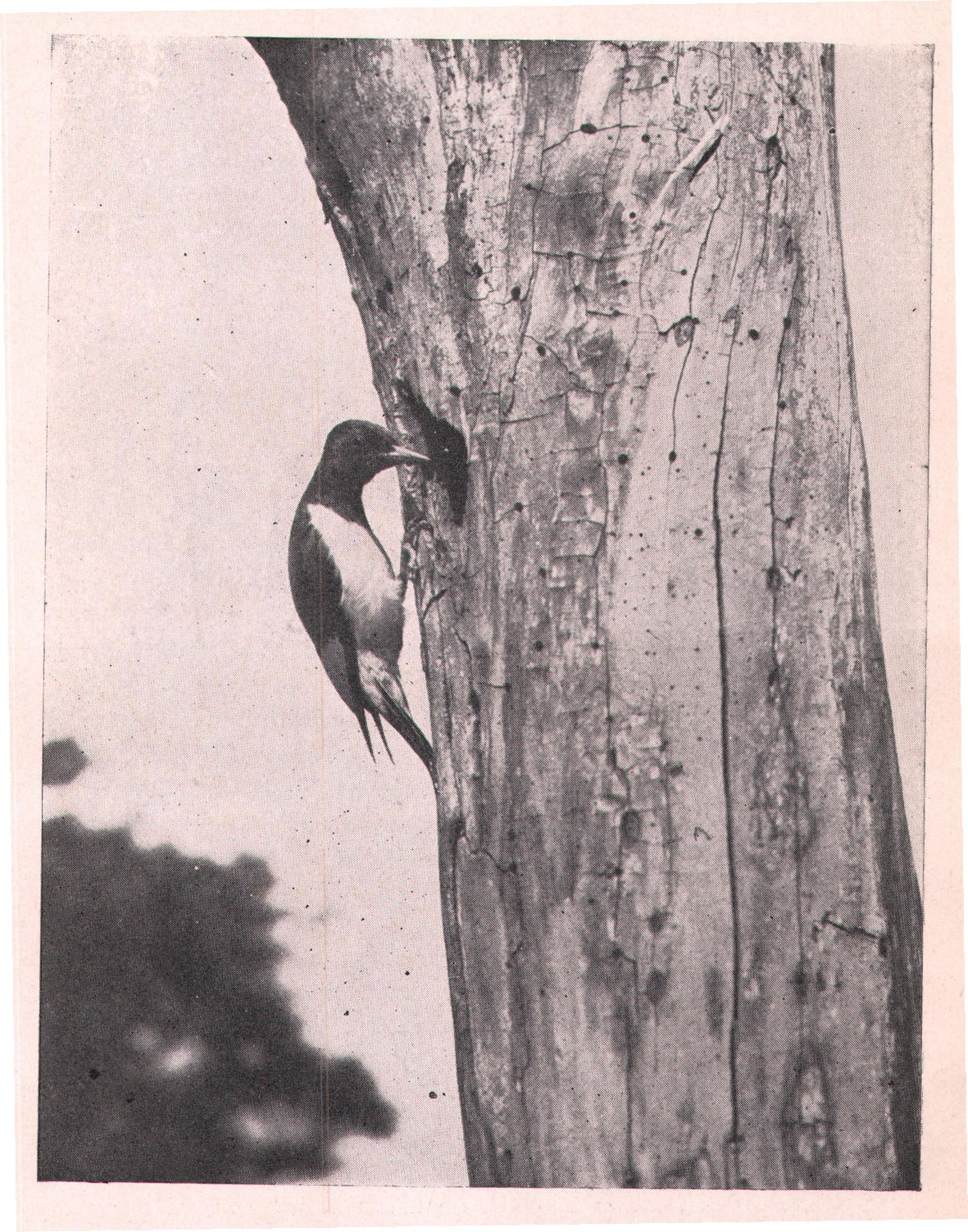
Here we have another type of woodpecker. The Flicker has a sticky tongue, perfectly adapted for catching the ants it likes so well. The Red-headed Woodpecker has a tongue, ८ Fig. 257. Adult Red-headed Woodpecker at the entrance to her nest. the tip of which is armed with tiny barbs, adapted to spearing insects and drawing them from under the bark or wood of trees. The tongue of a Sapsucker is covered with fine hairs at the tip making a small brush with which he can lap up the sap that oozes from holes he bores through the bark of trees.
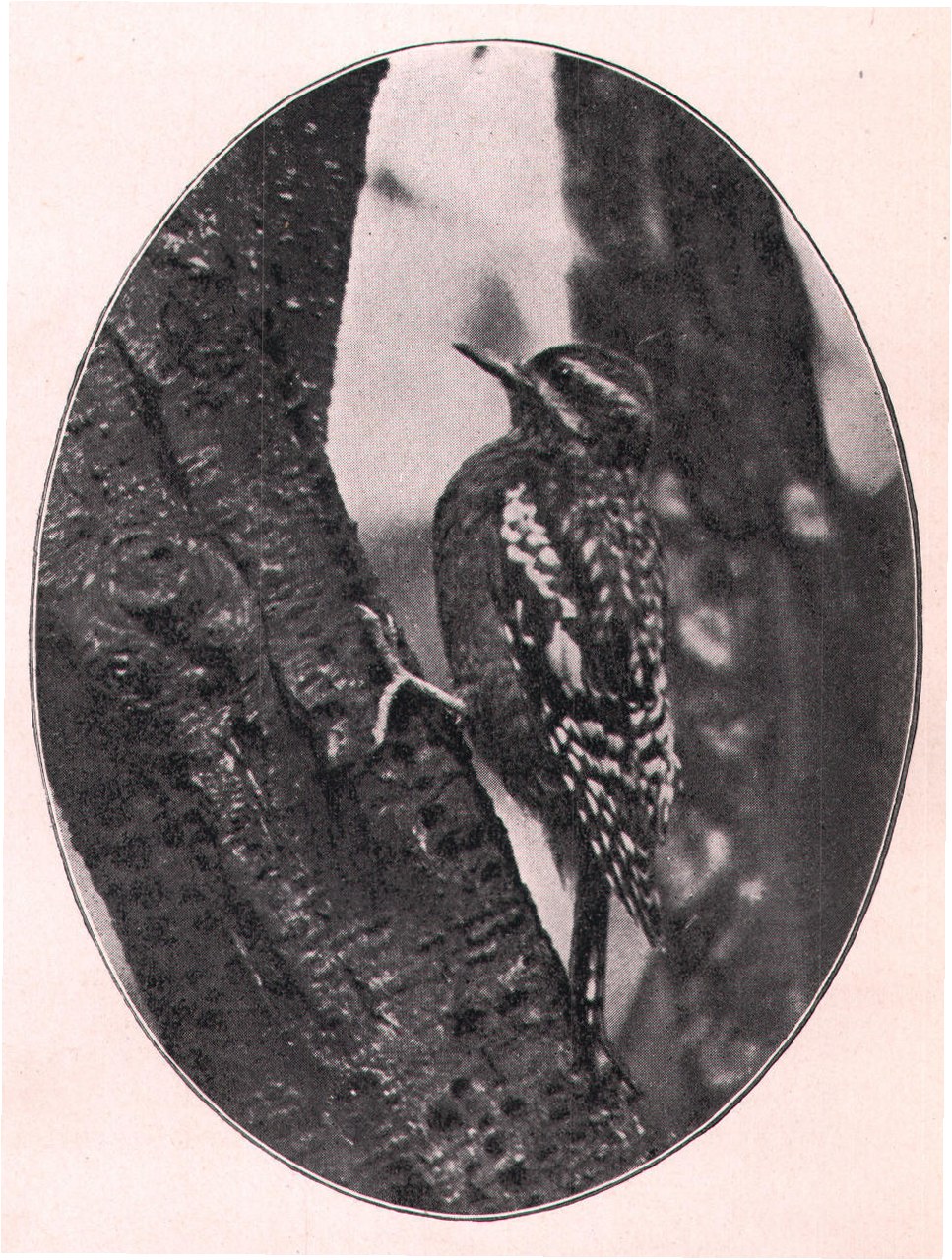
His food does not, however, consist even largely of sap, for he catches probably as many insects as others of the woodpecker family. Sapsuckers very frequently come to the suet and nut banquets that are spread for winter birds; it was while partaking of such a feast that the pictures of the Sapsuckers shown here were secured.
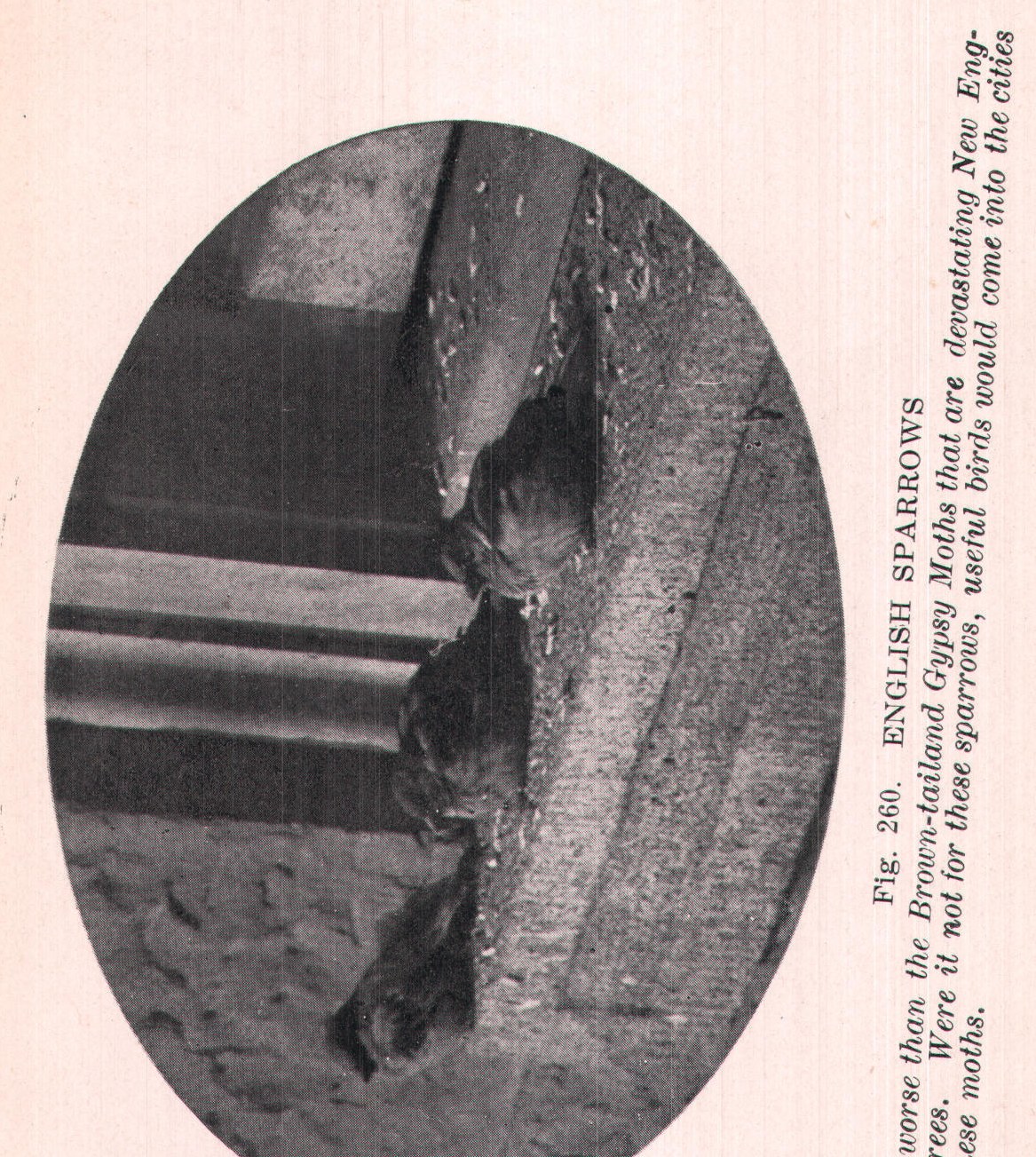
You can see the many holes he has bored through the bark so as to get the sap that collects. and detroy these moths. and land Pests, detroy shade even these trees. worse moths. than Were the it not Brown-tailand for these sparrows, Gypsy useful Moths birds that are would devastating come into New the cities England shade trees. Were it not for these sparrows, useful birds would come into the cities