Home › Contents › Red-Headed Woodpecker
Red-Headed Woodpecker
This species is one of the most beautiful of woodpeckers. The black, the white, and the red are distributed in such large, clear-cut areas that the bird cannot escape unnoticed when at rest or in flight. As a rule, I believe that birds of this species are rather proud and wish to attract as much attention as possible. They have loud, whining voices and, especially during the mating and early nesting season, seem to try to make all the noise they possibly can.
In many respects, "Red-heads" are just the opposite of Flickers. Flickers are peaceable birds, never known to start a neighborhood quarrel; but Red-headed Woodpeckers are "bird-brawlers," -never so happy as when engaged in arguments, or even rough and tumble fights with some neighbor. I am sorry to have to admit, too, that their adversaries are seldom guilty of any offense but usually have to protect themselves against the depredations of the Redheads. The head and back is gray instead of red and black respectively as in the adults. I have often seen the results of atrocious acts committed by these birds, in the shape of devastated homes of other birds, and once I saw a pair of them perform the act. It was in an old Virginia swamp where many tall, whitened, naked tree trunks were still standing. Two pairs of the woodpeckers were in evidence; I had found the nest of one of them, about twenty feet above ground in one of these dead trees.
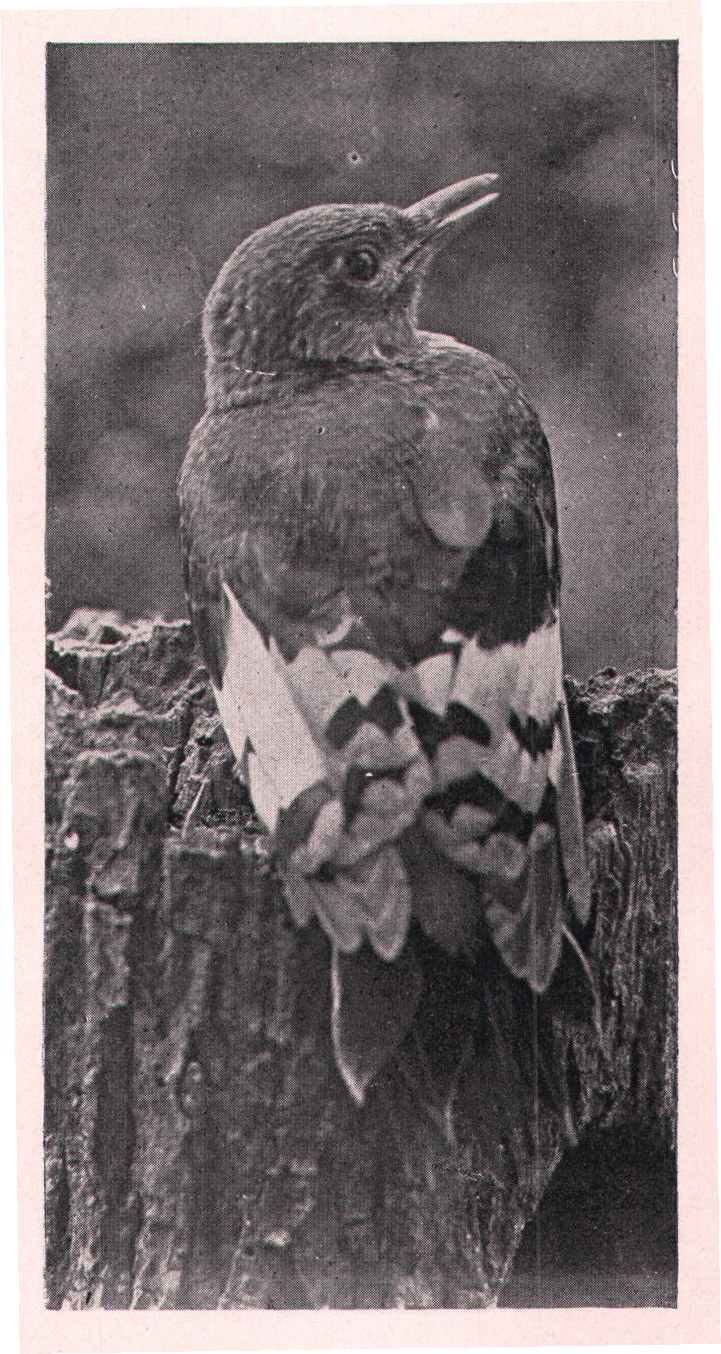
Many Brown-headed Nuthatches were also nesting there, and I had located one of their nests, high up, where I could not get to it. They were very busy carrying food to little birds, through the little round hole in the trunk that led to their dwelling. One day as I was about fifty yards away from this tree, I saw one pair of the Red-heads sweep by with their usual undulating flight and alight beside the Nuthatch home. Evidently the cavity was shallow, for each woodpecker, in turn, reached his head in and pulled out a squirming little nuthatch. The female bore her prize away to her own nest, but the male took his to a near tree, pulled it to pieces and ate it himself.
Of course it is but for a short season that these woodpeckers are destructive to the young and eggs of other birds. During the rest of the year they are useful in destroying a great many wood-borers, larvae, etc. They have the habit, shared by many birds that migrate little if at all, of storing up supplies of food for future use. They often conceal nuts in crevices in bark or in holes that they may make for that purpose. Of course some other bird has just as good a chance of eating the hoard as the one that stored it, but he, on the other hand, also uses goods stored by other individuals.