Home › Contents › White-Breasted Nuthatch
White-Breasted Nuthatch
Here is an acrobat worthy of notice. Apparently in defiance of all laws of gravity, he nimbly runs down tree trunks head-foremost, with never a falter. To him, the under side of a limb is just as secure a resting place as the top. A very close watch of his movements will show how he is able to get into such unbalanced positions; one foot is carried well forward under his breast but the other is reached back and grasps the bark behind so he can progress downward in a series of quick hitches.
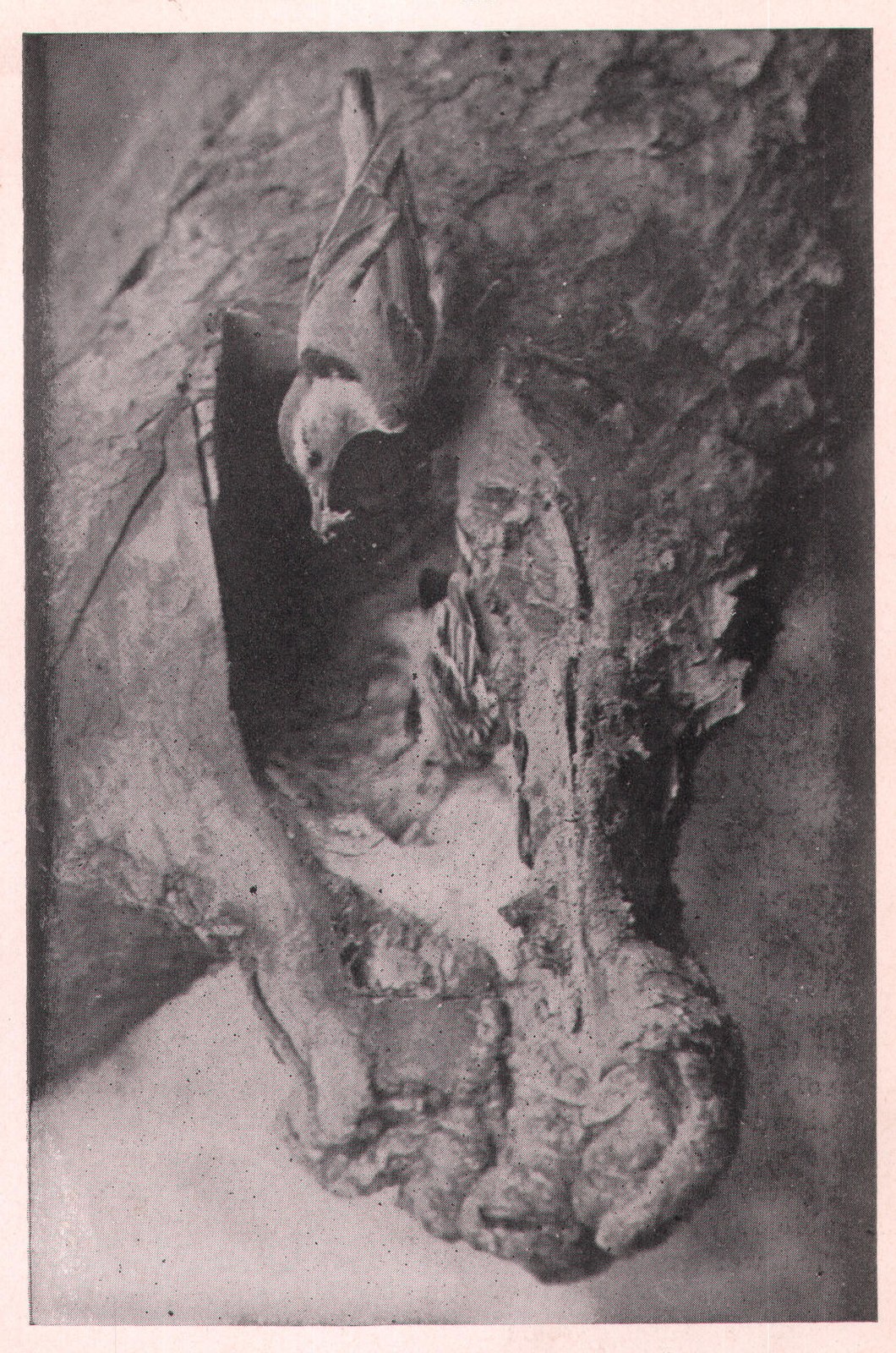
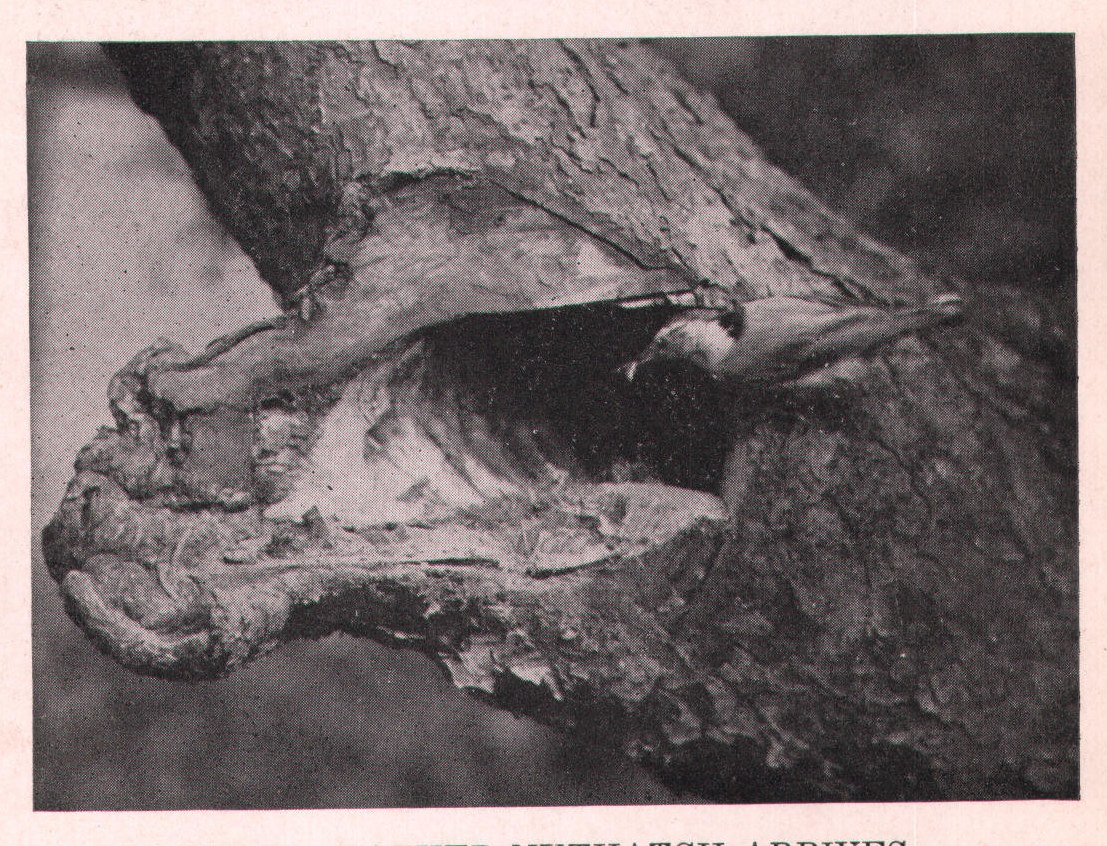
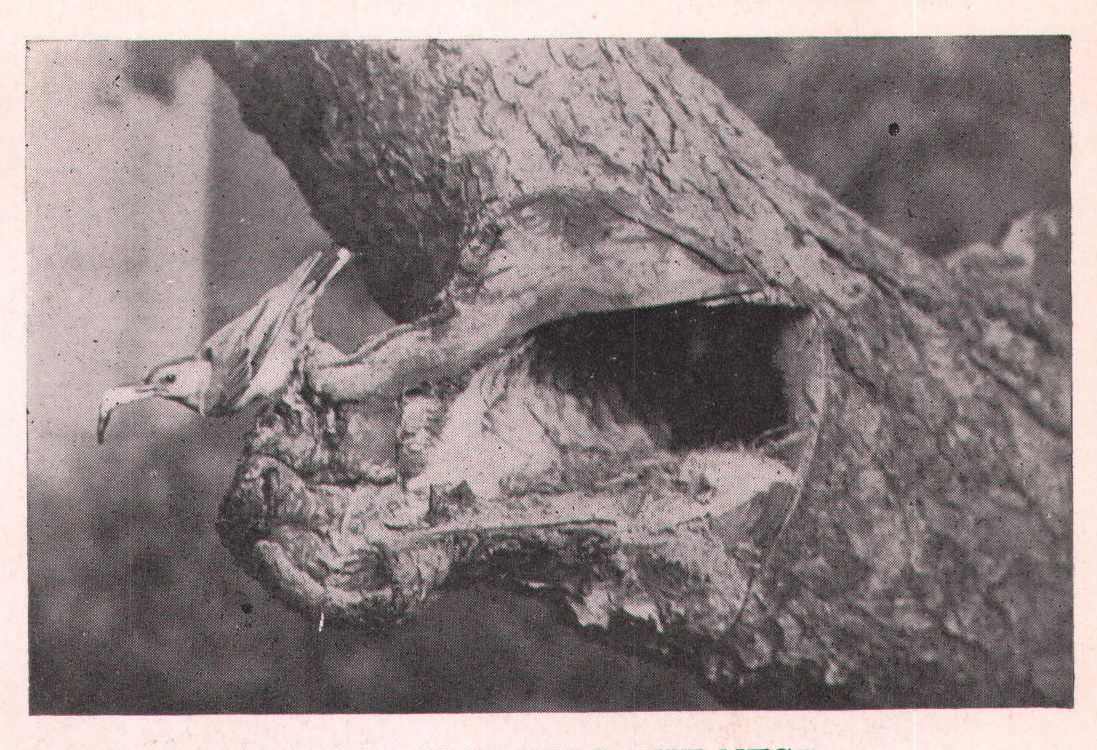
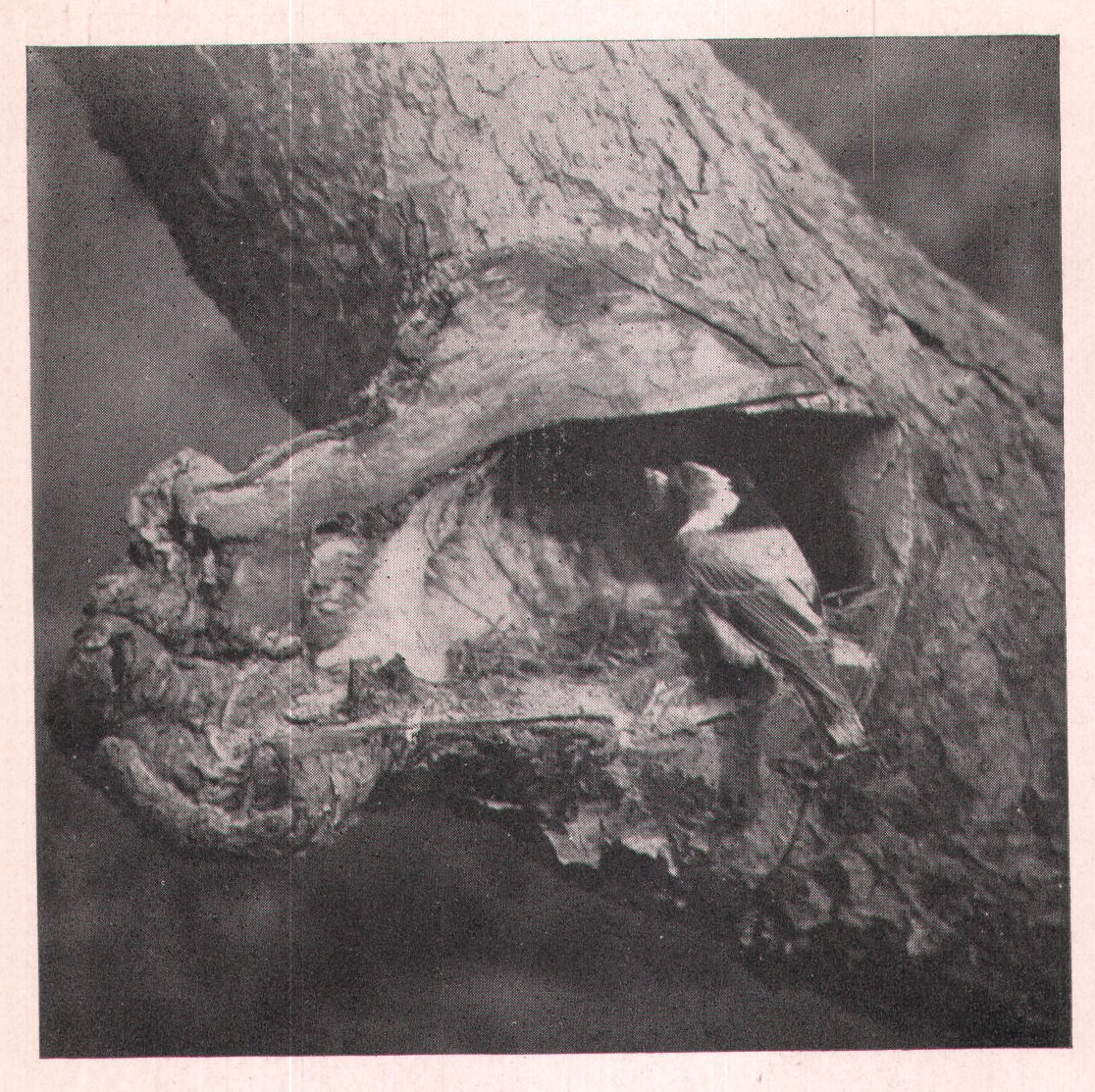
A section of the limb removed to show the interior Most of the nuthatch nests I have found have been located in holes in large chestnut trees, from twenty to fifty feet from the ground and of course, entirely unsuited for photographic purposes. Finally a pair was located breeding in a decayed limb of an apple tree very near a farm house and only about six feet from the ground. At the bottom of the cavity, on a soft bed of grasses and feathers, lay five, delicate eggs covered with reddish brown specks. The male was very attentive to his mate while she was sitting upon her eggs and often carried tempting grubs to her. Again he would slide down the limb just above her Note the male bird in the rear.
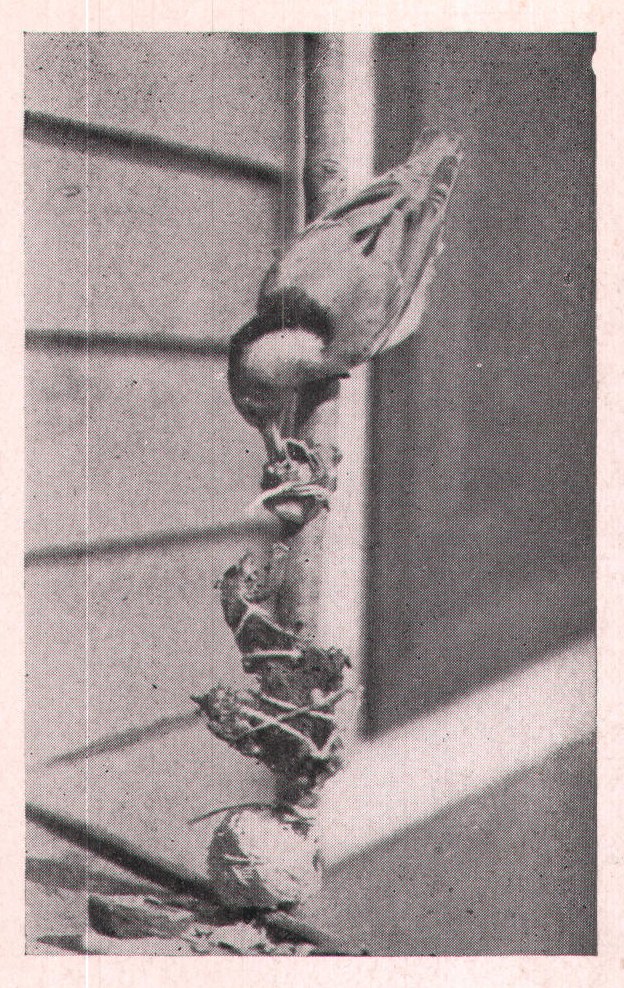
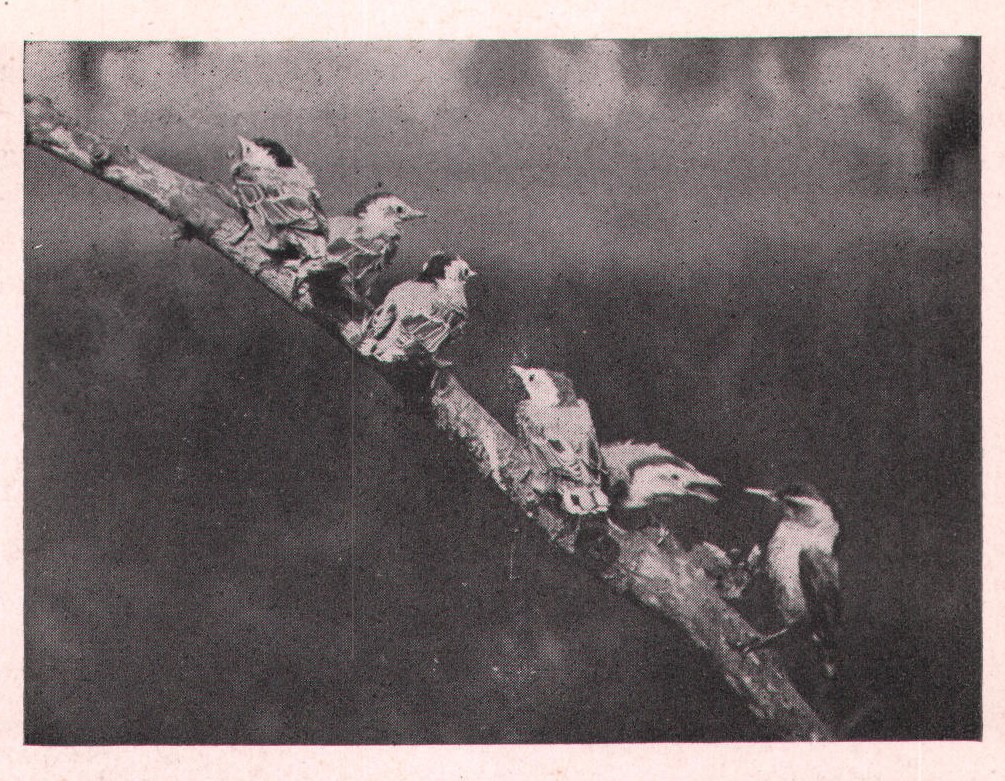
Fig. 21. The male Nuthatch was a handsome bird with a glossy black crown. and utter a soft "yank, yank" until she gave an answering "yank" from within. He did not spend much of his time in the apple tree, for to have done so would have advertised his home too conspiciously, but he was always within sight in the woods across the road. He could often be heard diligently hammering to get grubs that were concealed beneath the bark.
Fig. 22.
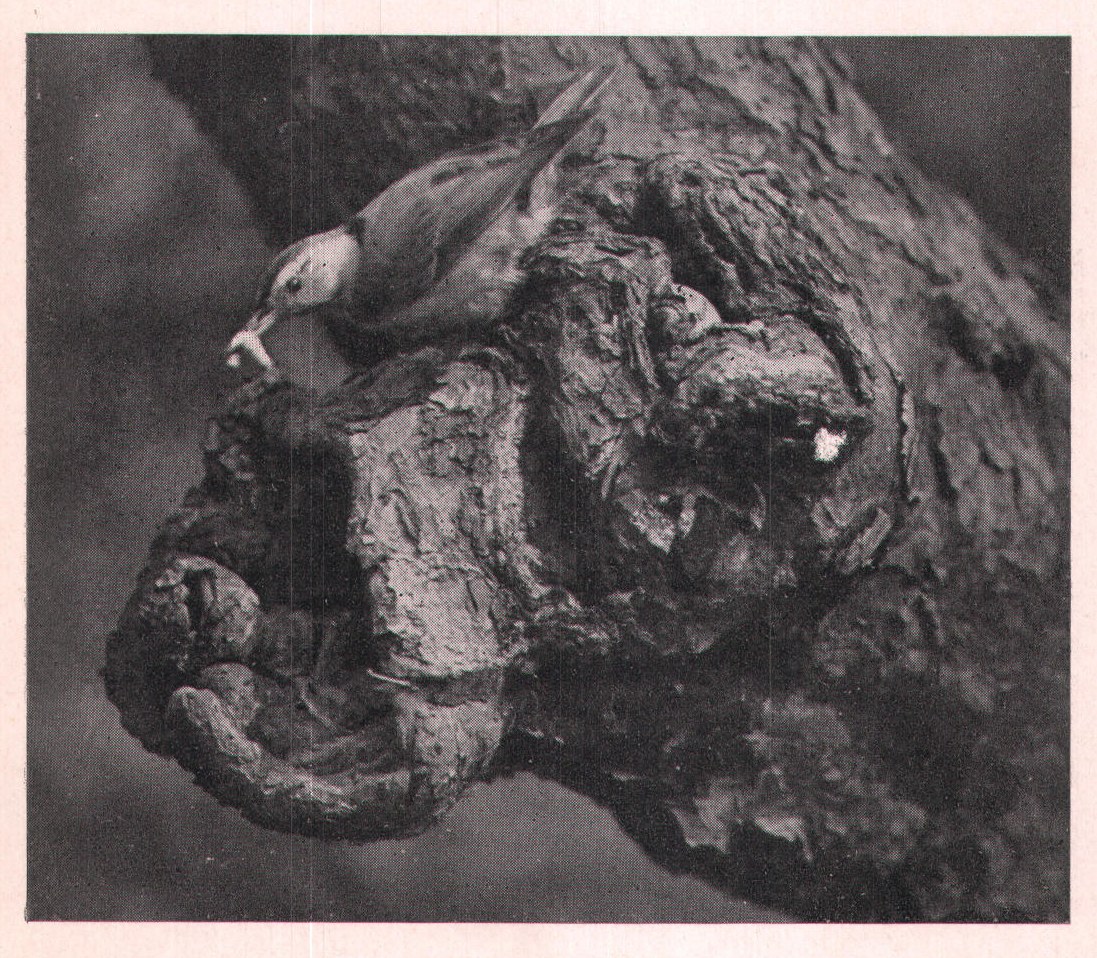
Fig. 23. The little birds and their parents assumed all manner of poses. I often watched him, standing on the shaggy bark of a chestnut tree, pounding away with might and main, sometimes putting his bill under an edge of the bark and prying until it seemed as though he might snap his bill in the middle. When hammering they always take their position above their work, just as the human wood-chopper likes to do.
Fig. 24. Caterpillars were eaten with a relish.
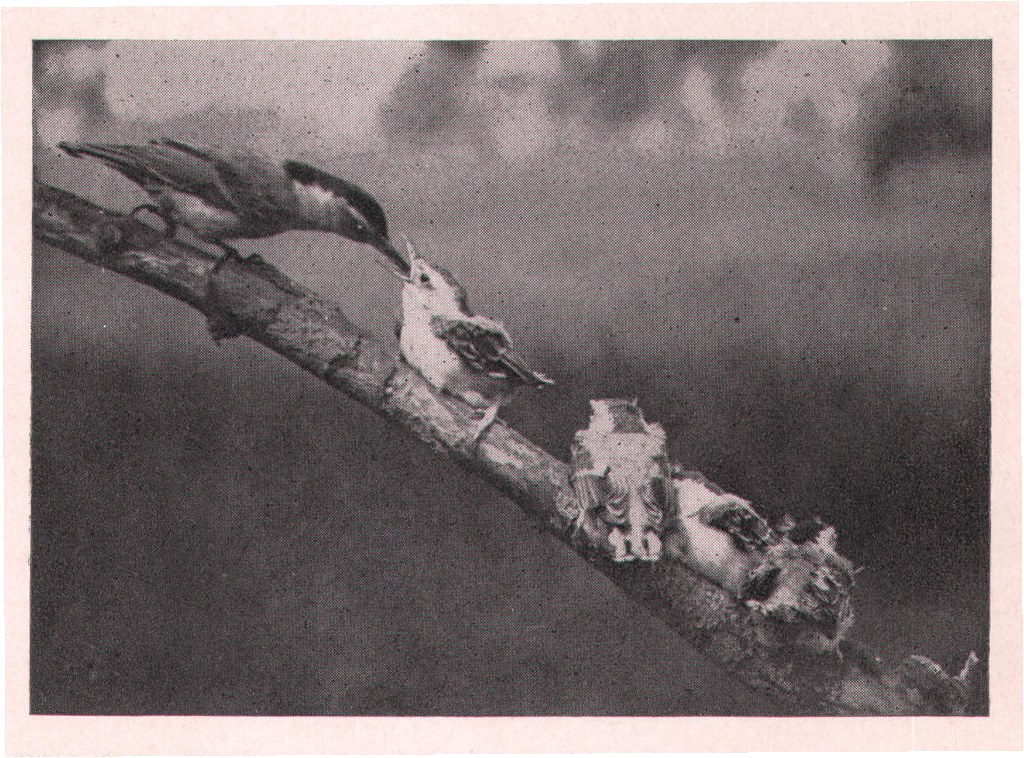
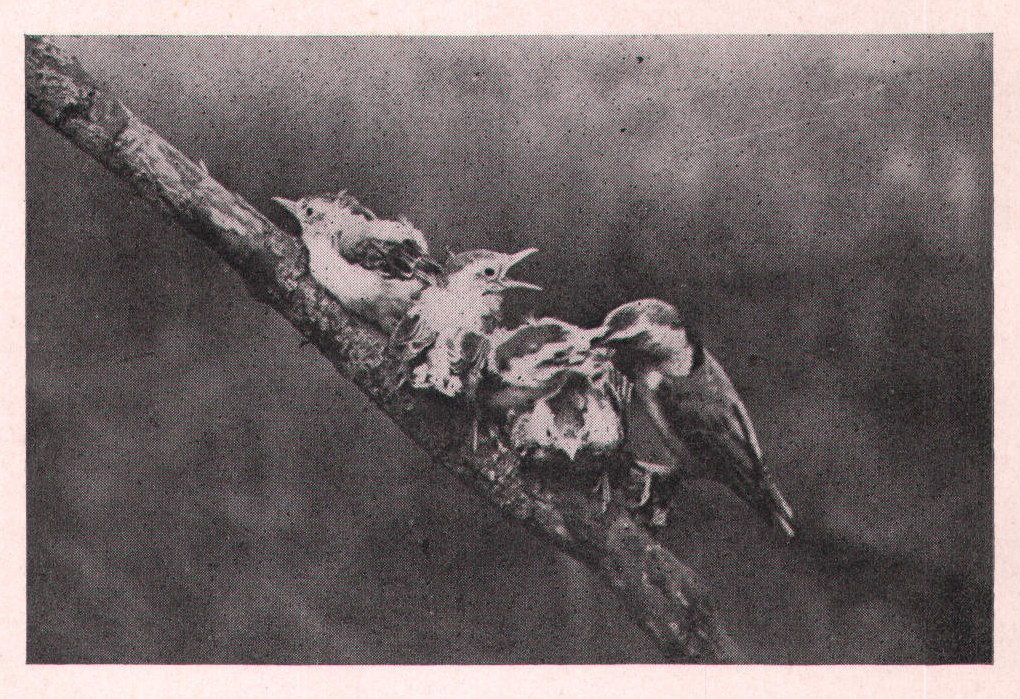
The male nuthatch, known by his glossy black crown, never took a turn at sitting upon the eggs leaving such duties exclusively to his gray-crowned wife. After the eggs hatched he assumed the greater part of the burden of feeding the little ones, coming with food at least twice as often as did his mate. I suspect this was because he was more skillful at uncovering larvae and grubs, and not because of any desire on his part to work more than necessary. Fig. 25.
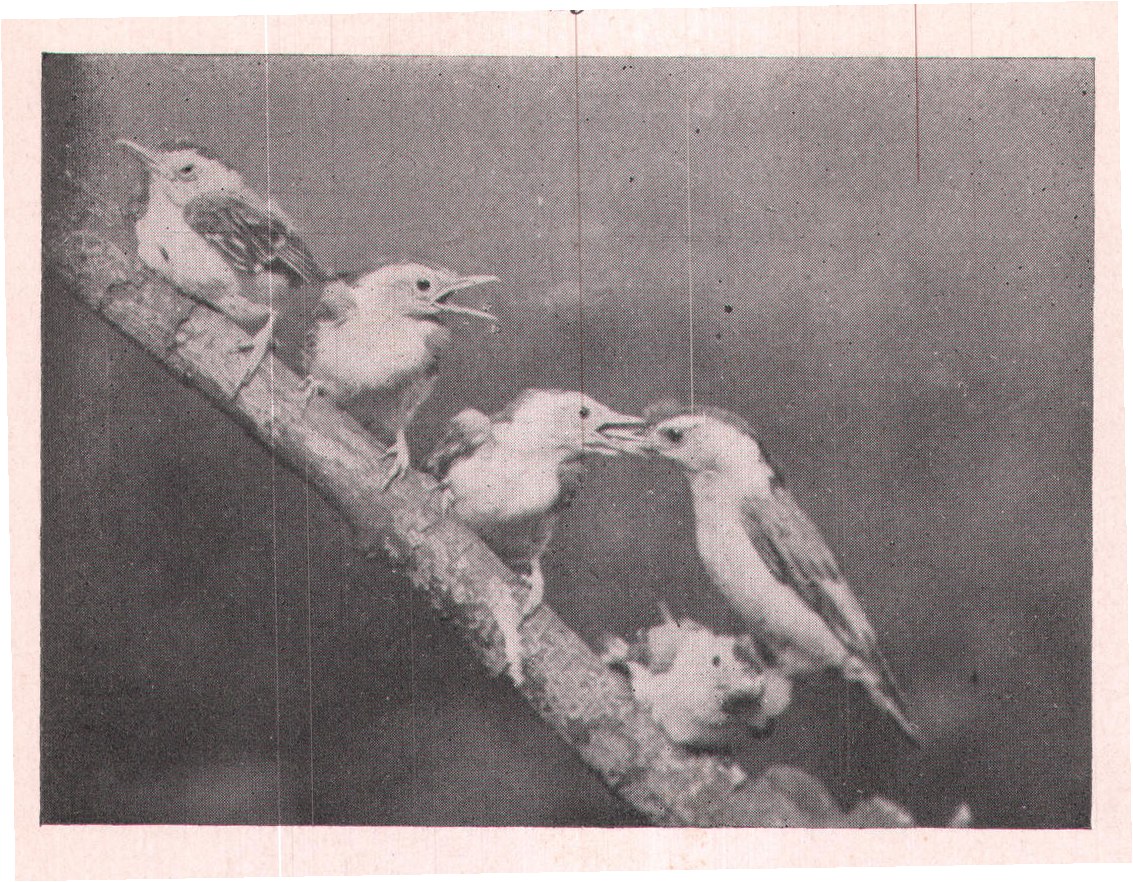
Fig. 26. The inconvenience of being in the way when brother's turn comes.
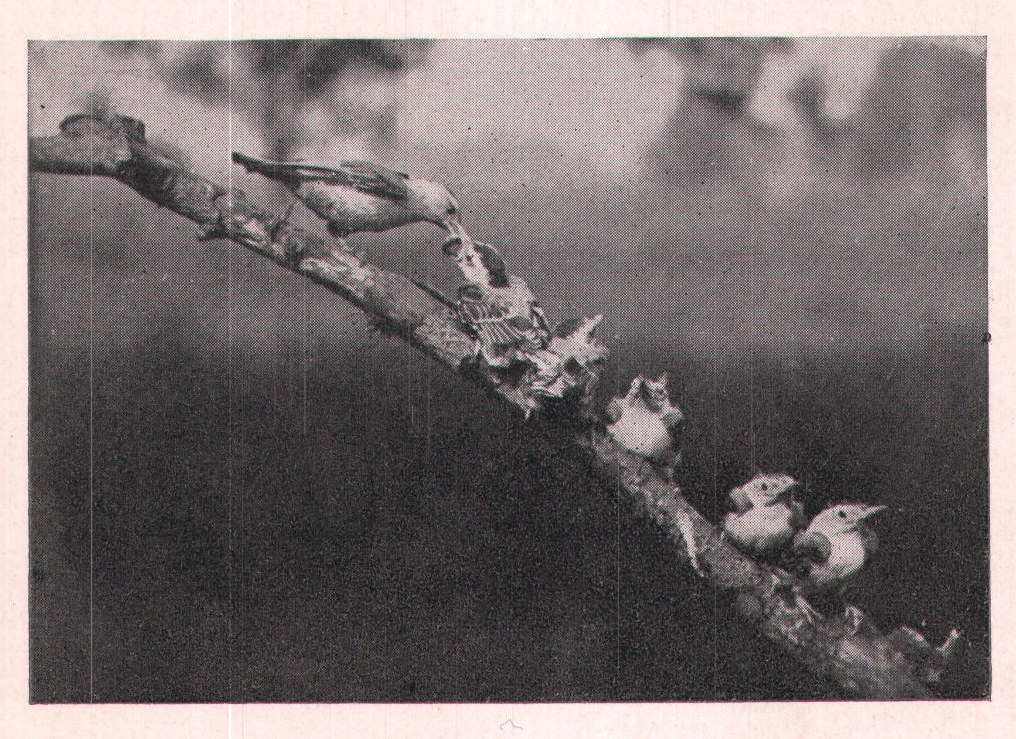
Fig. 27. His children were clamoring to be fed, so loudly that, in his excitement, father stood on one of them. , in his excitement , father stood on one of them.
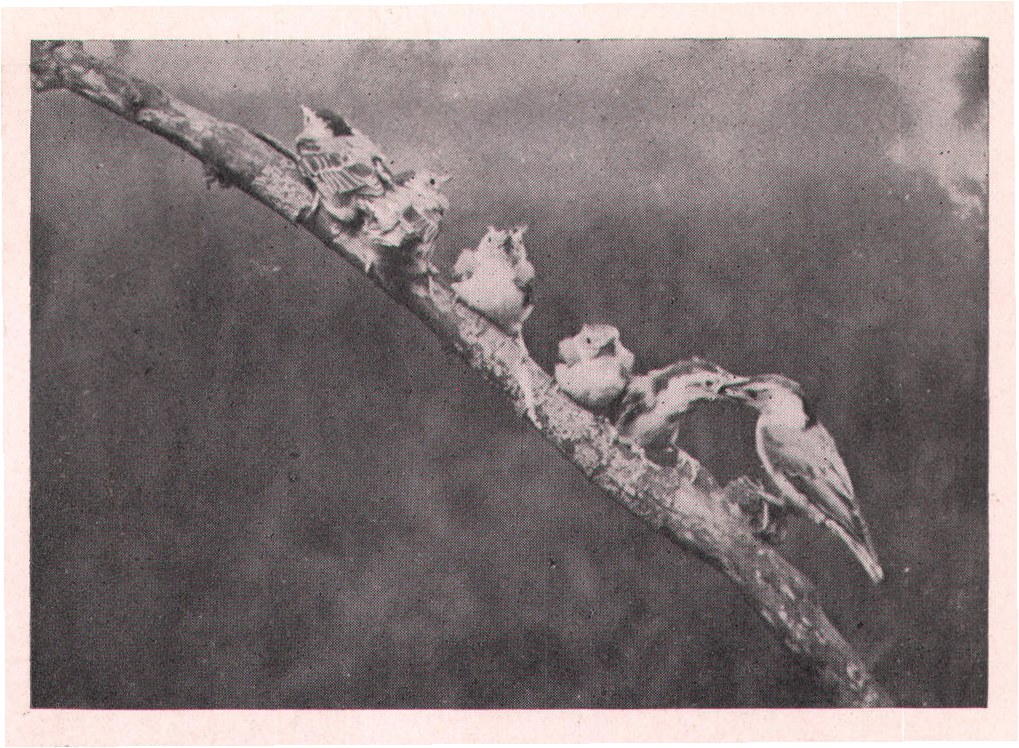
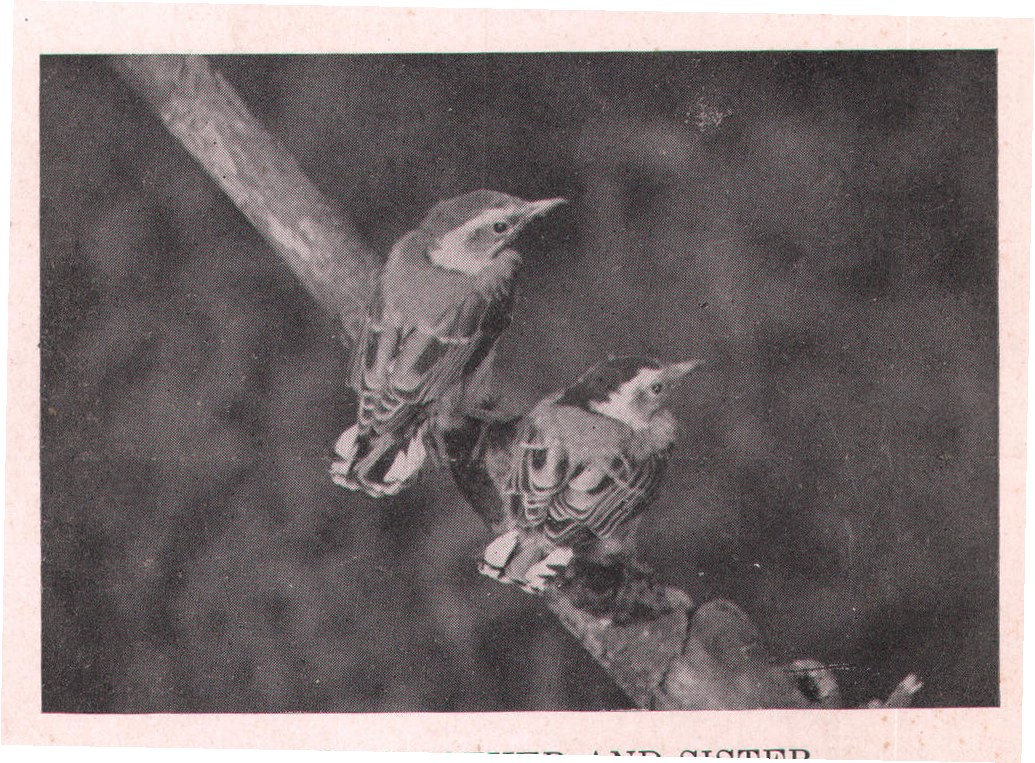
Besides grubs and larvae, the little ones were fed upon many kinds of millers and sometimes upon cracked corn that was picked up in the hen yard. Two weeks after the eggs hatched, the young were nearly large enough to leave the nest. They looked almost like their parents, the males having glossy black crowns, and the females gray ones. The five youngsters were arranged side by side on a small limb and many views taken of the parents as they fed them. Both parents never came to the branch at the same time, though one would often stay in the apple tree and watch while the other one was pushing food into the cavernous mouths. The little birds were very tractable, not behaving at all like the little chickadees. In fact they did not fly from the branch at all, but they were inclined to clamber along it so as to reach the trunk of the tree.
The name Nuthatch was given to birds of this family because of their supposed habit of hammering or "hatching" at nuts to get at the meat within, but as far as I know, none of the four species found in the United States ever open nuts of any kind. They are, however, very fond of the kernels and are often fed upon them as well as suet during winter months, by kind-hearted folks. Nuthatches, Chicka- Note the gray crown on the female and the jet black one of the male. dees, Downy and Hairy Woodpeckers are usually resident wherever they are found so that, besides the pleasure gained by watching them eat from the table provided for them, they may remain and nest the next summer in the vicinity. Any community that is so fortunate as to be the dwelling place of a number of these birds is to be envied , for they do inestimable good by destroying many insects that ravage shade trees, fruit trees and plants.