Home › The Chickadee › The Chickadee: Chickadees
The Chickadee: Chickadees
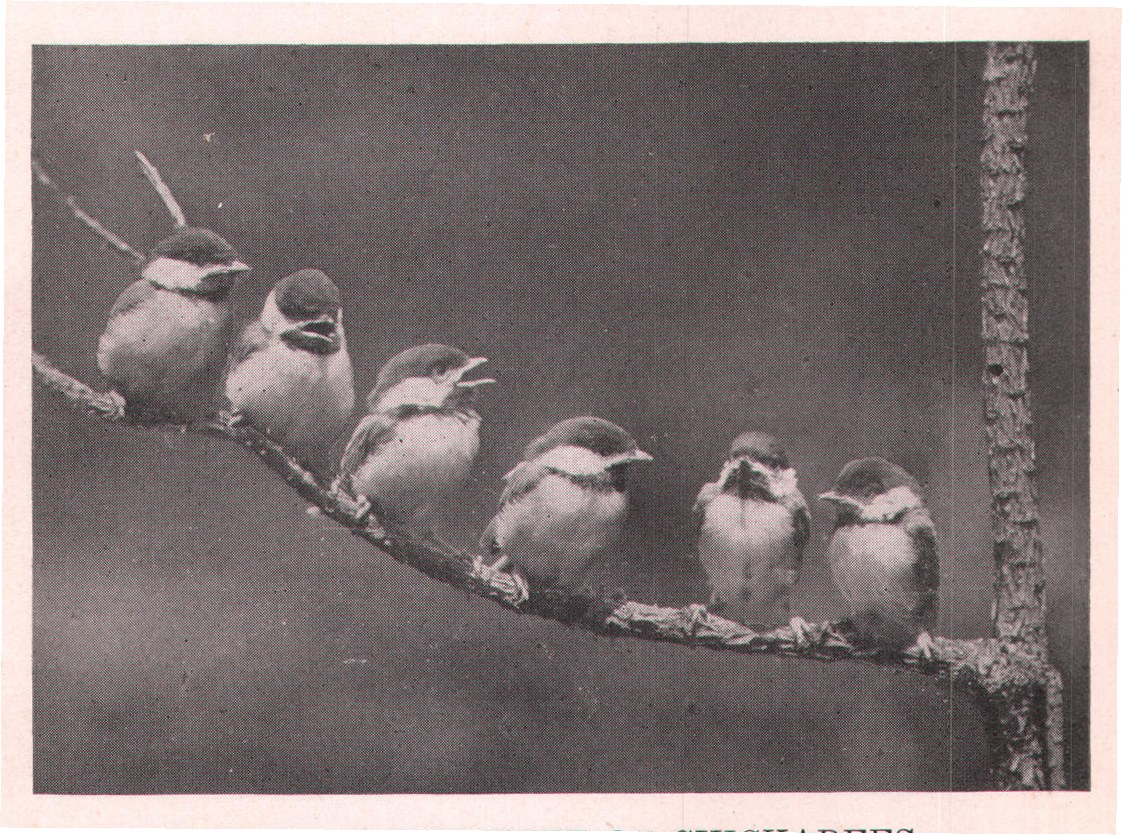
Fig. g. 6. She was not timid and always lit on the side of the branch nearest the tent, as though to shield her little ones. In order to see the little Chickadees, we made the opening to the nest a little larger. We found that they were pretty large "little Chickadees" for the only difference in appearance they showed from their parents was in abbreviated tail feathers. There were six of them, five of which were very capable of short flights; in fact one slipped through my fingers and got away before I had a chance to see how large they were.
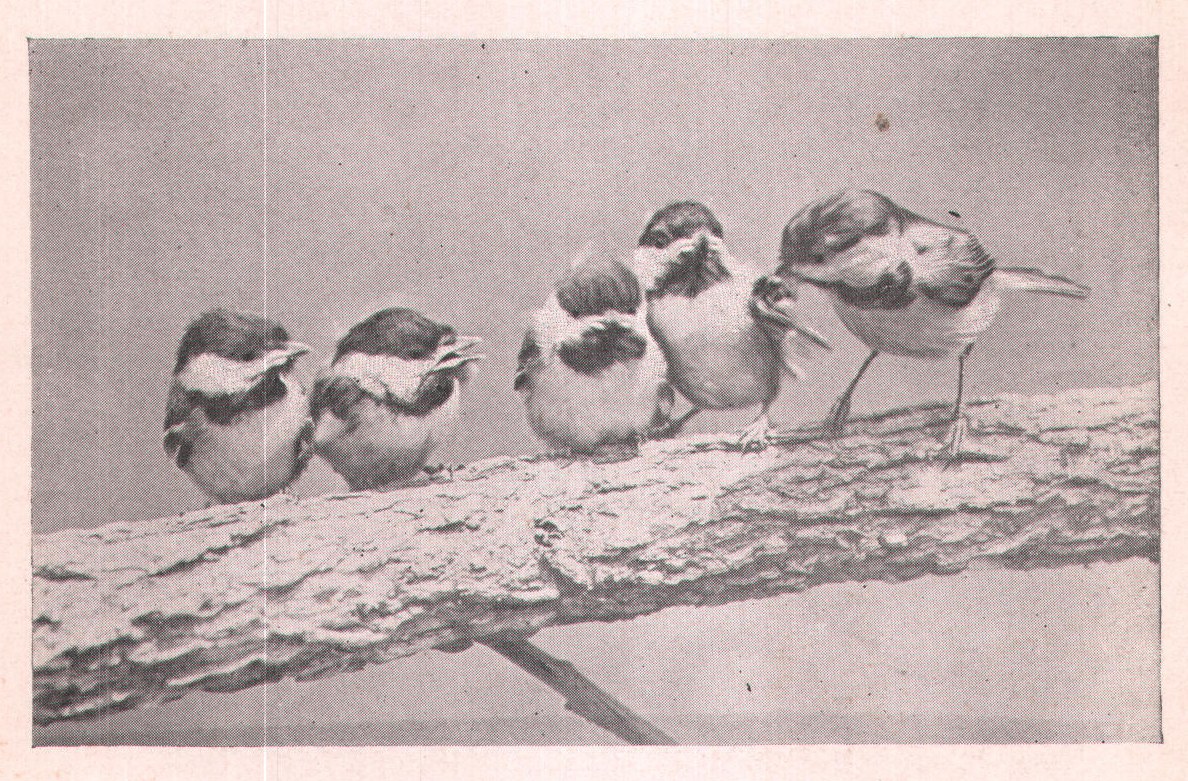
When we decided to arrange the five little fellows, that still remained, on a stick so that we might picture their parents feeding them, I knew that we would have our hands more than full; and my expectations were fully realized. Mother Chickadee ought to have been very proud of her children, and undoubtedly she was. They obeyed every command from her, and she called "jump" (in bird language) just as often as we placed them in position to suit us. If it were possible to obtain a little knowledge of bird Try as we would we could not persuade more than six of the dozen to pose for their pictures. language, I would give considerable to know just the sounds that mean "keep still." We finally got the pictures we wanted, but we earned them, and surely the little fellows earned the freedom that we allowed them as soon as we had made two exposures.
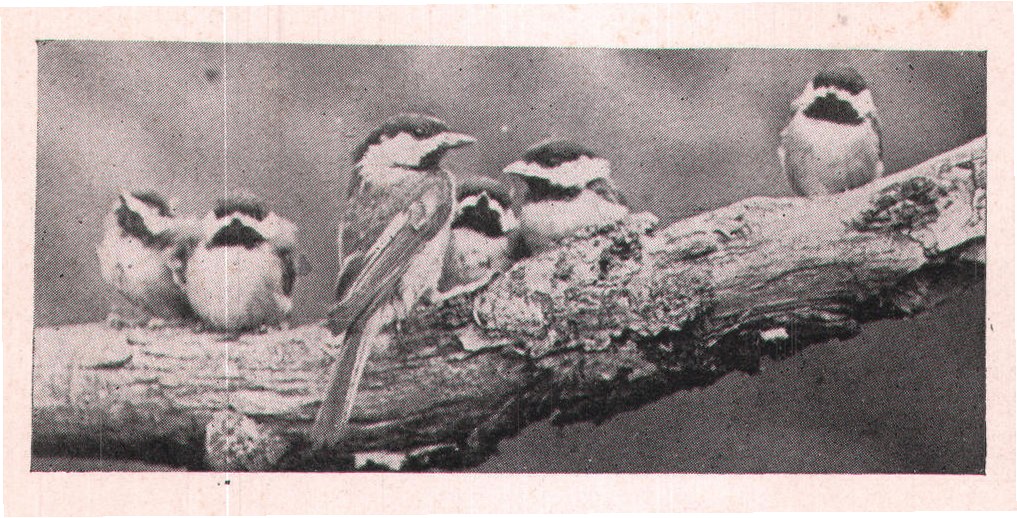
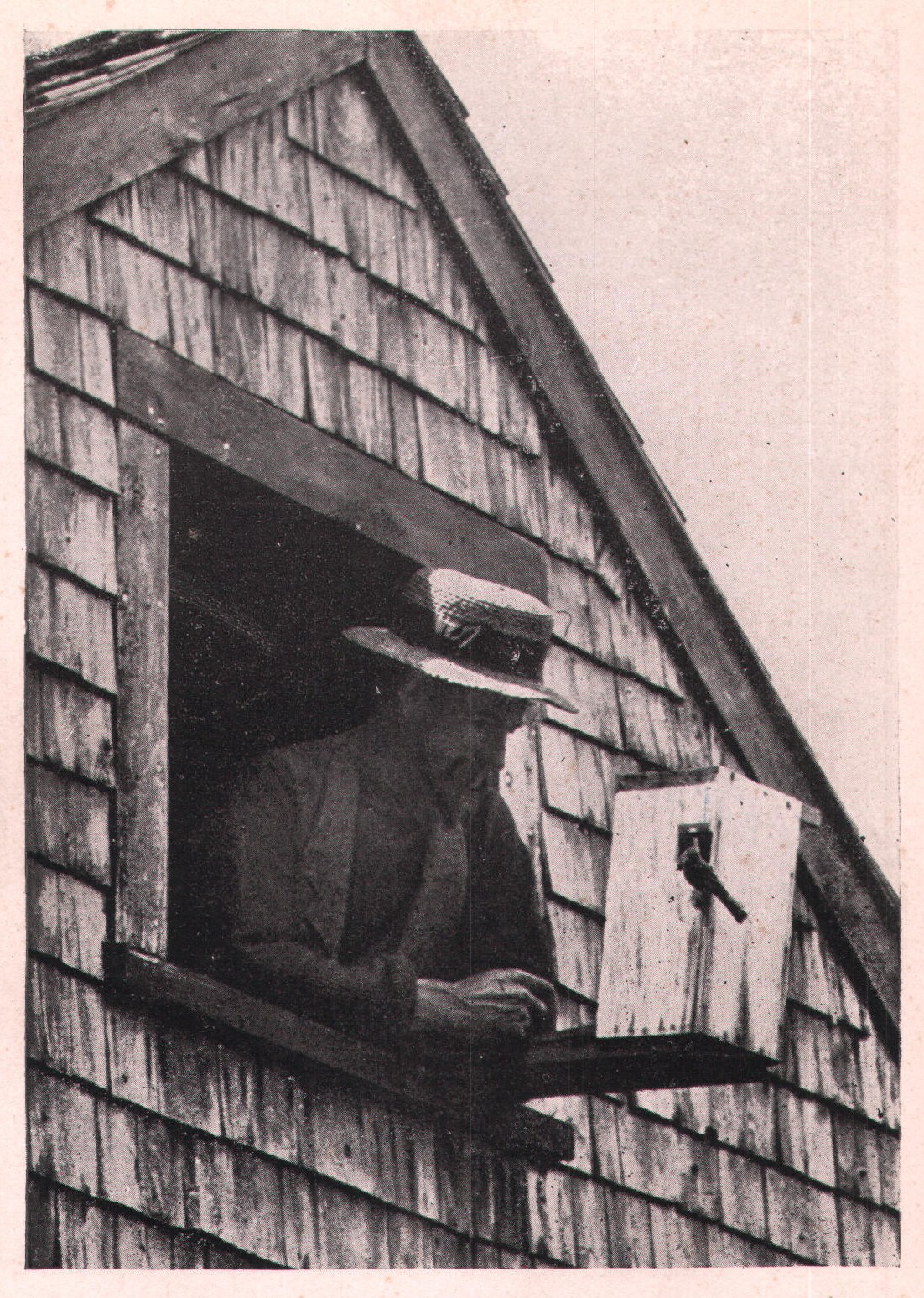
I have found and photographed several other families of Chickadees, one nest of which contained twelve eggs. I think this is about a record number and certainly it is more than these birds should have had, for the birch stump was so small that the eggs were arranged in tiers. They did, however, succeed in raising the entire family successfully. When the little fellows were most ready to leave home, they filled the stump from the bottom of the cavity to Fig. 8. Father Chickadee often made the mistake of alighting at the wrong side. It is the two little birdies at the left that are to be fed this time. the top. Those at the bottom were continually pushing their way up in order to get fed in their turn, a perfect circulation of young Chickadees. One summer, Mr. E. H. Forbush, well known in ornithological circles, wrote me that if I would appear with my This bird repeatedly lit on the side, and top of the nesting box, went in and fed her little ones while Mr. Forbush was watching them through the glass front.
The back of the box facing the window, was removable, so that all that transpired, as the parents fed the five little birds, could be plainly watched at a distance of but two feet. The value of a family of these birds on the premises is easily seen from the fact that all shrubs and plants about the house were kept entirely free from plant lice during the season.
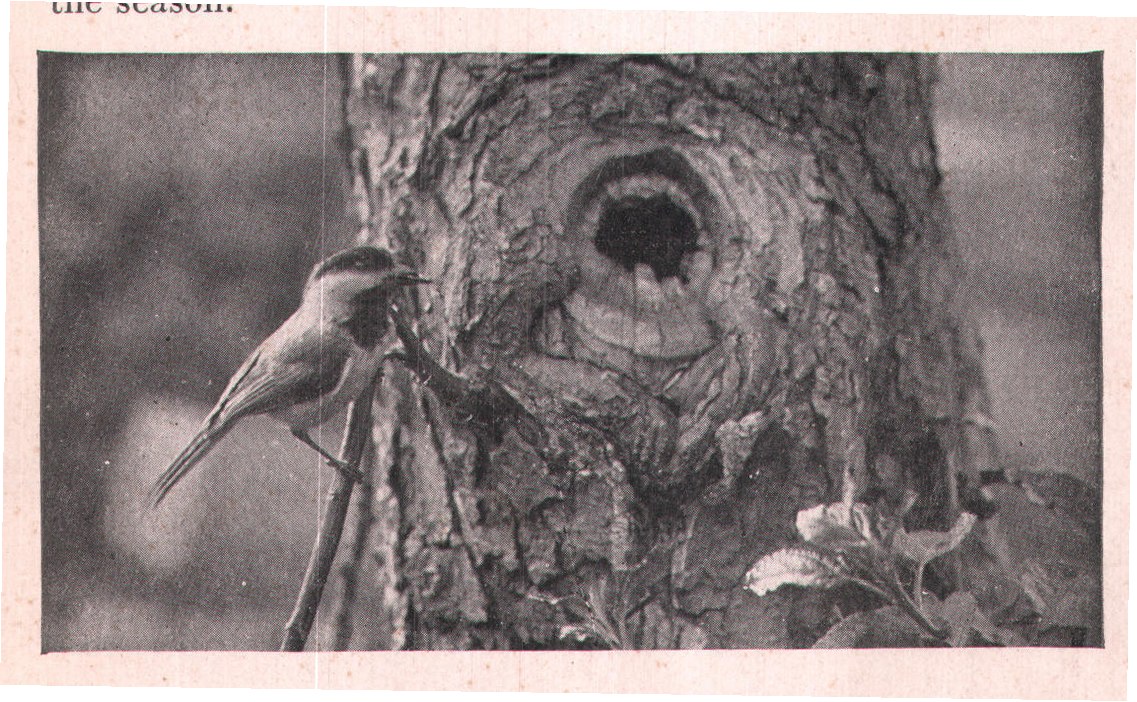
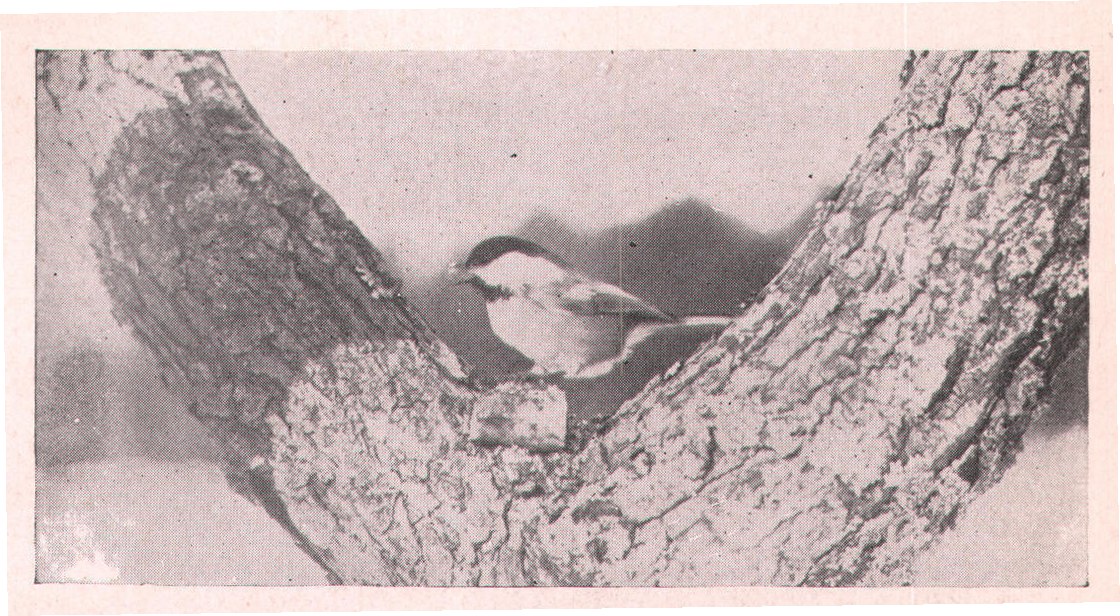
Fig. 13. Cavities in orchard trees make fine nesting places. You will notice, by one of the accompanying pictures, that the Chickadees were not in the least afraid, but came and went even though they were being watched at close range. The little ones left the nest shortly after this picture was taken, flying first to Mr. Forbush's shoulder, then to his hat and thence out into the wide, wide world. Chickadees can easily be induced to remain about farm houses in summer if they are occasionally fed during the winter, when food is scarce or difficult to obtain. Even if the orchard contains no trees with decayed limbs, in which they can nest, they will remain if you wire short sections of decayed birches to some of the trees.
Fig. 14. A piece of suet is just the thing for Chickadees on cold wintry days.
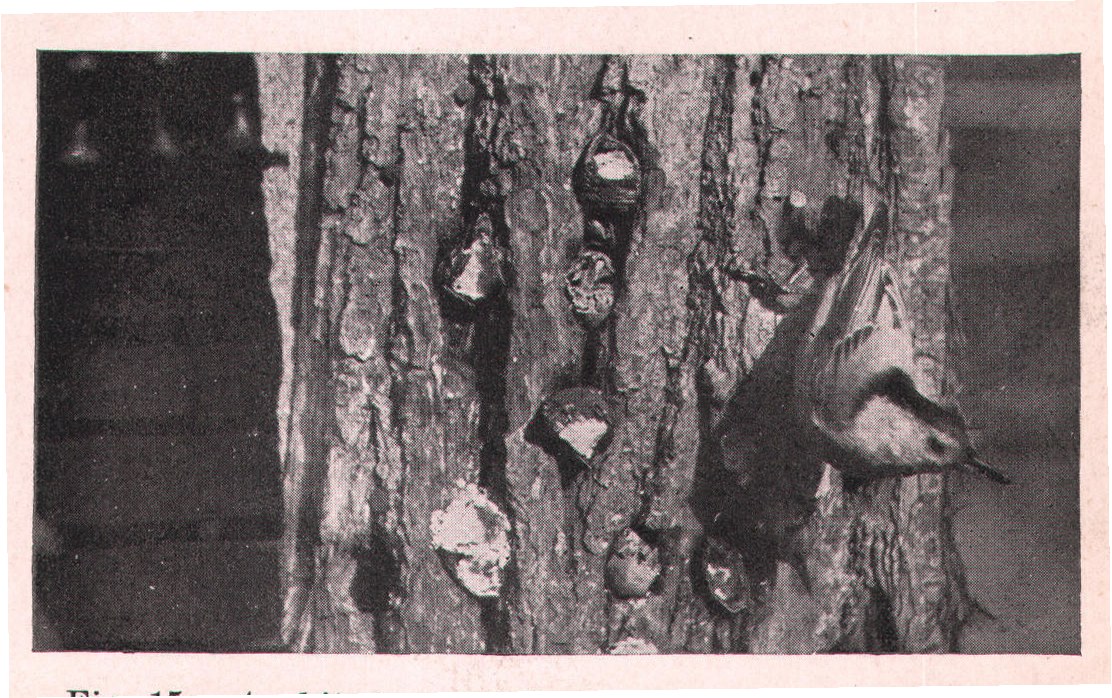
Fig. 15. A white-breasted Nuthatch and the bountiful repast of nuts and suet provided for him by a human friend. Fig. 16. Does a Nuthatch like nuts? Note the inverted position. These birds love to be head downward.