Wood Thrush
This is the largest and handsomest of our true thrushes and, in my estimation, has a much sweeter and more pleasing song than any of the others, not excepting the famous Hermit Thrush that I have often heard both in breeding grounds and during migrations. The Wood Thrush song is one impossible of adequate description, clear and flutelike, the notes coming after regular pauses, usually in groups of threes, the last one of which is often held and vibrated. These birds are heard at their best early in the morning and again just as darkness closes in about the woods.
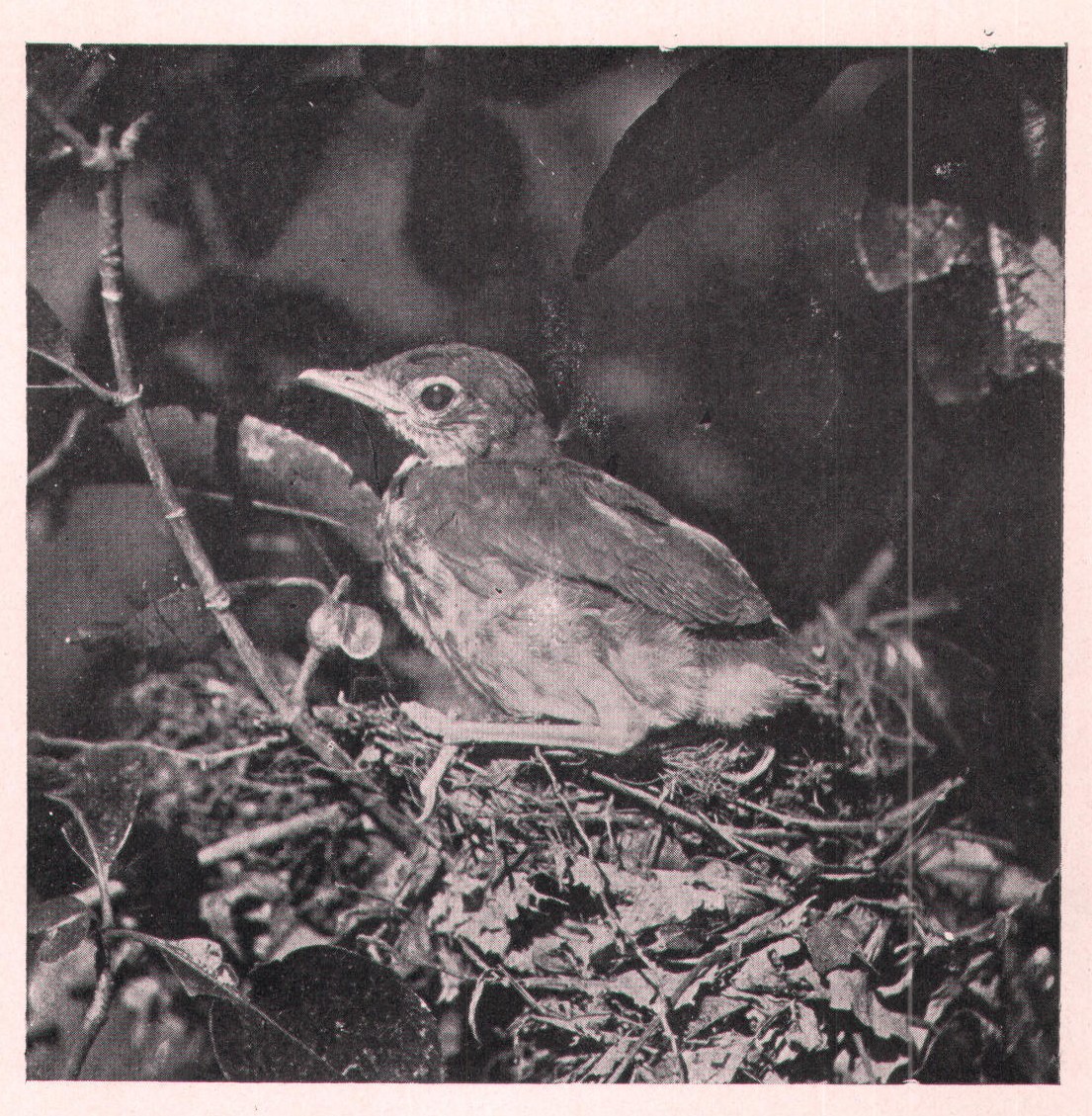
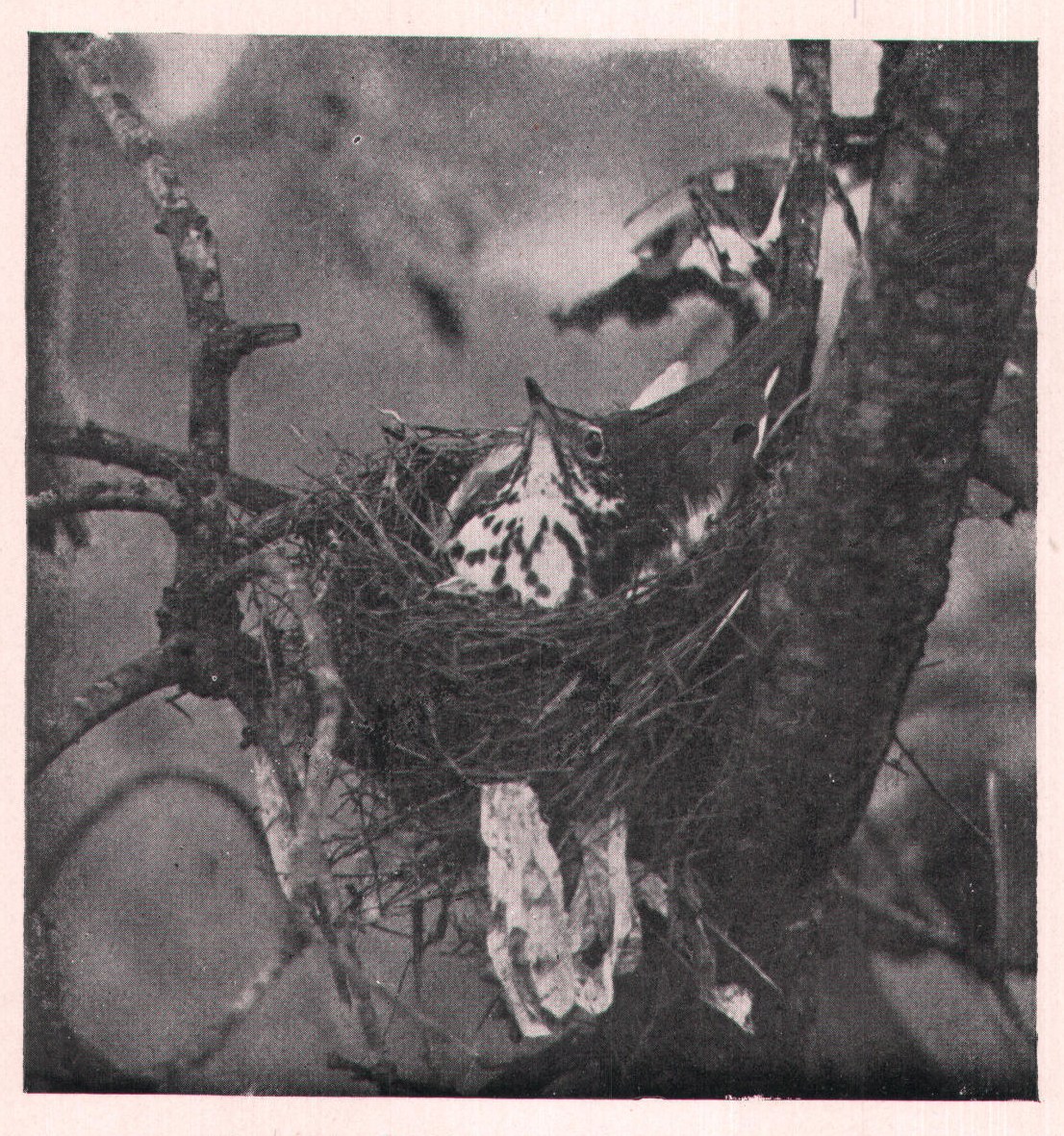
The Wood Thrush nest reminds one somewhat of that of the Robin. A small percentage of mud also enters into its construction, but not nearly as much as Robins use. The bulk of the nest is composed of grasses, rootlets and a few leaves. It is usually located in underbrush, where it is shaded by taller trees, at heights of from six to ten feet from the ground. The birds are usually very tame while setting, often allowing you to touch them before they will leave the nest. After they have left, however, it is difficult to induce them to return while you are near. I have not yet been able to photograph them feeding their young, probably because I have not yet met the "right" bird. While eggs of the Veery are of a greenish-blue, resembling in size and shape those of Catbirds, eggs of the Wood Thrush are of that peculiar color known as "Robin-egg' blue and most nearly resemble eggs of Robins.
They sit so closely that sometimes you may touch them before they will leave the eggs.