Home › The Woodland Apartment › The Woodland Apartment: Jack
The Woodland Apartment: Jack
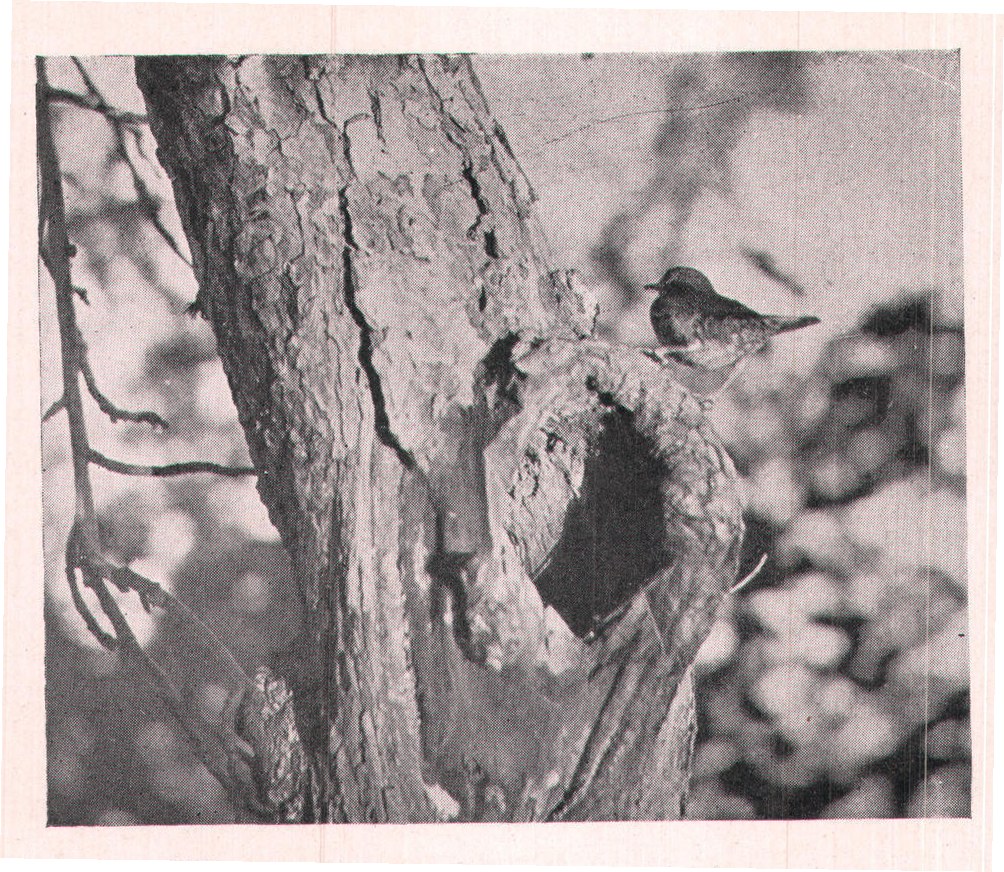
This is "Jack" as we soon got in the habit of calling him. On the other side the hand of man manifested itself in two shining ribbons of steel, stretching away into the distance along which thundered the sixty-mile-an-hour express and the slow, lumbering freights, not near enough to the apartment to be objectionable but just right to break the monotony of song and trees and flowers.
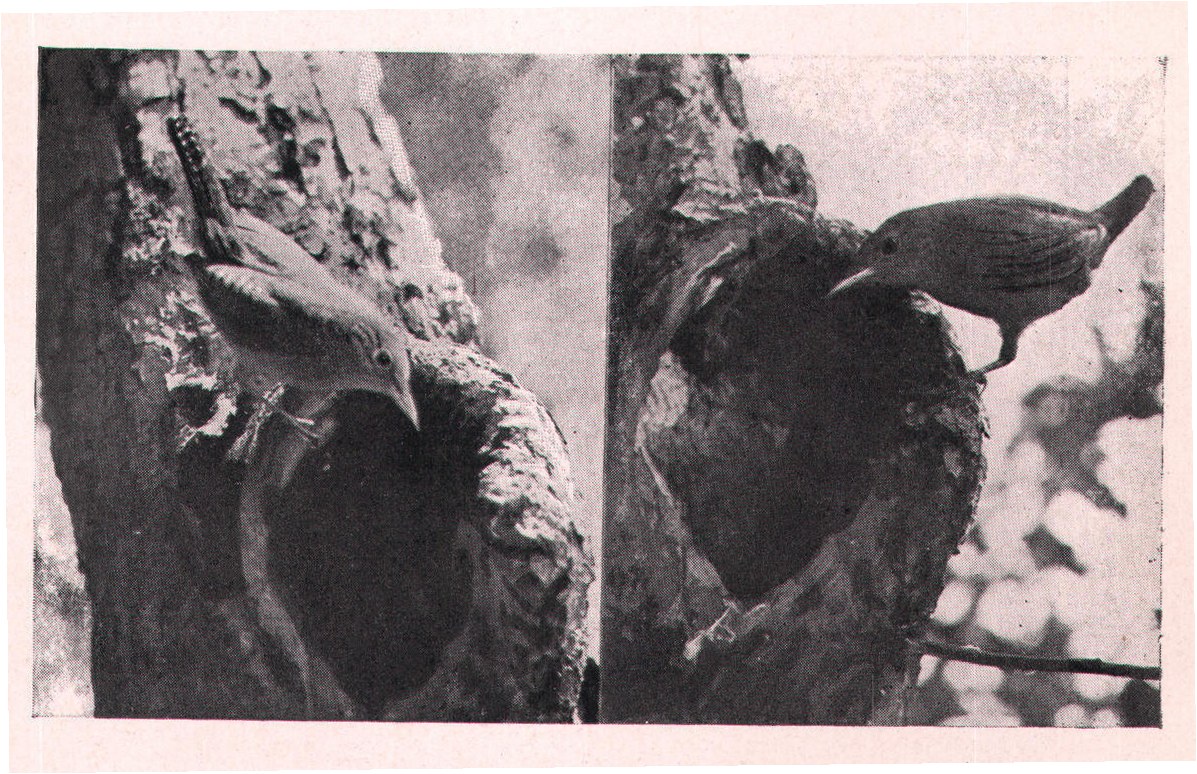
Ten days later the wren nest contained seven finely speckled treasures and the pair of woodpeckers were very busy trying to satisfy the unending appetites of five little woodpeckers. Both male and female Downy would enter and leave the nest without regard to us, even though we were nearly within arm's reach of them. Consequently we had no difficulty in securing a large series of photo- Fig. 225. Her plumage was not as smooth as Jack's, -perhaps because she worked harder. graphs. Downy's plumage was always clean and neat but that of his mate was quite worn and soiled, probably because she had been obliged to do nearly all of the work before the appearance of their little ones. The adults made alternate trips with food about every five minutes, one often remaining in the nest until the other arrived. Usually they brought but a single grub at a time, but occasionally one of them would make a "lucky strike" and bring a whole mouthful. This nest was visited nearly every morning in order to keep tabs on the growth of the youngsters; the older they got, the noiser they were, making loud whining sounds when they were being fed.
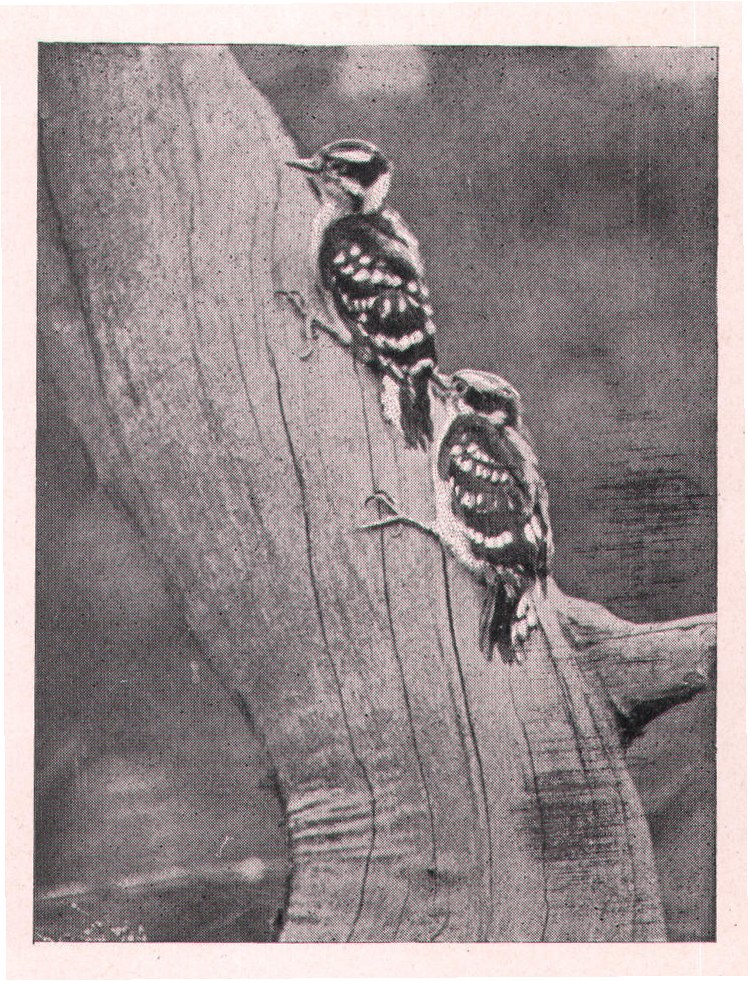
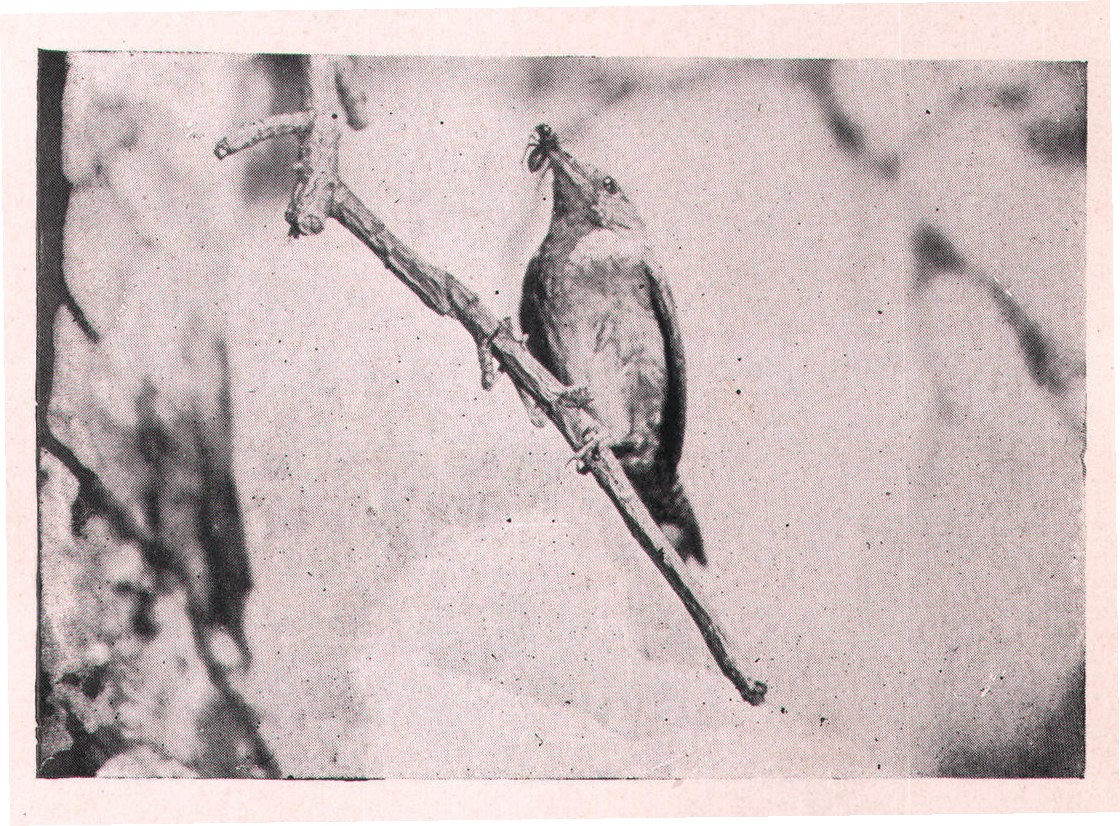
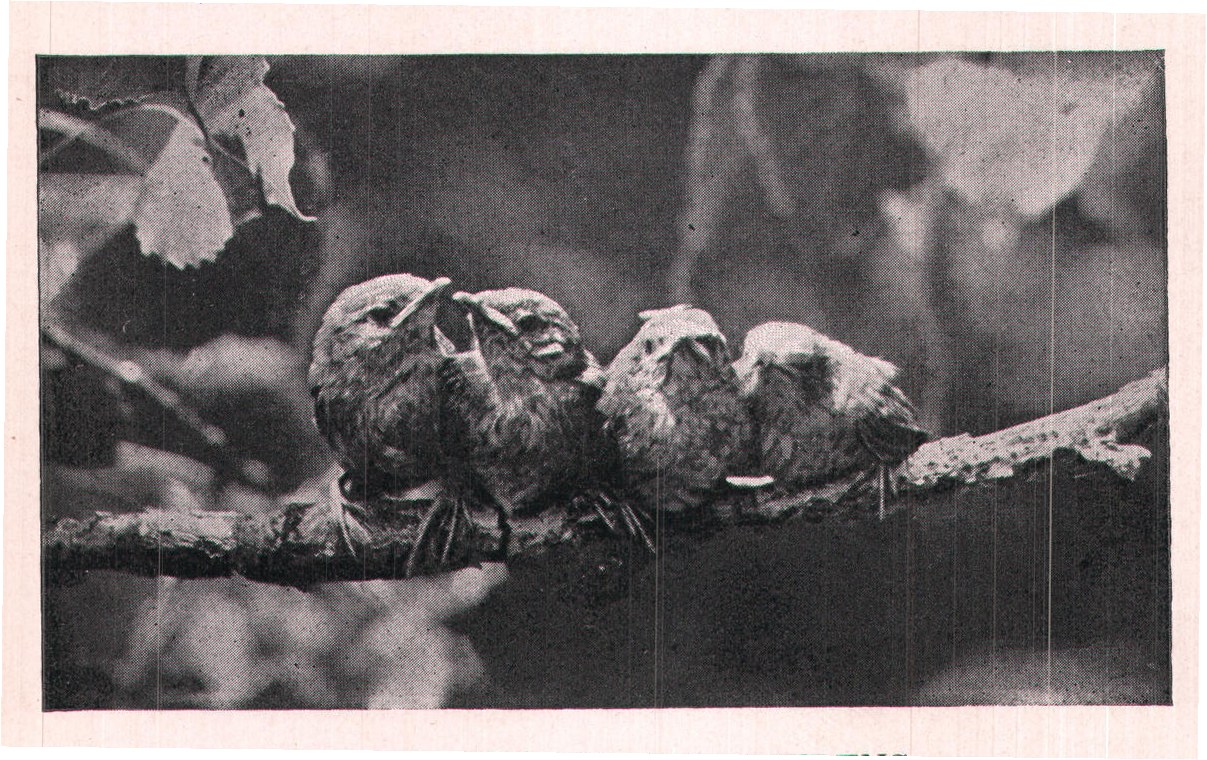
One morning I found one of them clinging to the outside of the trunk and the rest crowded about the small entrance. CAREER Fig. 226. Jack brought a wasp, -minus wings and legs. They were tired of their cramped quarters and were about to explore the outside world. As we approached, they all scrambled out and commenced climbing up the trunk. We brought them down to a horizontal limb, but they were very restless; they had an idea that they were large enough to fly and wanted to try it right away. Two of them were quite bashful; every time we tried to focus the camera on them they would slide down the back side of the limb to get out of the view.
Fig. 227.
Finally, as my father was trying to straighten them out, they all scrambled on his sleeve and, one by one, climbed to his shoulder from which elevation they made their maiden flights to the woods beyond.
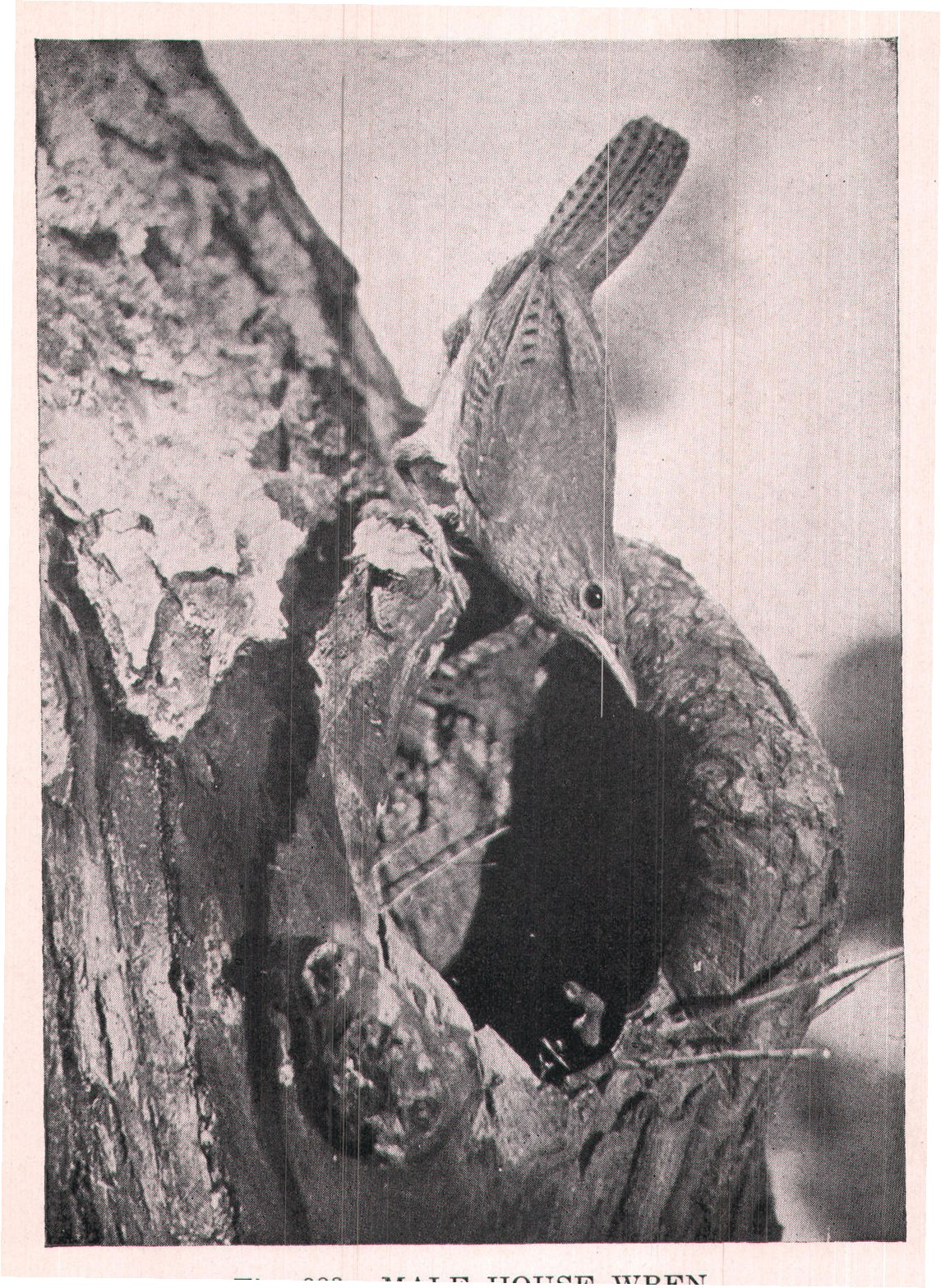
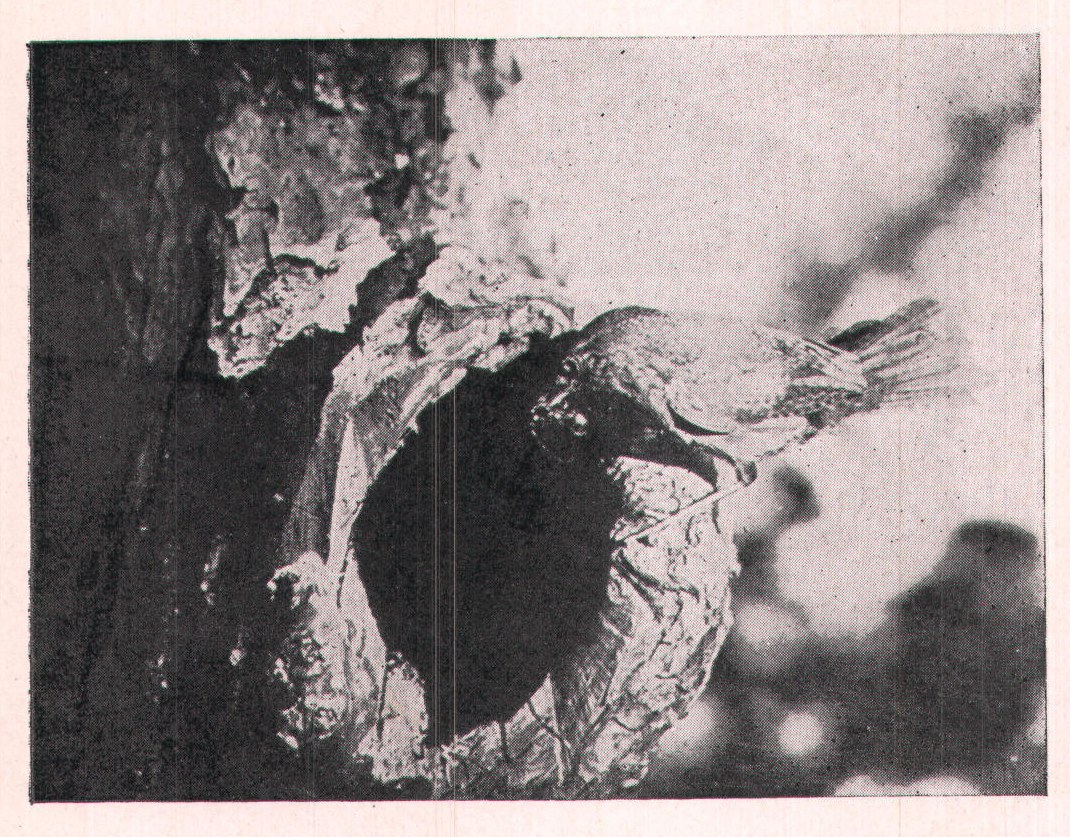
Meanwhile the wren eggs had also hatched and the male bird was happier than ever. So closely did his songs follow one another that it almost seemed as though a tiny, repeating phonograph must be concealed in his throat. We had visited the woodland apartment so frequently that neither of the wrens paid any attention to us. In fact we had come to know them as Jack and Jenny respectively. Like that of the male woodpecker, Jack's plumage was always sleek and orderly; also similarly and for the same reasons, that of his mate was worn, one tail feather was gone and another shorter than it ought to have been. We made pictures of Fig. 228, 229. Jack assumed various poses. them in all positions, head down, head up, bringing loads of plant lice, spiders, wasps, small grasshoppers and many other kinds of insects.
Jack devoted so much of his time to singing that his mate brought fully twice as many loads of food as he did. It was really amusing to see him sometimes try to sing when he had his beak filled to overflowing with insects; he could get in all the gurgling notes but he had to omit many of those that called for a rapid motion of the bills.
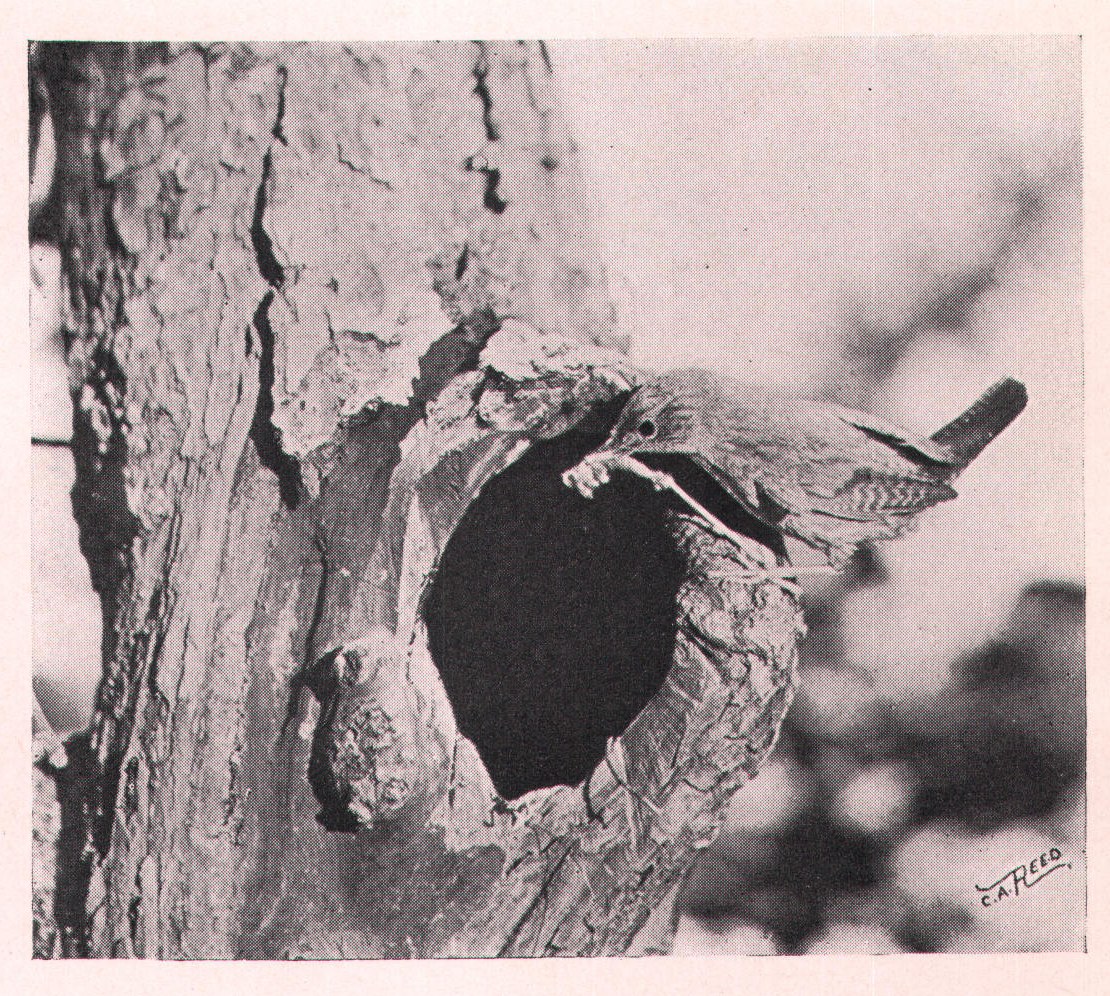
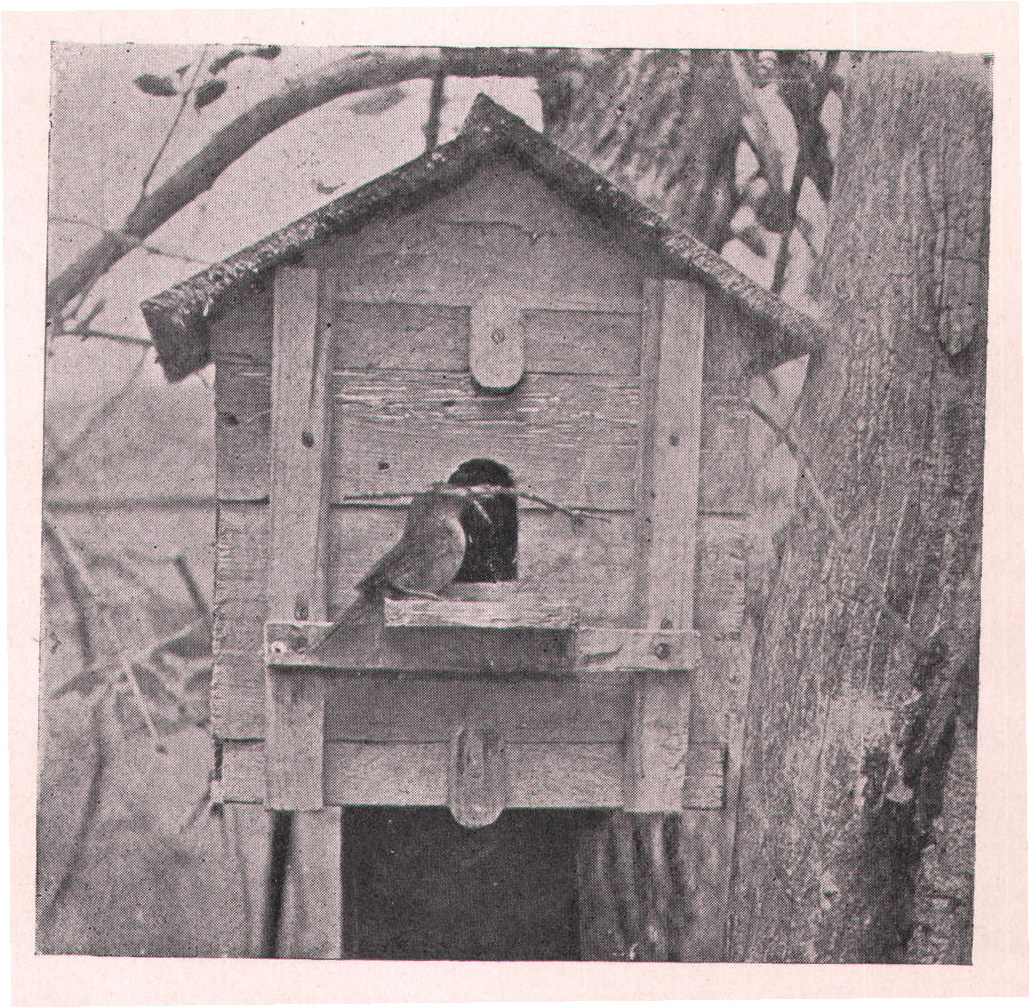
As in the case with the woodpecker, we happened to visit them on the morning the little wrens were to say goodbye to their home, but the results we obtained were entirely different. As soon as I touched the stump it seemed as though I had pulled the trigger of a gun, for the stump immediately belched forth little wrens. I clapped my hand over the opening but they poured out through my fingers and seven of the little fellows went scuttling away through the grass as fast as their wings and legs could carry them. Try as we would, we could not get more than four of them at a time and we could not persuade even one of those to sit still and look respectable while we made a portrait of him. We did not disturb the remaining tenant and I am sure that the chipmunks were delighted to see us take our final departure. They probably also was glad to see the birds go for they were not on friendly terms with one another. Chipmunks have the unfortunate habit of sometimes taking birds' eggs from their nests, a habit that forces birds to try and drive them away from the immediate vicinity of their homes. Whenever, therefore, Mr. Chipmunk appeared on the stump or tree trunk, either the Downy or wren was pretty sure to dash at him. He could easily escape the onslaughts of Downy by dodging around the limb, but the Fig. 231. This was an inexperienced wren; she always found it difficult to get long twigs in the small door. wren was even more agile than he and would put him to flight every time.
Downy did not like the colony of bees either; often I had seen him hitch around the tree trunk when they buzzed about his head. A number of times, too, I saw him spring up and catch one in his beak and carry it to his little ones. I think it quite probable that he may have exterminated the whole colony in this way before he left, at any rate I did not notice them afterwards. mind The big Carolina Wren is not at all particular in regard to nesting site, building in hollow trees or anywhere about houses.