Home › The Chickadee › The Chickadee
The Chickadee
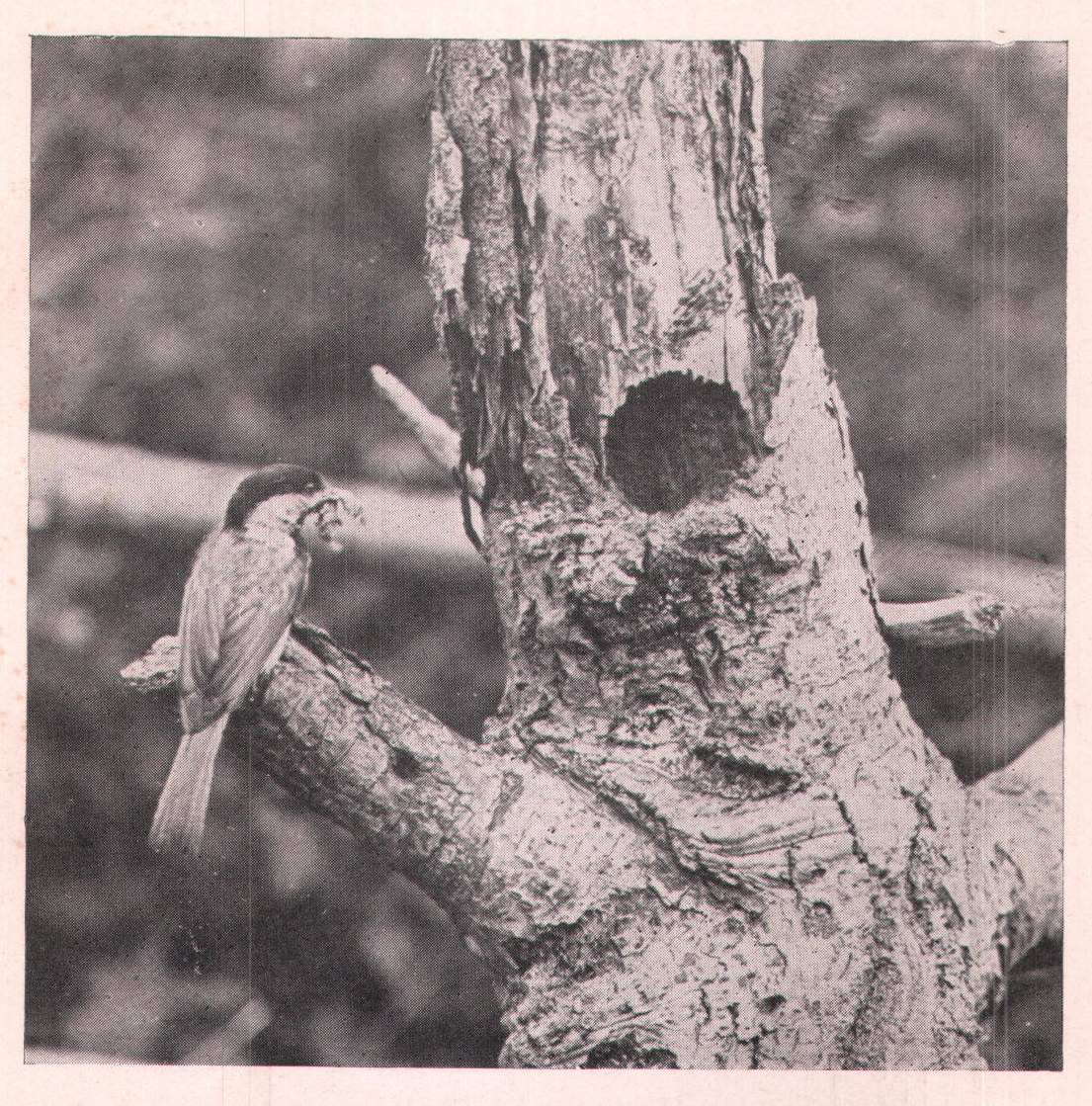
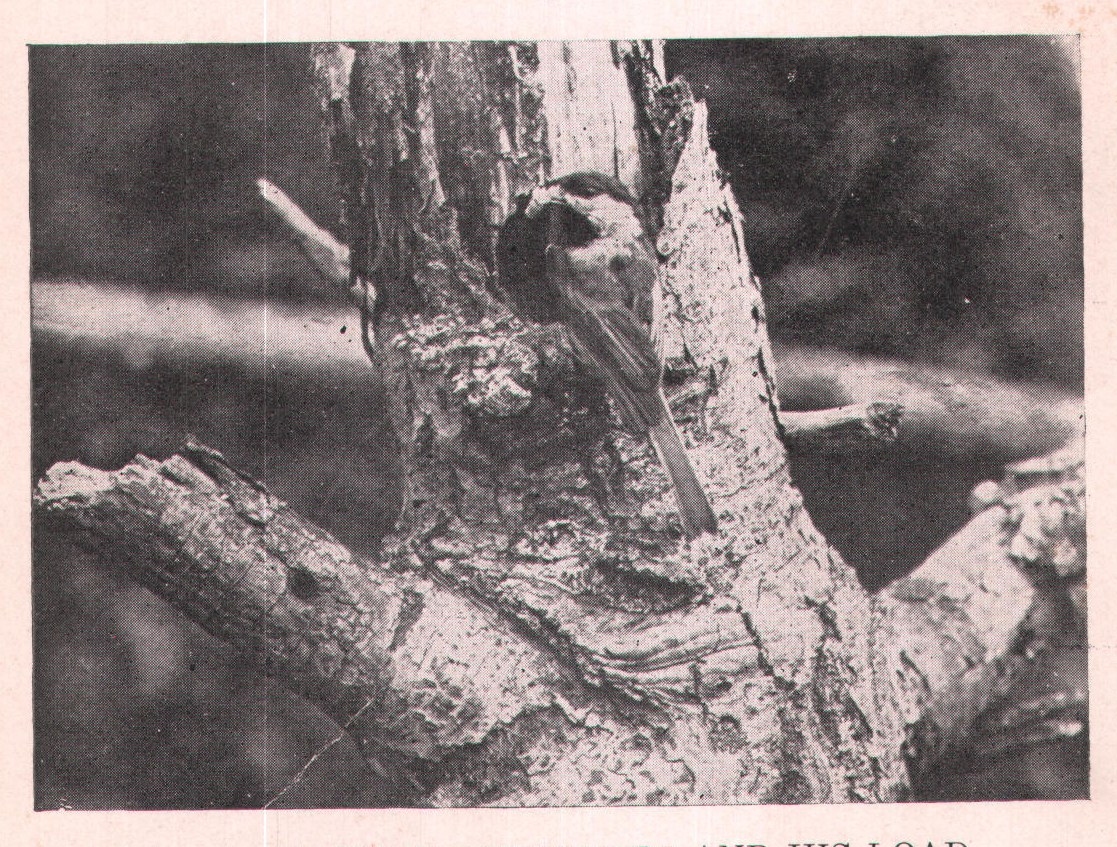
We were wending our way along a narrow country lane, hedged in on either side by stone walls and bushes, when a clear "phe-be," whistled in that high-pitched, clear tone, such as only the Chickadee can produce, attracted our attention. A few steps more we went, and the song suddenly ceased and changed to a series of "dee-dee-dee's" uttered Part of stump removed to show the twelve eggs,--a very unusual number. In a birch stub, barely two feet above ground. She has a green caterpillar in her beak; as it was a lively one, she has beaten it on a branch until it is mis-shapen and nearly dead. as rapidly as they could come from the throat of an angry bird.
It was very evident that we were uncomfortably near her home, but in which direction it was, we did not know and, had she been wise and remained silent, we probably never would have known. She came down very close to us and we saw that she had her beak filled to the brim with plant lice. How she could retain her grip upon them and still "dee-dee" so vigorously was a mystery, but the sound poured forth as rapidly from between her closed mandibles as it did later after she had deposited the food where it belonged.
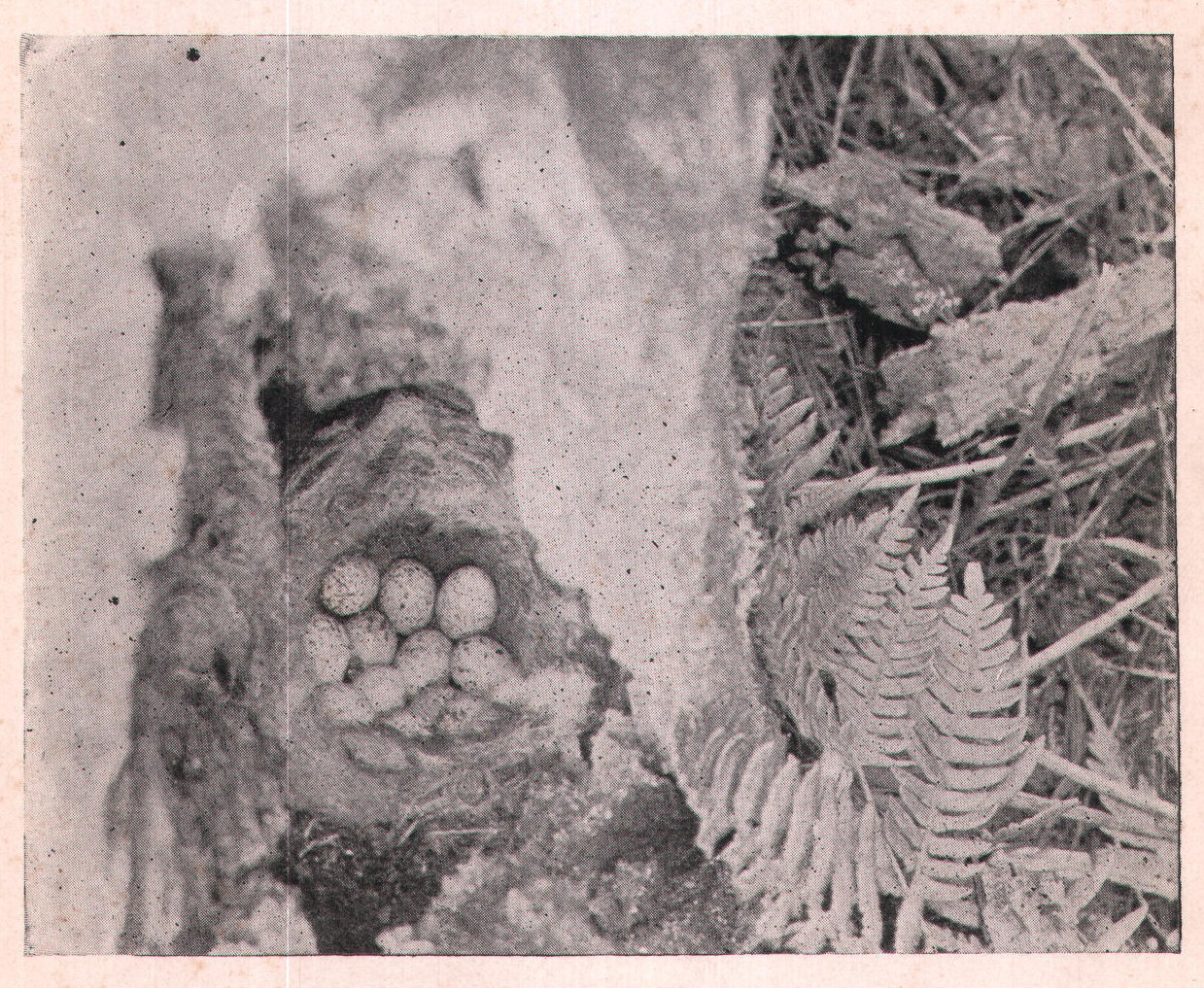
Naturally, with a mother bird anxious to feed her babies, to help us, it required but a few minutes to locate the nest in a small dead tree beside the wall. Violent as had been her protestations when we first found her, she soon became quite reconciled to our presence and, in a short time, was one of the tamest birds with which I have had to deal. For the next three or four hours we camped out right beside her home and, from the protection of a small tent, made a number of negatives of her and her mate going back and He was more shy than his mate and watched the tent closely each time before entering.
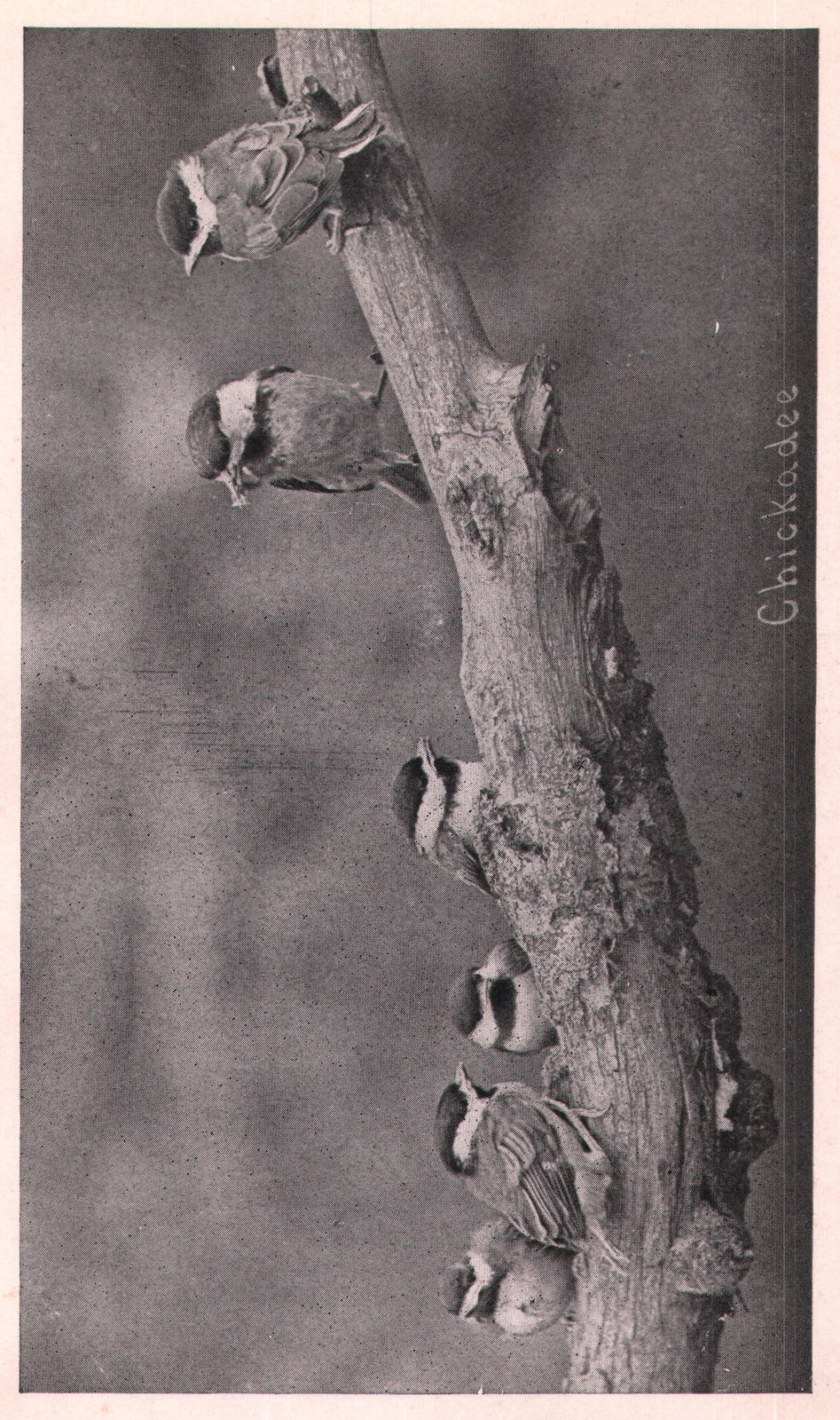
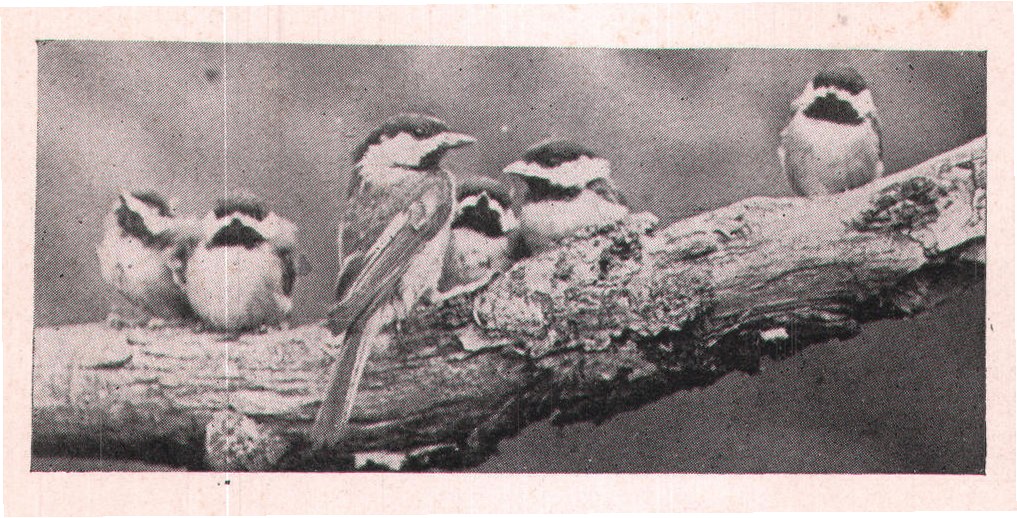
Chickadee Fig. 5. They were lively fellows; two of them have already flown away and the one on the right is about to. forth. The little birds were fed, on an average, about once in every four minutes, the adults timing their visits so that one was nearly always present.
Mrs. Chickadee nearly always brought a load of tiny insects, most often plant lice, so small that she must have brought from twenty to forty at each trip. Her mate was a philosopher, or it may have been that he was simply lazy, for he always brought single, large, white grubs, which certainly must have been easier to collect and perhaps were more filling than quantities of mites.