Home › Ruby-Thr. Humming Bird › Ruby-Thr. Humming Bird: Cuckoos
Ruby-Thr. Humming Bird: Cuckoos
Two species of Cuckoos are commonly found in eastern North America, the Black-billed and the Yellow-billed. The former is the most abundant in the northern half of the United States and the latter in the southern half. The two species are very easily distinguished although beginners in bird study often get them confused. The Yellow-billed Cuckoo is the largest, has a yellow lower mandible and the outer tail-feathers are black with broad white tips. The Black-billed species has an entirely black bill and the tail is a uniform olive-brown with narrow white tips to the outer feathers.
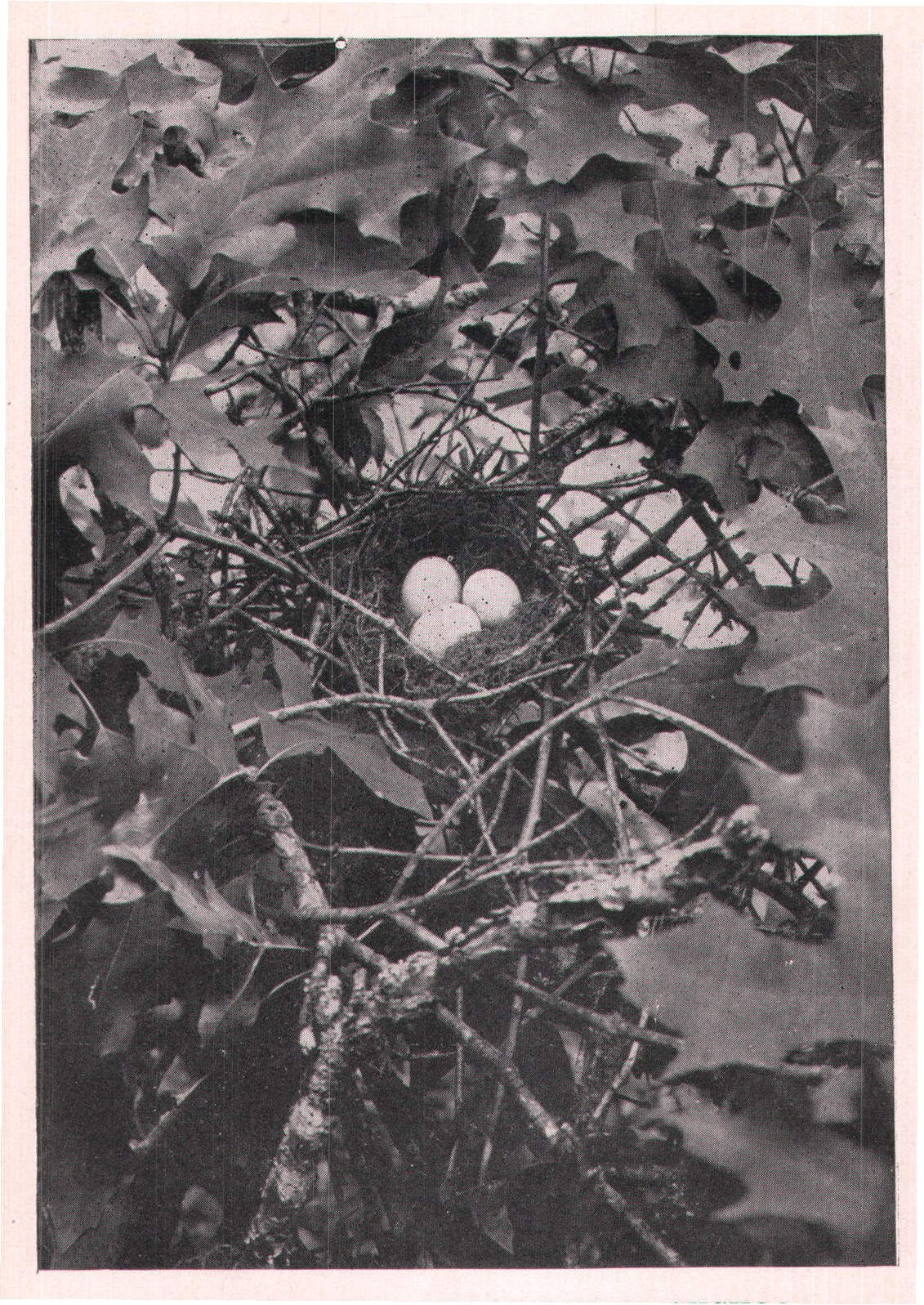
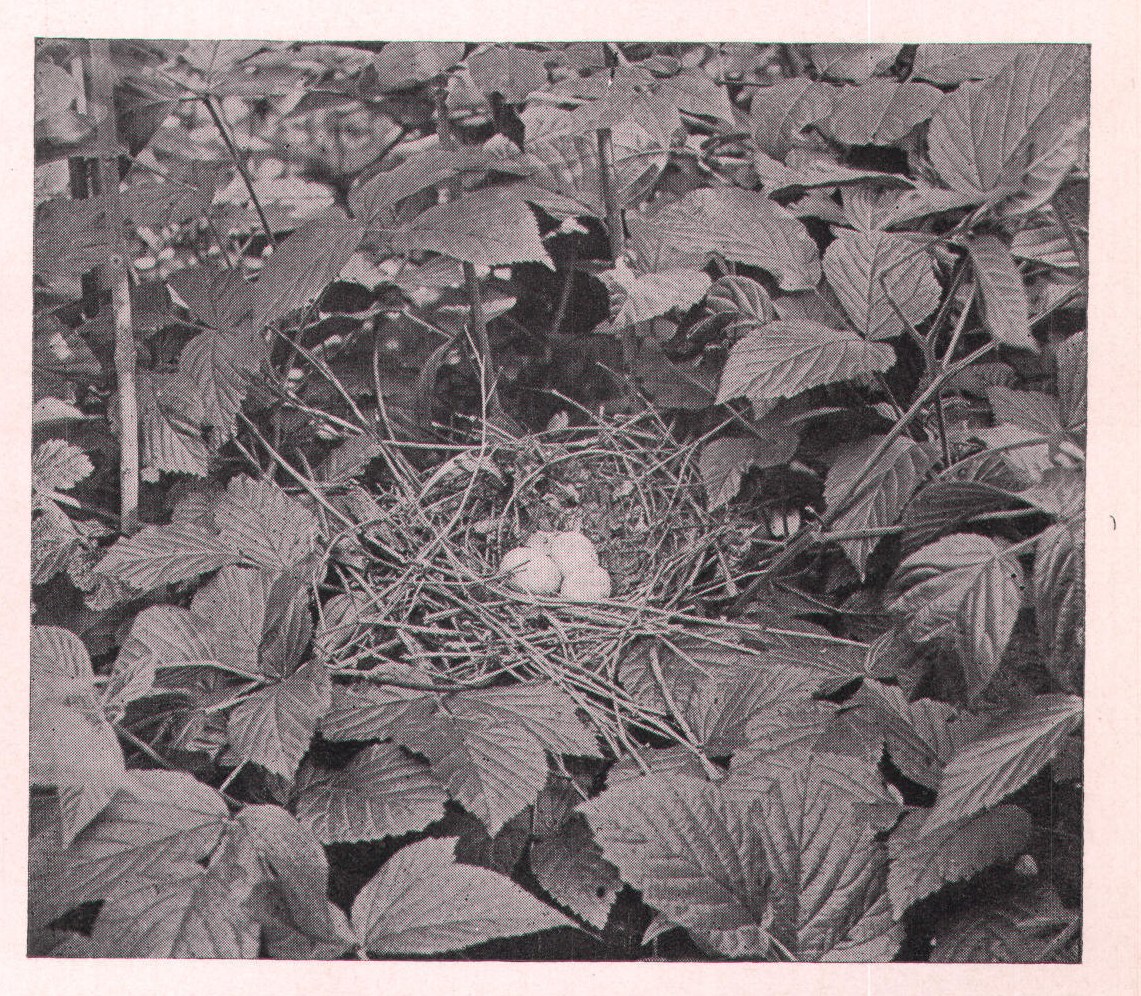
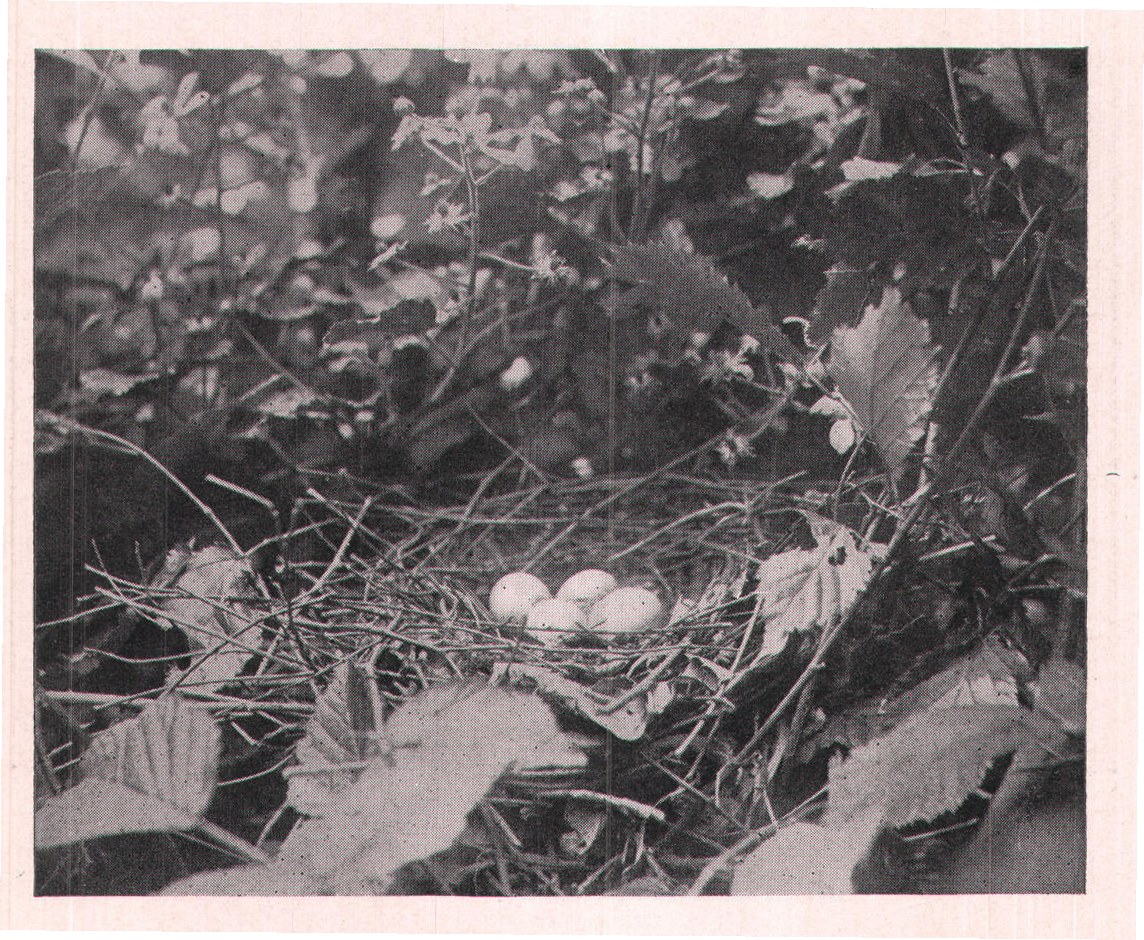
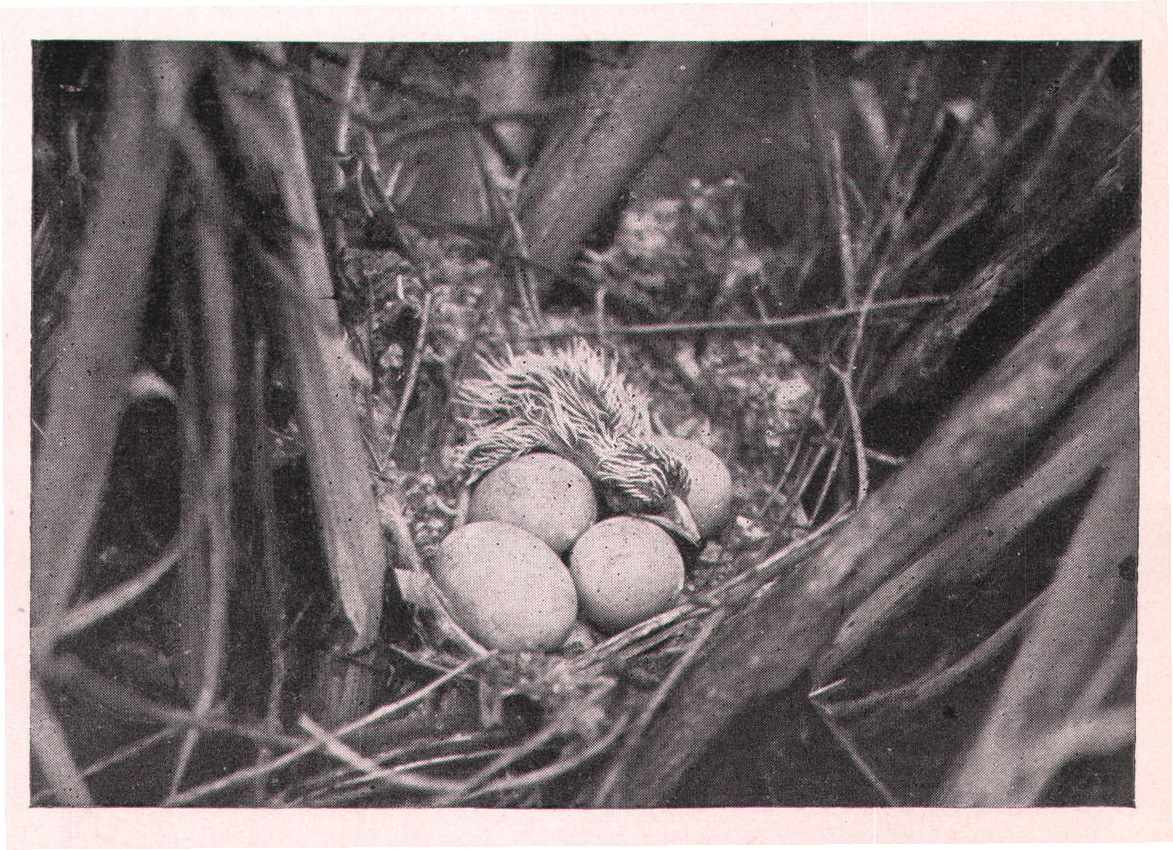
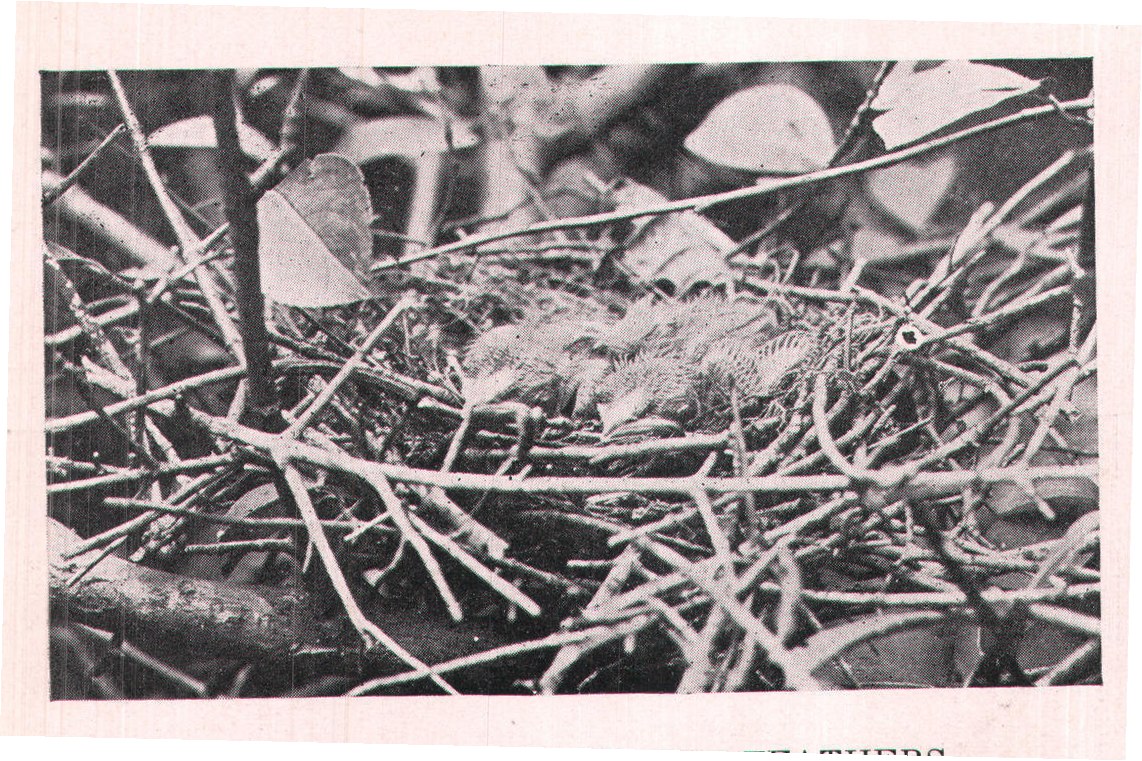
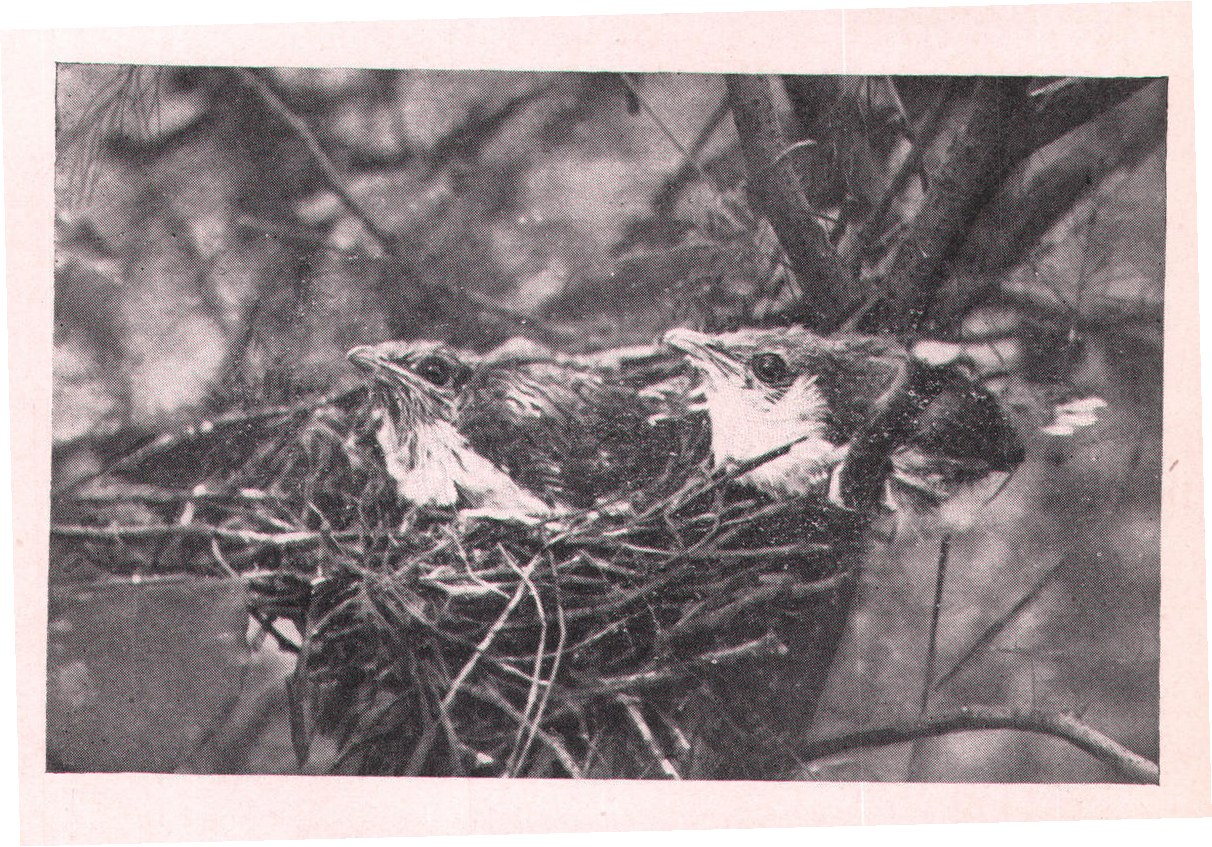
Both species build very shabby nests, mere platforms of a few twigs, usually lined with a few catkins. The eggs of the Yellow-billed species are considerable larger and paler colored than those of the other. Three or four eggs is a normal set. These are deposited at very irregular intervals, sometimes several days intervening between layings. The bird often commences to set when only one egg is laid, therefore it is very common to find eggs and young birds in the nest at once or young varying greatly in size. Our cuckoos do not lay their eggs in nests of other birds, but always build their own nests. European Cuckoos, which belong to a different genus, do not build nests but lay their eggs in nests of other birds. Much confusion exists on this subject because writers getting their ideas from English books speak of the Cuckoo as a parasite and even school teachers often ignorantly inform their pupils of this fact which is not true concerning our birds. The only birdparasite we have is the Cowbird. I have included Cuckoos under "Birds of Silence" because they are very slow and quiet in their actions and do not often use their voices, but they can sing, or rather they have notes which can hardly be called songs. The tones of the two species are very similar but one familiar with them can always tell which kind it is by the sound and the rhythm. The Black-bill has regular intervals between the "kow-kow's" while the Yellow-bill usually rapidly retards his.
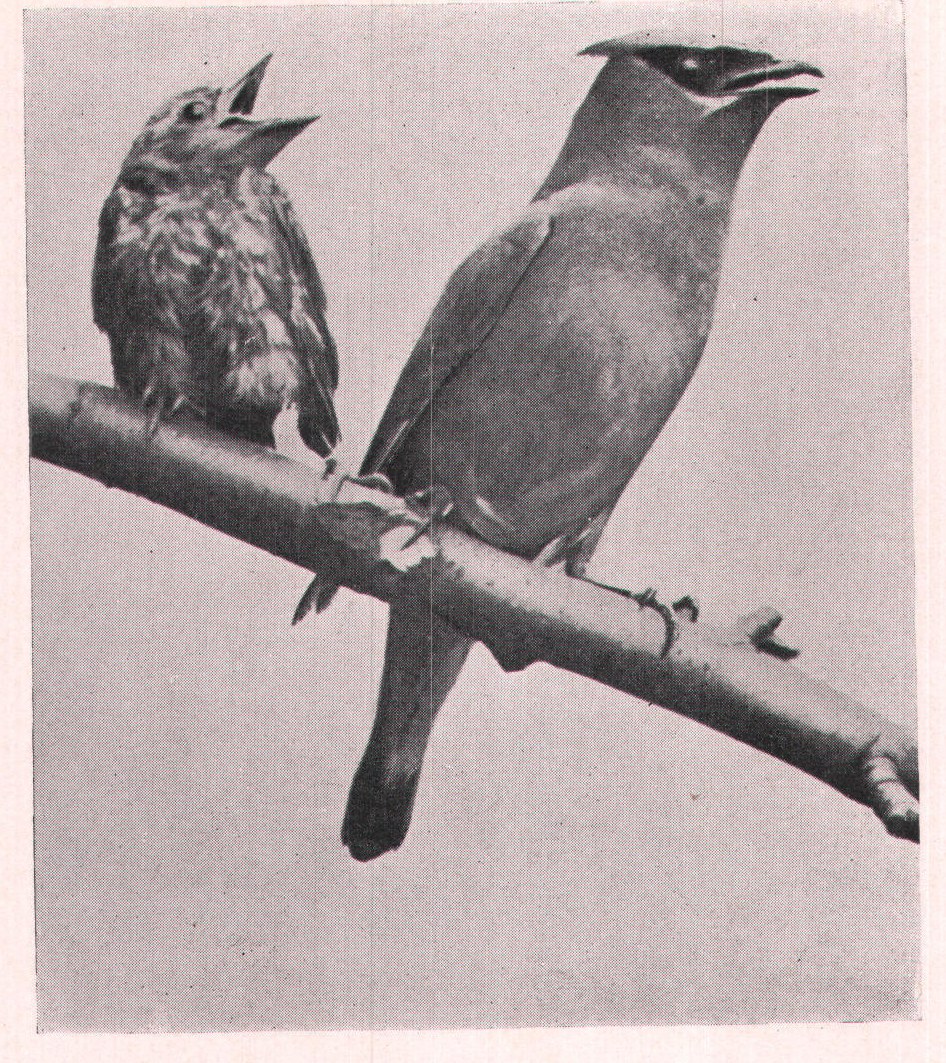
Although Cuckoos build homes and care for their young after a fashion, they do not have the attachment for them that most birds do for their little ones. I have not yet, out of probably half a dozen trials, succeeded in getting one to return either to the eggs or to feed young when I was prepared for picture-making. Some day I expect to find one whose home ties are stronger. They do, however, have a degree of affection for one another as the following will show:
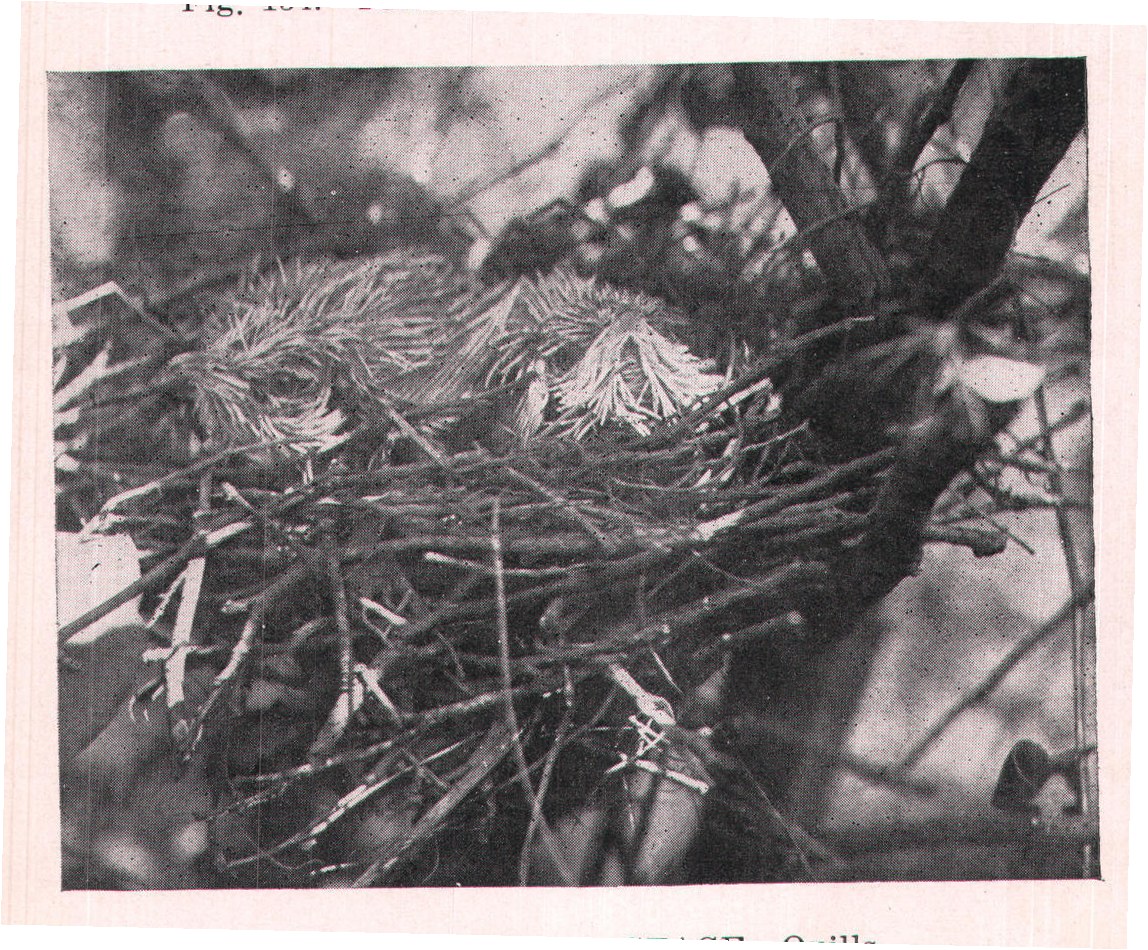
Cuckoos are very fond of tent caterpillars, in fact they eat more of these hairy creatures than all the rest of the birds together. One day I saw a Black-bill Cuckoo sitting beside a large caterpillar nest. He would utter a few notes and then eat a few caterpillars. Evidently he intended to stay by his find until they were all gone. After a while he took one in his bill and flew into a thicket a short distance away. In a few moments he was back again and after regaling himself for awhile, off he went with another mouth- Fig. 135. SECOND STAGE-Quills. ful. I carefully walked around the thicket and quietly parted the leaves. He was just returning with another caterpillar protruding from either side of his bill. He did not notice me and came directly to his nest which proved to be only about six feet from me. Instead of giving the morsel to young Cuckoos as I had expected, he passed it to his mate who, as I afterwards learned, was closely sitting upon her four blue eggs. It was an act of devotion that, knowing Cuckoos as I thought I did, I had not expected to see. I have always thought that had not somebody or something taken the eggs from this nest, it would have furnished me with the opportunity tures. with the opportunity to have gotten some successful pictures.