Home › Nighthawks and Whip-Poor-Wills › Nighthawks and Whip-Poor-Wills
Nighthawks and Whip-Poor-Wills
These two birds, often confused with one another by many, are similar in form but distinctive in plumage and , are similar in form but distinctive in plumage and very different in habits . I will first note some of the distinctions.
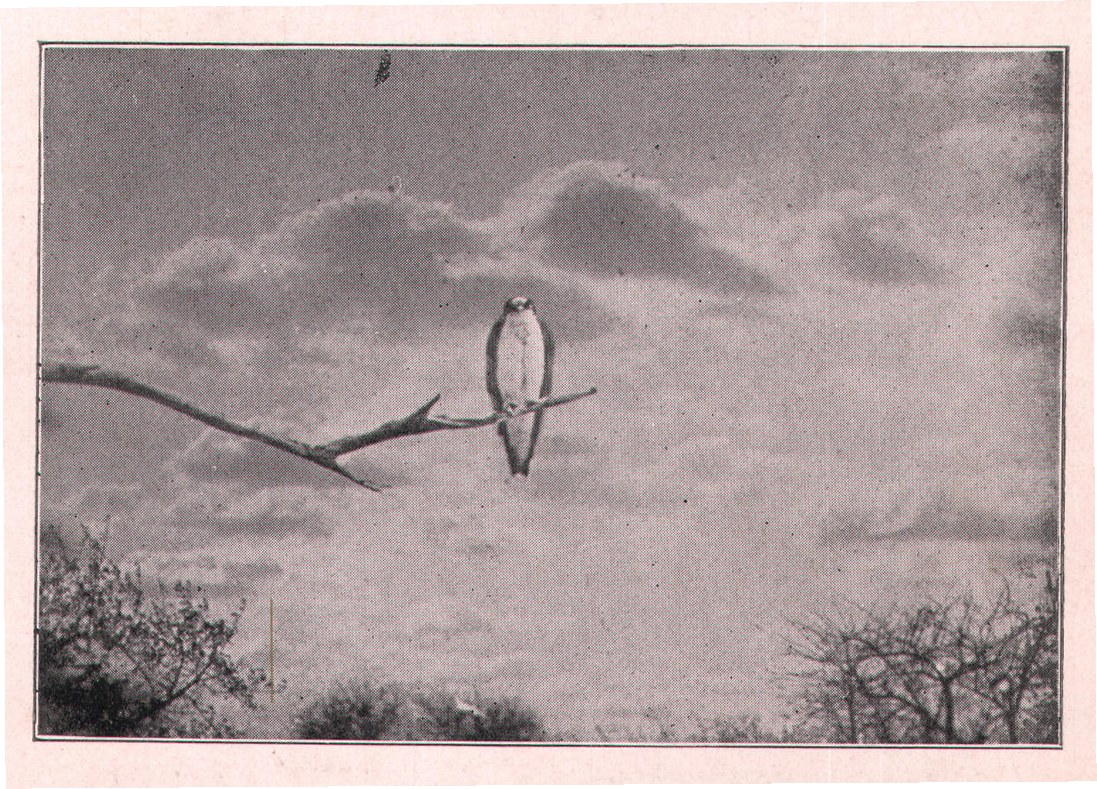
Nighthawk has a white throat, white bar across the outer wing feathers, white bar across the middle of the outer tail feathers, white bar across the middle of the outer tail feathers and the tail a trifle forked (female has the throat and tail bars rather buffy-colored). Whip-poor-will has a black throat, no white on wings, rounded tail and white tips to the outer feathers. These differences in plumage distinguish the two whether seen flying or perching. But there are other differences.
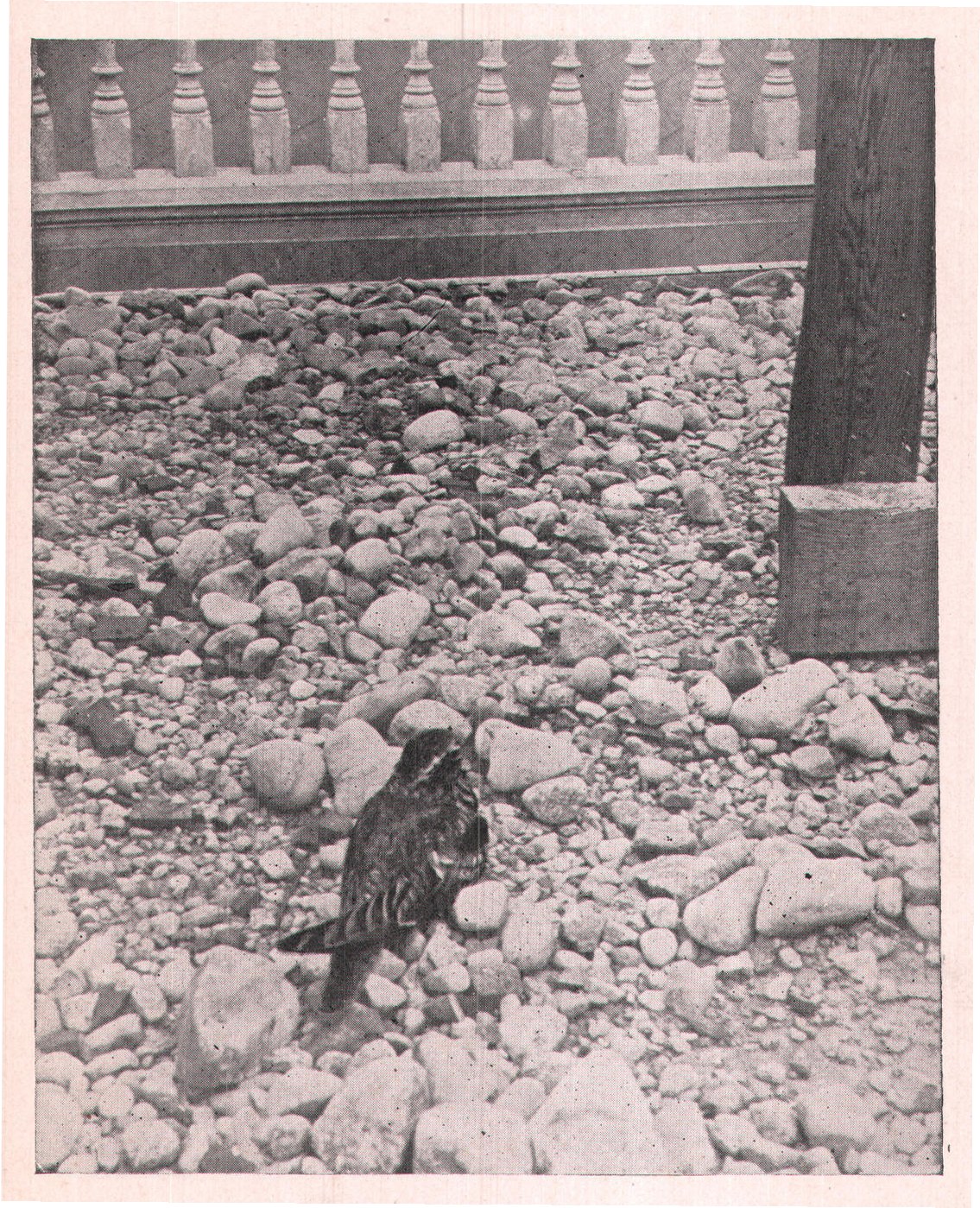
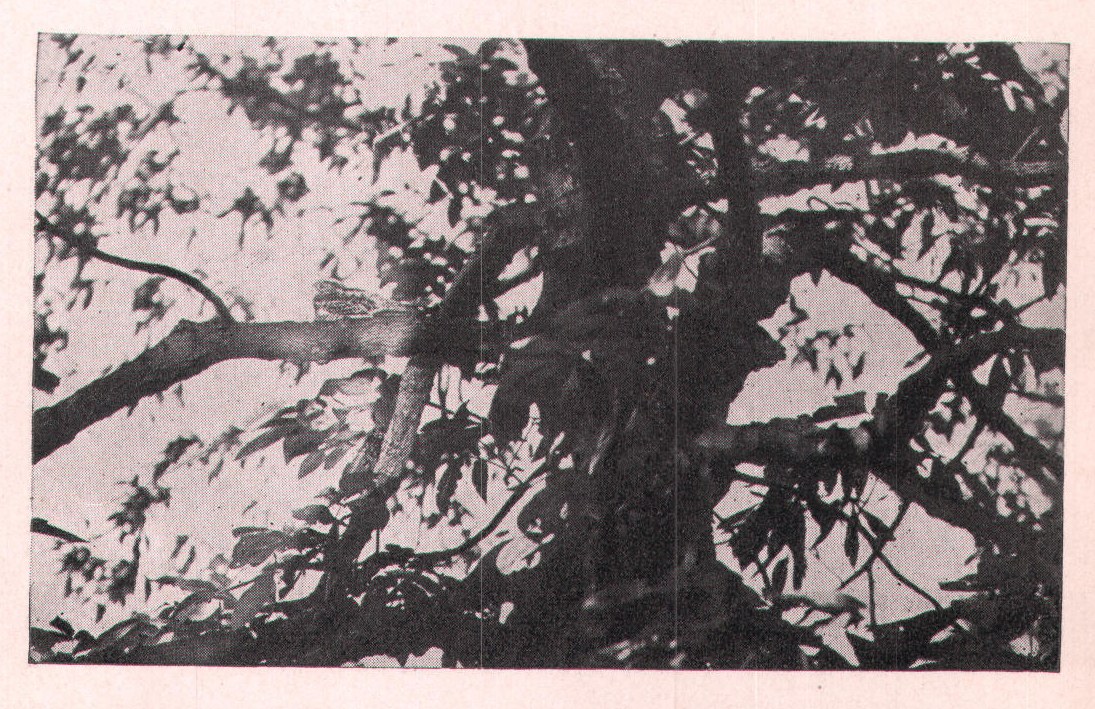
Sitting upon her eggs on the gravel roof of a city block. Nighthawks fly most at dusk or on cloudy days, frequenting open localities or cities; thousands see them every day during the season they are with us. Whip-poor-wills are night birds, frequenting woods and are seen by but comparatively few persons. The call of the Nighthawk is a rasp- Fig. 33. The male spend daytime sitting lengthwise along limbs and is quite difficult to see. ing, nasal "peenk," given while flying; that of the Whippoor-will is a loudly and rapidly whistled "whip-poor-will" often repeated twenty or more times in succession; this song is uttered while perched in the tops of trees.
The differences between the two birds are so great that there is really little reason for confusion, whenever or wherever they are seen or heard.
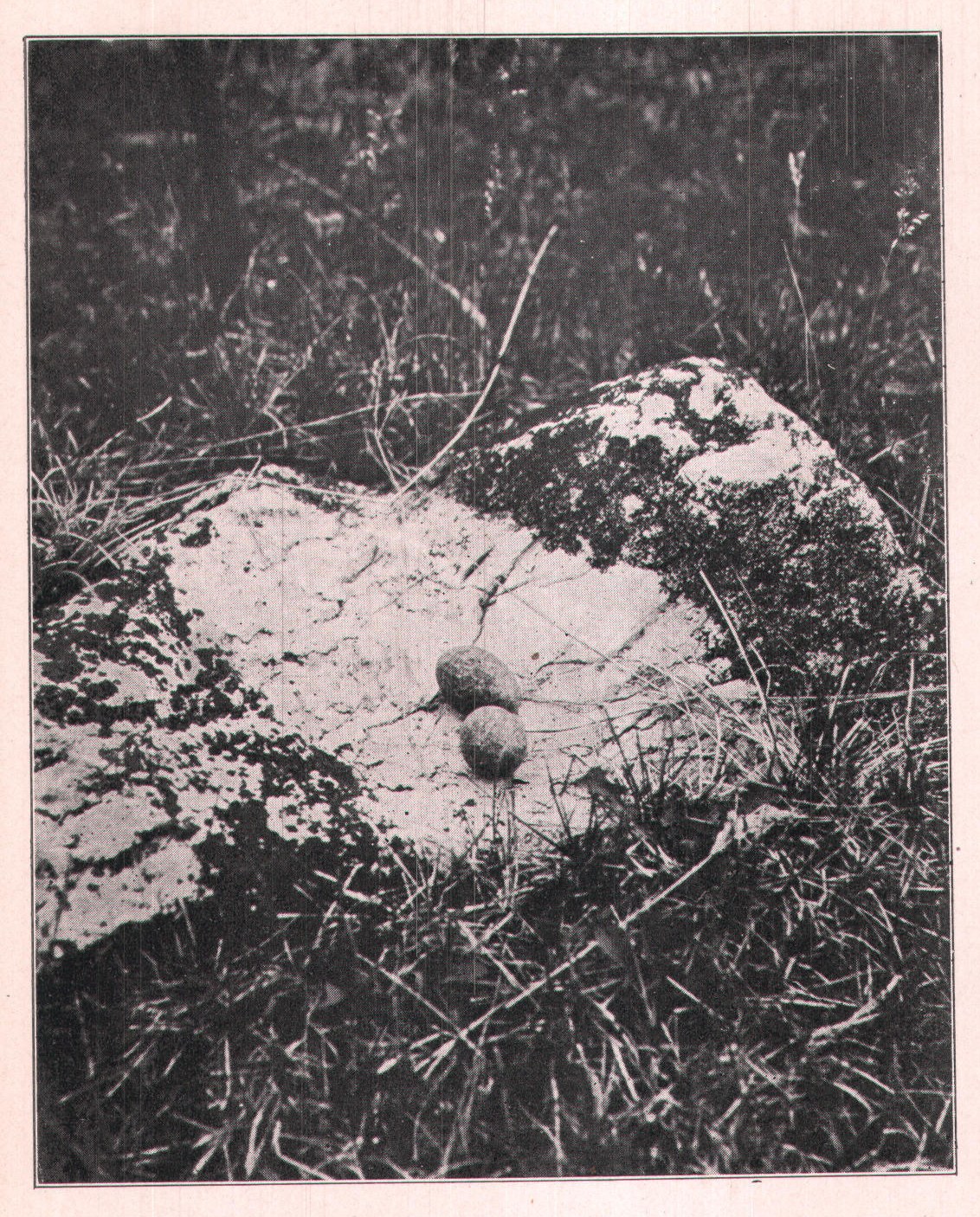
Nighthawks are past masters in the art of aviation. There are no feats of skill performed by other birds that cannot be equalled by these. During June and July they can The eggs are laid on the bare surface of a flat stone. usually be seen and heard in great numbers about any large city as they circle high in the air or sweep in graceful curves over the tops of the buildings. In the country they frequent the edges of woods or burned areas where flying insects are the most easily secured. They are very sociable birds and often hunt in large flocks. I have watched fully a hundred of them at a time as they swept back and forth across a large field, curving, skimming and cavorting about in a perfect maze; with never a falter they crossed and recrossed paths, each seeming to read the other's mind perfectly so that imminent collisions were always averted. Nighthawk bills are very small but the mouth opens to a point below the eyes so that the gape is enormous. Their food is entirely caught while on the wing, either by snapping up individual moths or beetles or by dashing through swarms of gnats, with wide-open mouths gathering them in by the hundreds.
During the mating season the males often perform wonderful evolutions in the air. Sometimes they make perpendicular descents from high altitudes shooting downwards with folded wings at bullet-like speed and turning upward so suddenly that the air rushing through their wings produces a hollow "booming." On a warm, still evening during early June and the latter part of May, these "boomings" may very frequently be heard.
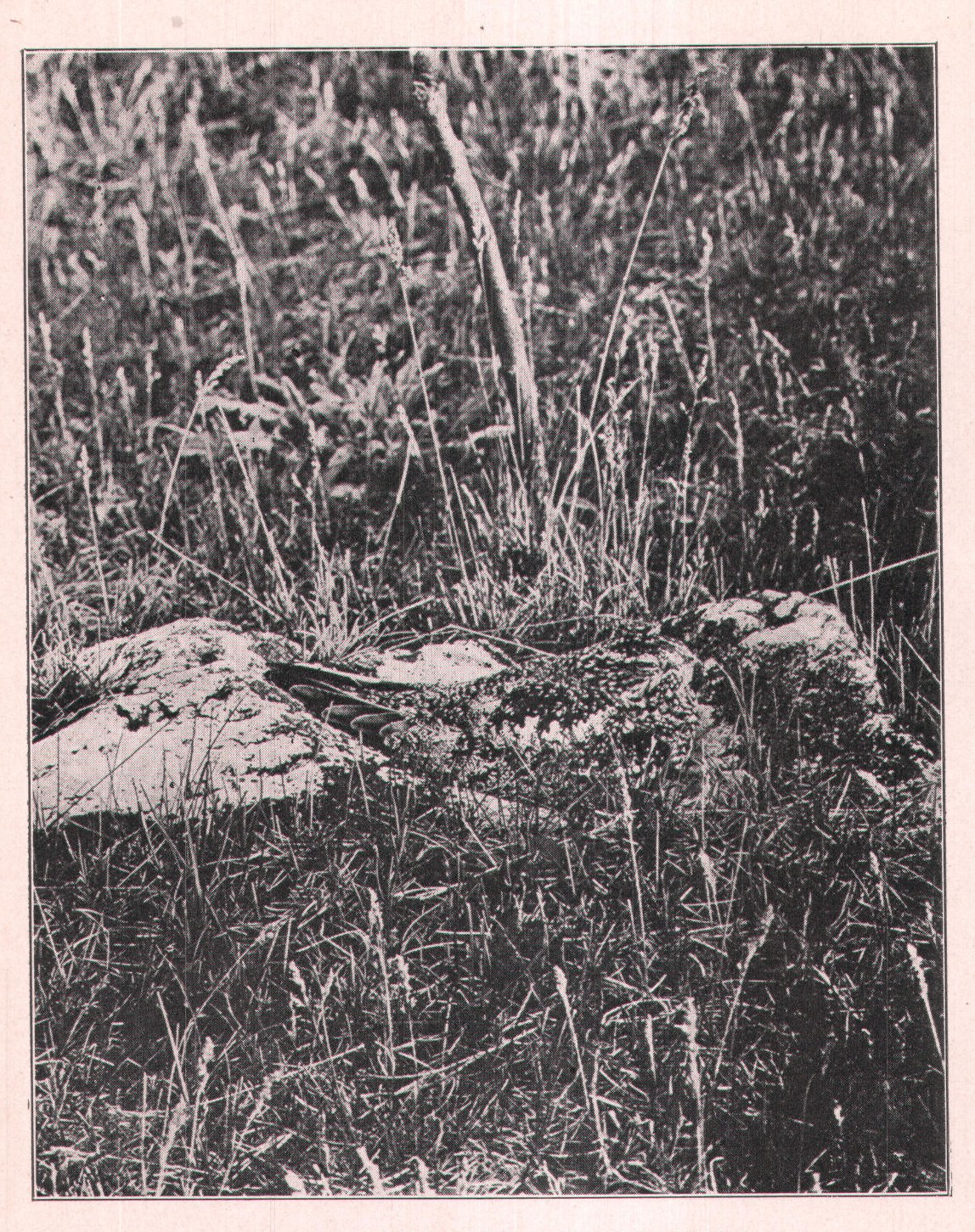
Although so exceedingly expert in aerial evolutions, Nighthawks are very awkward when on the ground. Their small, weak feet give them a very wobbly gait so that they often require the services of their wings to keep their balance. When roosting on the limbs of trees and fence rails they almost invariably sit lengthwise, their mottled plumage and motionless attitudes rendering them very inconspicious. They build no nest at all, just lay their two mottled eggs on the bare ground, usually choosing a small sandy spot in a pasture or in very open woods; frequently they are laid in hollows on rocks or even (very commonly) on Note that it is not at all conspicuous, Sometimes they can be touched before they will fly. flat gravel roofs of city blocks. The eggs resemble the pebbles so closely that it is difficult to see them. A friend knowing that I am always ready to go almost anywhere to secure a good bird picture, came and informed me that a Nighthawk was sleeping on his roof every day; that it sat behind a certain chimney and would allow him to approach within a few feet before flying. I thought it strange that he made no mention of seeing the eggs, but I went along and, sure enough, the bird, a female Nighthawk, was just where he said it would be. When we were about four feet distant it sailed easily away over the surrounding roofs. My friend watched the bird until it disappeared and then turned to me with a self-satisfied air saying: "I knew it would be here; strange that it comes to the same building to roost every day, isn't it?" He could hardly believe his eyes when I showed him the two eggs the bird had been covering. He had started this bird off at least half a dozen times and had not noticed them.
If the bird is flushed from the eggs when incubation is well advanced, she will attempt to lead the intruder away by feigning lameness, a very easy matter for a Nighthawk as they progress very awkwardly on the ground anyway. Young Nighthawks are first covered with fine down but, unlike most birds that are so clothed, they move about indifferently on their feet. One or the other of the parents sits beside them during the day and they are not fed until between dusk and daylight.
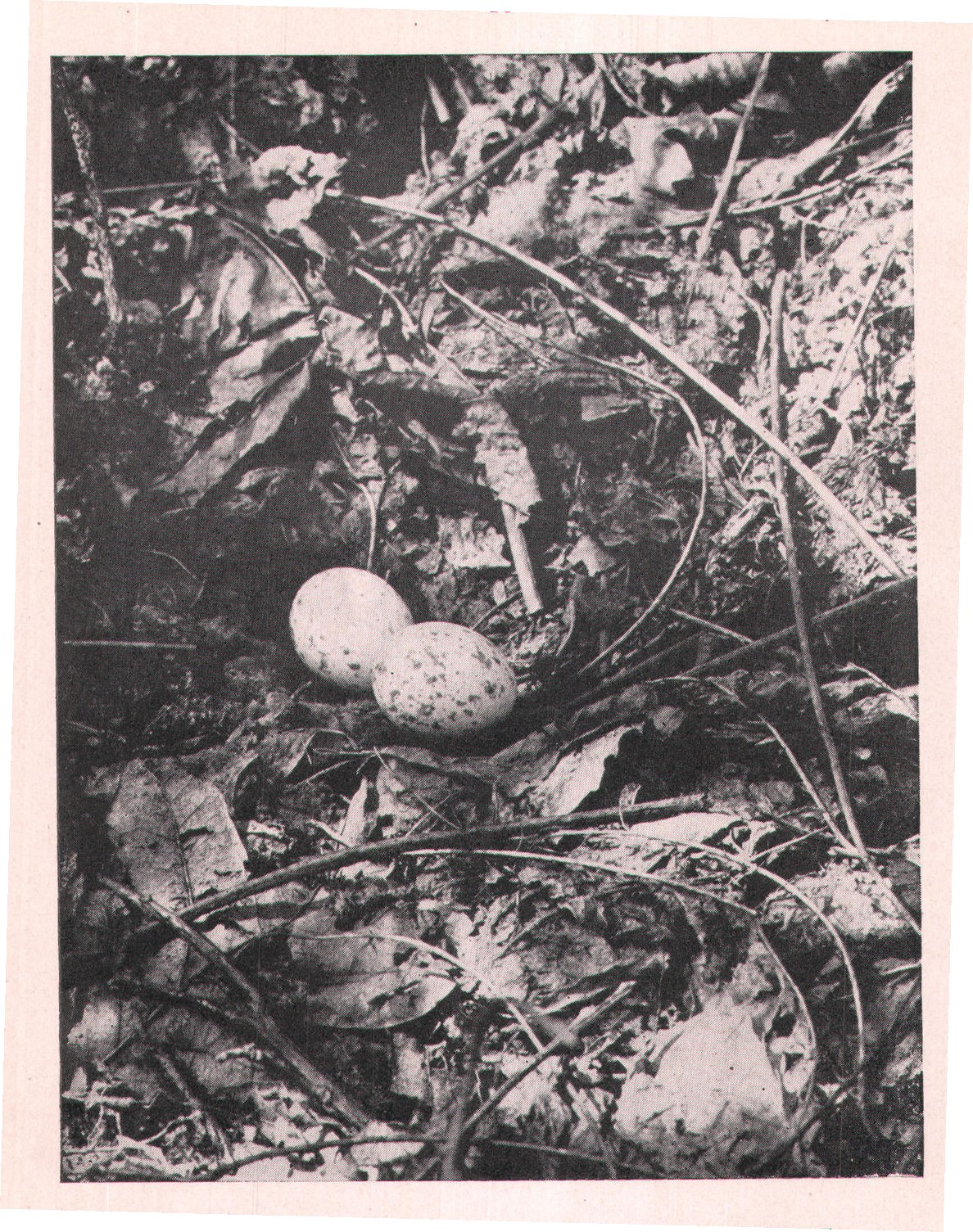
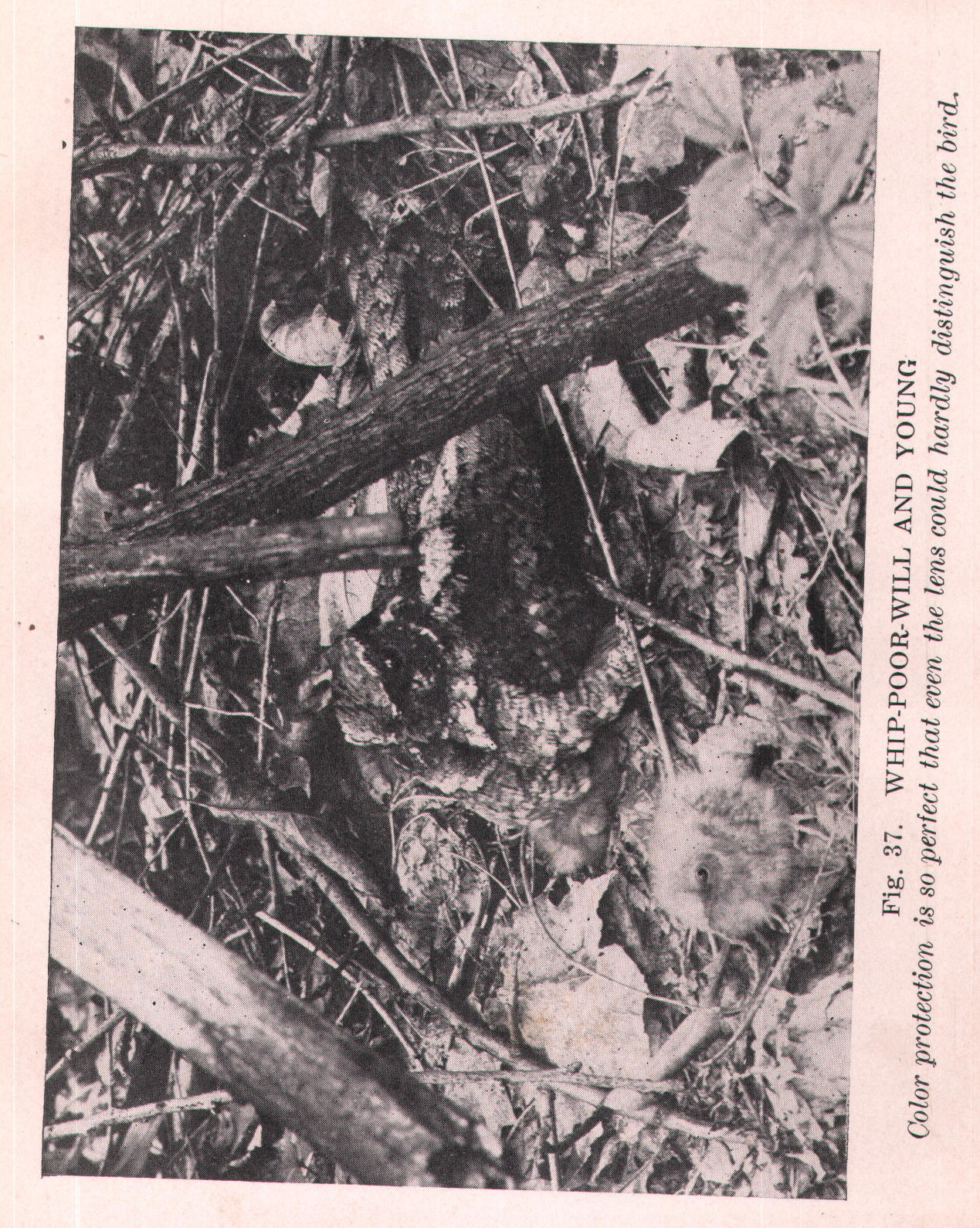
WHIP-POOR-WILL Unless disturbed, Whip-poor-wills pass the whole day dozing on horizontal limbs or upon fallen tree trunks. They are even more averse to moving during daylight than Owls. As soon, however, as the mantle of night has fallen over the woods, they become very active, swooping close to the ground to gather up luckless beetles or dashing upward to capture passing moths. Their bills are small but their The eggs are laid on the ground or leaves with no semblance of a nest.
Color protection is so perfect that even the lens could hardly distinguish the bird. Color protection is so perfect that even the lens could hardly distinguish the bird. mouths are perhaps even larger than those of Nighthawks. They swallow, with ease, the largest of the moths and sphinges and relish equally well small gnats or winged ants. Chuck-wills-widows, larger members of the same genus, found commonly in the Southern States are even more voracious and devour anything that happens to be a-wing at night and that will go in their enormous mouths; frequently Fig. 38.
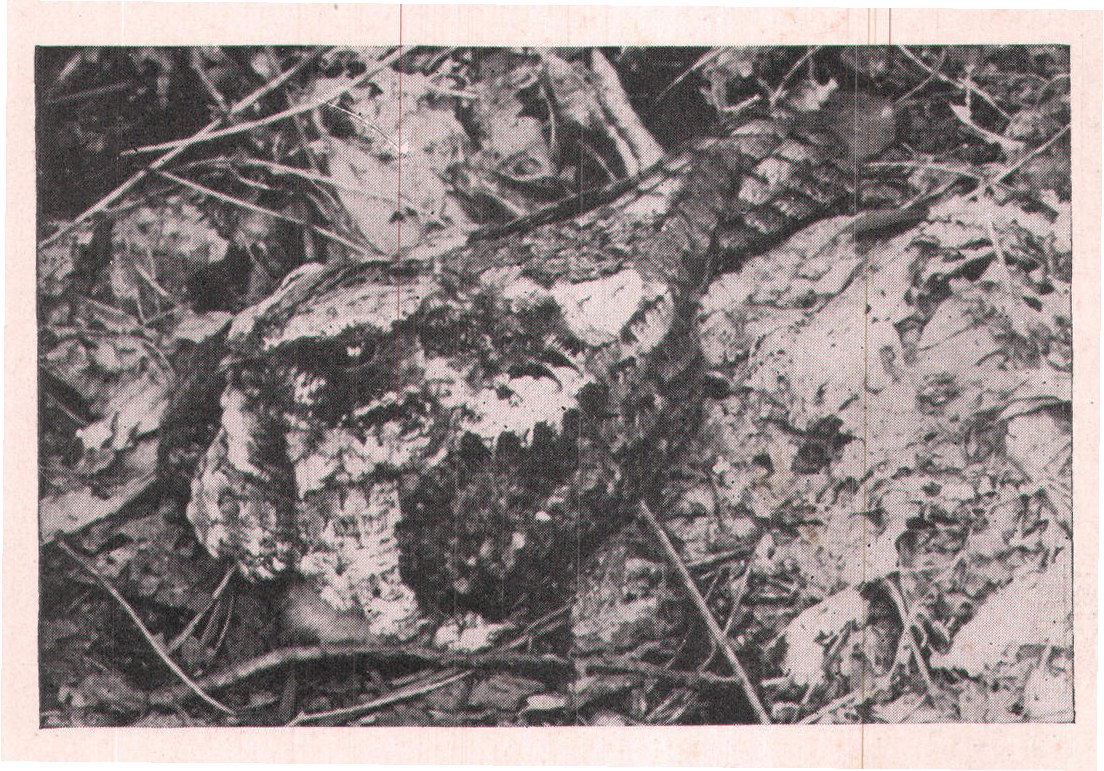
WHIP-POOR-WILL.
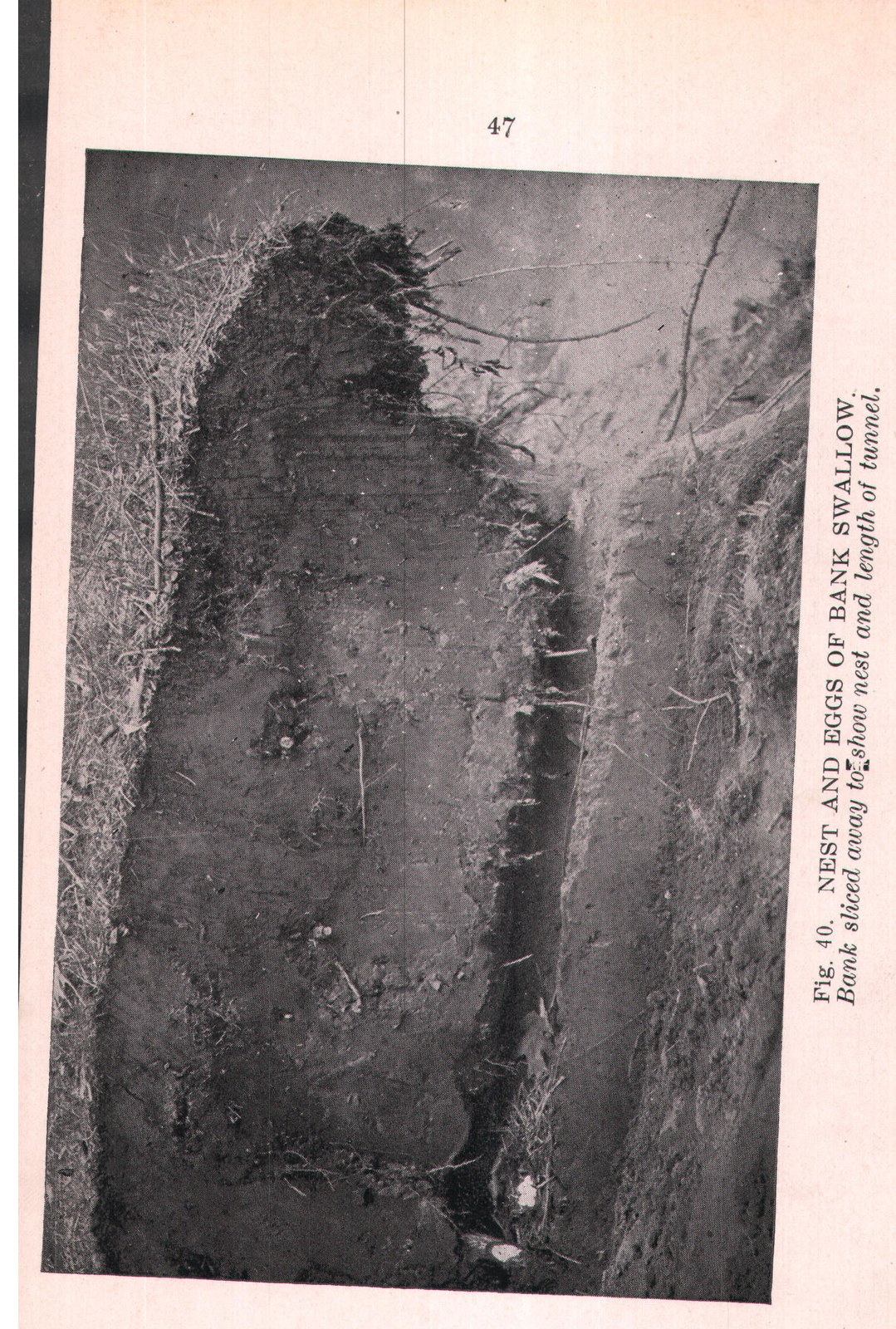
Notice how perfectly she blends into the surrounding leaves. The living bird as seen by the eye shows no plainer than it does here. the remains of small birds are found in their stomachs, probably caught while flying from one perch to another. Whip-poor-wills are very noisy on warm, clear, still nights. One night I pitched my tent beside a juniper tree on a point of land making out into a beautiful lake. This particular tree happened to be the favorite lookout perch of a Whip-poor-will, or else he was attarcted to it by the white tent. At any rate one of them sat in the top of this little juniper from nine o'clock until one. It seemed to me that he "whipped-poor-will" constantly all this time. The notes are not objectionable and are interesting to listen to for a few minutes at a time, but four hours of continuous performance was too much for me, especially as the performer was within twenty feet. I went out and gathered a few stones; as the first one went by he evidently though it some species of moth for he darted after it the same as These swallows nest in hollow trees or in bird boxes. bats do if anything is thrown up in front of them, and then returned to the tree top and "whip-poor-willed" again. The next stone crashed through the tree below him and I saw his shadowy form flit overhead across the lake where his calls soon mingled with others of his kind and I was left undisturbed by them for the balance of the night. Bank sliced away to show nest and length of tunnel.
The Whip-poor-will makes no nest but lays its two faintly mottled eggs on dead leaves on the ground in woods, usually where they will be partly concealed by overhanging brush. During daylight they trust to their protective coloration entirely and it rarely fails them. You can readily judge from the photographs shown how closely they harmonize in color and markings with their surroundings. If one knows the location of a nest and uses due caution in approaching he can nearly always touch them before they will leave.