Home › Contents › Chimney Swift
Chimney Swift
One of the most useful of these scouts is a "city dweller." Chimney Swifts at one time nested only in hollow trees and in caves or crevices in cliffs. To-day for some unaccountable reason they nest almost exclusively within the depths of unused chimneys. We can readily understand why they like to live in cities for there the little gnats and flies they like so well are the most abundant, but it is not so plain why any species of bird should desert the comparatively clean cavities of decayed trees for the dirty, sooty interiors of brick chimneys. It seems like a retrogressive rather than a progressive development.
Swifts return to the northern states about the middle of April each year, but they delay their nest building until early May when the weather is more settled. It is quite necessary that the air be dry when they make their homes for they are held together entirely by glue which does not harden rapidly in damp weather. This glue is made by the swifts from their saliva; it is very hard and almost waterproof when dry.
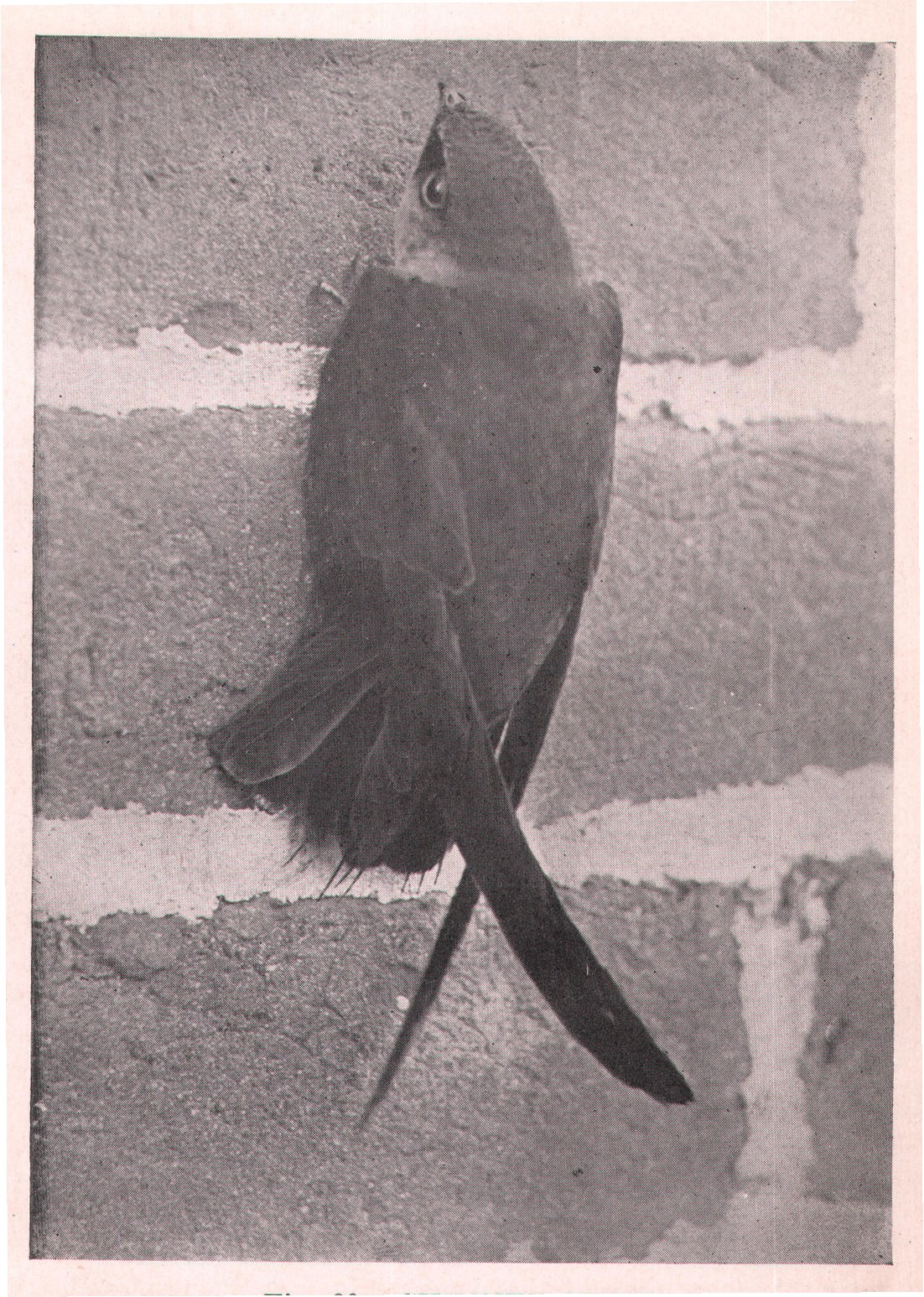
Their nest building is very interesting to watch but it is a slow operation often keeping the two birds busy for a week more. It is made of twigs varying in length from half an inch to a couple inches. They must of necessity be dead twigs for the birds break them from the tips of branches, Note how the tail spines assist them in clinging to the upright surface. while hovering in the air; I have on numerous occasions seen them secure nesting material in this way but never, except twice, did I see them alight on the ground to pick up pieces.
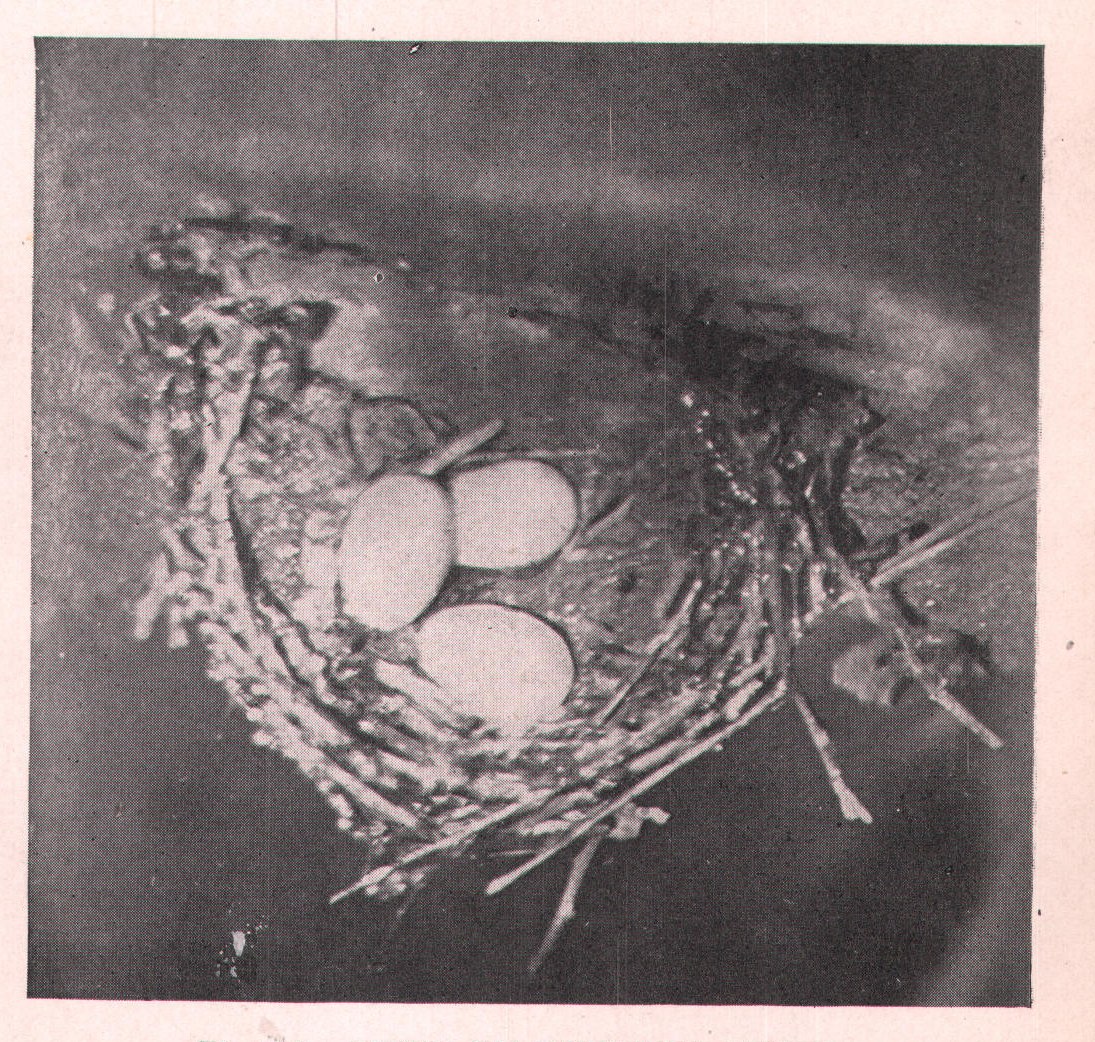
The inside of the chimney, at the point selected, is smeared with glutinous saliva and the little twig covered with the same; each tiny stick is added in this manner until the nest projects from the wall for two or three inches and the interior is an inch deep. It makes a very strong little home when properly made. Often, however, they fail to make the front wall sufficiently high so that some of the eggs roll or are pushed out by the sitting bird.
The eggs, white and from three to five in number, require incubating for nearly three weeks before they hatch. The young birds remain in the chimney for nearly a month longer before they are able to venture out on their wings. So the nesting of swifts is a slow process requiring about two months, while the ordinary insectivorous bird will get its little ones out of the nest sometimes within a month from the time the foundation was first commenced.
Long before the little swifts are able to fly they get exercise by climbing about the inside of their chimneyhome. A pair of swifts always built their nest directly opposite the stove-pipe opening in the chimney of an old country house. I have often removed the cap to look at the eggs or, later, to see the four little swifts clinging to the chimney directly under the nest. They are nimble little things and seldom lose their hold. Sometimes they do, and fall to the bottom of the chimney but, by the aid of the wings, their sharp little claws and their spiney tails, they can climb to the nest again. If you have examined Chimney Swifts closely, you probably have noticed that the shafts of the tail feathers project beyond the webs making sharp little spines that are of great assistance to the birds in their manner of living.
As it is obviously impossible for a bird to fly upwards in a vertical line and the narrow confines of a chimney would seem to make such flight a necessity, I often used to wonder just how the adult birds left the home. Of course a boy's curiosity has to be satisfied so one day I removed the board from the front of the old-fashioned fireplace, concealed Taken by reflected light from a mirror. myself within and watched until my quest for knowledge was satisfied. Their movements were so rapid and the loosened soot would persist in getting in my eyes so much that my research was no easy one.
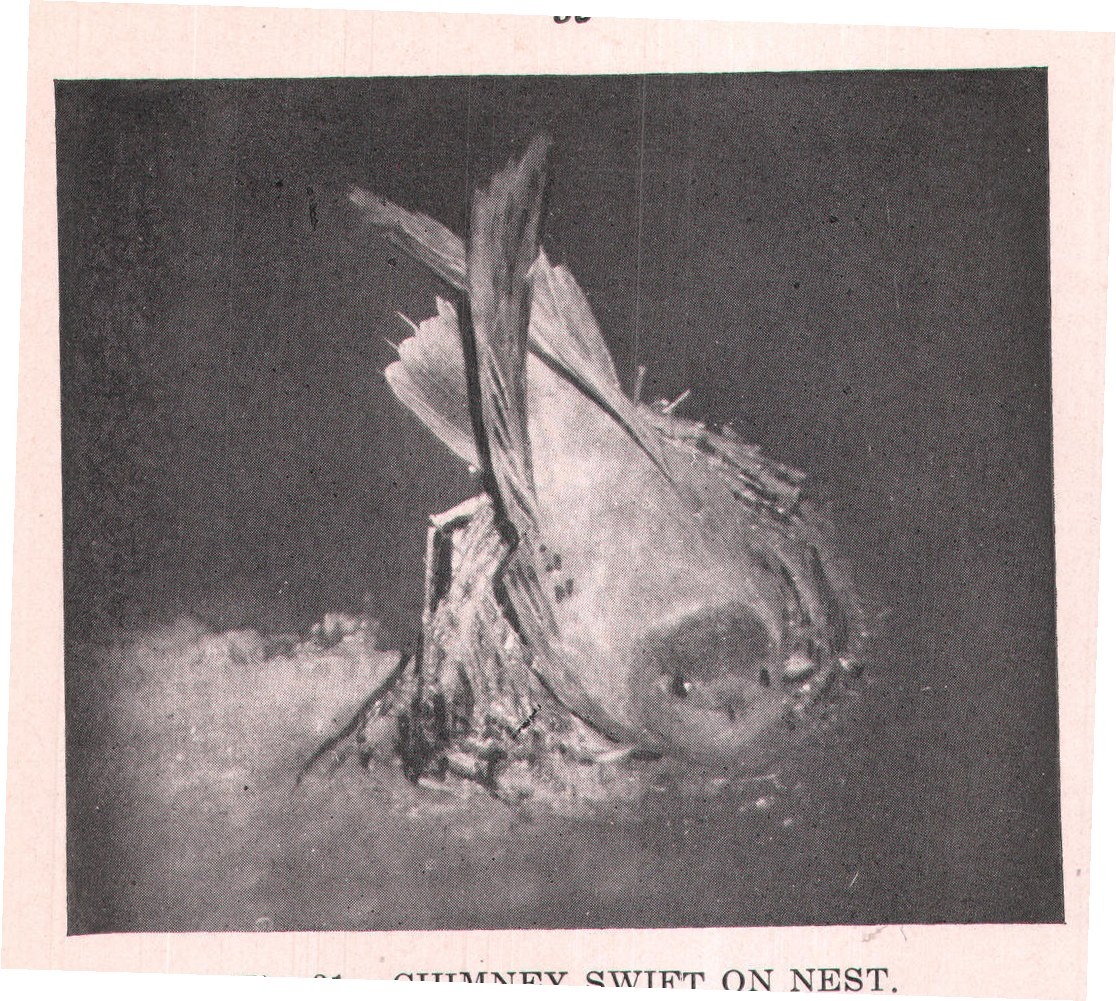
A little blurred because the bird jumped when the light was flashed on her.
The chimney was about eighteen inches in width. Starting from the nest, the bird would leap upward, and two strong flaps of the narrow wings would carry him to the opposite wall a little more than a foot above where he started; he just barely touched the side, whirled and two more beats raised him another foot. He only had about fifteen feet to rise before reaching the top and it only took about ten of the rapid side-to-side flights to accomplish it. The return to the nest was more difficult to watch as the birds came dashing down with the speed of a bullet , apparently not touching the sides at all. Almost before I could see them coming they would have turned and be clinging beside the nest.
The rapid twittering of Chimney Swifts is often heard as they wheel about overhead, and the sound is greatly augthey wheel about overhead, and the sound is greatly augmented when a little swift is about to make his maiden flight into the unknown. All the adults and young in the vicinity gather to celebrate the event and to encourage the little fellow in his attempt. The young swifts get their wings strongly developed before leaving the chimney by flights from side to side , so that they have little to fear as they emerge into the open and follow the others over the house tops.
Swifts are used by many as weather prophets and their prognostications seem to come true far more often than those of our government experts. When swifts fly high, to follow; when they fly low, look out for rain. Whether they fly high or fly low, however, you may be quite certain that it is not the state of the weather that influences them but means that the food they seek is most abundant at that level. The weather may or may not influence the altitudes at which the winged insects happen to be.