Home › Nighthawks and Whip-Poor-Wills › Nighthawks and Whip-Poor-Wills: Swallows
Nighthawks and Whip-Poor-Wills: Swallows
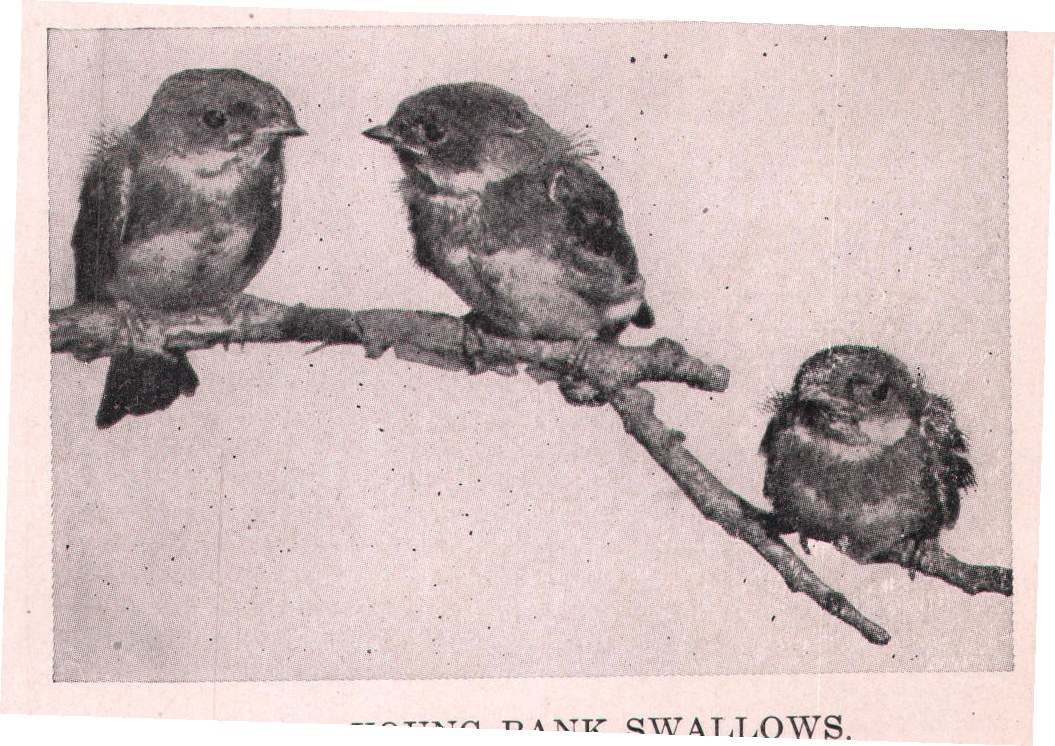
The feathers of all birds of this genus are exceedingly soft so that their flight is entirely noiseless. At night they can thread their way in and out through the branches with an ease and grace that is incredible. I believe their sight too, at night, is even keener that that of any of the owls. SWALLOWS Swallows are the most active, most persistant and most graceful gleaners of the atmosphere. Of the six species found in the eastern states, all except the Bank and the Rough-winged Swallows have taken up their abodes in buildings built by man. Even the Bank Swallow commonly nests in holes in banks where men are constantly at work digging; and the Rough-winged species often makes its homes among the stones of bridge foundations. Barn Swallows nest within our barns, Eave or Cliff Swallows make their homes under the eaves, Tree Swallows live in little bird houses nailed to the sides of buildings or holes in our orchard trees and Purple Martins live in colonies, often in very large, elaborate, many-roomed houses topping poles set on lawns. No other class of birds has become so almostdomesticated as the swallows. Swallows are always sociable; they sometimes nest in very large colonies and always in as large numbers as the locality will support or furnish sites for. Of course it is more difficult for Tree Swallows to find a sufficient number of suitable cavities for many to nest near together, but I have found a half dozen pairs of these nesting in one orchard.
The illustration in which part of the bank has been cut away gives a perfect idea of the nesting of Bank Swallows. The little tunnel goes horizontally in for about two feet and is then enlarged to make room for the feather-lined, grass nest. The four or five eggs are pure white without markings.
For many years Phoebes have nested under this old bridge. Note the bird on the branch at left.