Home › Contents › My Sandpiper Friends
My Sandpiper Friends
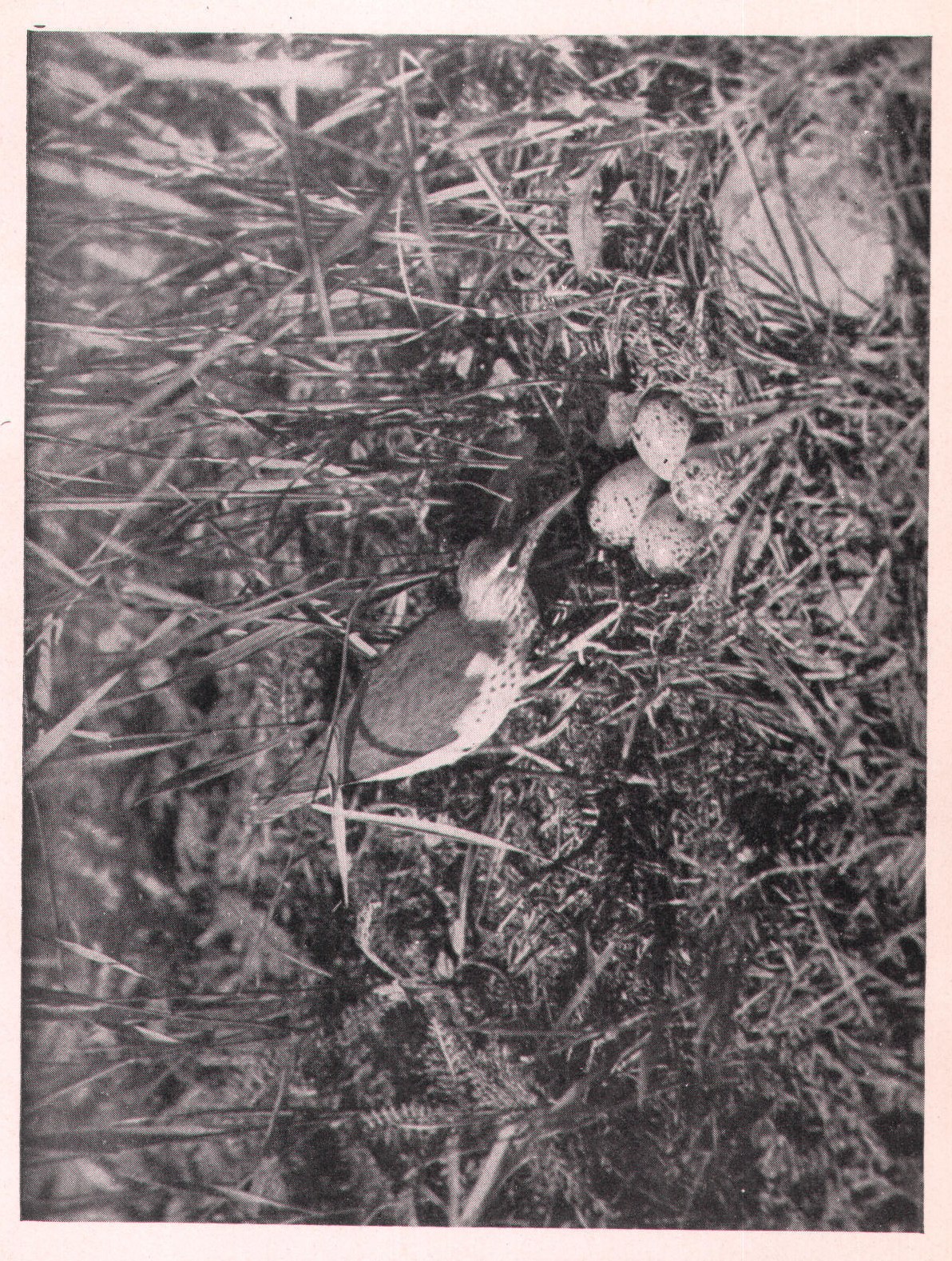
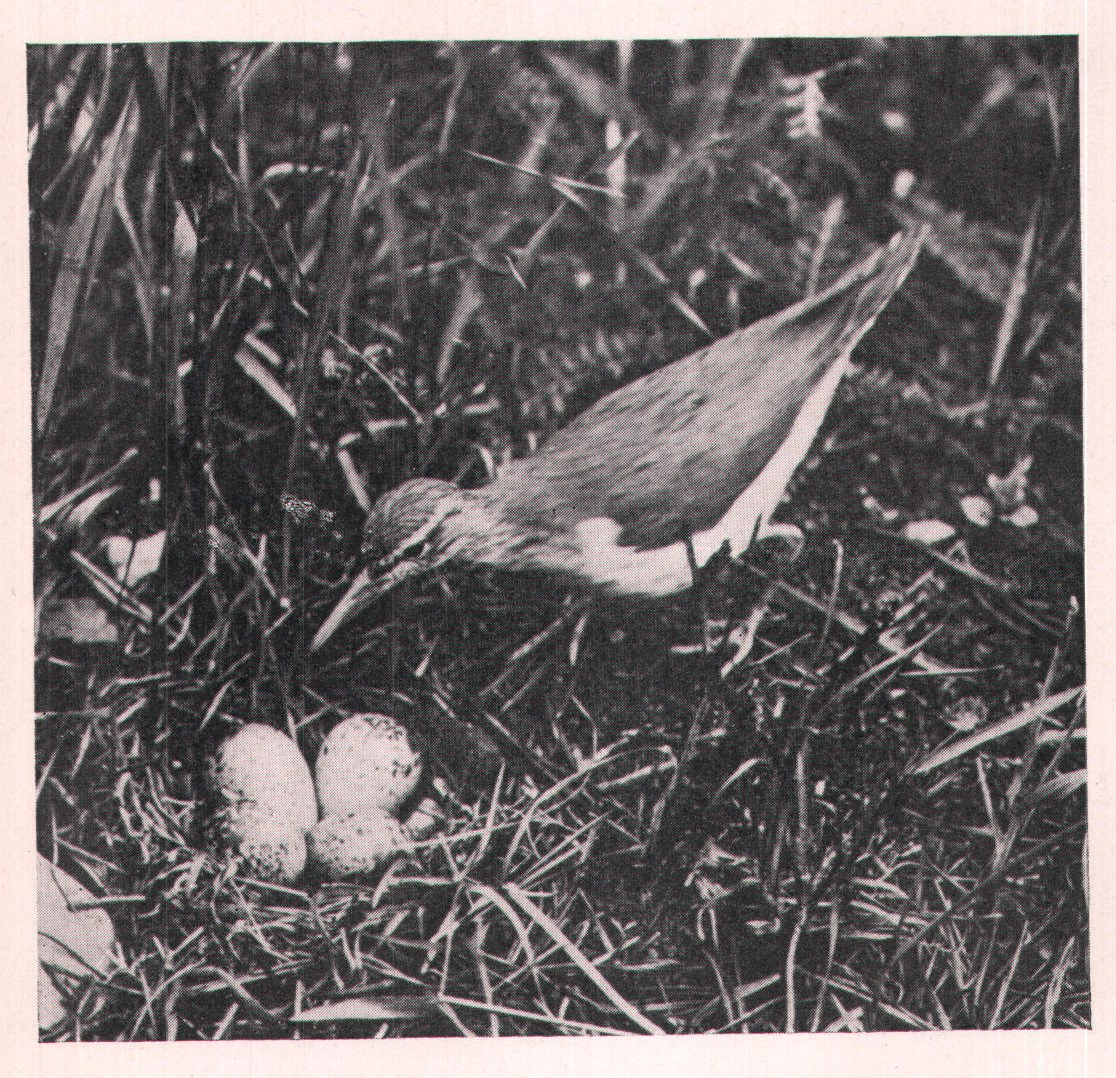
We were destined to become friends. For years, as long ago as I can remember, these Spotted Sandpipers, or some of their ancestors, had frequented the shores of a tiny pond and had, each year, built their nests in some of the bordering fields. Likewise, as far back as my memory takes me, the fields surrounding this same little pond were included in one of my favorite and most frequent rambles. Each year, the first week in May, I have welcomed my sandpiper T: 002 She stenned carefully up to the nest and fondled the eggs with her bill friends on their return from the sunny south, have listened to their fife-like notes as they chased one another about, or have watched them skimming across the pond with the peculiar, tremulous flutter of the down-curved wings, characteristic of sandpipers. By the end of May, they cease their play and settle down to business. Having selected a suitable spot, the female builds a nest, not a very strenuous task, for she simply squats in the grass and turns around a few times, thus forming a hollow of the correct shape. Sometimes she will wind a few grasses around the hollow but often she does not do even that much.
One morning as I passed through a clearing in some small pines near the pond, a bird fluttered from nearly under my feet. A glance proved it to be a Spotted Sandpiper and another glance showed me that I had nearly trod upon the four eggs upon which she had been sitting. She tried her best to lead me away; apparently she was very severely wounded for she limped with one leg, both wings dragged on the ground and, every few steps, she would fall over as though exhausted. It was a very fine piece of acting and would deceive anyone not accustomed to it (still men who profess to be scientists say that birds and mammals have no intelligence; personally I believe that many birds and many mammals have a higher degree of intelligence than some of those who claim everything is done by instinct or imitation).
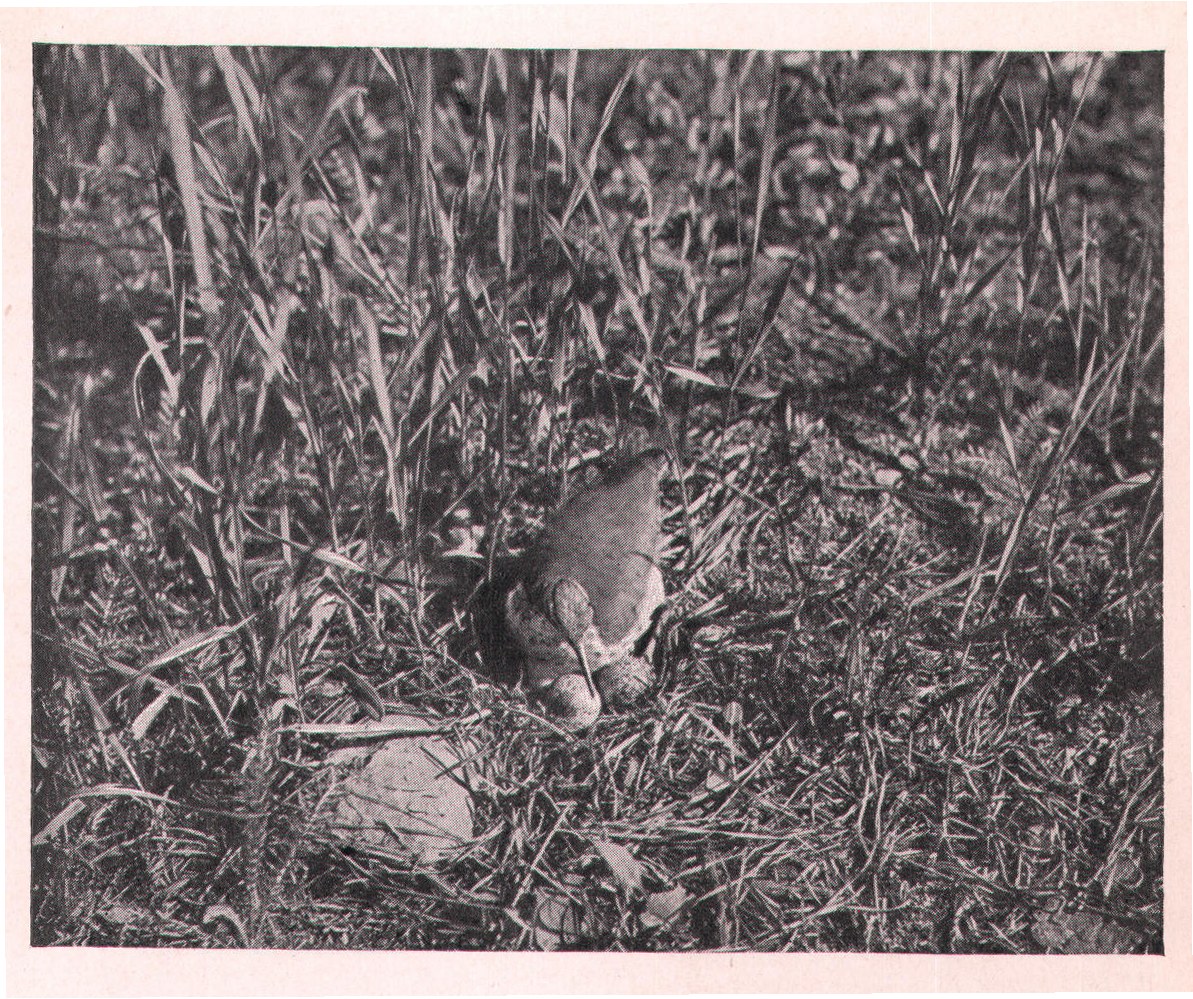
Although I had found a great many nests of these birds, I was glad to locate this because I had never made photographs of them and this nest offered an excellent opportunity to do so. The eggs were handsomely marked, as is usual with those of this species; they had little to conceal them from view, except their coloration, which harmonized so well with the surroundings that, at ten feet distance it was almost impossible to pick them out.
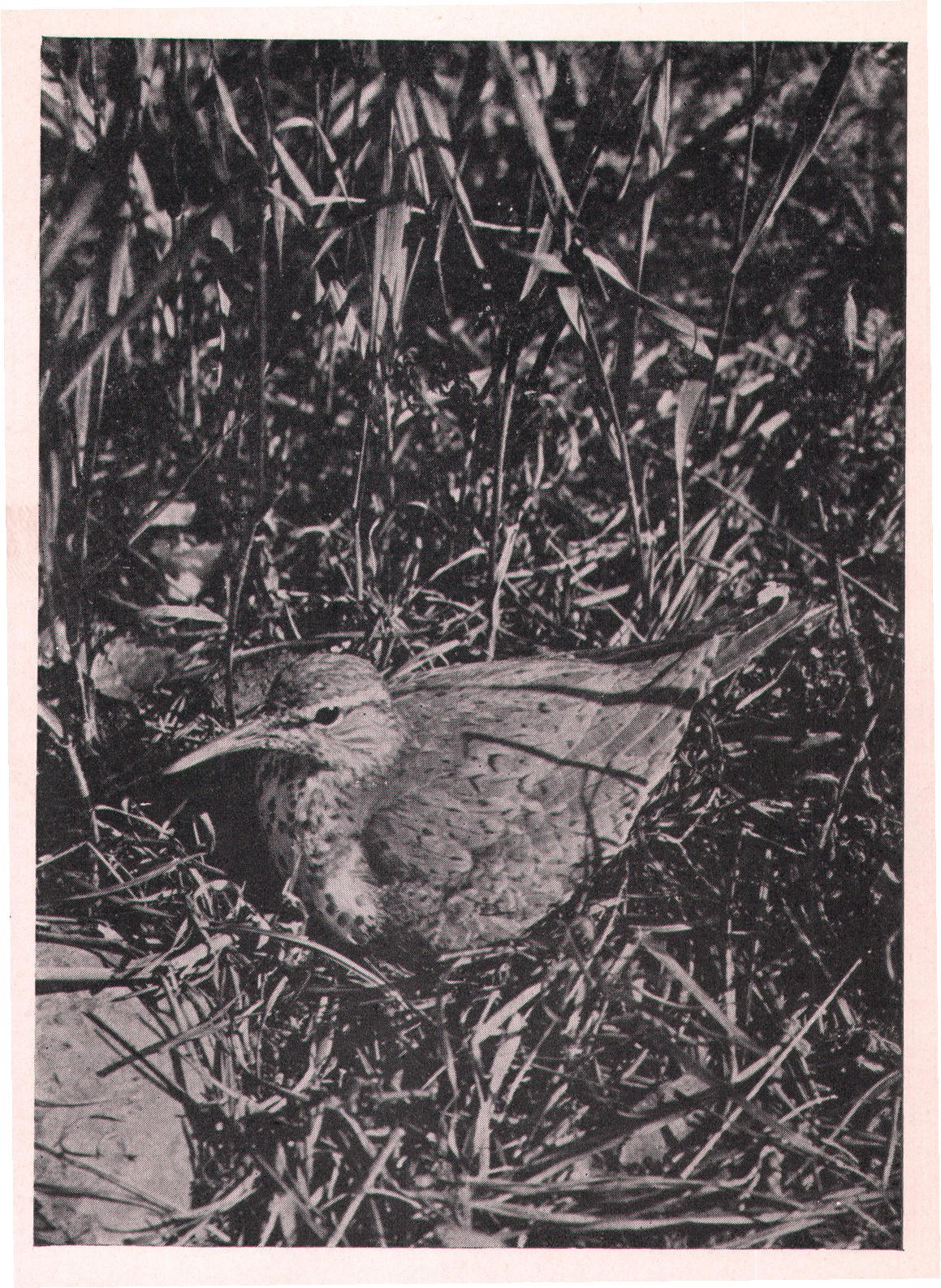
Fig. 204. She sat there as calmly as if I were miles away, though I could have reached out and touched her.
As I have said, this nest was in a clearing where there was not a particle of shelter, not even a spear of grass to keep the sun's rays off at any time during the day. On exceedingly warm days, I used often to think of this bird, sitting there, panting, but faithful to her charges. Even worse to endure than the sun, was the rain. At that time, there occurred four days of the heaviest rainfall we had ever experienced and I was very doubtful about her being able to stand it. However, when the sun shone on the morning of the fifth day, she slipped away from the nest, upon my approach, none the worse for her drenching. Only one who has been caught in the fields or woods, far from shelter,, in a driving rain, can appreciate the hardships that birds have to undergo at such times.
Early one morning, I appeared with all my paraphernalia for picture making. She slid off the eggs as usual and flew down to the pond; she knew from experience that I would not be deceived so she never now tried to feign lameness. Just for an experiment, one morning later, I had a friend approach the nest first and she tried her best to decoy him away. Certainly this showed at least a ray of intelligence for, while she knew that I was aware of her nest and reasoned that it would be useless to try and deceive me, she tried it with everyone else.
I used a green umbrella-tent placed so that the front edge was about two feet from the eggs. This was covered with small pine branches, not to deceive the bird, but so as not to attract much notice should anyone come that way, as they frequently did. I soon had a camera focussed carefully on the eggs and was lying comfortably on the ground awaiting the return of my hostess. Presently I heard her approaching, her calls sounding plainer and plainer each time they were repeated. Finally she stood on a stone about twenty feet away, 'teetering' as sandpipers always do, and eying sharply the new addition to the landscape.
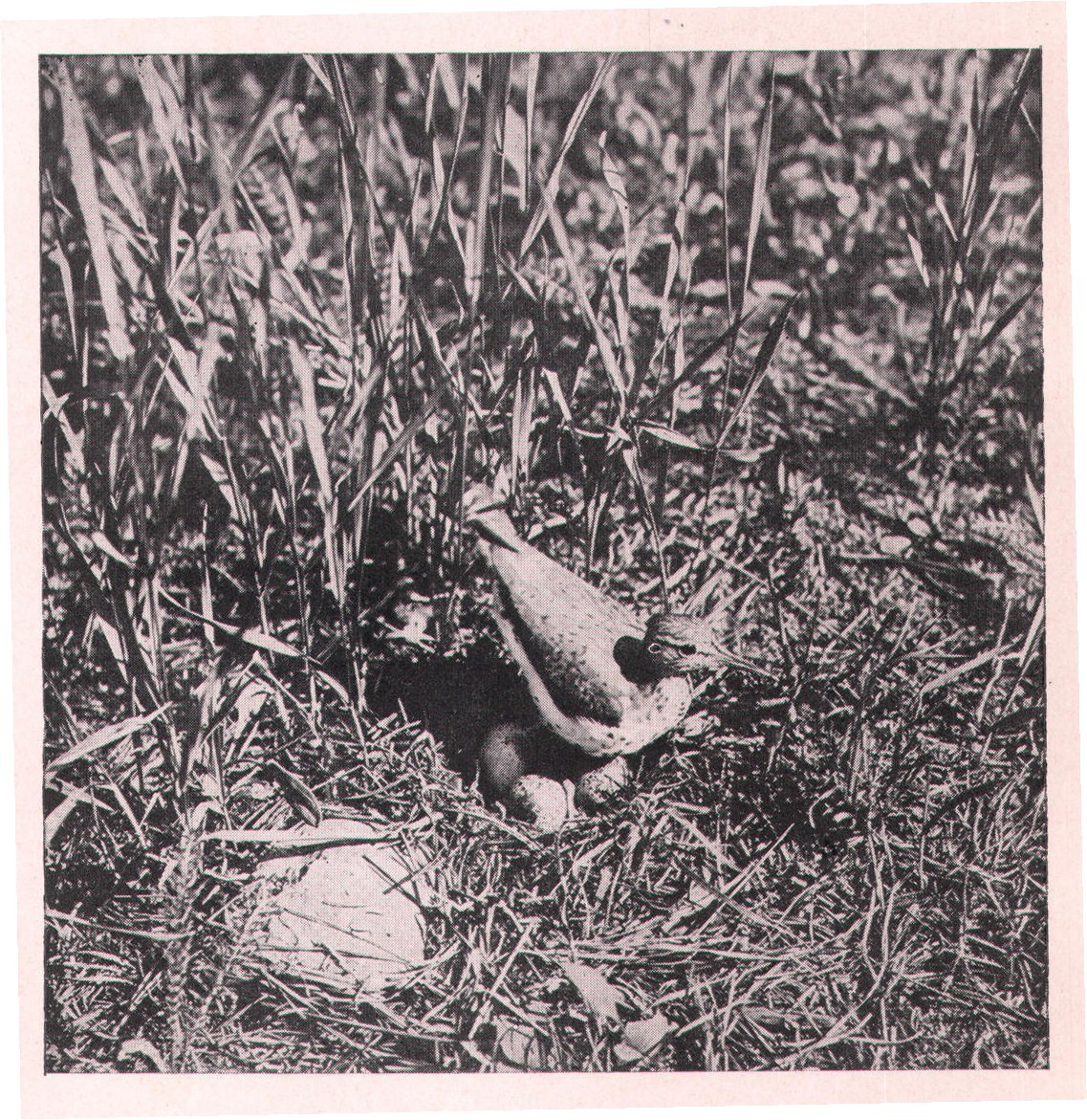
Everything was perfectly still and there seemed to be no signs of life about, so she stepped from her elevation and approached, slowly, uncertainly and with many pauses to look anxiously about her. She made a complete circuit of the tent three times, often brushing against its sides and passing within six inches of the small peek-hole through which I was breathlessly watching. Finally she stopped Fig. 205. She stepped carefully between the eggs and settled down.
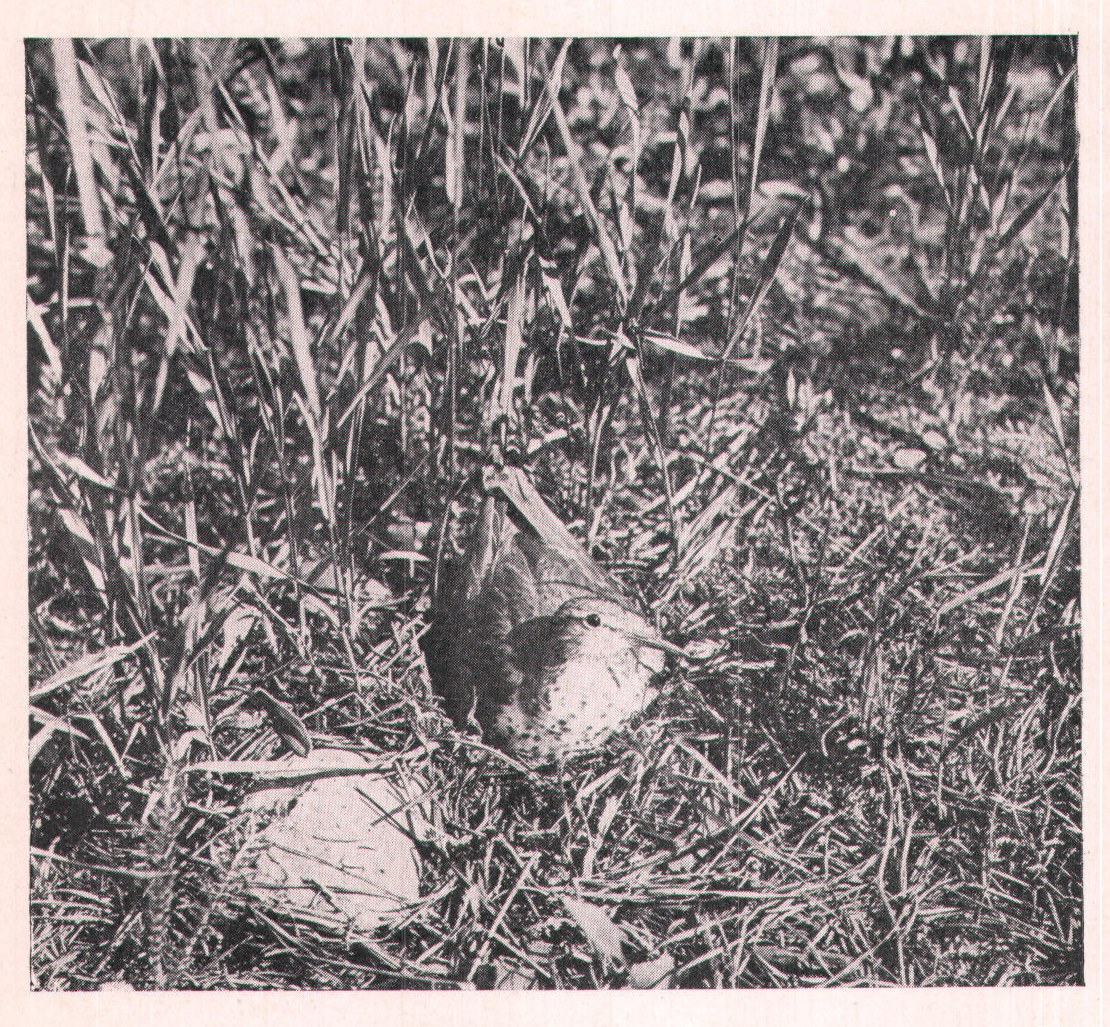
Fig. 206. She kept a sharp watch of the great glass eyes that stared so steadily at her, only three feet away. at her nest, gently touched one of the eggs with her bill and then, suddenly catching sight of the great camera-eye staring at her, quickly jumped back. Approaching even more cautiously, she ran right across the eggs and whirled about quickly to see if anything happened. The next time she fondled all the eggs and at last was contentedly settled upon them. The click of the shutter the first few exposures, startled her a trifle but she very quickly got accustomed to it and paid no attention to the tent or anything that went on within Fig. 207. From time to time she half arose and carefully treaded the eggs over. it. I even opened a large flap in the front of the tent, stuck my head out and watched her from a distance of less than twenty-four inches, without frightening her off the nest. I often wondered what she thought of the new conditions and what wonderful tales she told her mate when she joined him at the edge of the pond. I think she must have concluded that I was harmless, had built a large green nest near hers and was as much entitled to live there as she was.
Invariably when returning to the nest, after a short absence, she would feel of the eggs with her bill, carefully turn them over, then cautiously step on or between them and settle down to her task. When sitting, her wings were drooped so as to rest on the ground and her head was drawn well back on her shoulders. She seemed to be interested in all that transpired about her, watching the small birds as they flitted through the pines and twisting her head in all manner of positions to watch others as they flew overhead. Three times, while I watched, danger threatened her home, but she met it bravely and in the best manner to fit the occasion. Once she saw a man coming through the trees before I had heard his approach; her feathers drew closer to her sides and she became as motionless as the stone beside her. When he was within about twenty yards she slipped quietly off the nest, sneaked through the scanty grass to a distance of about thirty feet and hid behind a larger stone. The man passed without even noticing my tent and the sandpiper came leisurely back, stopping several times to pick up insects.
The next time we were disturbed, we did not escape so easily. A man approached from the rear so quickly that there was no time for her to hide; he came lumbering through the pines, going right over any bushes that were in his path. I was forced to step out of the tent and stop him for fear he would go right over it. He started back as though he had seen a ghost, with a "Waall I swan! I never seen yer!" I explained that I was making photographs, but did not say what of, and he went his way without seeing the nest nor the bird that was running off with trailing wings.
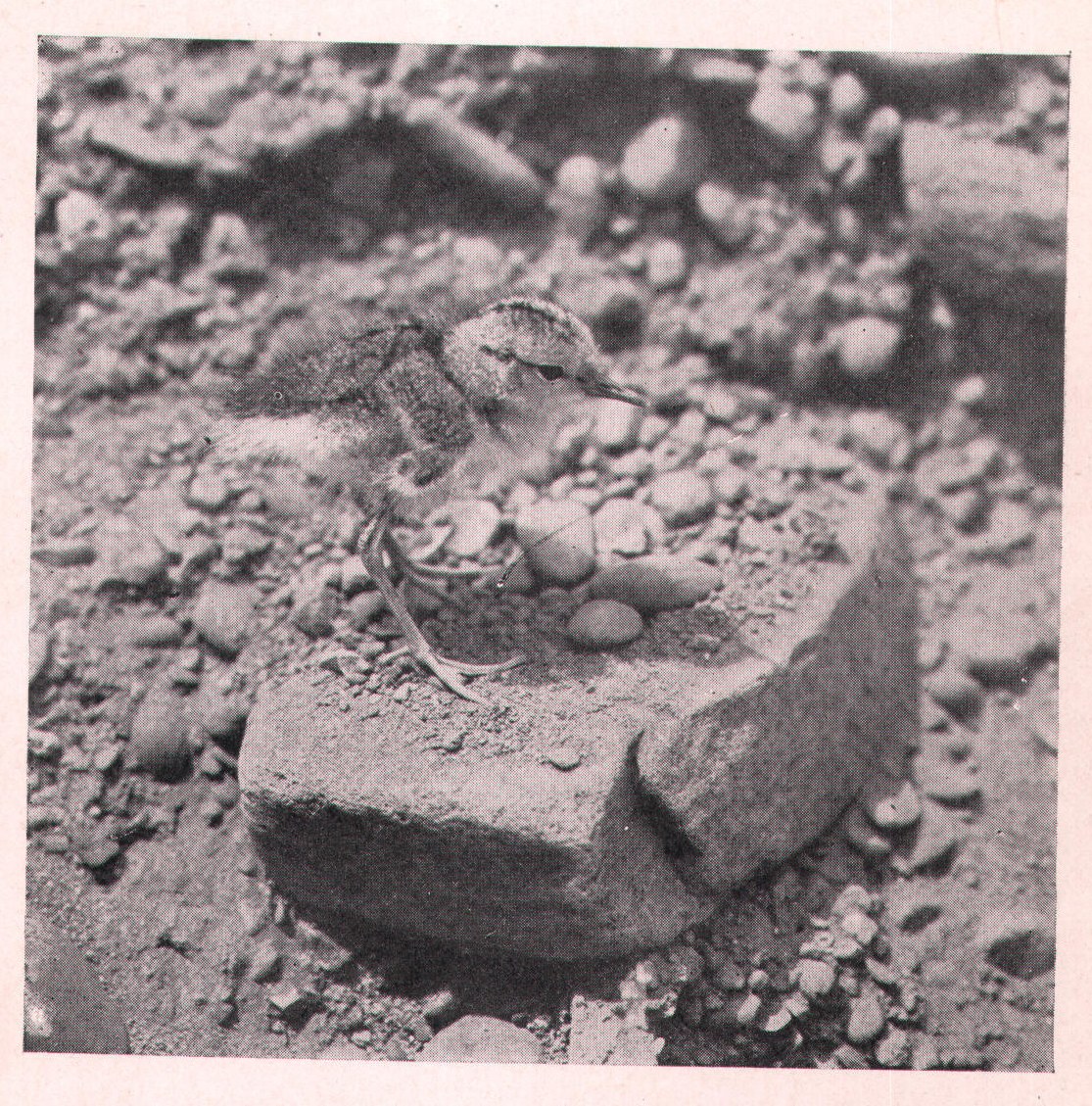
The third danger might have been serious had I not been there, but believe she would have pulled through all right. She was sitting quietly on her eggs, tending strictly to business, when I suddenly saw a startled look come into her eyes. Looking in the same direction, I saw a large, hand- Fig. 208. Little sandpipers are beautiful little mites, covered with soft down. They run very swiftly and hide most effectively. some gray squirrel; he would take a few, graceful bounds towards us, then stop and search about him ever coming nearer. My sandpiper friend left her nest and ran to meet him, which she did about ten yards from her nest. Then began the prettiest bit of bird-strategy I ever seen. A bird actually wounded could not act the part any better than she did; he kept springing toward her, possibly in play, but she always avoided him and led him further away from her nest. Finally she flew away to the pond leaving him in bewilderment. I do not know what he would have done, could he have caught her but I do know what would have happened if he had found her four eggs. I have seen many bird homes broken up by gray squirrels and more by the smaller red variety. In order to prevent any further exploration on his part, I left the tent and chased him from the grove, an easy matter since I could shake him out of any pine he climbed.
Quite often, as she sat upon the nest, she would answer the male birds as they called to one another or to their mates, from the pond. It sounded alarmingly loud and clear to hear her call, at such a short distance. Just once I heard her give a low series of whistles, or rather warbles; she was probably so happy that she was singing to herself, unaware that she had an appreciative audience.
Several times, the male bird came up to the edge of the clearing and conversed with her by means of low "pipings", but he never came to the nest, and I do not think he ever sat upon the eggs; at least, the bird that I saw always appeared to be the same one. One morning I found only a few small pieces of egg shell. Her little ones were born during the night and, somewhere in the fields, she was leading them about. The little ones are born covered with a soft gray and white down, marked with a few black stripes. They can run very fast and will hide themselves most effectively at a warning "pipe" from their mother.