Home › Osprey; Fish Hawk › Osprey; Fish Hawk: Ospreys
Osprey; Fish Hawk: Ospreys
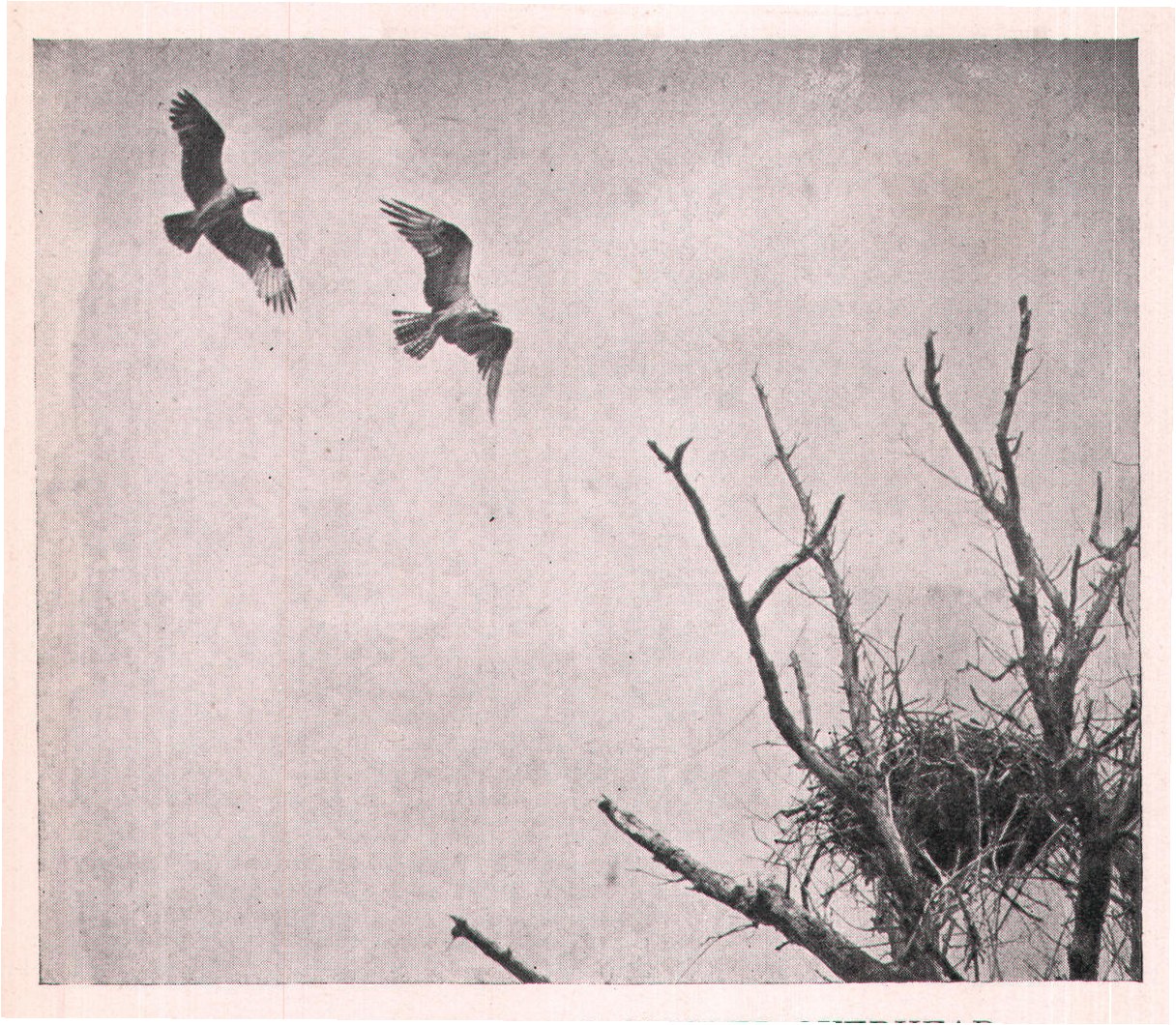
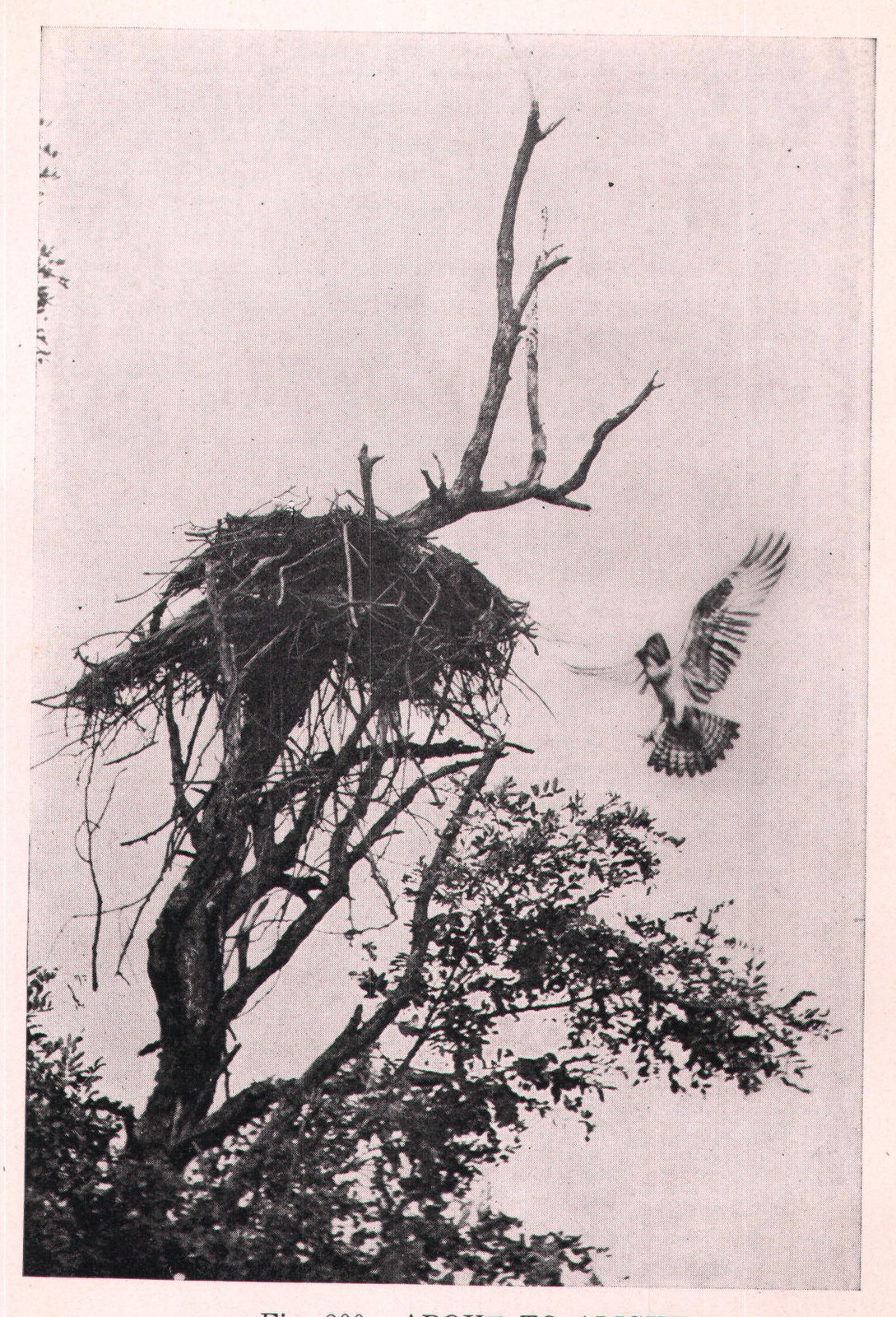
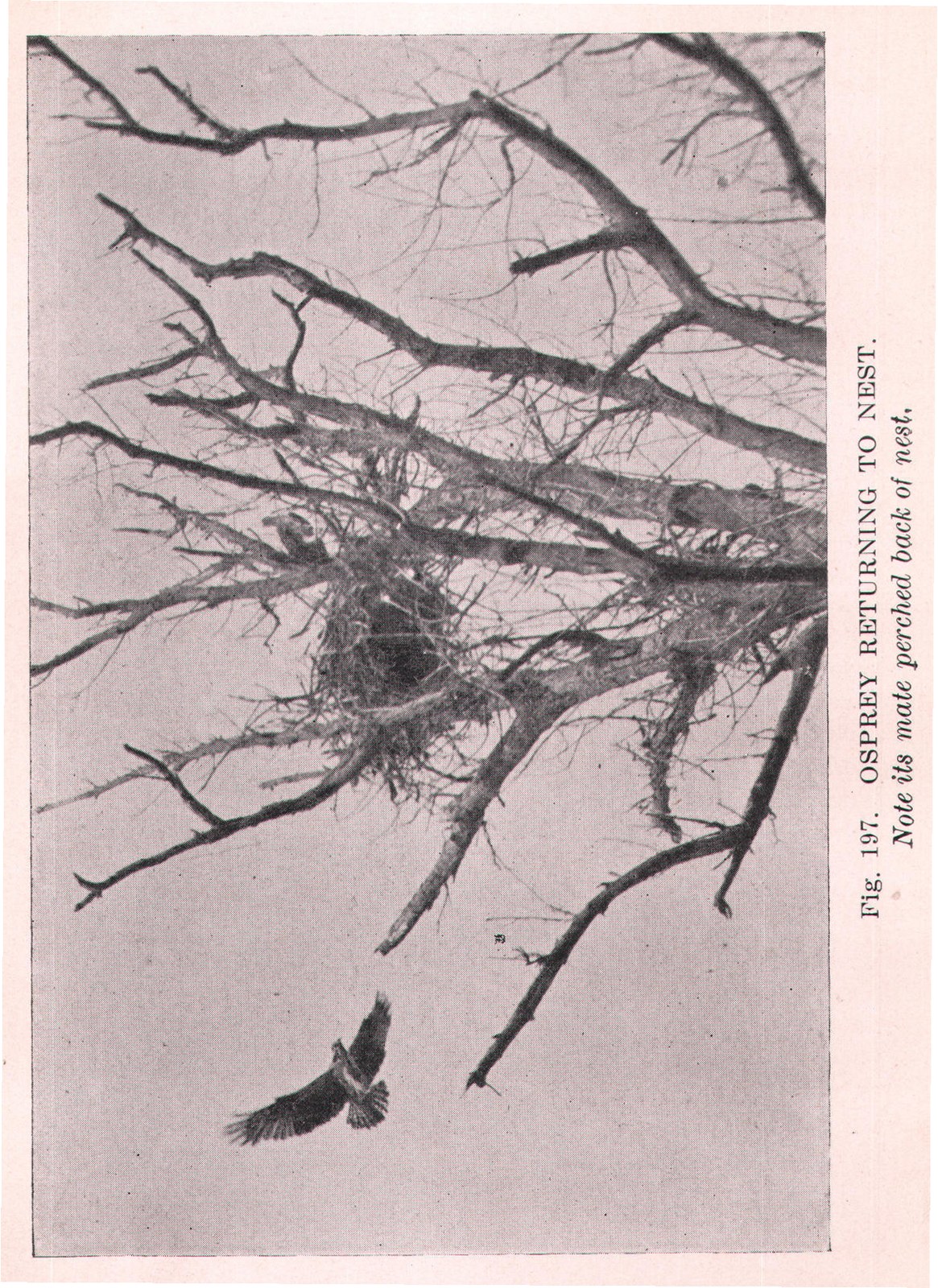
It is very interesting to watch Ospreys at their fishing grounds, to see them sailing smoothly along on motionless pinions or wending their way homeward with a steady flapping, bearing their catch to waiting, little Ospreys. When on the lookout for fish, they usually sweep along at an elevation of perhaps one hundred feet above water. As soon as one is sighted in a favorable position, the Osprey hovers for a few moments, with wings rapidly beating the air and, if his quarry does not take alarm, quickly folds his wings Note its mate perched back of nest, Note its mate perched back of nest. and shoots downward, headfirst; just before striking the water, the long legs are thrown forward so that the sharp talons reach even in front of his head, he accomplishes the remarkable feat of diving into the water both headfirst and feet-first at one and the same time. The average success of Fish Hawks at their trade, seems to be about one catch to three misses. They will catch any kind of fish that swim near the surface, fish weighing, usually, from a half pound to two or three pounds.
Twice in one day, I witnessed a scene in bird-dom that is rarely observed, that of an eagle pursuing an Osprey. This act was first noted by Audubon and has been copied widely from his writings, but few have had the opportunity of actually seeing it. Near Lynnhaven Inlet on the coast of Virginia, Bald Eagles were very plentiful as also were Ospreys. The latter caught most of their fish out of the nets that were set at frequent intervals by fishermen. The eagles fed largely upon dead fish that washed ashore, the same as did the buzzards, but often they, too, went fishing in the weirs.
I had located an Osprey nest, containing young, about two hundred yards from the beach; standing at the foot of this tree I could, at one time, count sixteen eagles in sight. To decide whether the Ospreys and eagles were on friendly terms, I spent the greater part of a day watching them. Unfortunately, as it was a ten mile walk from my stopping place, I did not have my graflex with me.
One of the Ospreys, bearing a fish in its talons, came to the nest about every half hour. Although several eagles were perched on some of the dead trees, which were half covered by the drifting sands, within a hundred yards of the nest, they did not attempt to molest the smaller bird except in two instances; they did, however, all watch the incoming hawks with the greatest of interest. On one occasion, perhaps in a spirit of bravado for, with food so plenty, there was no excuse for marauding, a young, very dark, Bald Eagle, uttering a single shrill whistle, flew to meet a returning Osprey. Evidently the same thing had happened before for the hawk immediately wheeled and started mounting skyward, uttering piercing, tremulous screams. With only an occasional flap of his huge wings, the eagle closely followed, ascending in wide spirals until both were nearly lost to view, even when viewed with powerful binoculars. I should judge that they were A fully two miles up when the hawk released his prey, so high that I could not see what happened, but the eagle came swooping grandly to the perch he had left, bearing the prize, while the poor Osprey went out to the weirs for another one. Undoubtedly stolen fish tasted much sweeter to the eagle than if he had captured it himself, even though the latter course would have required but a fractional part of the energy he expended in mounting to the clouds.
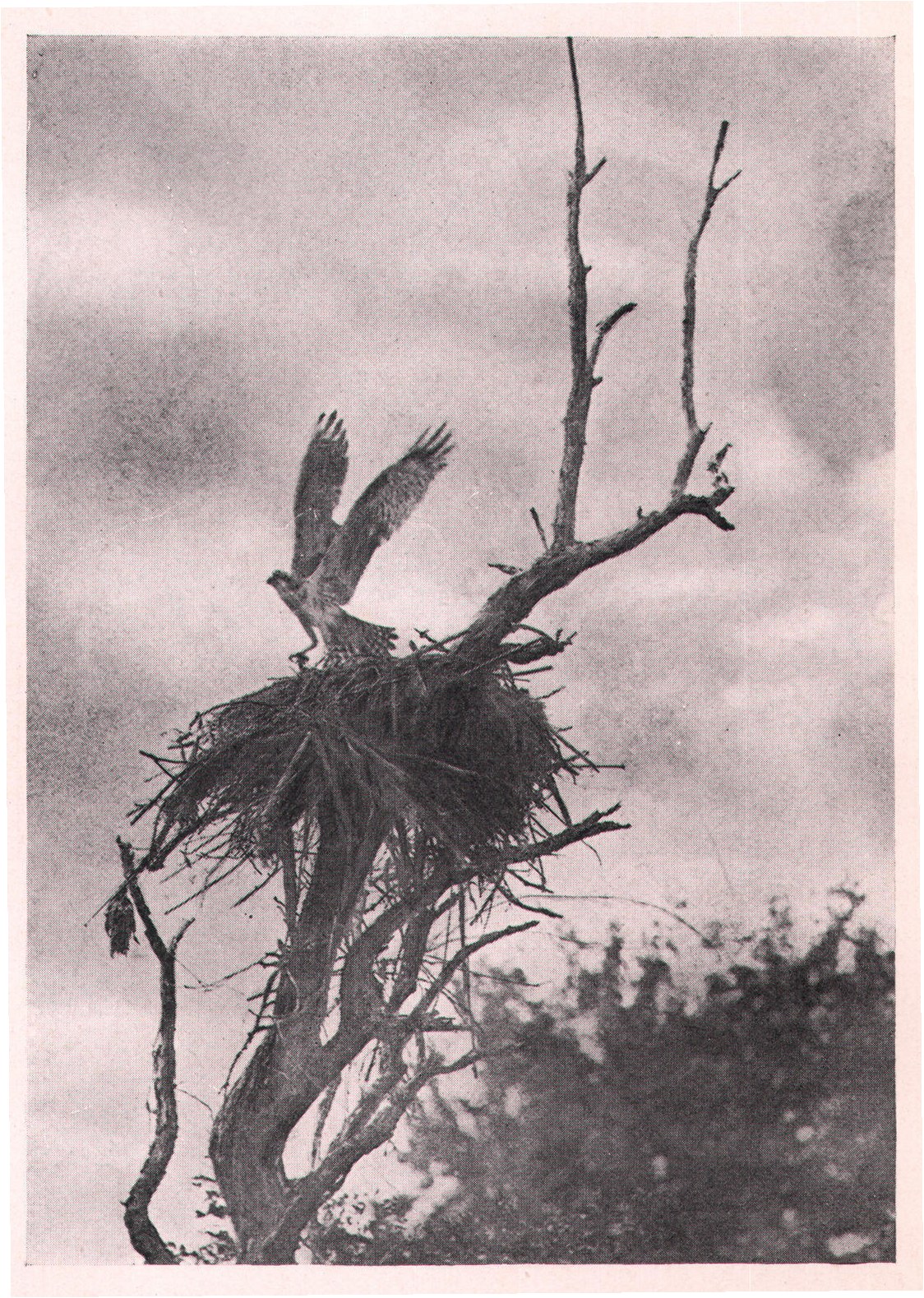
On another occasion the same thing happened, but the Osprey released his prey before he had ascended half a mile, the eagle lazily reaching out one leg and grasping it as it fell past him. Eagles have wonderful control of themselves when in the air. I have seen one, that was attacked by crows from above it, repeatedly turn completely over in midair and present his talons toward his tormentors. Ospreys nest not only in dead trees but on cliffs, on the ground, on the cross arms of telegraph poles and even on unused chimneys.
Sandpiper eggs are very handsome, -gray buff, blotched and specked with blackish-brown.