Home › Contents › Field Sparrow
Field Sparrow
As would be judged from their name, these birds are inhabitants of fields, not fields carpeted with fresh green grass, though, but dry side hills or hollows that are usually plentifully sprinkled with small shrubs.
Throughout the East, the high-pitched, piping melody that constitutes their song is one of the most familiar sounds of rural districts. Commencing with a single longdrawn whistle of intermediate pitch, it continues through a succession of three or four very high notes and ends in a pleasing little trill. It is a rather pretty little song a that once heard will not likely be forgotten or confused with that of any other bird.
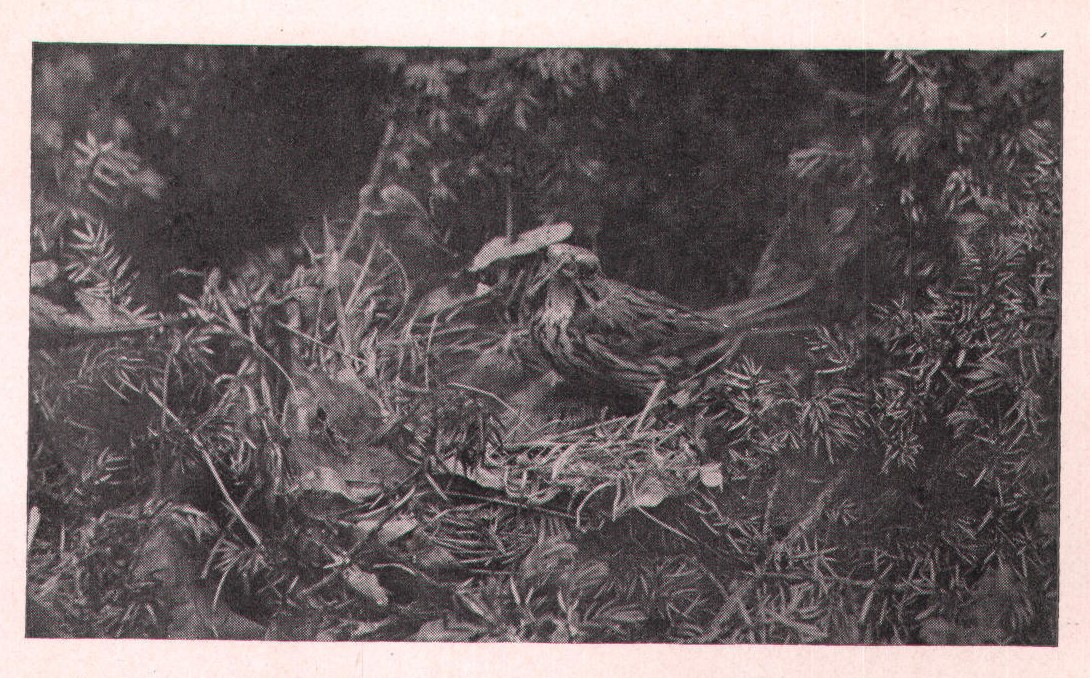
They nest about equally often on the ground or a foot or two up in small bushes; in either case the nest is usually up in small bushes; in either case the nest is usually well concealed from view. There is a great difference in the temperaments of individual birds of the same species. One pair of Field Sparrows may perch on the top of a bush and chirp excitedly as long as an intruder is in sight, while another may quiet down in a very few moments and carry on their household duties as though they were alone . The birds shown in the accompanying pictures belonged to the latter class.
The nest, or what was later to be the nest, was discovered almost as the first straw was laid. During two hours following the discovery the nest grew wonderfully. The fe- male was the carpenter, her mate's part consisting of bringing part of the material. Both birds would usually depart together, but she always returned first and had her grasses wound into place and was ready to take his as soon as he appeared.
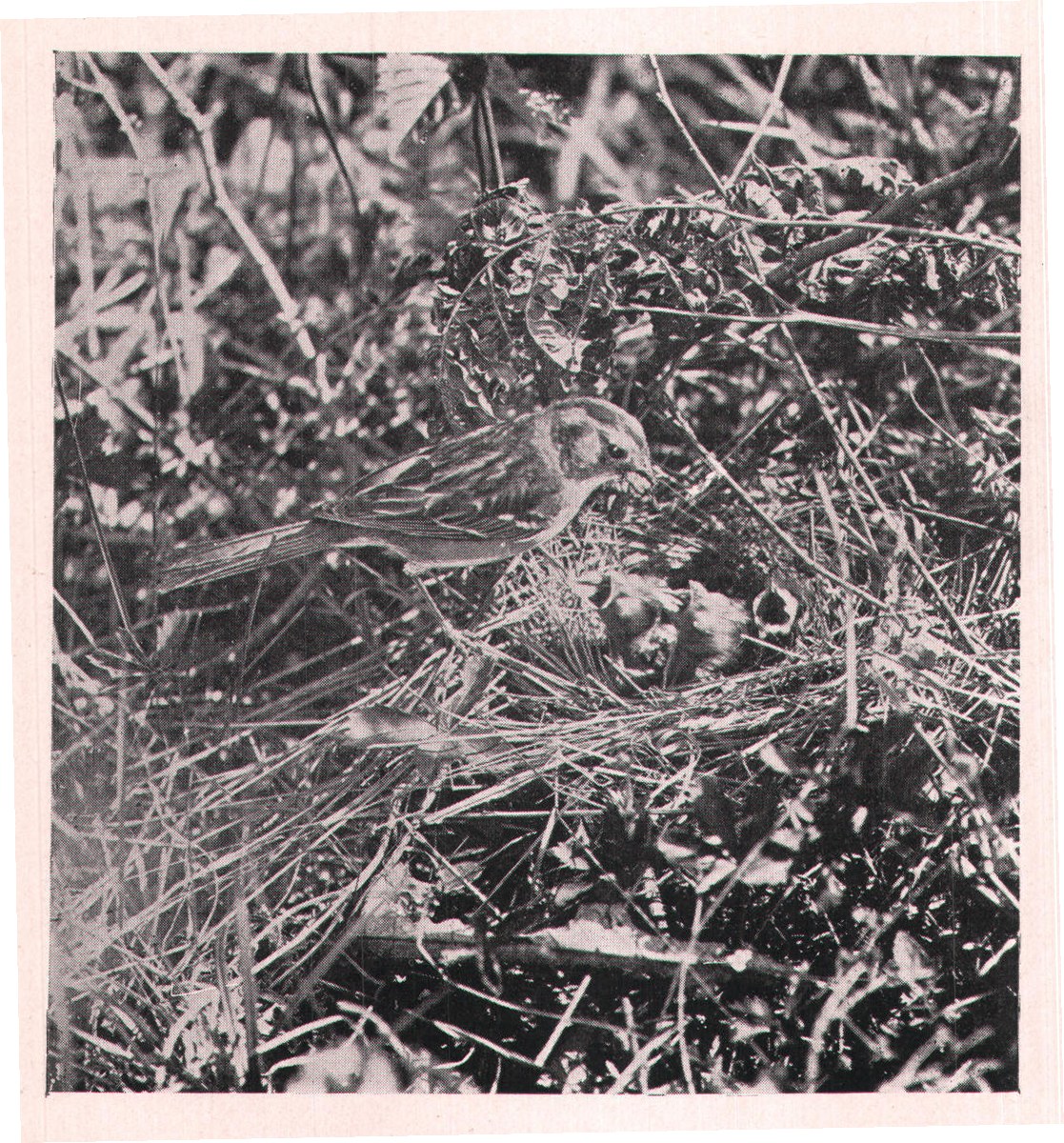
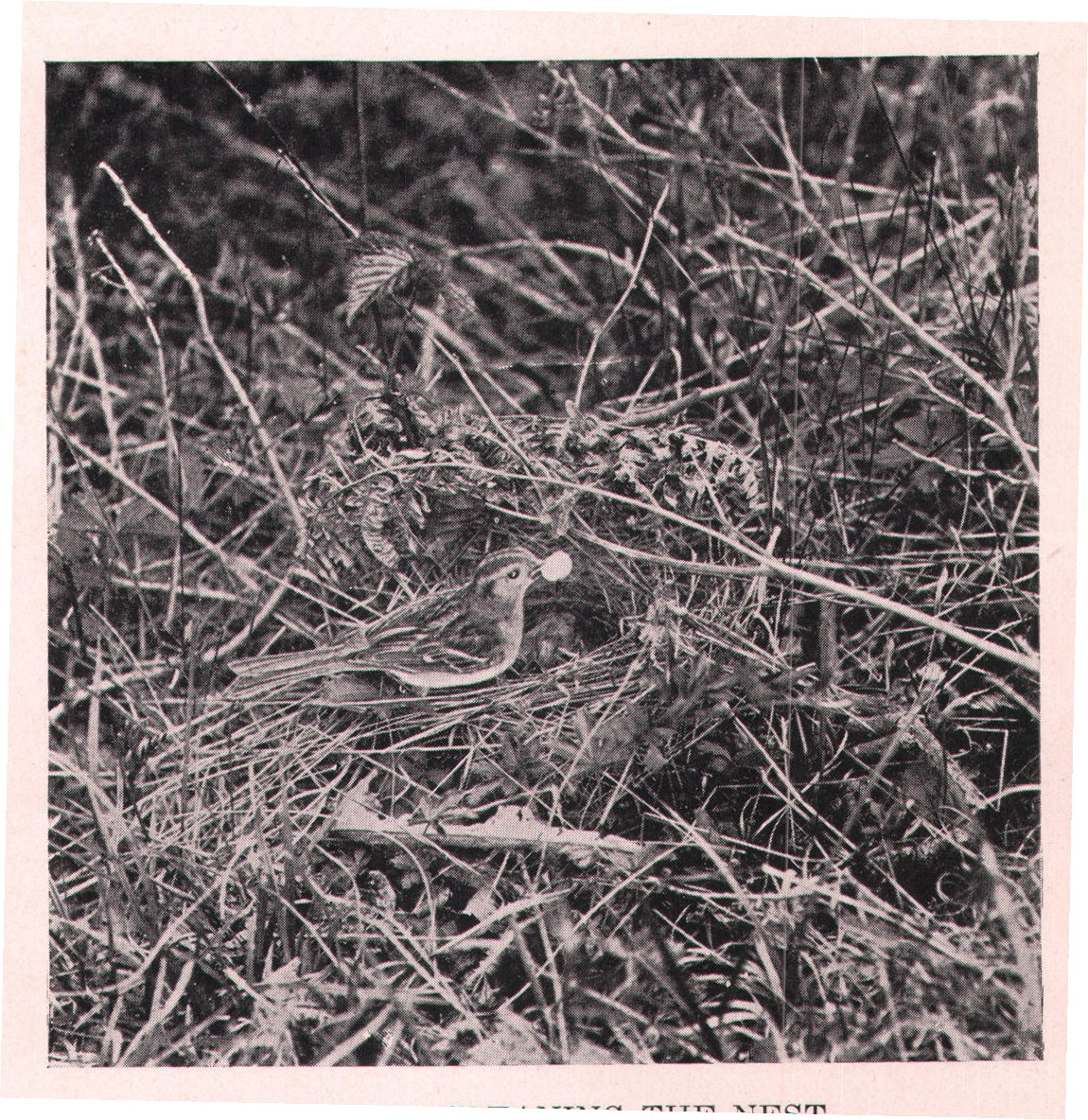
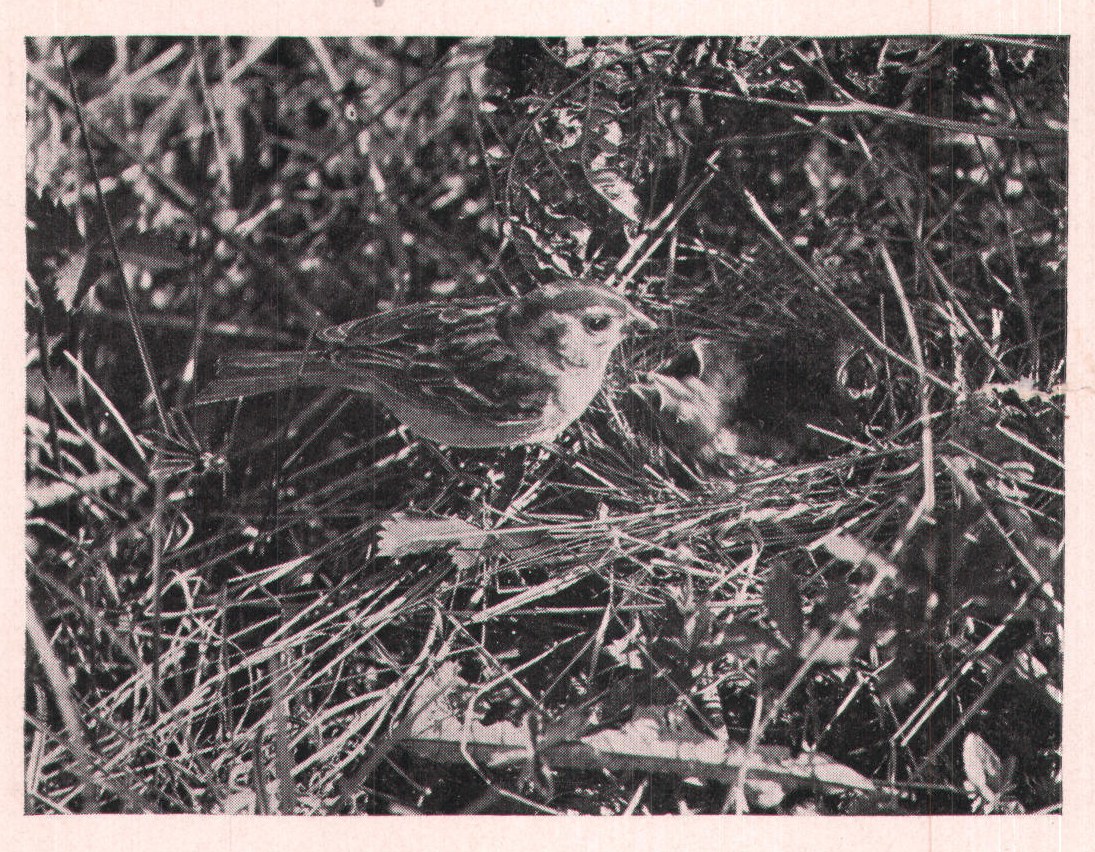
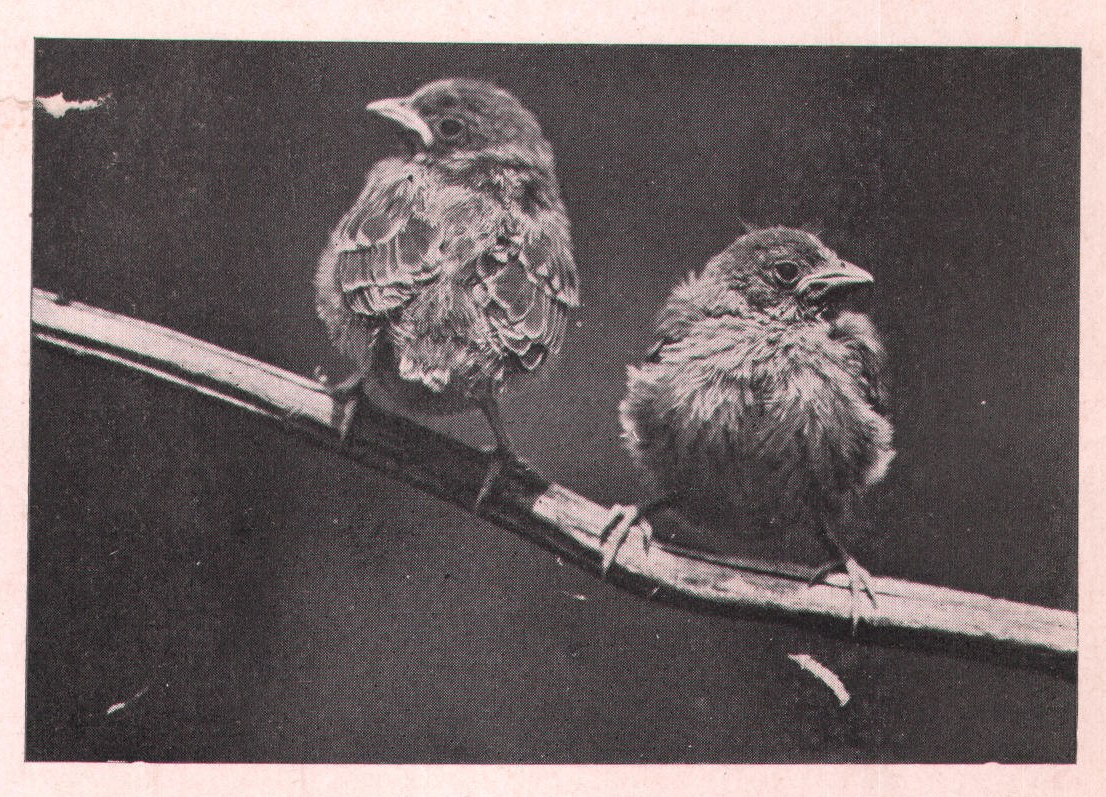
In the course of three weeks, three of the four eggs that she had laid, hatched. When the young were six days old, several pictures were taken of scenes at the nest. As in the case of the Chipping Sparrows no attempt at concealment was made; the camera was within three feet of the nest and I was seated on the ground just back of it. The birds paid scarcely any attention to me and were back at the nest in less than ten minutes after I had things in readiness for them. Ants, spiders and plant lice formed the bulk of the food that was brought, although, occasionally a caterpillar or a hard-shelled beetle would be brought in. Nearly all their food was gathered from the ground, in fact many times they would have pieces of grass also in their beaks, that they had accidentally pulled up while seizing the insects. On the twelfth day after the eggs hatched, the nest was empty; the young were near by for the parents were anx-- iously calling, but we were able to find but two of them.