Home › Contents › Brown Thrasher
Brown Thrasher
The Thrasher is also something of a mimic but not as accomplished a performer in that line as the Catbird. He has, however, a much better and more characteristic song of his own.
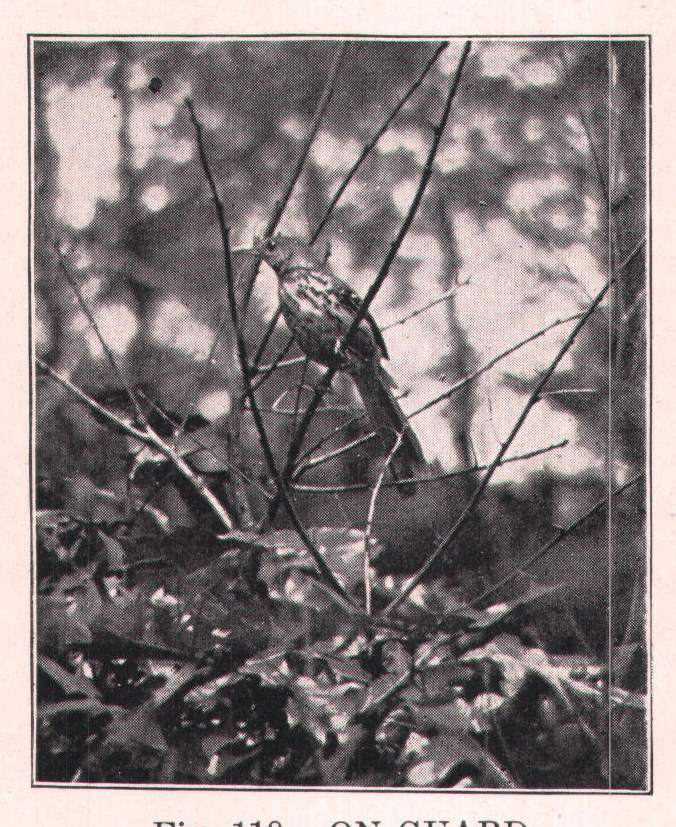
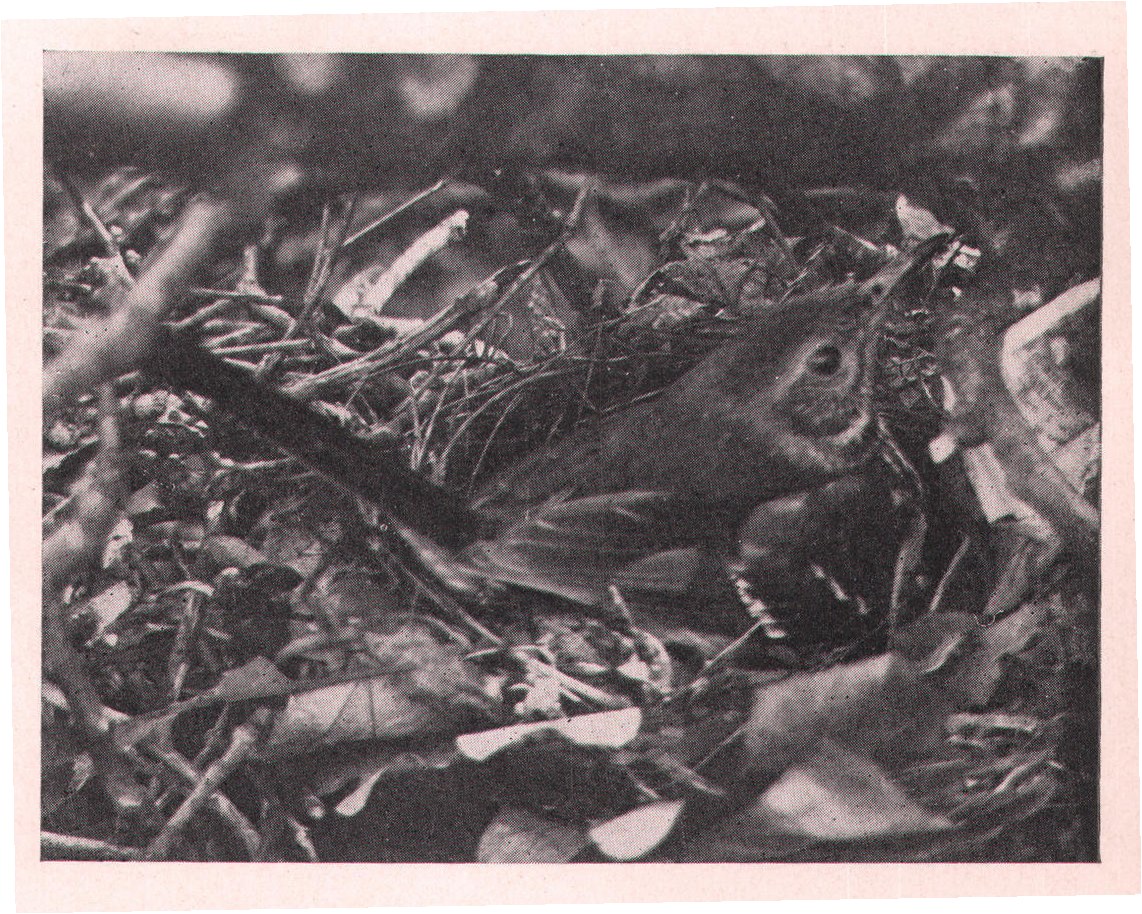
Early one morning I was making my way along a side hill, through sweetfern and briers and around scrub oaks and thorn bushes. The shadow of a bird overhead caused me to glance up just in time to see the long, bright-rufous tail of a Thrasher disappear in a bush a short distance away. Naturally as I passed, I parted the leaves to see what she was doing there. I was scarcely prepared for the "hornetnest" that I had disturbed. An angry Thrasher confronted me, her bright yellow eyes blazing with wrath, her wings and tail wide spread. From her cavernous mouth came a continuous stream of explosive "chirks," angry, grating "Karr-r-r-r-r's" and clearly whistled "wheu's." I had interrupted her as she was giving her children their breakfasts and a Catbird or Thrasher meal cannot be disturbed with impunity.
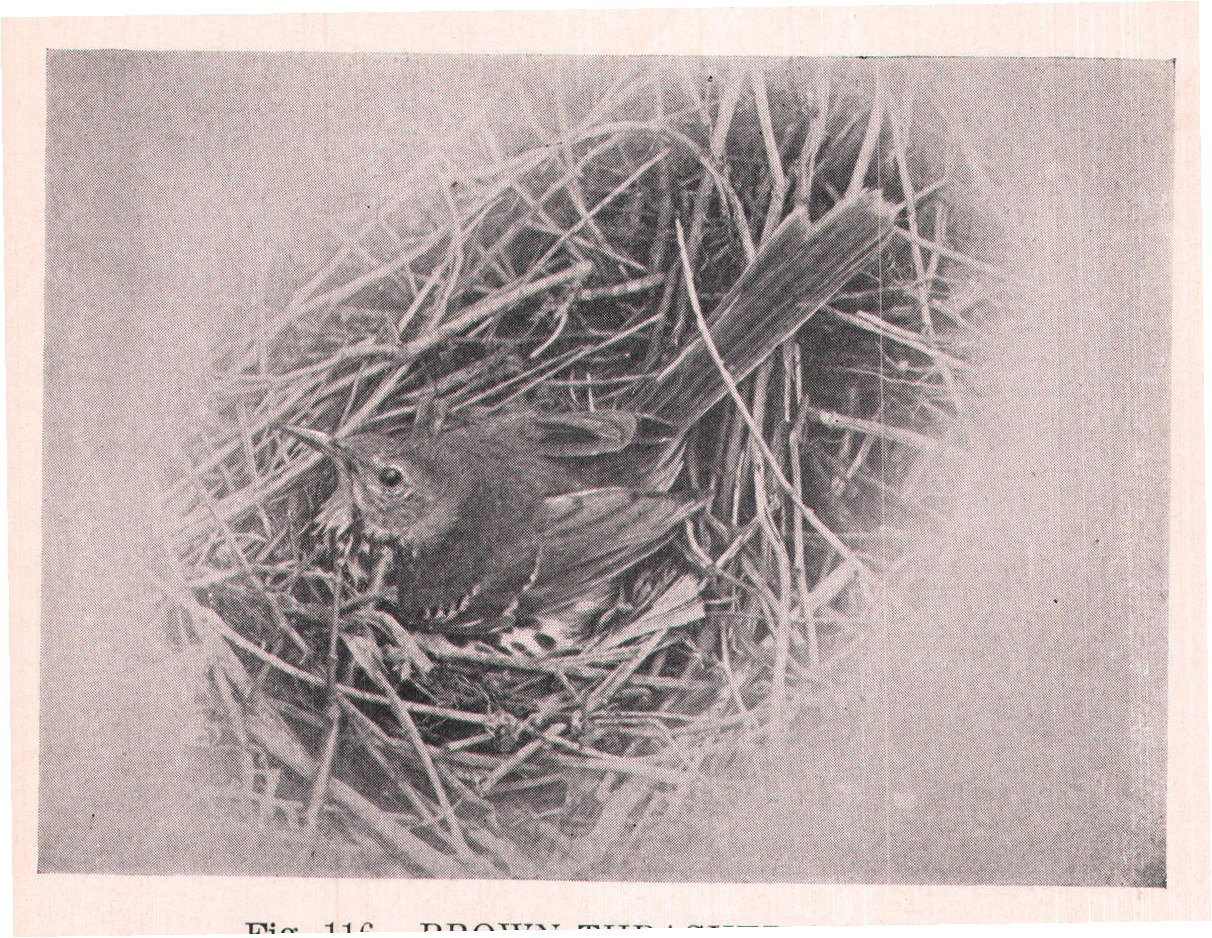
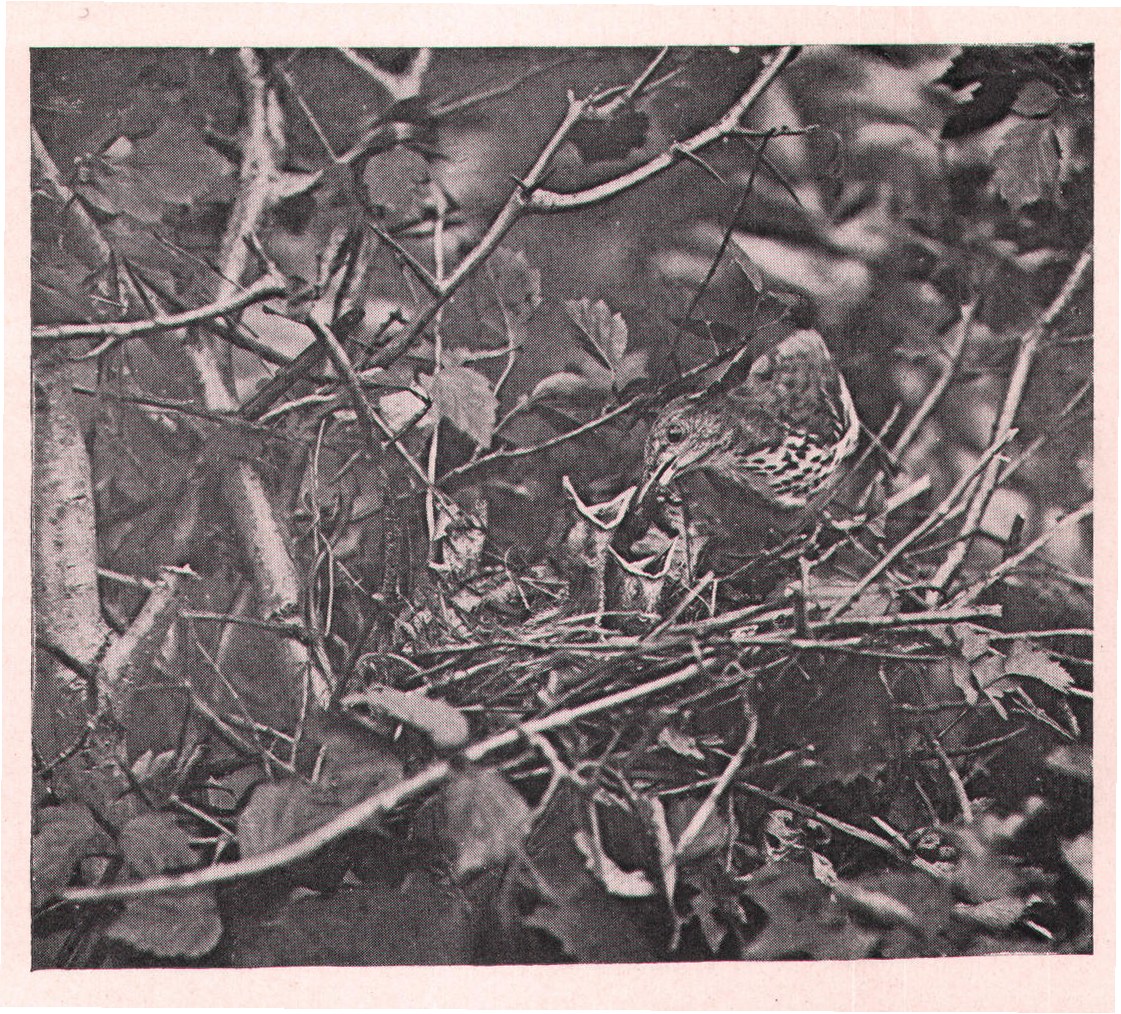
I stood perfectly still and she scolded until she became tired; she gradually quieted down, her ruffled feathers as- Fig. 119. She sometimes fed them great black ants. sumed their normal positions and the angry glint left her eyes. She began to wonder what she had been making all the fuss about anyway. I whistled softly to her and, after looking at me steadily for a few moments, she answered in the same tone. In a few moments more she cleaned the nest and left with no concern for my presence.
I had been on the way to photograph some towhees about half a mile farther on but I decided to let the latter go a day or two and set up my green tent beside the Thrasher nest. I had it in readiness before she returned and she paid not the slightest regard to it but went directly to the nest. Unfortunately the sun shining through the leaves caused a spotty background and made many shadows about the nest. Usually it is possible to tie branches out of the way so as to get good surroundings and light, but in this case they would not admit of so doing.
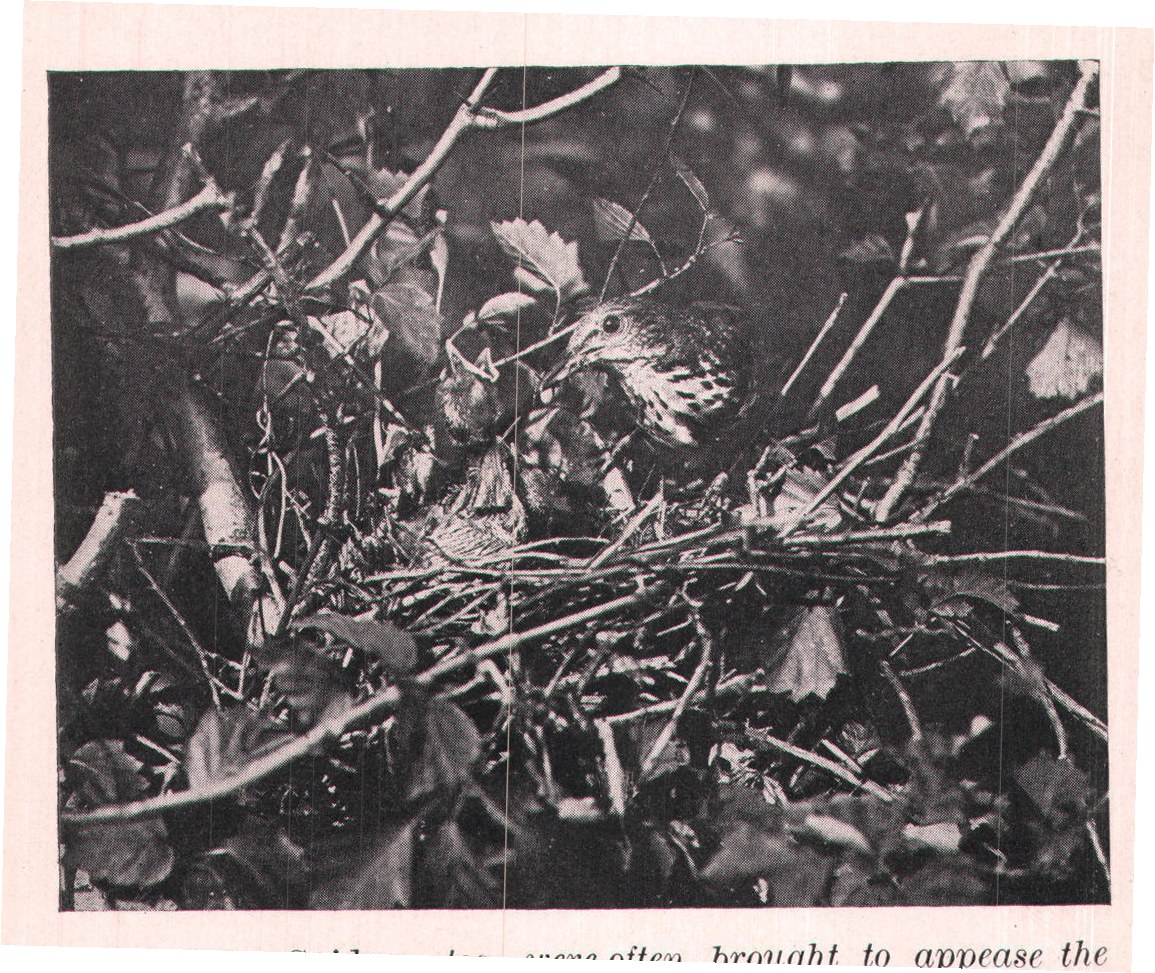
Fig. 120. Spiders, too, were often brought to appease the hunger of the little thrashers.
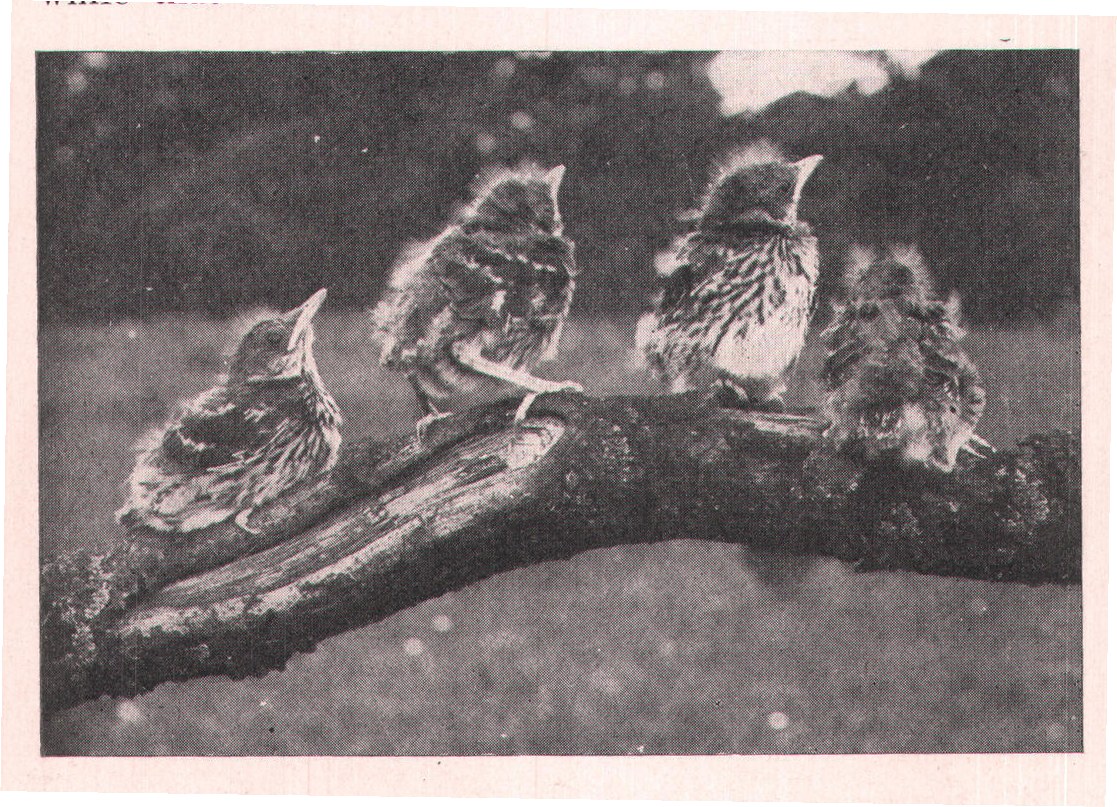
The three young birds were about a week old, just large enough to commence to take an interest in things going on about them. They had very acute and discriminating hearing; other birds were singing in all directions about us but they always heard mother Thrasher's low whistle, usually given when she was twenty or thirty feet away from the nest. They would prick up their ears and with wide-open eyes and mouths opened wider still, each strive to be the nearest to her as she hopped to the back edge of the nest.
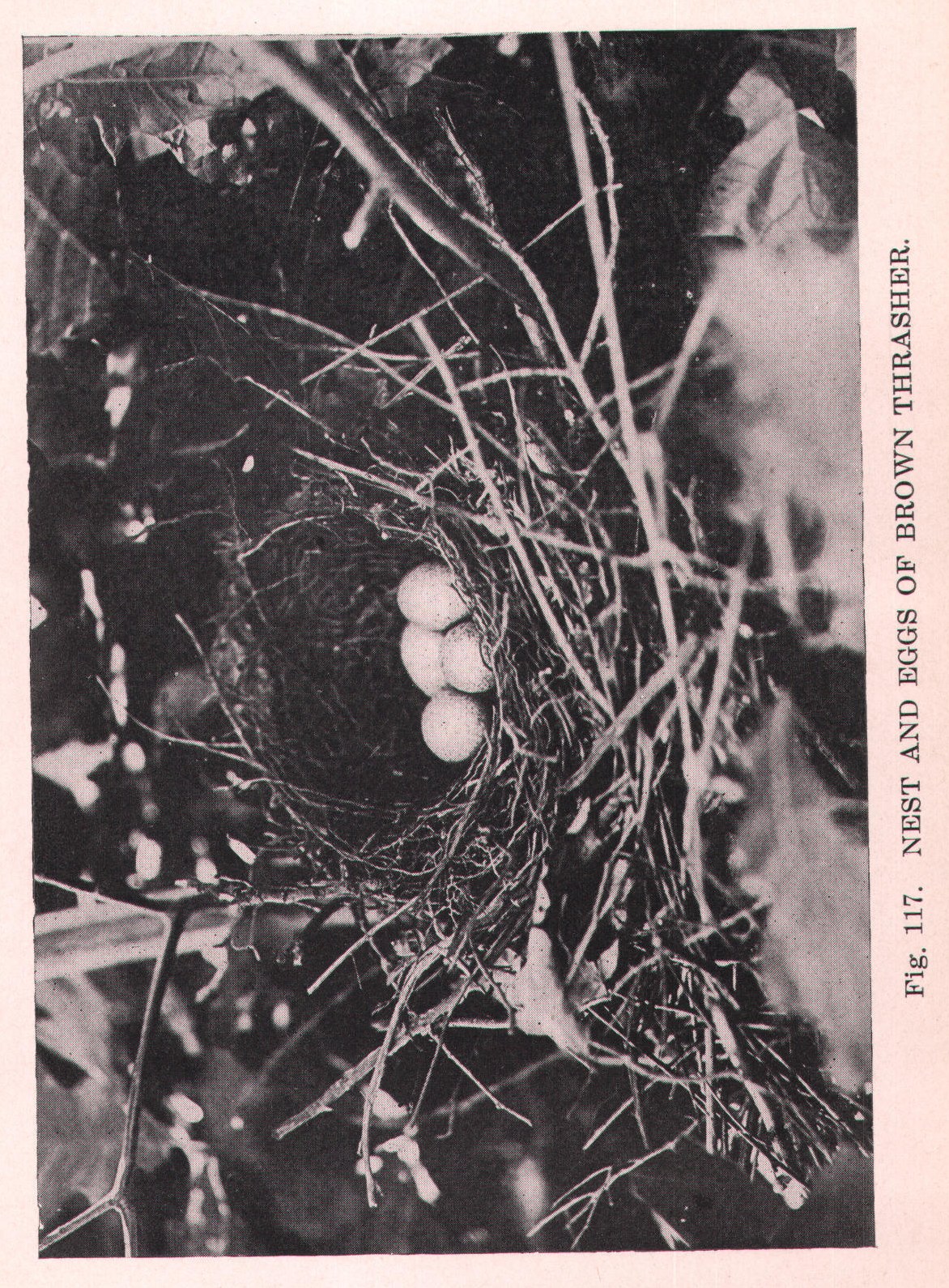
Mother Thrasher showed no intentional partiality but fed her three children in turn. Occasionally she made a Fig. 121. Sometimes Thrashers nest on the ground but more often in bushes. mistake and fed the same one twice in succession. As the little fellows grew older they resented such slights. The one whose turn it was to be fed would raise his voice in noisy protest if a nice, appetizing spider was, by mistake, thrust down his brother's throat. As the morsel was immediately swallowed he had no redress except to peck at his brother as soon as his mother left.
Father Thrasher must have been on a vacation the day that I found this nest for I did not see him, but he was in evidence on several subsequent days. I never saw him feed the little ones, though as a rule both parents share the task between them. His plumage was in perfect condition, while that of the female Thrasher was worn and several tail feathers were missing, showing that she had borne the brunt of the hard work and perhaps fought most of the battles of life too.
It was during the last week in May that I found the foregoing nest. The little birds had left it and were scratching for themselves early in June, while their parents undertook to raise another family. This time they selected a place only a short distance from the first one, but they built the nest on the ground instead of in the thorn bush that stood over it. From the appearance of her plumage, I am sure that the female Thrasher was the same one that I had been photographing. Either her memory was very poor or someone had frightened her, for she failed to be friendly with me any more and refused to return to the second nest while I was near.