Bird Mimics
CATBIRD You cannot judge the disposition of a person by his clothes, neither can you judge that of a bird by its feathers. A soft gray suit and black cap is the garb worn by the Catbird, raiment that might indicate its wearer to be a quiet, Quaker-like bird although in reality no other has a more irrascible temper than our Catbird. A perfect model of propriety when everything is in accord with his temperament but a real virago and scold when the least thing goes amiss.
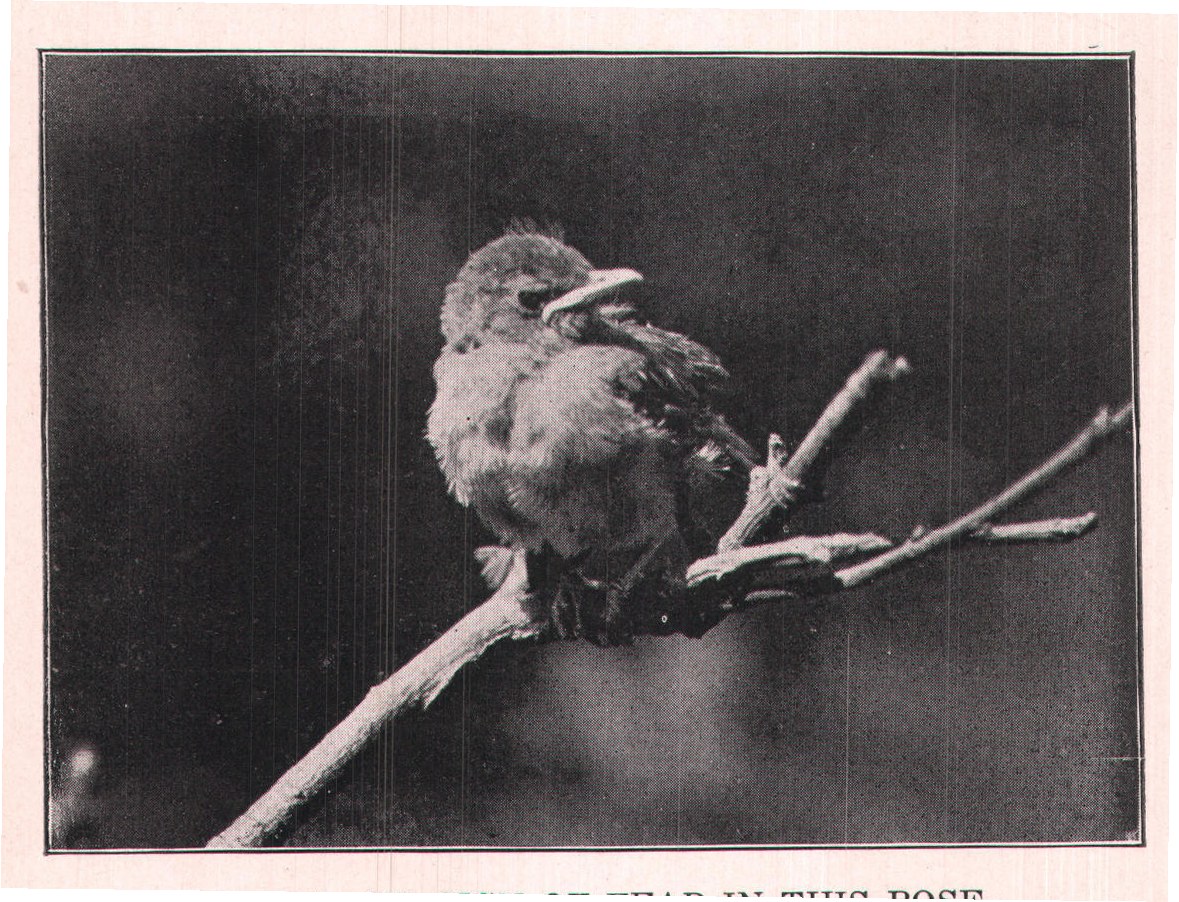
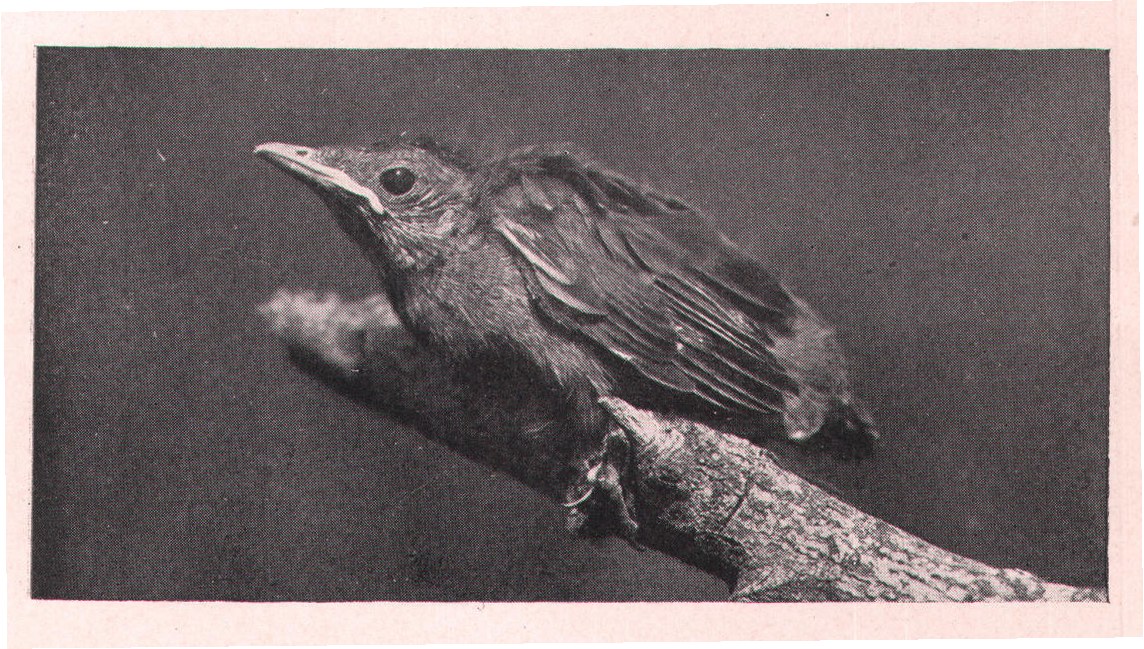
I always like to listen to the Catbird song. It is a song Fig. 112. A real virago if you provoke her to anger; and her ire is very easily aroused.
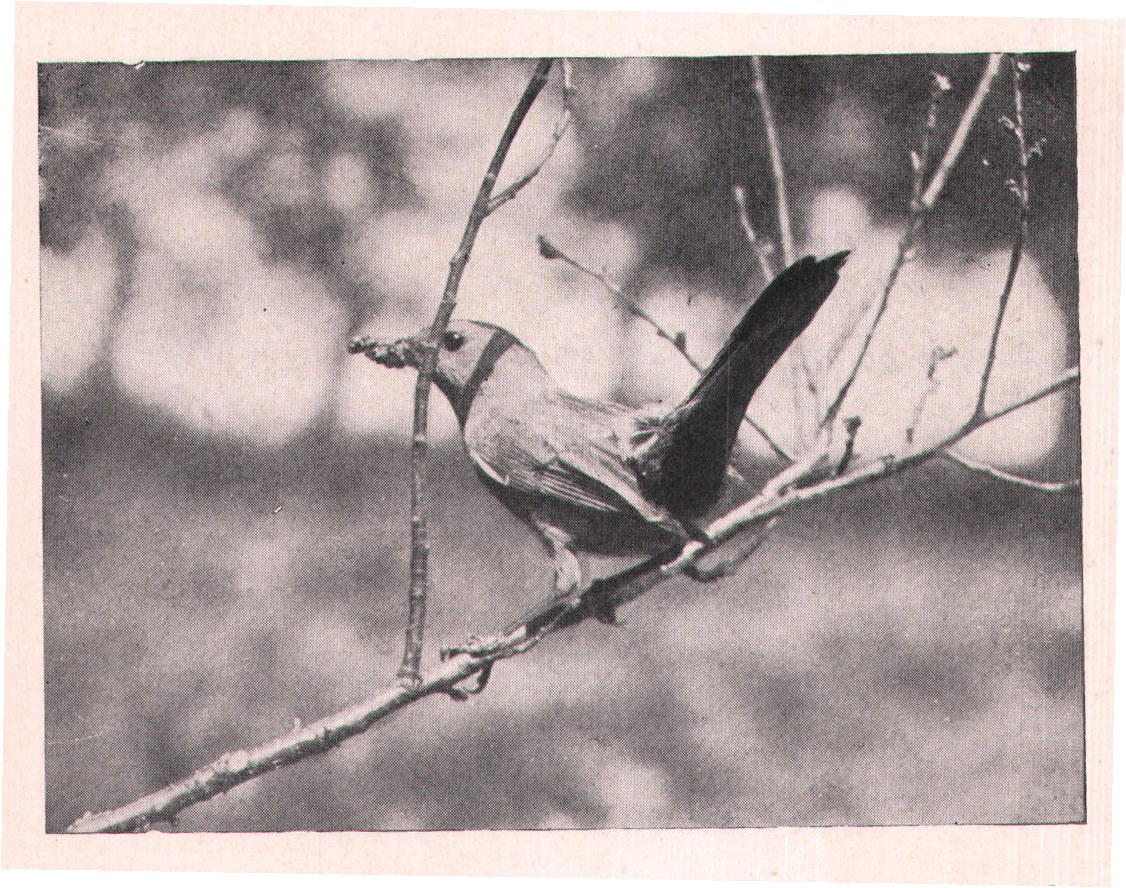
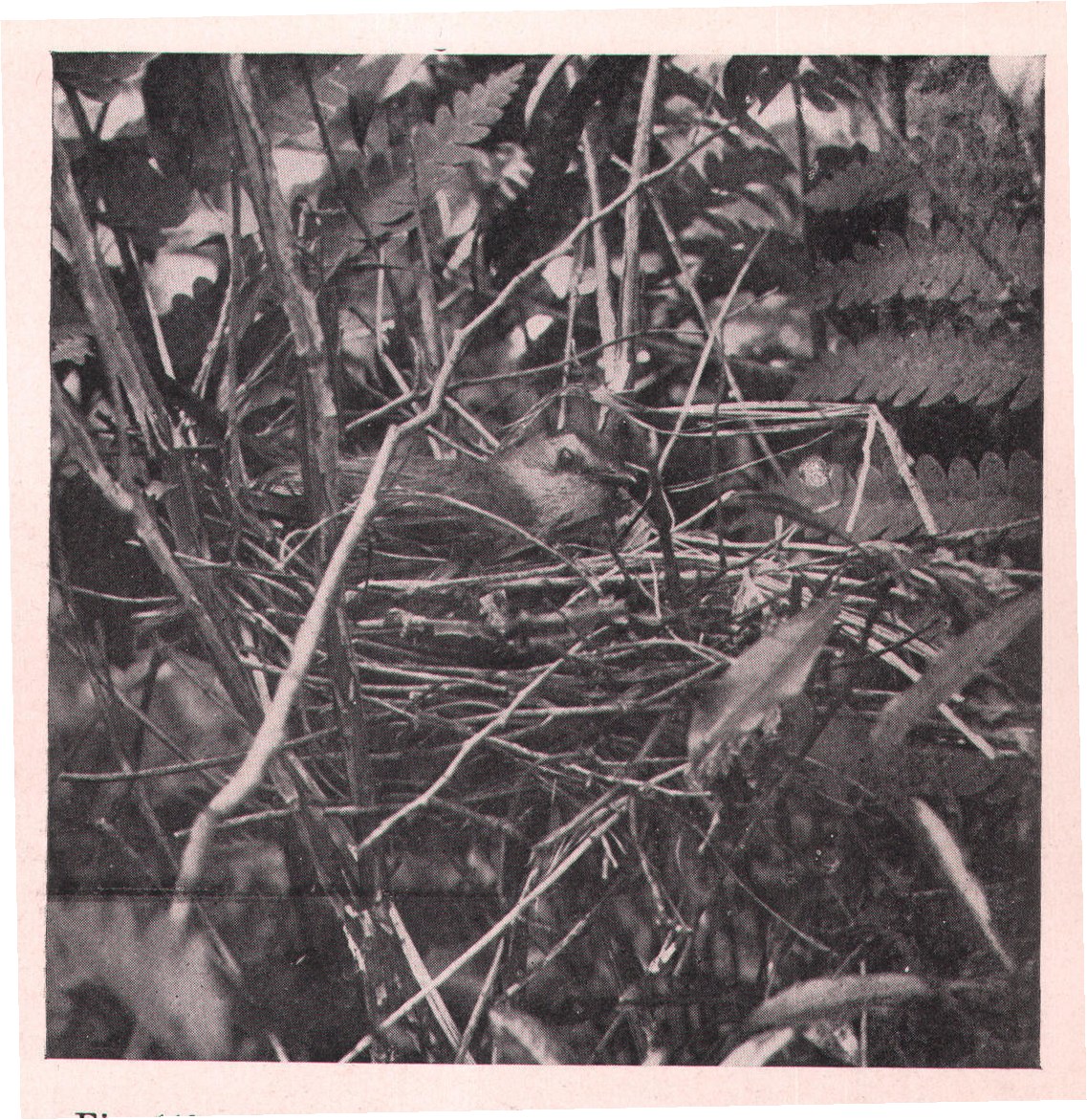
Fig. 113. Her eyes snap as they watch your every move. No t a sound from her until she leaves the nest,-then beware. sound from her until she leaves the nest, then beware. such as no other bird is capable of giving. The Mockingbird has a clearer, sweeter and more lengthy song but it cannot compare with that of the Catbird in its variety of notes, musical and otherwise, or the absolute indifference to rhyme, rhythm or reason with which it is delivered. The song cannot be written or even adequately described for it is never twice alike and seems to be made up on the spur of the moment.
They often perch in the tops of bushes and sing for an hour or more at a time, wings and tail drooping, head erect and eyes half closed. From between the half-opened bills, come selections from the songs of robins, thrushes, of wagon wheels, mewing of cats, clucking and cackling of hens and noises of his own invention like nothing ever before heard.
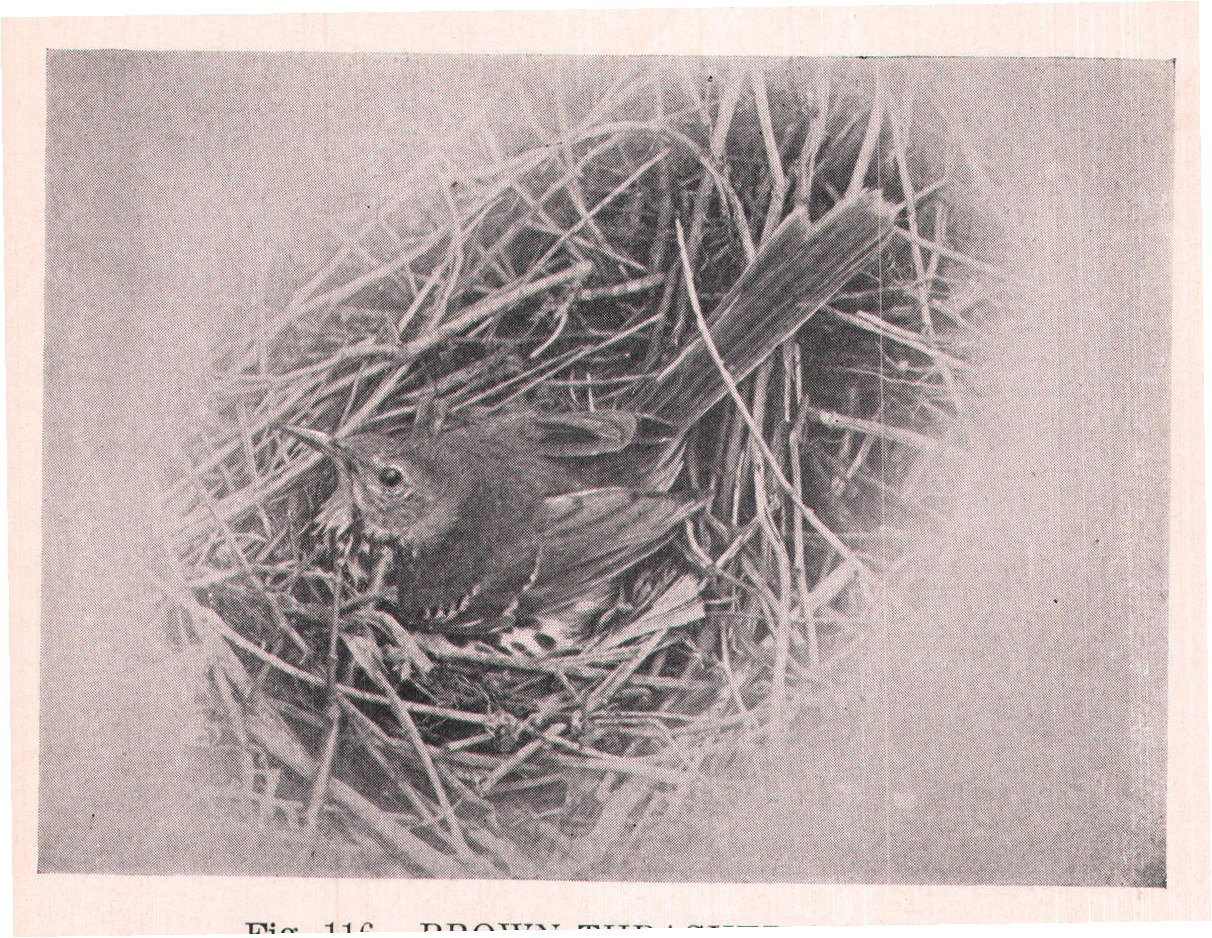
Catbirds build quite large and substantial nests of small twigs, rootlets and shreds of bark; the bowl-shaped interior is lined with slender black rootlets and on these the four greenish-blue eggs are laid. The female is very loathe to leave her nest while setting and will usually allow anyone to almost touch her before she glides off the eggs. Once off, however, her anger is unrestrained and she gives her opinion of you in strident tones that alarm the bird population for a long distance around. Catbird anger is not expressed solely in noise either; I have seen a chipmunk running for his life to escape from the attacks of a pair that had caught him in the bushes near their nest; I have seen them dash furiously at a black snake, that was hunting among the branches for egg-dainties, until he was forced to slip to the ground and flee; and I have had one of them come screaming at me and peck at my fingers as I reached through the briers to feel what was in a nest. Their most effective note of protest is a loud, whining "tschay" repeated as fast as they can get their breath and sometimes drawn out into a continuous scream.
My experiences at photographing Catbirds have been many and varied; I have had a lot of the experience and got but few of the pictures. I have not yet induced one to return and feed its young while I had a camera in position before the nest. When without a camera I have, a number of times, hidden beside Catbird nests and watched the parents performing their various household duties. There are "good" Catbirds and "bad" ones; it is just as impossible to photograph one of the latter class as it is to portray a naughty child.