Important: Safety Warning
This page describes collecting wild birds' eggs, shooting birds for specimens, or similar practices. These activities are now illegal under wildlife-protection laws, including the Migratory Bird Treaty Act, and they contributed to the decline of the very species described.
This information has been left in for historical purposes but should not be acted upon.
Home › Chipping Sparrow › Chipping Sparrow: Chippy
Chipping Sparrow: Chippy
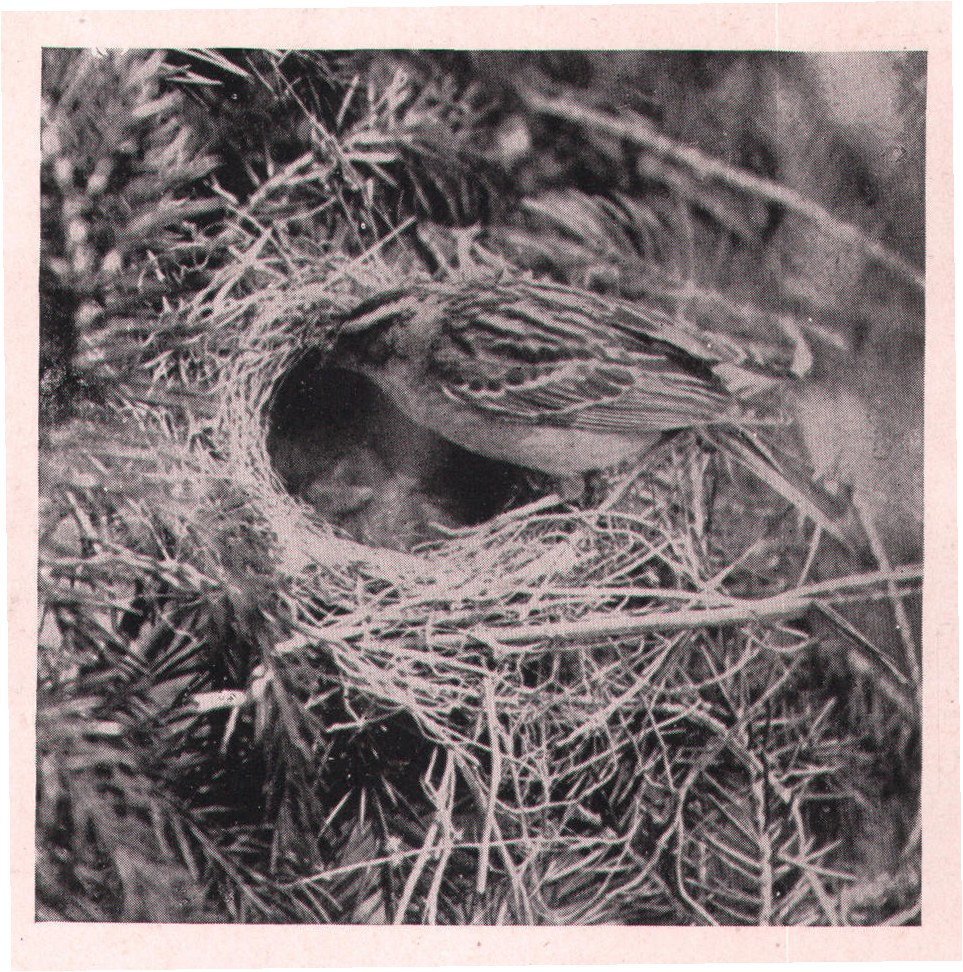
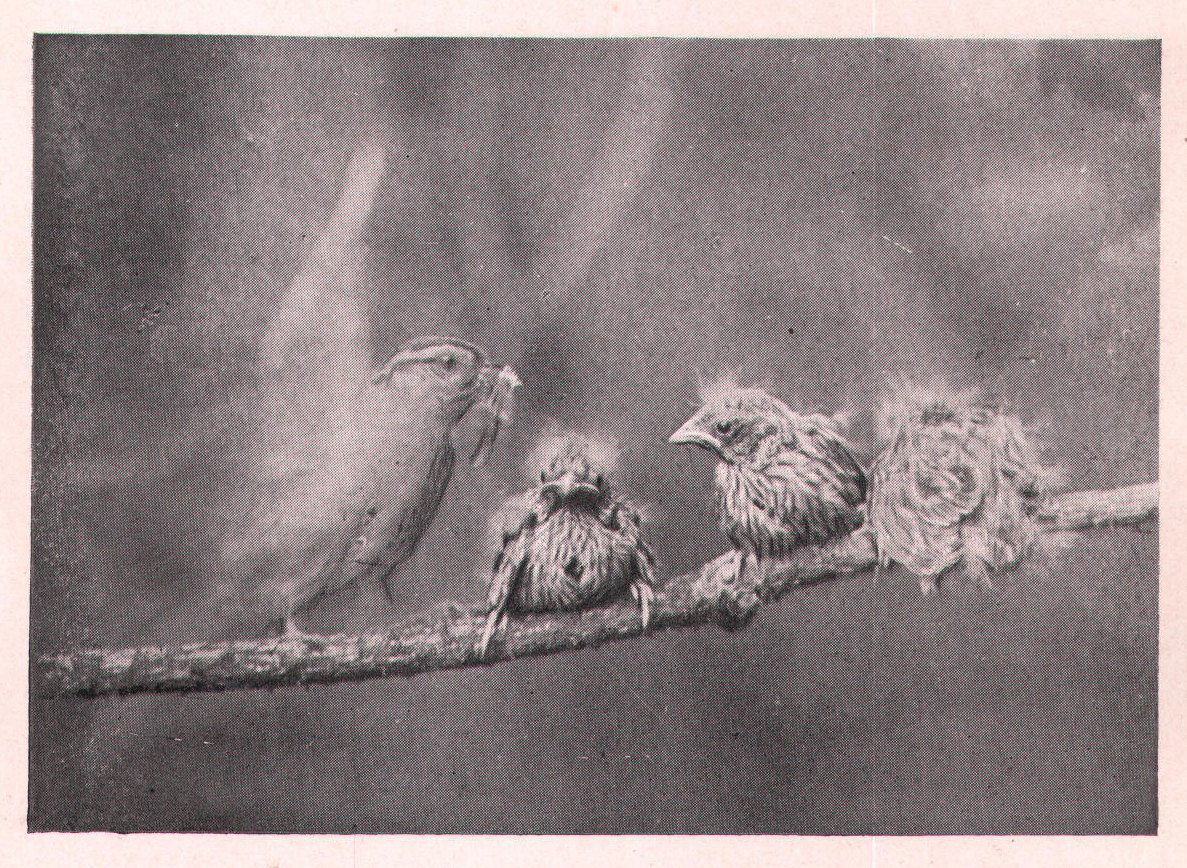
The male Chippy returned to the nest within five minutes after the camera had been focussed. We used no tent nor concealment of any kind, simply stood behind the camera and worked the shutter with the ordinary bulb and tube. They were the very tamest birds with which I have ever dealt, which accounts in part for the excellent results that were obtained photographically at this nest.
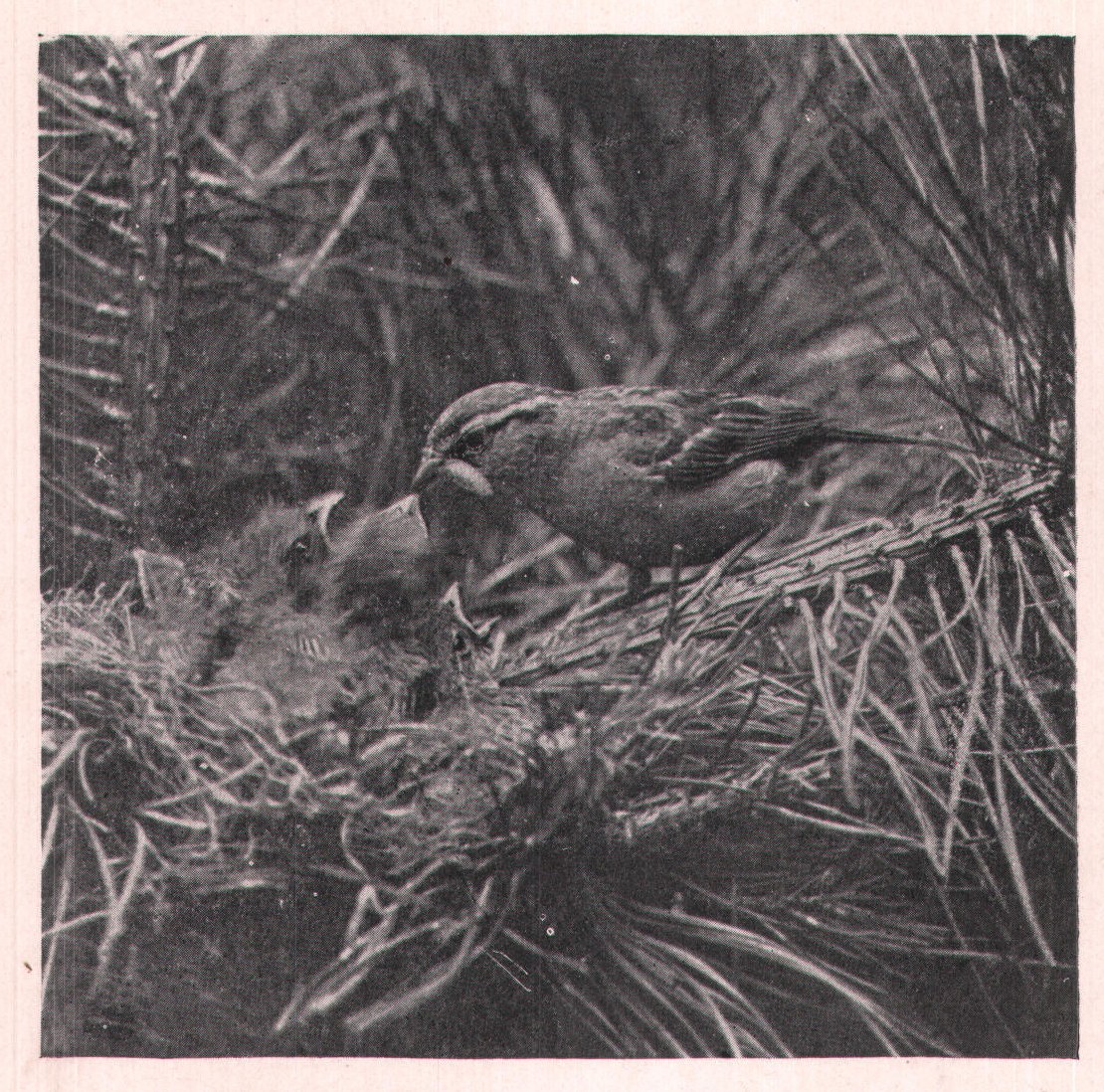
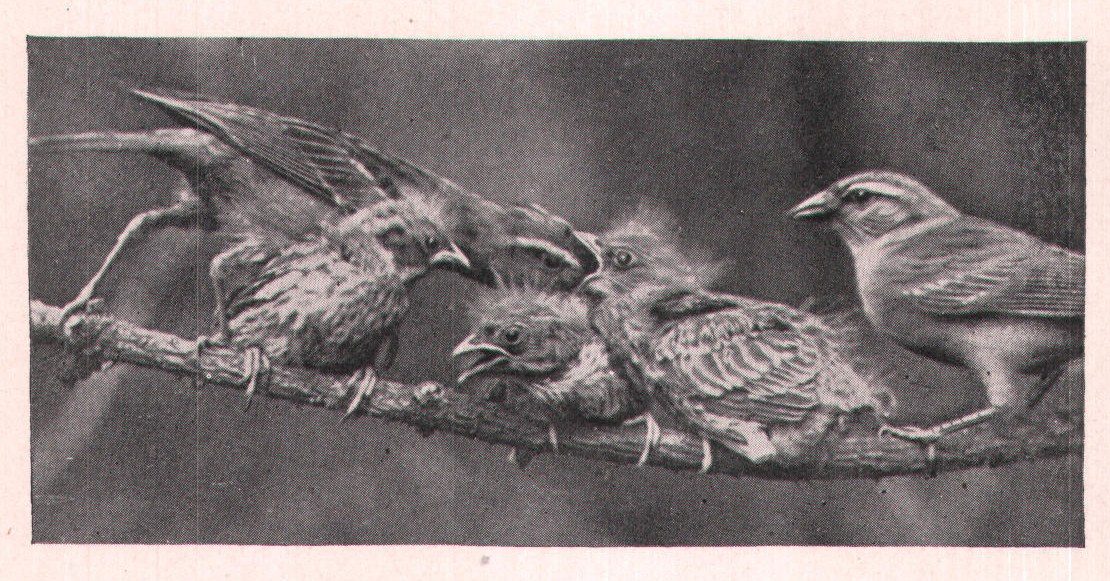
At his first visit the male bird brought no food, but just Both adult birds came and went freely, without Fig. 139. regard to our presence. came to see that the little ones were all right. The picture entitled "A Chippy Portrait" represents the result of the first 'shot', showing him as he was inspecting the camera. He did not move while plates were being changed, but just as we were in readiness for another exposure, his mate was seen coming with a green worm, and he left. As she Fig. 140. They reached eagerly for the green worm Mother Chippy brought. reached the edge of the nest all the young birds rushed to meet her. They were so very eager, each to receive the morsel she brought that they very nearly spoiled the next picture by their rapid motions. We made but five pictures at this time and two of these were worthless because both the adults and little ones moved too fast for the shutter. The following day was one of those rare, perfect days for photographs, very light, but the sky sufficiently over- Chipping Sparrow The parent birds breaking in two a caterpillar that was too large. A very unusual sight and The parent birds breaking in two a caterpillar that was too large. A very unusual sight and perhaps never before photographed cast to prevent any shadows. At nine o'clock we were back in the grove to see our new acquaintances. Although the young had appeared very 'smart' the day before, we were, nevertheless, surprised to find that they had all left the nest. Two of them were sitting, side by side, on a small dead limb of a neighboring tree, but the other two were not in sight.
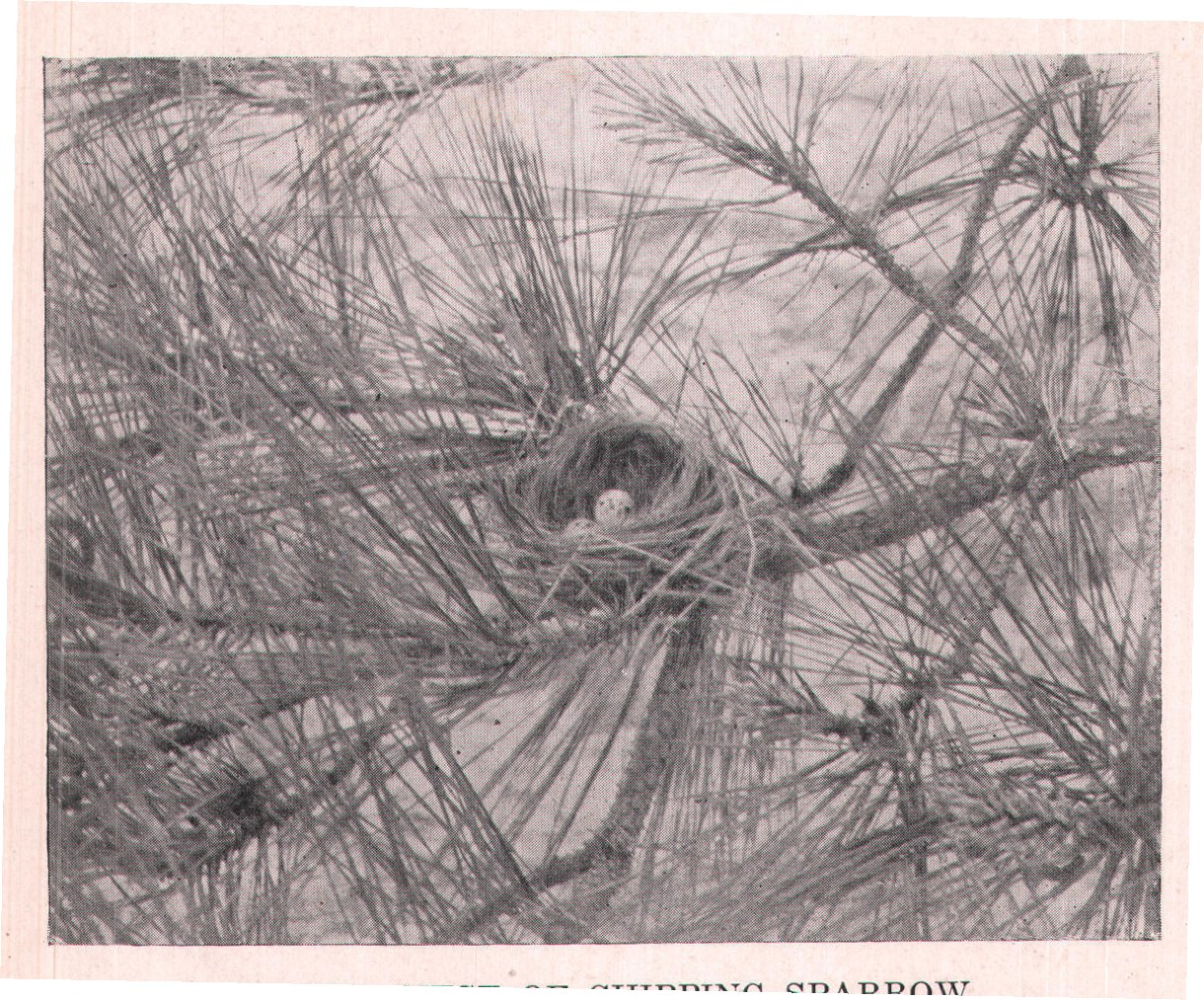
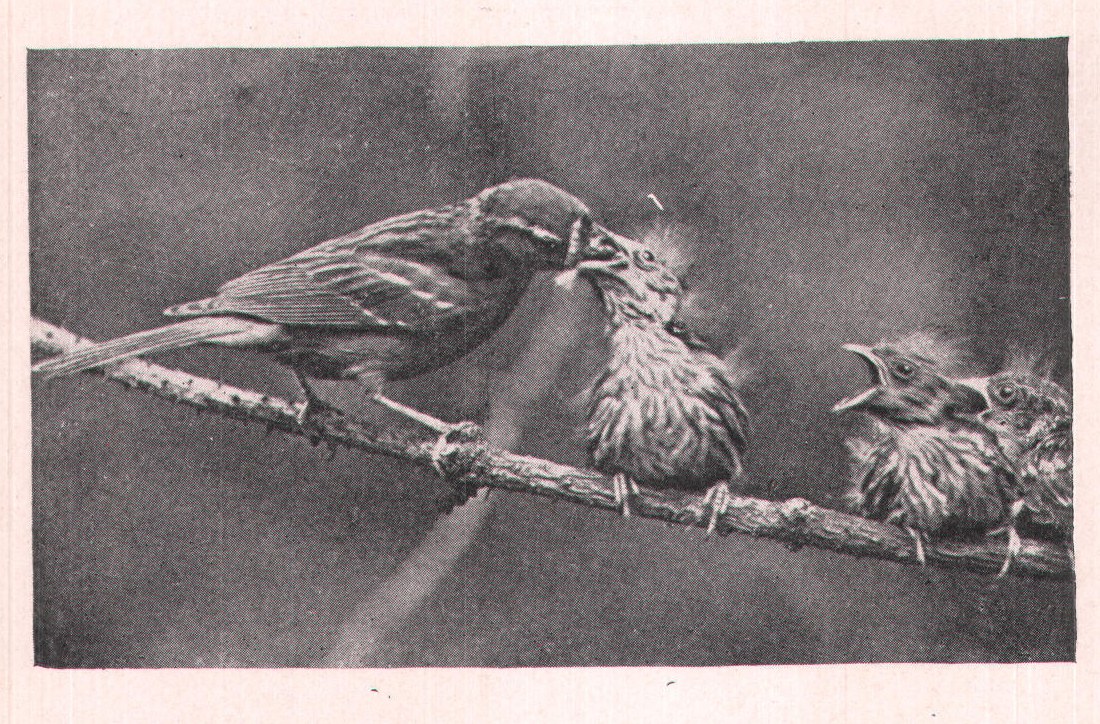
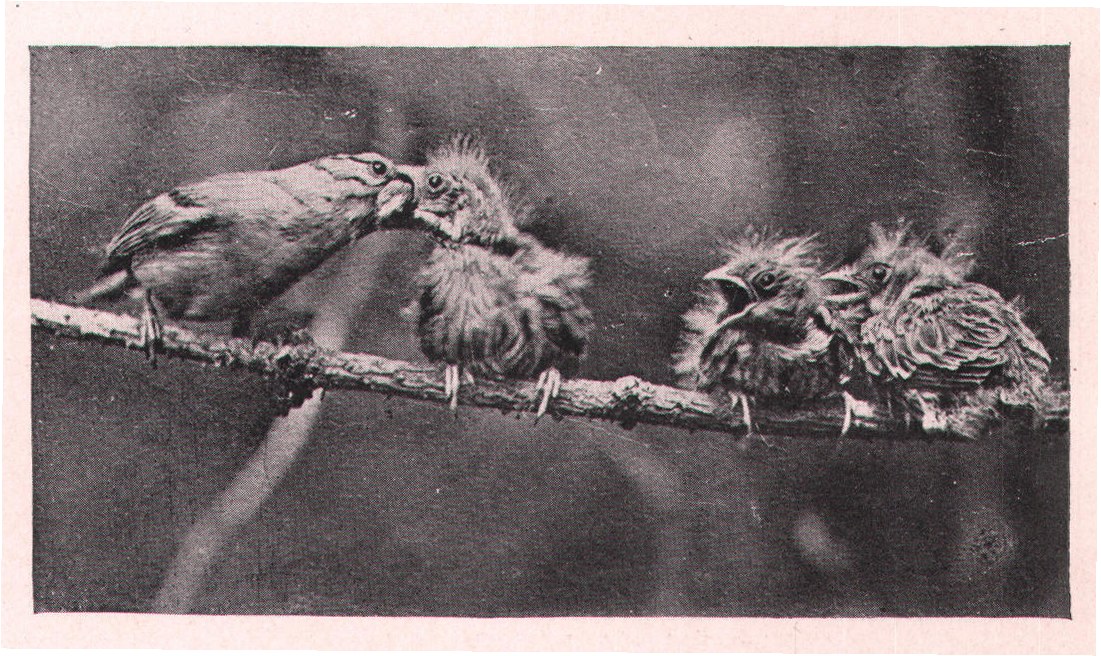
Fig. 142. Food is pushed down the throats of the young-not simply dropped into their mouths.
After watching the old birds for quite a while, we at last located the missing pair and returned them to the side of their mates, who had already been carefully focussed in the camera. After having once tested their wings and found that they could fly for short distances, they were not content to sit still, especially just where we wanted them to. Time after time, they made short excursions and had to be brought back.
The adults did not seem to be greatly alarmed as to the safety of the little ones we were handling so much and, after we had them arranged to our satisfaction and had stepped back, one of them flew away after food. He was back very quickly and at once went to feed the little birds, while his mate started off to hunt too. They continued this routine for a long time, one going as soon as the other came in sight.
Fig. 143. This is one of the failures, but it shows the amount of movement that occurred in 1-100 of a second, wings from side to their highest point.
Our illustrations show a picture of father Chippy as ne pushed a whole beak-full of plant lice down the throat or one of his offspring and also of the mother as she deliverea her antidote for hunger. You will notice that in both these pictures there is a 'vacant chair'; one of the little fellows could not overcome his desire to aviate and had to be chased about every five minutes.
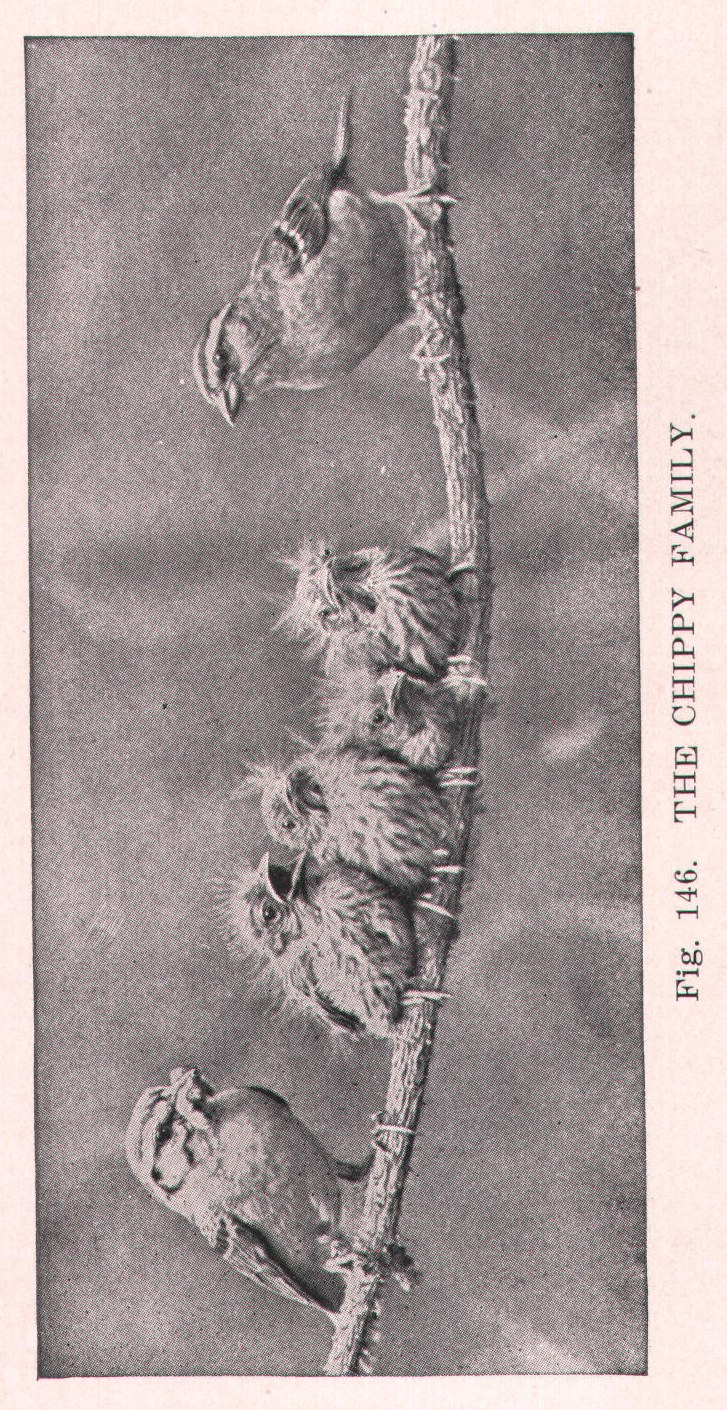
They came and went in turn, so regularly that we concluded that if we could detain one of the adults for a few minutes we would have them both arriving at the same time. The scheme worked to perfection. We prevented the female from feeding the young until the male was seen com- Notice that the adult is reaching over two little birds and the space where another one should be. ing in the distance, and as a result, secured the picture entitled "The Chippy Family". Mother, on the right of the picture, has just fed the two birdies nearest to her and is turning to leave just as father arrives with a beautiful green worm for the remaining little ones. I regard this as the best bird photograph that I ever secured; every one of the six birds is absolutely sharp, even to the finest feathers. Only those who have made bird pictures can realize how slight a movement will show on the plate.
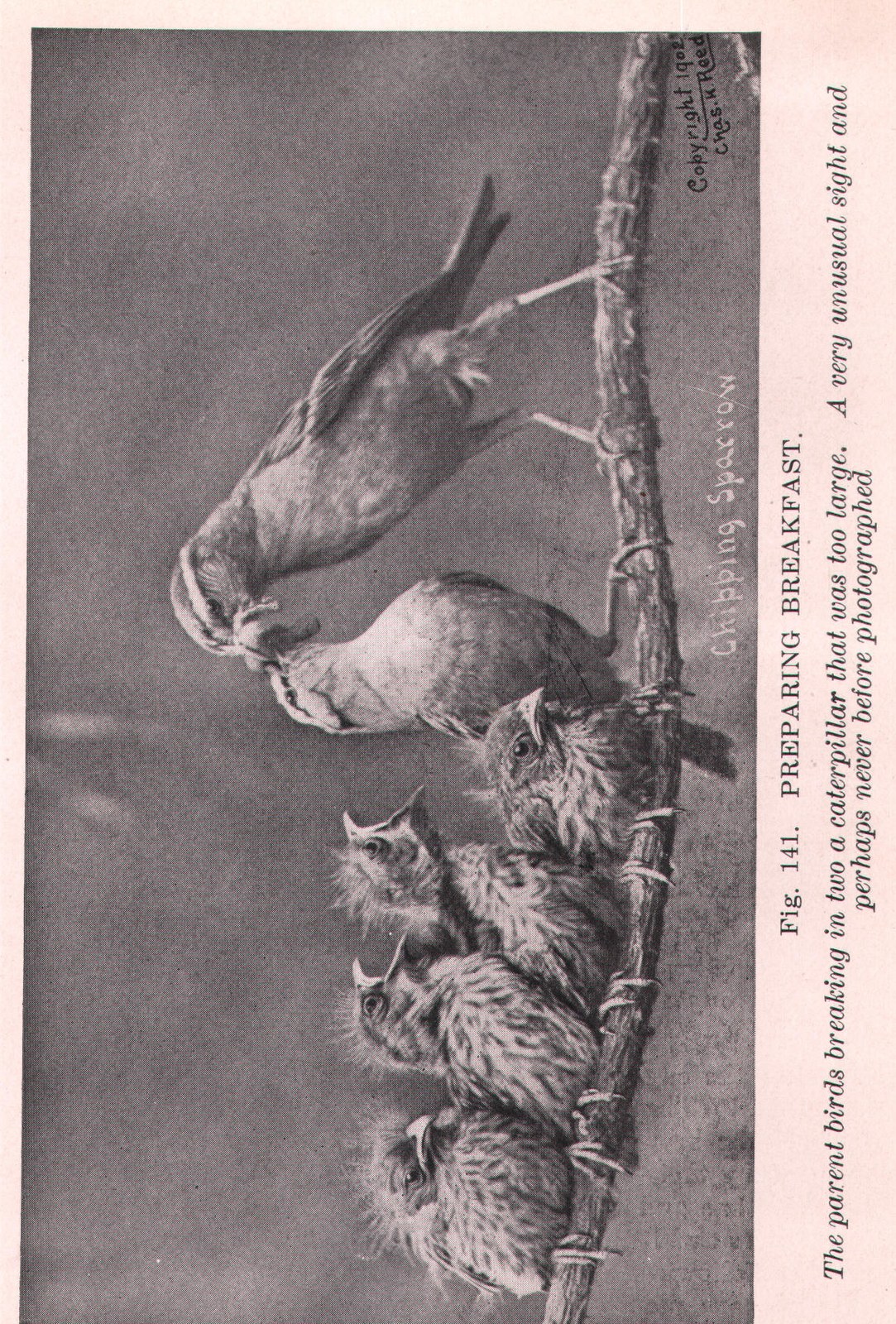
The next appearance of the two birds at the same time is shown in "Preparing Breakfast". This shows one of the occurrences in bird-life that is very rarely witnessed and still less often photographed. The male bird is the one nearest the young; he had just fed the little one beside him and was on the point of leaving when the female arrived with a large caterpillar. To our surprise, instead of alighting on the other side of the little birds, as usual, she lit at the side of her mate. In bird language, she instructed him what to do, and the next moment he had hold of one end of the caterpillar, bearing down with all his might; she lifted up on her end until it parted in the center. The two youngsters in the middle, who have anticipation written on every line of their faces, were the recipients of the broken morsel.
We were also fortunate in being able to reproduce another very interesting performance, shown in the picture entitled "A Long Reach". You will notice that the little bird with It is very unusual to secure a photograph of an entire family of birds and have all of them perfectly sharp in every detail. which we have had so much trouble, has taken another flight and is missing. The mother is just turning to go, and shows a slight motion in the picture. The father is reaching entirely over two birds and the space where the other should have been, to feed the one farthest away from him. It is no mean acrobat, who can thus maintain his equilibrium with his center of gravity falling so far outside his support. One never knows until after the plates are developed, whether he has secured success or failure, when engaged in bird photography, so we exposed about two dozen plates, of which more than half came out satisfactorily, the poor ones being due to too rapid motion on the part of the subjects. These birds may be "only sparrows" but they are very interesting ones, as anyone seeing them as we did, would have to admit.