Home › The Man-Like Apes › The Man-Like Apes: Orangs
The Man-Like Apes: Orangs
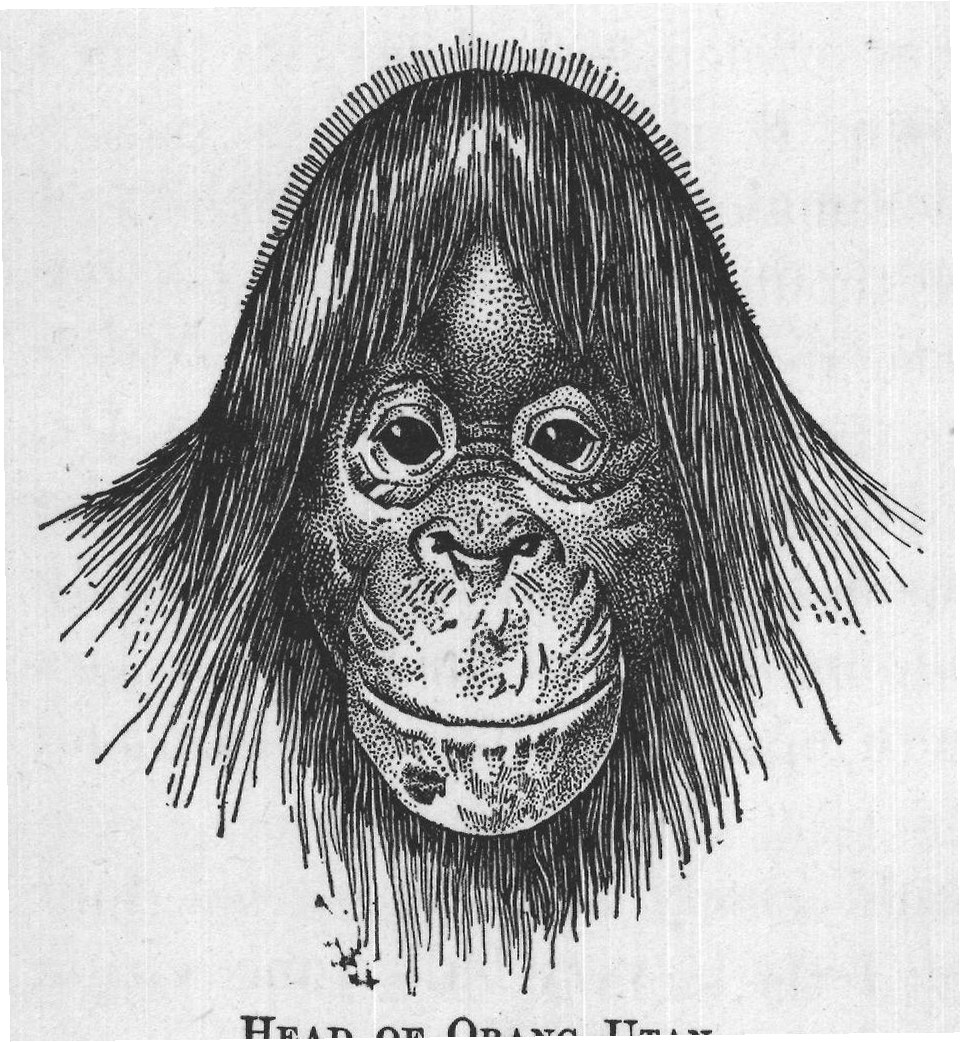
The young Orangs seem to remain unusually long under their mother's protection, probably in consequence of their slow growth. While climbing the mother always carries her young against her bosom, the young holding on by the mother's hair. At what time of life the Orang-Utan becomes capable of propagation, and how long the females go with young is unknown, but it is probable that they are not adult until they arrive at ten or fifteen years of age. A female which lived for five years at Batavia had not attained one-third the height of the wild females. It is probable that, after reaching adult years, they go on growing, though slowly, and that they live to forty or fifty years. The Dyaks tell of old Orangs which have not only lost all their teeth, but which find it so troublesome to climb that they maintain themselves on windfalls and juicy herbage.