Home › Volumes › Butterflies › Sulphurs and Whites
Common White
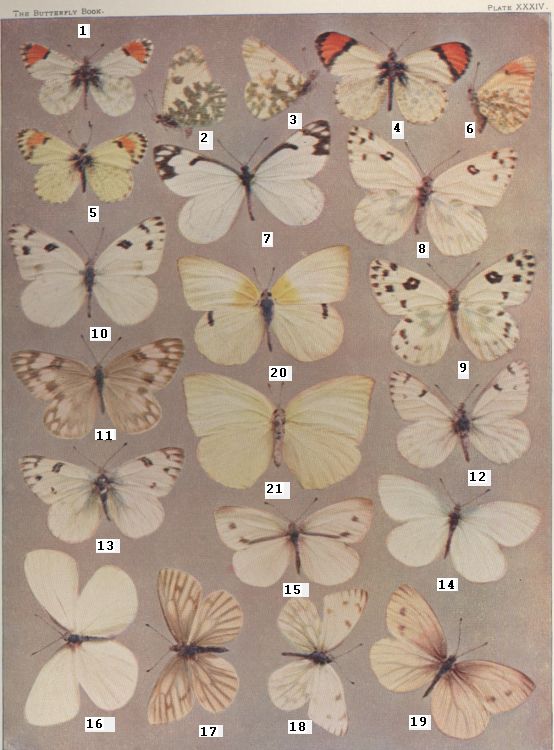
Butterfly.--Allied to the foregoing species, especially to P. occidentalis; but it may always be quickly distinguished by the pure, immaculate white color of the hind wings of the male on the under side, and by the fact that in the female the hind wings are more lightly marked along the veins by gray-green.
Winter form vernalis, Edwards, Plate XXXIV, Fig. 18, male. What has been said of the typical or summer form does not hold true of this winter form, which emerges from chrysalids which have withstood the cold from autumn until spring. The butterflies emerging from these are generally dwarfed in size, and in the males have the dark spots on the upper side of the wings almost obsolete or greatly reduced, and the dark markings along the veins on the under side well developed, as in P. occidentalis. The females, on the contrary, show little reduction in the size and intensity of any of the spots, but rather a deepening of color, except in occasional instances.
Early Stages.--The life-history of this insect has often been described. The caterpillar feeds upon cruciferous plants, like many of its congeners.
It ranges from the Atlantic to the Rocky Mountains, from Canada to the Gulf States.