Home › Volumes › Butterflies › Nymphs
Behr's Fritillary
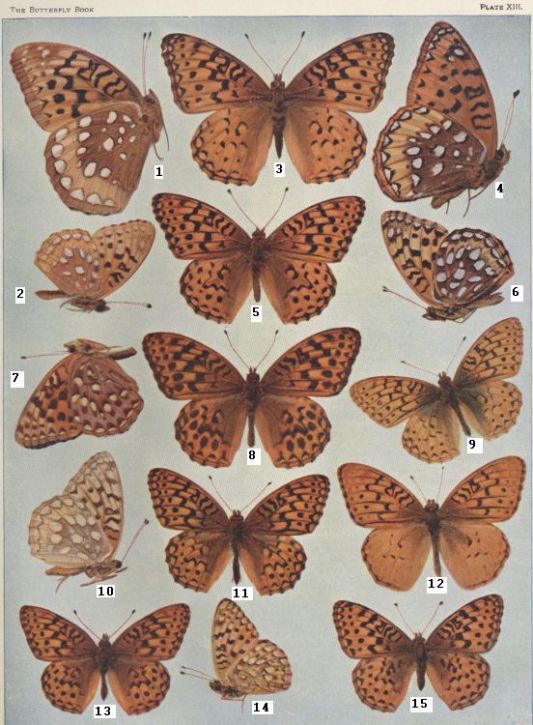
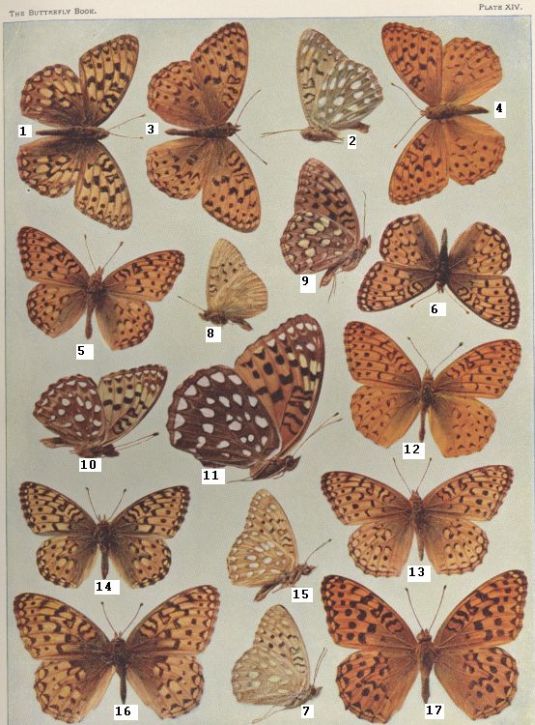
Butterfly.--This species is very closely allied to the preceding in some respects; the upper surface, however, of the wings in both sexes is brighter than in zerene, and the dark markings stand forth more clearly upon the lighter ground-color. The wings are not shaded with fuscous toward the base as much as in A. zerene. While the markings on the upper side are almost identical with those of Dr. Boisduval's species, they are much brighter and clearer, giving the insects quite a different aspect. On the under side the wings are colored as in zerene, the primaries in the male being ferruginous, laved with a little red toward the base, marked with purplish-gray toward the apex, the light spots near the end of the cell on this wing being pale buff. The hind wings are very uniformly purplish-gray, mottled with dark brown, the spots very little, if at all, silvered in the male. In the female the fore wings are bright red at the base, and the hind wings are colored as in the male; but all the spots in both the fore wings and hind wings are broadly and brightly silvered.
Early Stages.--The early stages have not been ascertained, and there remains something here for young entomologists to accomplish.
This species is quite common in the same localities as the last, and some authors are inclined to regard it as being a mere variety, which is a belief that can only be verified by careful breeding form the egg.