Home › Volumes › Bird Neighbours › Thrashers, Wrens, Etc.
Mocking-bird
- Length
- 9 to 10 inches. About the size of the robin.
- Male and Female
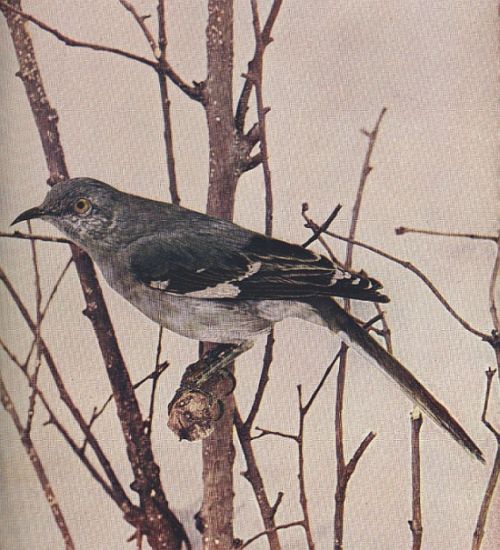
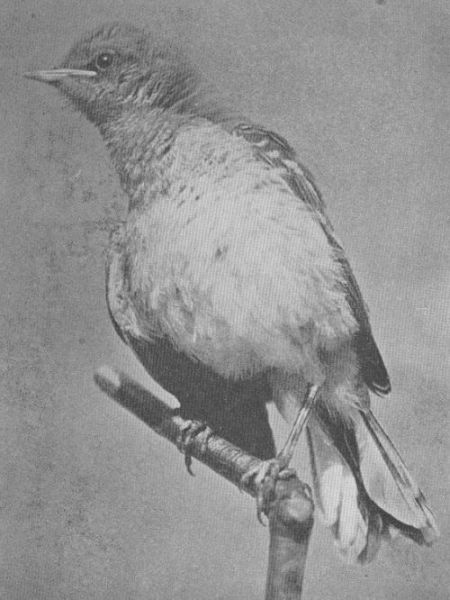
- Gray above; wings and wedge-shaped tail brownish; upper wing feathers tipped with white; outer tail quills white, conspicuous in flight; chin white; underneath light gray, shading to whitish.
- Range
- Peculiar to torrid and temperate zones of two Americas.
- Migrations
- No fixed migrations; usually resident where seen.
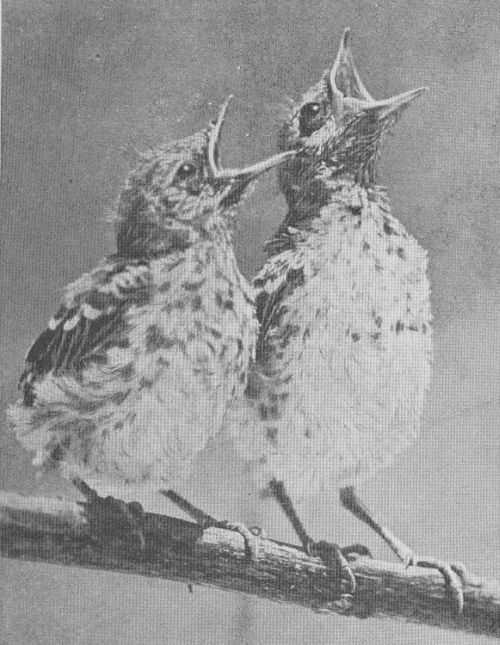
North of Delaware this commonest of Southern birds is all too rarely seen outside of cages, yet even in midwinter it is not unknown in Central Park, New York. This is the angel that it is said the catbird was before he fell from grace. Slim, neat, graceful, imitative, amusing, with a rich, tender song that only the thrush can hope to rival, and with an instinctive preference for the society of man, it is little wonder he is a favorite, caged or free. He is a most devoted parent, too, when the four or six speckled green eggs have produced as many mouths to be supplied with insects and berries.
In the Connecticut Valley, where many mocking-birds' nests have been found, year after year, they are all seen near the ground, and without exception are loosely, poorly constructed affairs of leaves, feathers, grass, and even rags.
With all his virtues, it must be added, however, that this charming bird is a sad tease. There is no sound, whether made by bird or beast about him, that he cannot imitate so clearly as to deceive every one but himself. Very rarely can you find a mocking-bird without intelligence and mischief enough to appreciate his ventriloquism. In Sidney Lanier's college note-book was found written this reflection: "A poet is the mocking-bird of the spiritual universe. In him are collected all the individual songs of all individual natures." Later in life, with the same thought in mind, he referred to the bird as "you slim Shakespeare on the tree." His exquisite stanzas, "To Our Mocking-bird," exalt the singer with the immortals:
"Trillets of humor,--shrewdest whistle-wit--
Contralto cadences of grave desire,
Such as from off the passionate Indian pyre
Drift down through sandal-odored flames that split
About the slim young widow, who doth sit
And sing above,--midnights of tone entire,--
Tissues of moonlight, shot with songs of fire;--
Bright drops of tune, from oceans infinite
Of melody, sipped off the thin-edged wave
And trickling down the beak,--discourses brave
Of serious matter that no man may guess,--
Good-fellow greetings, cries of light distress--
All these but now within the house we heard:
O Death, want thou too deaf to hear the bird?
"Nay, Bird; my griet gainsays the Lord's best right.
The Lord was fain, at some late festal time,
That Keats should set all heaven's woods in rhyme,
And Thou in bird-notes. Lo, this tearful night
Methinks I see thee, fresh from Death's despite,
Perched in a palm-grove, wild with pantomime
O'er blissful companies couched in shady thyme.
Methinks I hear thy silver whistlings bright
Meet with the mighty discourse of the wise,--
'Till broad Beethoven, deaf no more, and Keats,
'Midst of much talk, uplift their smiling eyes
And mark the music of thy wood-conceits,
And half-way pause on some large courteous word,
And call thee 'Brother,'O thou heavenly Bird!"